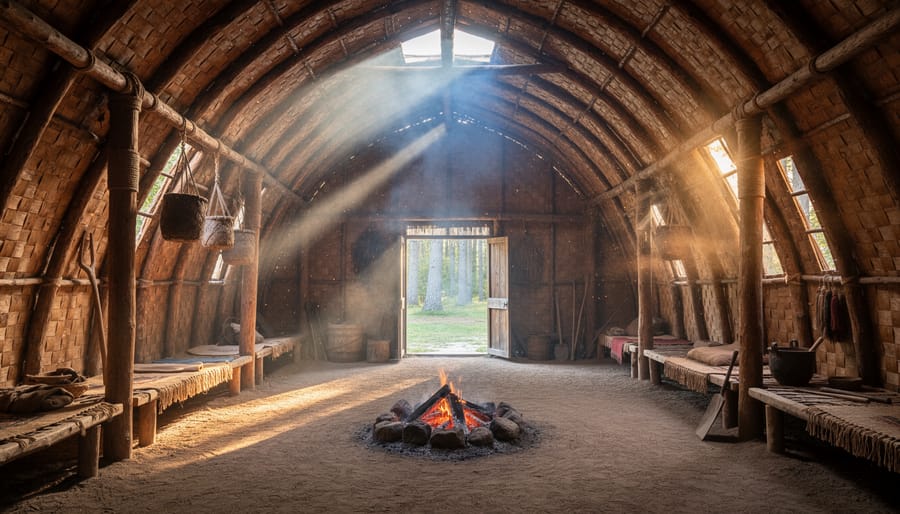
Long before steel and concrete shaped our cities, Indigenous peoples across Ontario crafted homes that breathed with the seasons, drawing wisdom from the land itself. The wigwam’s bent saplings, the longhouse’s communal warmth, and the tipi’s portable elegance weren’t just shelters—they were living expressions of deep ecological knowledge, each curve and lashing reflecting centuries of observation about wind patterns, water flow, and forest resources.
Stand inside a traditionally built longhouse today and you’ll feel what textbooks can’t teach: how smoke rises through carefully positioned roof vents, how bark layers create natural insulation, how the entire structure becomes a climate-responsive organism. These aren’t primitive dwellings relegated to history—they’re sophisticated architectural solutions that modern builders are now studying for sustainable design principles.
Ontario’s landscape still holds opportunities to experience these structures firsthand, where you can trace your fingers along elm bark walls and understand the engineering genius behind bentwood frames. Indigenous communities across the province welcome visitors to cultural centers and heritage sites where traditional architecture stands proud, offering hands-on workshops and guided interpretations that transform abstract concepts into tangible understanding.
This isn’t just about appreciating beautiful craftsmanship—it’s about recognizing a living architectural tradition that solved complex environmental challenges through observation, innovation, and profound respect for natural materials. Whether you’re an architecture enthusiast, eco-conscious traveler, or simply curious about Ontario’s deeper stories, indigenous building traditions offer surprising lessons for our sustainable future.
Why Indigenous Architecture Still Matters When You Visit Ontario Parks
When you’re paddling across a quiet lake or hiking through old-growth forest in Ontario’s parks, you’re traveling through landscapes shaped by thousands of years of Indigenous knowledge. Understanding traditional architecture transforms these outdoor spaces from simple scenic backdrops into living classrooms where the ingenuity of First Nations, Métis, and Inuit peoples becomes tangible.
Here’s something most visitors don’t realize: the trails you follow often trace ancient pathways, and the camping spots you choose reflect the same land-reading wisdom that guided where Indigenous peoples built their seasonal dwellings. When you recognize how a wigwam’s dome shape mimics the surrounding landscape, or understand why a longhouse was oriented east to west, you start seeing the land differently. Suddenly, you notice natural windbreaks, water access points, and south-facing slopes with fresh eyes.
This knowledge enriches your outdoor experience in practical ways too. Traditional structures were masterclasses in sustainable living. Learning how bark was harvested without killing trees, or how ventilation systems worked without electricity, offers valuable lessons for modern campers trying to minimize their environmental footprint. Indigenous builders understood seasonal cycles intimately, knowledge that still helps visitors today when planning trips or choosing campsites.
Many Ontario parks now offer interpretive programs where you can see reconstructed traditional dwellings or hear directly from Indigenous educators. These aren’t museum pieces behind glass, they’re invitations to understand the deep relationship between people and place. When you sit inside a wigwam and feel how it channels airflow, or notice how a longhouse creates community space, you’re connecting with architectural wisdom that’s beautifully adapted to the very environment you’re visiting. That connection makes every subsequent park visit richer and more meaningful.
The Genius Behind Wigwams and Waginogans
How They Were Built (And Why It Worked)
Picture this: you’re standing in an Ontario forest hundreds of years ago, and you need shelter before nightfall. Indigenous builders mastered this challenge through generations of refined knowledge, and honestly, their techniques are brilliantly simple yet effective.
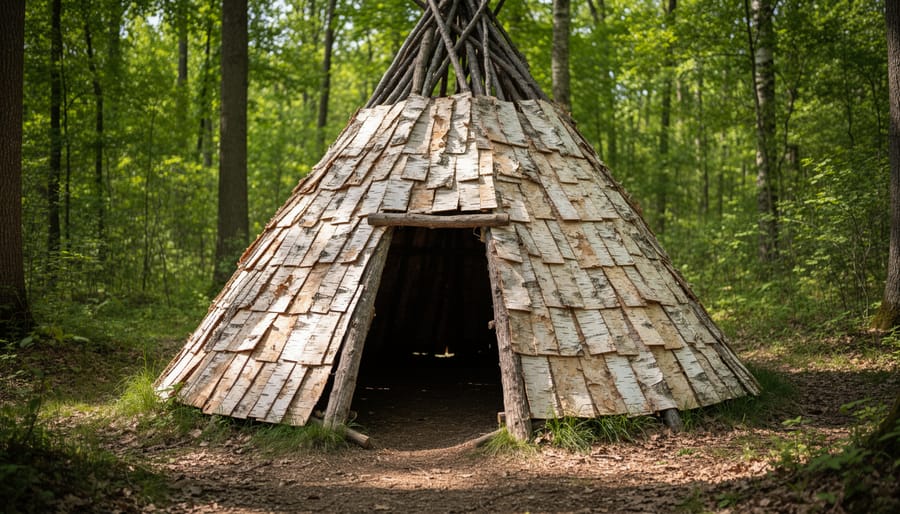
The process started with selecting young saplings, typically cedar, maple, or ash, chosen for their flexibility. Builders would bend these into a dome or conical frame, securing the poles by tying them with plant fibers or strips of bark. Here’s an insider tip: the spacing between poles was calculated carefully, close enough for stability but allowing room for the covering material.
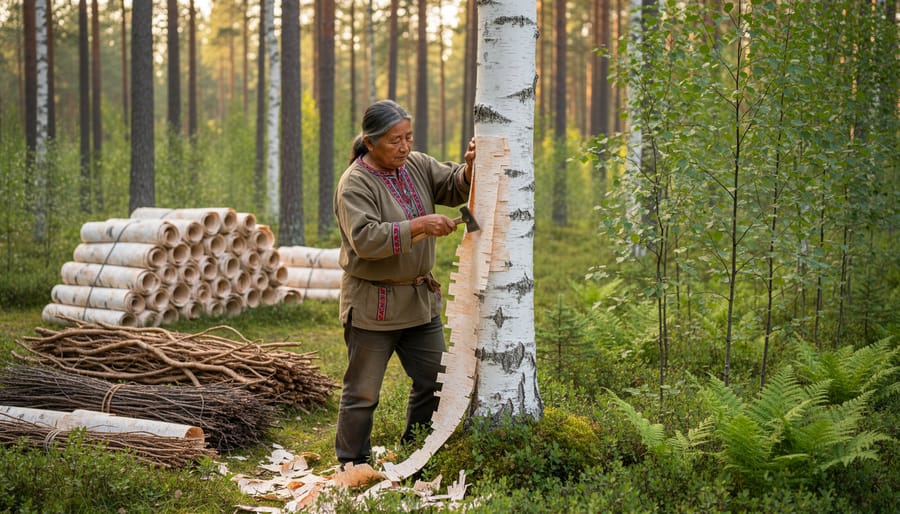
Next came the ingenious part – the birch bark covering. This wasn’t just any bark; it had to be harvested in early summer when the sap flows freely, making it easier to peel in large, intact sheets. Indigenous builders would layer these sheets like shingles on a roof, overlapping them to shed rain perfectly. The natural oils in birch bark made it waterproof and surprisingly durable.
The genius behind these structures lies in their eco-friendly design. Every material came from sustainable harvesting practices that never harmed the forest ecosystem. Smoke holes at the top provided ventilation while central fire pits offered warmth. The flexible framework could withstand Ontario’s fierce winds and heavy snow loads by bending rather than breaking.
What really makes this work is understanding that these weren’t primitive shelters – they were sophisticated, climate-adapted homes built from nature’s own hardware store, demonstrating an architectural wisdom we’re only now beginning to appreciate fully.
Where You Can See These Structures Today
You’ll find some of Ontario’s most authentic indigenous architecture experiences right here in our provincial parks and heritage sites. At Crawford Lake Conservation Area near Milton, you can step inside full-scale reconstructed longhouses based on archaeological evidence from a 15th-century Iroquoian village. Indigenous interpreters share stories about daily life and building techniques that’ll give you goosebumps—trust me, it’s worth the drive.
Sainte-Marie among the Hurons in Midland offers another incredible opportunity, where you can explore both Wendat villages and learn how bark structures were crafted to withstand harsh winters. The guides here really bring history to life with hands-on demonstrations.
For a more immersive experience, visit Curve Lake First Nation’s Whetung Ojibwa Centre, where traditional birchbark structures dot the landscape. Many Indigenous cultural centers across Ontario also feature architectural displays and workshops.
Insider tip: Call ahead to book guided tours—they fill up quickly during summer, and you’ll gain insights that self-guided visits simply can’t match. Many sites offer special programming during Indigenous History Month in June, making it an ideal time to plan your visit while supporting Indigenous-led tourism initiatives.
Longhouses: The Original Multi-Family Dwellings
Inside a Haudenosaunee Longhouse
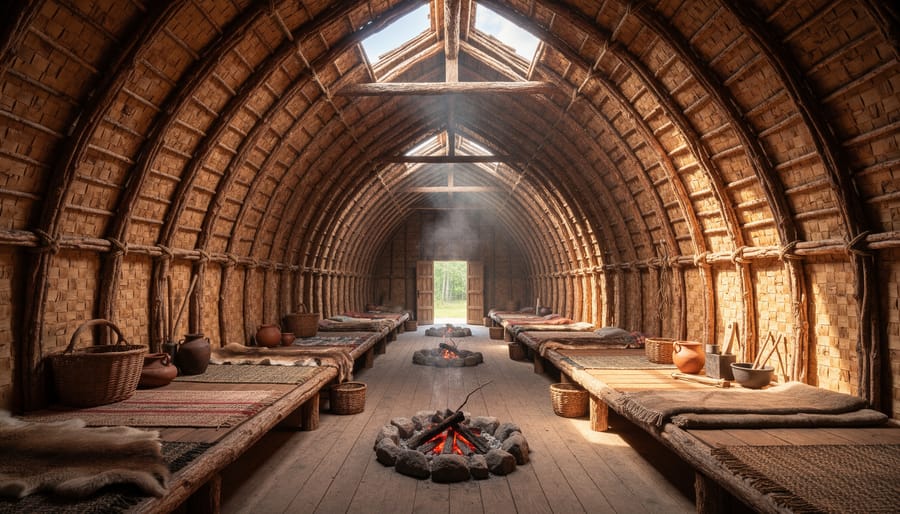
Step inside a traditional Haudenosaunee longhouse and you’ll discover a remarkable living space that housed multiple families under one bark-covered roof. These structures stretched anywhere from 60 to 200 feet long, with a central corridor running down the middle like a main street through the community.
Picture yourself walking through the entrance – you’d immediately notice a series of fires burning down the center aisle, each one shared by two families living on opposite sides. Smoke would drift upward through strategically placed openings in the roof, a clever ventilation system that kept the interior remarkably comfortable. Each family had their own designated living area along the walls, complete with raised sleeping platforms that doubled as seating during the day. Think of it like having your own private apartment within a larger communal building.
Storage was ingenious too. Families hung dried corn, beans, and squash from the rafters, while woven baskets tucked beneath platforms held tools and personal belongings. The architectural design itself reflected Indigenous leadership traditions, with clan mothers holding significant decision-making power within these shared spaces.
Here’s an insider tip: When visiting reconstructed longhouses at heritage sites across Ontario, ask guides about the social protocols that governed daily life. Understanding how families coordinated cooking schedules around shared fires, or how they maintained harmony in such close quarters, offers fascinating insights into sustainable community living that remains relevant today.
The Eco-Friendly Lessons We’re Still Learning
Here’s something that blew my mind during my first longhouse visit: these structures were essentially the original green buildings, and we’re only now catching up to their brilliance. The ingenious design principles that kept Indigenous communities comfortable for thousands of years are the same ones modern architects are rediscovering in their quest for sustainable buildings.
Think about it. Longhouses used strategic smoke holes and doorways positioned at opposite ends to create natural airflow, eliminating the need for mechanical ventilation. The curved bark roof naturally shed rain and snow, while the materials themselves – cedar, elm bark, saplings – came from right outside the door and would eventually decompose back into the earth without leaving a trace.
What really strikes me is the zero-waste approach. Every part of a harvested tree served a purpose, and when a longhouse reached the end of its lifespan, communities simply relocated and let nature reclaim the materials. No landfills, no demolition crews, just a return to the forest floor.
Today’s eco-conscious builders are finally embracing these time-tested concepts: local sourcing to reduce transportation emissions, natural materials that regulate temperature and humidity, and designs that work with the environment rather than against it. The longhouse wasn’t just shelter; it was a masterclass in living lightly on the land.
Survival Shelters: Quick-Build Techniques for Ontario’s Climate
What Modern Campers Can Learn
Next time you’re setting up camp in Ontario’s backcountry, channel some ancient wisdom that indigenous builders perfected over thousands of years. The principles behind traditional shelters offer surprisingly practical lessons for modern outdoor enthusiasts.
Start by reading your environment like the Anishinaabe did. They positioned wigwams with entrances facing east to catch morning warmth and avoid prevailing winds—a trick that works just as well for your tent today. Notice where natural windbreaks like rock formations or dense tree stands exist, and use them to your advantage.
Consider your campfire placement thoughtfully. Traditional builders created smoke vents at shelter peaks, understanding air circulation long before modern physics explained it. When you’re cooking outdoors, position yourself upwind and ensure smoke has a clear escape path—you’ll avoid that annoying “campfire chase” where smoke seems to follow you everywhere.
Embrace natural insulation techniques too. Indigenous peoples layered birchbark and cattail mats for weatherproofing, but you can achieve similar results by piling leaves or pine needles around your tent’s base to block drafts. Even a simple tarp positioned to reflect fire heat back toward your shelter, mimicking the reflective properties of hide walls, can keep you remarkably cozy on cool Ontario nights.
Most importantly, practice the leave-no-trace ethic that indigenous communities embodied naturally—build temporary, work with your surroundings rather than against them, and leave the landscape as pristine as you found it.
Building With What the Land Provides
Imagine constructing an entire dwelling using only what grows within walking distance of your home. For Indigenous peoples across Ontario, this wasn’t a survival challenge—it was an art form refined over thousands of years, deeply rooted in respect for the natural world.
The genius of traditional architecture lay in understanding that every tree, plant, and root had a purpose. Take birch bark, for instance. This remarkable material wasn’t just peeled from any tree at any time. Harvesting happened in late spring when the bark separated easily, and skilled builders only took what they needed from mature trees, ensuring the tree could heal and continue growing. One birch bark sheet could cover several square feet of a wigwam’s exterior, creating a waterproof barrier that you could roll up and transport to your next seasonal camp.
Cedar played an equally starring role. Its natural oils made it resistant to decay—perfect for structural posts that needed to last season after season. Imagine the aroma! That distinctive cedar scent you love in modern saunas? Picture an entire dwelling infused with that fresh, earthy fragrance.
For binding everything together, spruce roots became nature’s rope. After soaking and splitting, these flexible fibers could secure birch bark panels or lash poles together with surprising strength. Meanwhile, cattails and elm bark provided additional insulation and covering options depending on the season and location.
Here’s what makes this truly remarkable: Indigenous wisdom ensured these practices never depleted resources. Builders moved between harvesting sites, giving areas time to regenerate. They took only mature materials, left offerings of gratitude, and taught younger generations these same principles.
This sustainable approach meant that the same forests provided building materials for countless generations—a far cry from today’s construction waste. When you visit reconstructed Indigenous dwellings across Ontario, you’re not just seeing historical buildings; you’re witnessing a masterclass in living harmoniously with the land.
Experience Indigenous Architecture Yourself
Ready to move beyond observation and truly immerse yourself in Indigenous architectural traditions? Ontario offers remarkable opportunities to learn directly from Indigenous knowledge keepers and experience these building practices firsthand.
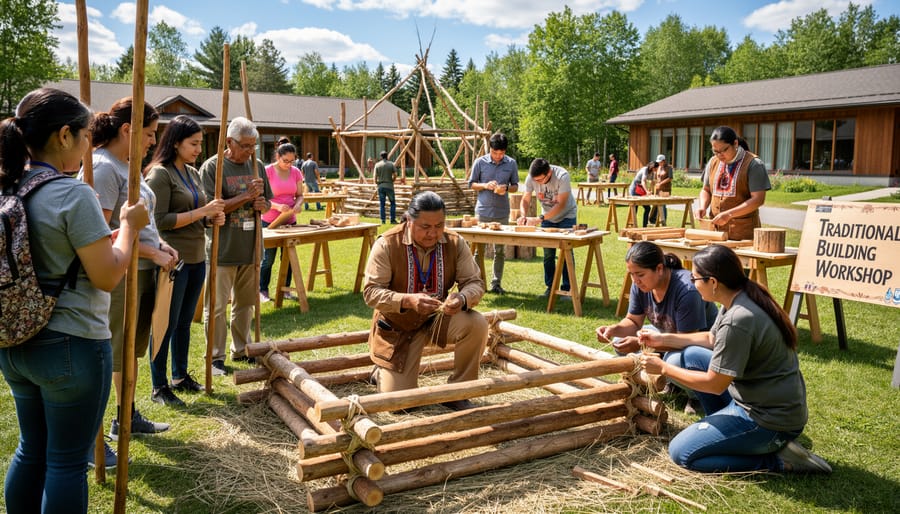
Several Ontario parks run seasonal workshops where you can help construct traditional structures. At Bon Echo Provincial Park, summer programs occasionally feature wigwam-building demonstrations led by local Algonquin experts. You’ll work with natural materials like cedar poles and birch bark, learning the intricate lashing techniques passed down through generations. There’s something magical about feeling the smooth bark in your hands and understanding how each element serves multiple purposes.
Peterborough’s Canadian Canoe Museum partners with Indigenous communities to offer hands-on programs exploring the connection between canoe building and shelter construction. These workshops reveal how similar materials and techniques applied across different aspects of traditional life.
Insider tip: Visit Curve Lake First Nation Cultural Centre during their spring and fall cultural days. These events often include guided tours of reconstructed longhouses where you can chat with community members, hear Indigenous oral traditions, and even participate in preparing traditional foods using ancestral methods.
For a more extensive experience, consider the Indigenous Tourism Ontario certification programs. These multi-day immersions connect you with Anishinaabe, Haudenosaunee, and other communities offering authentic architectural experiences.
Remember to book workshops well in advance, especially during peak summer months. Come prepared with sturdy footwear, sun protection, and an open mind. Most importantly, approach these experiences with respect and genuine curiosity. You’re not just learning building techniques but connecting with living cultures that continue to thrive and adapt their architectural wisdom for contemporary times.
As you explore Ontario’s incredible parks and natural spaces, take a moment to appreciate the Indigenous architectural wisdom woven into the landscape around you. From the curved lines of a wigwam to the ingenious insulation of an earth lodge, these time-tested designs offer valuable lessons in sustainability and living harmoniously with nature—principles that feel more relevant now than ever.
When you’re hiking through forests or camping beside lakes, remember that you’re walking lands where Indigenous peoples have thrived for thousands of years, creating homes perfectly suited to their environment. Consider visiting cultural centres and heritage sites that showcase these remarkable structures firsthand. Many offer workshops where you can learn traditional building techniques from knowledge keepers themselves—an experience that’ll deepen your connection to the land.
Here’s an insider tip: before your visit, research which Indigenous nations traditionally inhabited the area you’ll be exploring. This respectful approach enriches your outdoor adventure and helps preserve these important cultural stories for future generations.
Ready to experience Indigenous architecture for yourself? Start planning your eco-conscious Ontario adventure today, and discover how ancient wisdom continues shaping our relationship with the natural world.






+ There are no comments
Add yours