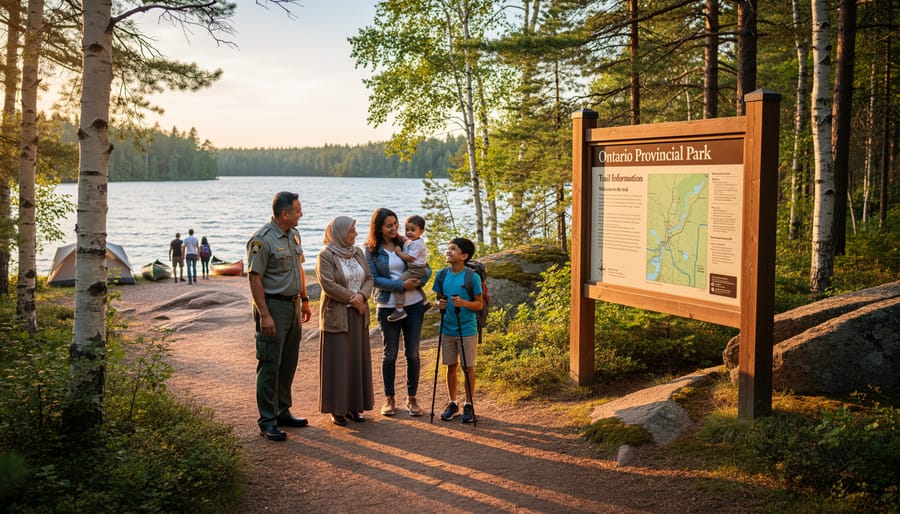
Explore visitor centers and trail signage in provincial parks where multiple languages welcome diverse communities—these multilingual touchpoints transform outdoor spaces into inclusive gathering places where newcomers and long-time residents alike feel they belong. Look for parks offering interpretive programs in languages beyond English and French, particularly in regions with significant immigrant populations like the Greater Toronto Area, where Mandarin, Punjabi, and Arabic translations help families connect with nature while honoring their linguistic heritage.
Seek out Indigenous-led experiences that weave multiple knowledge systems together, where Anishinaabemowin place names share equal prominence with colonial designations and traditional ecological knowledge enriches standard park interpretation. These encounters reveal how language shapes our relationship with landscape—when you learn that “Ontario” itself derives from an Iroquoian word meaning “great lake,” you begin understanding the deep multicultural foundations beneath every hiking boot step.
Connect with park staff who champion cultural responsiveness, from rangers trained in cross-cultural communication to naturalists who adapt programming for diverse learning styles and religious observances. Their grassroots efforts, though rarely spotlighted in academic journals, demonstrate how linguistic diversity enriches rather than complicates outdoor recreation management.
Document your own multilingual park experiences through photos, stories, and conversations with fellow visitors whose first languages differ from yours. This practice builds awareness of how Ontario’s natural spaces serve as living laboratories for multicultural exchange—where trail companions might teach you words for “birch tree” in Tagalog or share how their grandmother’s homeland resembles the Canadian Shield’s rocky beauty. These authentic encounters prove that nature transcends language barriers while simultaneously celebrating the rich linguistic tapestry that makes Ontario’s parks genuinely welcoming to all.
The New Reality: Ontario’s Parks Reflect a Multicultural Mosaic

Who’s Visiting Our Parks Today?
Ontario’s parks are buzzing with voices from around the world, creating a beautiful tapestry of languages and cultures on our trails and waterways. On any given weekend at Algonquin Provincial Park, you’ll hear Mandarin-speaking families photographing moose at Highway 60 overlooks, Punjabi groups preparing traditional meals at campsite picnic tables, and Arabic conversations echoing across Canoe Lake. Park staff report that over 40 different languages are regularly spoken across Ontario’s provincial park system during peak season.
Urban parks showcase even greater diversity. Toronto’s Rouge National Urban Park welcomes visitors from the city’s 200+ ethnic communities, with Tagalog, Spanish, Tamil, and Urdu among the most commonly heard languages on the waterfront trails. High Park’s cherry blossom season attracts thousands of Japanese-Canadian families celebrating hanami traditions alongside newcomers experiencing their first Canadian spring.
At Frontenac Provincial Park, ranger-led programs now regularly accommodate French-speaking families from Quebec and Ottawa, while interpretive signage includes multiple language options. The park has become a popular destination for multicultural hiking clubs from Kingston and Toronto, with groups organizing outings that blend outdoor education with cultural food sharing and storytelling.
Indigenous communities are increasingly visible too, with Anishinaabe and Haudenosaunee families reconnecting with ancestral lands through cultural camps and traditional teaching programs. This rich cultural mix isn’t just changing who visits our parks—it’s transforming how we experience and protect these special places together.
Why Cultural Narratives Matter in Natural Spaces
Nature speaks different languages, and that’s what makes Ontario’s wilderness so beautifully complex. Indigenous communities have walked these lands for thousands of years, viewing forests and waterways as living relatives rather than resources. Their traditional ecological knowledge—passed down through ceremonies and oral histories—offers profound insights into seasonal patterns and sustainable practices. Meanwhile, newcomers bring their own relationships with nature: perhaps picnic traditions from Mediterranean cultures, foraging skills from Eastern Europe, or meditation practices rooted in Asian philosophies.
These diverse perspectives transform our parks into vibrant cultural meeting grounds. When you hear storytelling in multiple languages around a campfire, or notice different families celebrating special occasions outdoors in their unique ways, you’re witnessing something magical. A Chinese-Canadian grandmother teaching tai chi by the lake enriches the space just as much as an Italian family sharing their Sunday meal tradition on the trail.
This cultural tapestry isn’t just nice to have—it’s essential. Different cultural practices teach us new ways to appreciate our environment, from Indigenous plant medicine to immigrant gardening techniques. Everyone’s experience deepens when we recognize that there’s no single “right” way to connect with nature.
Breaking Down Language Barriers: What’s Actually Happening
Signage and Trail Information That Speaks to Everyone
Ontario parks are making incredible strides in welcoming visitors from all linguistic backgrounds, and the results are truly inspiring. Several parks have embraced multilingual signage that goes far beyond simple translations, creating experiences that genuinely connect with diverse communities.
Rouge National Urban Park in Toronto stands out as a trailblazer, featuring interpretive panels in English, French, Tamil, Mandarin, and Urdu—reflecting the region’s rich cultural tapestry. During my last visit, I watched a grandmother read trail information to her grandchildren in Punjabi using the QR code system, and it was a beautiful reminder of why this matters.
The QR code approach is particularly clever. At parks like Algonquin and Killarney, scanning these codes with your smartphone instantly provides trail maps, safety information, and cultural stories in over a dozen languages. You can even download audio guides before heading into areas with limited cell service—an insider tip that’s saved me more than once.
Visual communication strategies are equally impressive. Parks Canada sites throughout Ontario now use internationally recognized symbols alongside text, making navigation intuitive regardless of language proficiency. Pictographs show trail difficulty, wildlife warnings, and facility locations at a glance.
Pukaskwa National Park deserves special mention for integrating Anishinaabemowin language alongside English and French, honoring Indigenous heritage while creating inclusive spaces. Bruce Peninsula National Park has followed suit, demonstrating how thoughtful signage can educate while welcoming everyone to explore Ontario’s natural wonders together.

Cultural Programming and Inclusive Events
Ontario’s parks have become vibrant hubs for celebrating diversity through year-round programming that welcomes all cultures. These immersive cultural experiences transform traditional outdoor spaces into gathering places where stories, traditions, and languages intertwine.
At Presqu’ile Provincial Park, the annual Indigenous Peoples Day brings together Anishinaabe elders, storytellers, and artisans who share teachings through traditional drumming circles and craft workshops. I watched families from diverse backgrounds sit together under the maples, learning about medicinal plants in both English and Anishinaabemowin. It’s these moments that break down barriers naturally.
Algonquin Park’s Visitor Centre has embraced multilingual interpretation with remarkable success. During Chinese New Year, they host special programming featuring traditional dragon dances and bilingual nature walks that connect Lunar New Year symbolism with Canadian wildlife. Rangers tell me these cultural celebrations have become among their most attended events, drawing newcomer families eager to share their heritage in outdoor settings.
Insider tip: Check park websites for Heritage Month programming between February and June when many locations offer special multicultural events, often with free admission for specific communities being celebrated.
The diversity extends beyond specific event days. Bon Echo Provincial Park now offers interpretive materials in seven languages, while their guided hikes frequently incorporate diverse perspectives on landscape and ecology. Staff members from various cultural backgrounds lead these programs, ensuring authentic representation.
These initiatives demonstrate how parks can honour multiple worldviews simultaneously, creating spaces where everyone sees themselves reflected in Ontario’s natural heritage story.
Stories from the Trail: Multicultural Experiences in Ontario Parks
Indigenous Voices: The Original Park Storytellers
Ontario’s provincial parks are becoming vibrant spaces where Indigenous cultural perspectives are shared authentically and respectfully. These weren’t always places where First Nations, Métis, and Inuit voices took center stage, but times are changing beautifully.
Many parks now offer guided walks led by Indigenous knowledge keepers who share traditional stories about the land, plants, and animals that have sustained their communities for thousands of years. At Quetico Provincial Park, for example, visitors can learn about pictographs painted on cliffsides centuries ago, understanding their spiritual significance through the voices of those whose ancestors created them.
Here’s an insider tip: arrive early for cultural programs, as they often fill quickly and offer intimate group sizes that encourage meaningful conversation. Bring a journal to capture the stories you hear—they’re precious gifts of knowledge.
Traditional ecological knowledge programs teach visitors how Indigenous peoples have practiced sustainable land stewardship long before modern conservation became popular. You’ll discover medicinal plants, learn about seasonal harvesting practices, and understand fire management techniques that protected forests for generations.
The eco-friendly approach? Listen more than you speak during these programs, ask thoughtful questions, and purchase authentic Indigenous artwork directly from artists when available at park visitor centers. This supports communities economically while honoring their continuing connection to these lands.
These storytelling experiences transform your park visit from simple recreation into profound cultural exchange.

Newcomers Finding Home on Ontario Trails
When Maria Chen first arrived in Toronto from Beijing with her two young children, she felt overwhelmed by the newness of everything. A neighbor suggested they visit a nearby conservation area, and that simple recommendation changed everything. “On the trail, smiling didn’t need translation,” Maria recalls. “My kids played with children who spoke different languages, and we all shared snacks by the water. It felt like home for the first time.”
Stories like Maria’s unfold daily across Ontario’s parks and trails. You’ll spot families spreading colorful picnic blankets with homemade samosas, kimchi, and plantain chips alongside traditional sandwiches. During my last visit to Rouge National Urban Park, I watched a Syrian grandfather teach his grandchildren to skip stones while sharing the technique in Arabic and English, creating a beautiful soundtrack of two languages mingling with nature.
Insider tip: Many newcomers discover that Ontario parks offer free programming specifically designed to welcome diverse communities. Check local conservation authority websites for multicultural nature events and guided walks available in multiple languages.
International visitors often tell me they’re surprised by how accessible and welcoming Ontario’s trail systems feel. The combination of universal wayfinding symbols, multilingual signage at major parks, and the inherently inclusive nature of outdoor spaces creates an environment where everyone belongs.
Parks become more than recreational spaces for newcomer families—they’re classrooms for learning about Canadian ecosystems, playgrounds for building friendships across cultures, and sacred spots for maintaining traditions like forest bathing or seasonal celebrations under Ontario’s towering pines.
What This Means for Your Next Park Adventure
Insider Tips for International Visitors
Visiting Ontario’s parks when English or French isn’t your first language? You’re in for a welcoming experience! Many provincial parks are stepping up their multilingual game, making it easier than ever to explore these natural treasures.
Start with parks near major urban centers like Algonquin and Killarney, where you’ll find staff members who speak multiple languages, especially during peak summer months. Several visitor centers now offer interpretive materials in Mandarin, Spanish, Arabic, and German. Here’s an insider tip: download the free Google Translate app before you head out, and grab the offline language packs while you still have WiFi at home. The offline feature is a lifesaver in remote areas where cell service disappears.
For cultural etiquette, Ontarians appreciate genuine attempts to connect, regardless of language barriers. A smile and basic “hello” go a long way. When visiting Indigenous cultural sites within parks, remember that photography may be restricted at sacred locations, so always ask first.
Connect with community groups before your trip through platforms like Meetup or local Facebook groups. Organizations like the Multicultural Council of Windsor & Essex County and similar groups across Ontario often organize nature outings specifically for newcomers. Parks Canada also runs settlement programs that provide free guided experiences for new permanent residents.
Pro tip: Visit park offices during weekday mornings when staff have more time to assist with detailed questions. Many rangers genuinely enjoy sharing their knowledge and will go the extra mile to ensure you have the information you need, often pulling out maps and drawing routes to help bridge any language gaps.
How Ontario Residents Can Be Better Park Ambassadors
Ontario’s parks are richer when we embrace the beautiful tapestry of cultures exploring our trails. As locals, we have a unique opportunity to make international visitors feel truly welcome while learning from their perspectives.
Start simple. Learning basic greetings in languages like Mandarin (nǐ hǎo), French (bonjour), Arabic (marhaba), or Punjabi (sat sri akal) goes a long way. Keep a short list on your phone for those spontaneous campsite conversations. When you encounter families speaking different languages on the trail, a friendly smile and a wave transcend any language barrier.
Share your knowledge generously. If someone seems unsure about trail markings or park etiquette, offer help with patience and warmth. Remember, what feels intuitive to you might be brand new to someone experiencing their first Canadian camping trip.
Celebrate differences at campsites. That enticing aroma from a neighbor’s campfire might be an invitation to cultural exchange. I’ve discovered incredible recipes and stories simply by expressing genuine curiosity about unfamiliar cooking traditions.
Support parks that prioritize accessible storytelling initiatives and multilingual resources. Your feedback to park administrators about signage and interpretation programs matters.
Most importantly, approach every interaction with openness. When we view language diversity as an asset rather than a barrier, our provincial parks become spaces where everyone truly belongs, and where connections flourish across cultures.
The Future Is Multilingual: What’s Coming Next
Eco-Friendly Tech Making Parks More Accessible
Ontario’s parks are embracing tech solutions that benefit both the environment and visitors from all language backgrounds. Gone are the days when parks needed to print thousands of brochures in multiple languages—now, there’s a smarter, greener way.
Several provincial parks have introduced multilingual mobile apps that deliver trail information, safety tips, and cultural stories directly to your smartphone in over 20 languages. During my last visit to Algonquin Park, I watched a family from South Korea effortlessly navigate the visitor center using QR codes that instantly translated exhibit information into Korean. No paper, no waste, just instant access to everything they needed.
Interactive digital kiosks at park entrances now offer touchscreen displays with language selection options, reducing paper consumption by an estimated 80% annually. These displays use solar power, making them truly sustainable solutions.
Here’s an insider tip: download your park’s app before you arrive, as cell reception can be spotty on trails. Most apps work offline once downloaded, ensuring you have multilingual guides, maps, and emergency information right in your pocket. These eco-friendly innovations prove that technology can bridge language barriers while protecting the natural spaces we all love exploring.

Research That’s Shaping Park Policy
Academic research is quietly revolutionizing how Ontario’s parks welcome visitors from all backgrounds, and it’s creating some pretty exciting changes on the ground. Studies published in journals focused on multilingual and multicultural development have shown something park planners are now taking to heart: when people see their language and culture reflected in natural spaces, they’re more likely to visit, stay longer, and develop a deeper connection to conservation.
Here’s what’s particularly fascinating: researchers have discovered that something as simple as trail signage in multiple languages doesn’t just help people navigate—it sends a powerful message that says “you belong here.” This insight is reshaping policies across Ontario Parks, where staff are now collaborating with cultural communities to understand what makes outdoor spaces feel welcoming versus intimidating.
One study that caught attention examined how immigrant families interact with provincial parks, revealing that cultural storytelling and familiar references can bridge the gap between urban newcomers and wilderness experiences. Park administrators took note, leading to programs where Indigenous guides share creation stories, while interpretive centers now feature exhibits explaining how different cultures traditionally interact with similar ecosystems.
The practical result? You’ll increasingly find park staff trained in cultural sensitivity, interpretive materials that acknowledge diverse perspectives on nature, and programming designed with input from community groups. It’s academic research meeting real-world application, making your next park visit richer whether you’re a fifth-generation Ontarian or a first-time visitor exploring Canada’s natural wonders.
Ontario’s parks become infinitely richer when we embrace the multilingual, multicultural stories woven into their landscapes. Every trail walked, every campfire shared, and every sunrise witnessed carries the potential for connection across languages and cultures. The research published in journals like the Journal of Multilingual and Multicultural Development reminds us that diversity isn’t just something to acknowledge—it’s what makes our outdoor spaces truly come alive.
I’ve learned through countless park visits that nature speaks a universal language. Whether you’re reading trail signs in English, French, or an Indigenous language, or sharing a smile with fellow hikers who speak different tongues, the wonder of a waterfall or the majesty of ancient trees needs no translation. These shared moments of awe create bridges between people from all backgrounds.
Here’s my challenge to you: Visit an Ontario park this season and seek out those multilingual interpretive panels. Listen to stories from Parks Ontario staff representing different cultural backgrounds. Strike up conversations with fellow visitors whose experiences differ from yours. Share your own family’s connection to these landscapes on social media using park hashtags—your story matters and enriches everyone’s understanding.
As someone who’s witnessed the magic of diverse voices coming together under the same canopy of stars, I can promise you this: the more stories we share, the more we all belong. Nature welcomes everyone, and so should we.





+ There are no comments
Add yours