
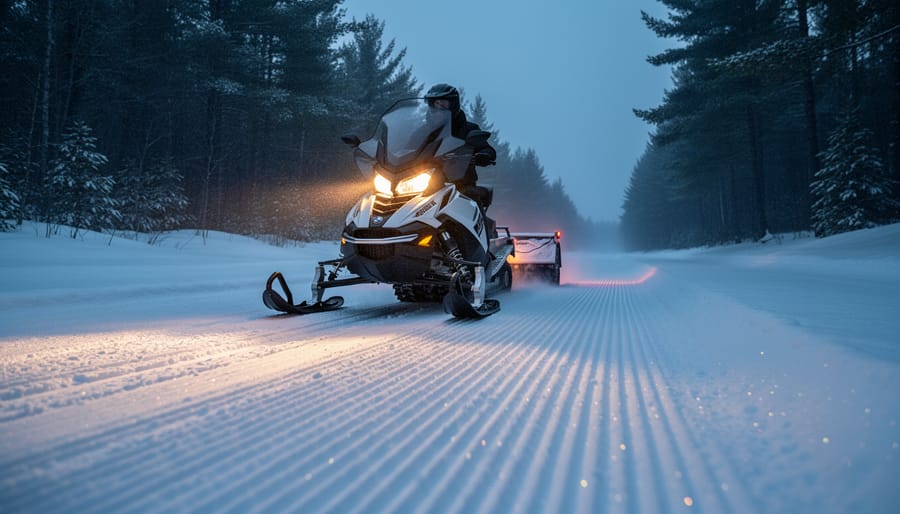
Check grooming reports before heading out—most Ontario snowmobile clubs post daily updates on their websites and social media showing which trails received fresh grooming overnight. Fresh corduroy makes all the difference between a smooth, exhilarating ride and a bumpy, exhausting slog through moguls and ruts.
Trail grooming transforms packed snow into that gorgeous rippled surface using specialized drags pulled behind heavy snowmobiles, typically running between midnight and dawn when temperatures drop and fewer riders are out. These dedicated volunteers smooth out bumps, fill in holes, and create the firm, even surface that makes Ontario’s 40,000-kilometer trail network so legendary. Understanding when and how grooming happens helps you time your rides perfectly—hitting trails within 24 hours of grooming gives you that magical “first tracks” feeling.
Pay attention to closure advisories, especially during warm spells or early season. Grooming can’t fix trails with insufficient snow base, and riding on marginal conditions damages the trail bed for the entire season. Respecting these closures protects the volunteer groomers’ hard work and ensures better riding for everyone once conditions improve. Most clubs operate on tight budgets funded by trail permits, so your pass directly supports the grooming that makes Ontario snowmobiling world-class.
What Trail Grooming Actually Does to Your Riding Experience
Picture this: you’re gliding across a pristine winter landscape, your sled responding smoothly to every movement, the trail stretching ahead like a freshly paved highway made of snow. That’s the magic of a freshly groomed trail, and trust me, once you’ve experienced it, there’s no going back.
Trail grooming transforms what would otherwise be a bumpy, exhausting ride into pure winter bliss. Without grooming, snowmobile trails quickly develop into obstacle courses of moguls, ruts, and unpredictable ice patches. Every ride becomes a workout as you fight to control your sled through choppy terrain. But when a groomer passes through, everything changes.
The grooming machine works like a giant snow zamboni, pulling a heavy drag behind it that smooths out those punishing bumps and fills in dangerous ruts. The process creates a firm, packed surface that gives your sled’s track something solid to grip. The difference is immediately noticeable from the moment you hit that groomed section. Your ride becomes smoother, quieter, and significantly faster. You’ll feel less fatigued because you’re not constantly wrestling with uneven terrain, which means you can ride longer and enjoy the scenery more.
Here’s an insider tip: freshly groomed trails are best enjoyed within the first 24 to 48 hours after grooming, before heavy traffic and changing weather conditions start breaking down that perfect surface. Early morning riders often get the smoothest conditions, especially after an overnight grooming session.
The comfort factor can’t be overstated either. Groomed trails reduce jarring impacts on your body and your machine, meaning less wear on both. You’ll arrive at your destination feeling refreshed rather than rattled, ready to enjoy everything Ontario’s winter playground has to offer.
The Heavy-Duty Machines Behind Ontario’s Perfect Trails
The Grooming Process Step-by-Step
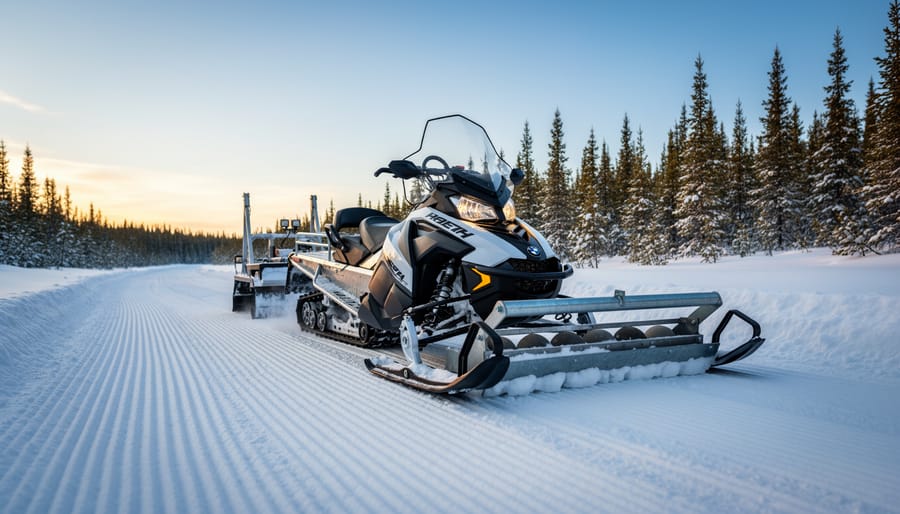
Picture this: A grooming snowmobile heads out in the evening, pulling a wide drag behind it that looks like a giant rake meets a steamroller. As it moves along the trail, the magic happens in stages.
First, the front tiller breaks up those bumpy moguls and rough patches that developed throughout the day. Think of it like a food processor churning up frozen terrain into manageable chunks. This is where all that hard-packed, uneven snow gets pulverized into something workable.
Next, the middle section levels everything out, redistributing the snow evenly across the trail width. Any icy spots get mixed with fresher snow, creating a more consistent surface. An insider tip: this is why trails groomed after fresh snowfall feel absolutely dreamy to ride.
Finally, the rear drag creates that famous corduroy pattern you’ll recognize instantly. Those parallel ridges aren’t just pretty, they provide crucial traction for your sled and help prevent the trail from becoming an ice rink. The grooves also help channel meltwater off the trail during temperature swings.
Most grooming happens overnight when temperatures drop and fewer riders are out. This timing lets the freshly groomed surface freeze solid, giving you that perfect firm-but-grippy ride come morning. When you hit a newly groomed trail at sunrise, you’re experiencing Ontario’s snowmobile trails at their absolute best.
Why Timing Matters: When Groomers Hit the Trails
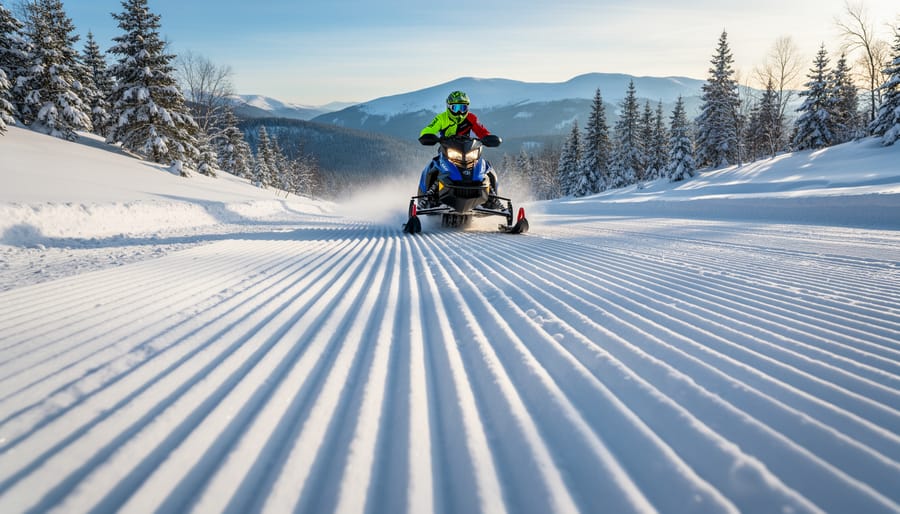
Ever wonder why you see those bright snowmobiles working the trails when most folks are sleeping? There’s a good reason for that! Grooming crews typically hit the trails overnight or in the early morning hours, usually between midnight and 6 a.m. This timing isn’t random – it’s strategic. Fresh grooming needs time to set up properly before riders arrive, and cold nighttime temperatures help the packed snow freeze into that perfect corduroy surface we all love.
Weather plays a huge role in grooming schedules too. After a fresh snowfall, groomers work overtime to get trails rideable again. But here’s an insider tip: extremely cold temperatures (below -25°C) can make grooming difficult, as snow becomes too dry and powdery to pack well. Similarly, warm spells or rain can completely halt operations until conditions improve.
Trail usage also dictates frequency. Popular routes near towns might see grooming three to four times weekly during peak season, while remote trails might only get attention once a week. Weekend warriors should know that Friday nights often see extra grooming passes to prepare for heavy Saturday traffic. Most clubs post their grooming schedules online, so you can plan your ride around freshly groomed conditions. Smart riders check these schedules before heading out – there’s nothing quite like being among the first to carve through freshly groomed trails at sunrise!
How to Check Trail Conditions Before You Head Out
Digital Resources and Apps That Help
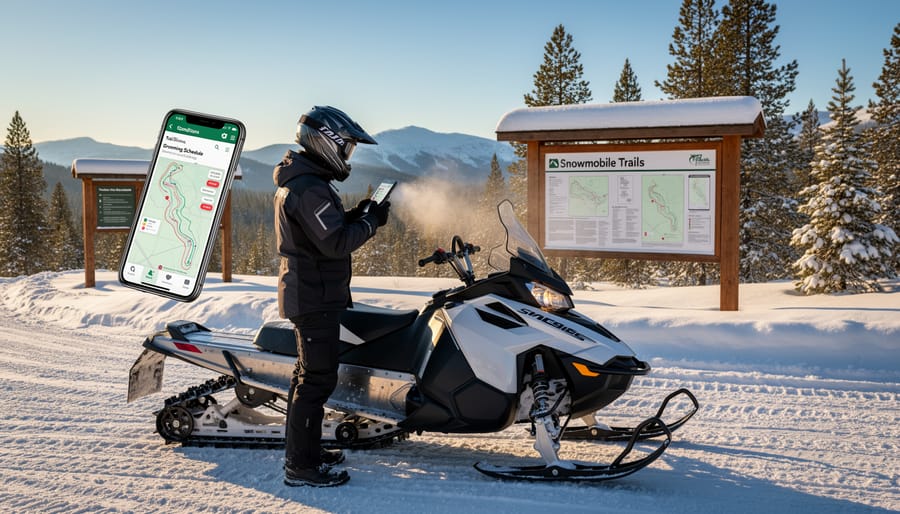
Staying connected to real-time trail conditions has never been easier, thanks to some fantastic digital tools designed specifically for snowmobilers. Here’s your go-to guide for keeping tabs on freshly groomed trails.
The Ontario Federation of Snowmobile Clubs (OFSC) website is your best friend for trail info. Their interactive online map shows trail statuses across the province, including which routes have been recently groomed. Download the OFSC Go Snowmobiling app – it’s a game-changer! This free mobile app gives you GPS navigation, trail conditions updated by local clubs, and even lets you report issues you spot on the trail. Think of it as your pocket-sized trail companion.
Many local snowmobile clubs maintain active Facebook pages and Instagram accounts where they post daily grooming updates, often with photos of their groomer operators in action. It’s worth following clubs in your favorite riding areas – you’ll get insider tips about trail conditions before you even leave home.
For quick updates, most regional clubs operate trail condition hotlines you can call while you’re loading up your sled. These recorded messages are typically updated each morning after grooming runs.
Pro tip: Join snowmobiling groups on social media where riders share real-time conditions and hidden gem routes. The snowmobiling community is incredibly helpful about posting updates when they’re out on the trails. This grassroots information often gives you the most current picture of what to expect, helping you plan the perfect riding day while supporting eco-friendly practices by avoiding closed or sensitive areas.
Reading Trail Reports Like a Local
Learning to read trail reports properly can save you from disappointment and keep you safe out there. When you see “freshly groomed,” that typically means the trail’s been worked within the last 24 hours and you’re in for buttery-smooth riding. “Packed” means the trail’s rideable but hasn’t seen the groomer recently, while “fair” often translates to icy patches or moguls that’ll rattle your teeth a bit.
Here’s an insider tip: if the report says “limited base” or “thin coverage,” postpone your trip unless you’re comfortable risking scratches on your sled. Those rock gardens aren’t worth the repair bills. Similarly, watch for warnings about sudden trail closures due to equipment breakdowns or weather events.
Pay attention to the report’s timestamp too. A “groomed” status from three days ago after a warm spell means you’re likely facing refrozen ruts. The best rides happen within 12 hours of grooming on cold, stable days. If temperatures have yo-yoed or rain’s in the forecast, trust your gut and wait for better conditions.
Understanding Trail Closures and Advisory Notices
Safety First: When Closed Really Means Closed
Look, I get it—you’ve driven hours to get here, you’re itching to ride, and that “Trail Closed” sign feels like a personal insult. But here’s the thing: when groomers post trail closures, they’re not being party poopers—they’re protecting you and the trail itself.
Last winter, a group ignored closure signs on a partially groomed trail near Haliburton. The grooming equipment had identified dangerous ice conditions and weak spots. Two riders ended up breaking through into water pockets, requiring rescue. Both machines needed expensive repairs, and one rider suffered hypothermia.
Closed trails might be dealing with equipment on-site, unstable conditions, wildlife activity, or incomplete grooming that creates hidden hazards. Riding closed trails can result in fines up to 5,000 dollars in Ontario, potential rescue costs you’ll be billed for, and—most importantly—serious injury risks.
Plus, here’s an insider tip: respecting closures helps clubs maintain their insurance and funding, which means better grooming for everyone long-term. Check condition reports before you head out, and remember that patience today means safer, better-maintained trails tomorrow.
Alternative Options When Your Trail Is Closed
When your planned trail gets closed for grooming or maintenance, don’t let it derail your winter adventure! Instead, think of it as an opportunity to explore somewhere new. Most regions have multiple interconnected trail systems, so check with your local snowmobile club or trail association for real-time updates on alternative trail options nearby.
Here’s an insider tip: keep a mental list of backup destinations within an hour’s drive. Many riders discover their new favorite routes this way! Popular areas like Haliburton, Muskoka, and the Kawartha Lakes offer extensive networks where you can easily pivot your plans.
Stay flexible by downloading trail apps that show current conditions and grooming schedules before you head out. Pack extra fuel and snacks since alternate routes might be longer than expected. Consider it part of the adventure! Many clubs also maintain social media pages with last-minute updates, making it easier to adapt on the fly. Remember, grooming crews work hard to provide the best possible riding conditions, so a temporary closure usually means better trails await you soon.
Supporting the Volunteers Who Groom Your Trails
Here’s something that might surprise you: those beautifully groomed trails you ride on aren’t maintained by large government crews. Most of Ontario’s 40,000 kilometers of snowmobile trails exist thanks to dedicated volunteers who donate countless hours to keep your riding experience smooth and safe.
Local snowmobile clubs are the backbone of trail grooming operations across the province. These passionate volunteers don’t just operate grooming equipment – they clear brush in fall, monitor trail conditions daily, coordinate with landowners, and often head out in the middle of the night to groom after fresh snowfall. Many clubs run entirely on membership fees, trail permits, and fundraising events.
You can support these essential volunteers in several meaningful ways. First and always, purchase your Ontario Federation of Snowmobile Clubs trail permit. This isn’t just a legal requirement – it directly funds trail maintenance and grooming operations. Think of it as your contribution to the community that makes winter riding possible.
Practice eco-friendly trail etiquette by staying on marked trails to prevent erosion and protect sensitive habitats. Avoid riding over young trees or through wetland areas, even when they look frozen solid. Pack out everything you pack in, including any food wrappers or drink containers.
Respect posted speed limits and grooming schedules. When you see fresh corduroy, resist the urge to race over it immediately – give it time to set up properly. If you encounter a groomer on the trail, slow down, pull over safely, and give them plenty of space to pass.
Consider volunteering with your local club. Even if you can’t operate equipment, clubs always need help with trail monitoring, fundraising events, or administrative tasks. Your time and enthusiasm mean everything to these community-driven organizations.
Insider Tips for the Best Groomed Trail Experience
Timing is everything when it comes to freshly groomed trails. Here’s something I learned from seasoned riders at a trail stop near Muskoka: hit the trails within 12 to 24 hours after grooming for that dream-like, corduroy surface. Early morning rides are particularly magical—you’ll glide over smooth, firm snow before other sleds churn it up. Check your local club’s grooming schedule online or through their social media pages to plan your adventure.
Weather plays a huge role in how long that pristine grooming lasts. Cold, dry conditions preserve the groomed surface beautifully, sometimes for days. But watch out for warm spells or freezing rain—they can quickly turn a perfect trail into an icy challenge. One veteran rider told me she always checks the three-day forecast before planning a long-distance ride. If temperatures are hovering around freezing, she adjusts her route to stay closer to home.
Pack smart for groomed trail riding. Bring extra layers since you’ll likely be moving faster on smooth trails, which creates a serious wind chill. A trail map, GPS device, and emergency kit are essential—even well-groomed trails can surprise you. I always carry a small shovel and tow strap, just in case.
Here’s an insider secret: ride mid-week if your schedule allows. Weekends see heavier traffic, which breaks down groomed trails faster. Tuesday and Wednesday rides often offer the best conditions with fewer sleds around.
Finally, respect the grooming process. If you spot a groomer working, wait patiently and give them space. These operators are volunteers creating the experience you’re enjoying. A friendly wave goes a long way in building the community spirit that makes Ontario’s snowmobiling culture so special.
The magic of Ontario’s snowmobiling experience truly comes down to the dedication of trail groomers who work tirelessly, often through the night, to create those perfect ribbon-like paths through our winter wonderland. Understanding the grooming process helps you appreciate the incredible effort behind every smooth ride and makes you a more informed, responsible rider. When you check trail conditions before heading out, you’re not just planning a better trip—you’re respecting the work of volunteers and operators who pour their hearts into maintaining these trails.
Think of grooming information as your best friend when planning any snowmobile adventure. Those online trail reports and grooming schedules aren’t just suggestions; they’re your roadmap to the best possible experience. Fresh grooming means optimal conditions, while advisories help you avoid disappointment and ensure your safety. Plus, staying off trails when they’re closed or in poor condition helps preserve them for everyone’s future enjoyment.
Ontario’s winter trail network is truly something special, maintained by passionate communities who love this sport as much as you do. So bundle up, check those conditions one more time, and get ready to explore the stunning winter landscapes waiting for you. Adventure is calling, and those perfectly groomed trails are ready to deliver memories that’ll last a lifetime.



+ There are no comments
Add yours