

Plunge into heart-stopping winter adventures across Ontario’s winter landscape, where adrenaline meets crystalline wilderness. Ice climbing frozen waterfalls at Tiffany Falls, navigating backcountry terrain on a snowkite at Wasaga Beach, and diving through powder-filled chutes while speed riding combine to create the ultimate winter rush. Beyond traditional slopes, these extreme sports push boundaries and transform familiar terrain into an extreme athlete’s playground.
For thrill-seekers ready to level up their winter experience, Ontario’s rugged wilderness offers the perfect testing ground. Picture yourself scaling pristine ice formations, soaring above snow-covered fields powered by winter winds, or carving fresh lines through untouched backcountry. These aren’t just sports – they’re transformative experiences that challenge your limits and reward you with unparalleled adventure.
Whether you’re an experienced extremist or a curious newcomer, Ontario’s extreme winter sports scene welcomes all who dare to push beyond their comfort zone. With proper training, expert guidance, and respect for nature’s raw power, you’ll discover a whole new dimension of winter excitement that makes traditional skiing feel tame by comparison.
Ice Climbing: Scaling Ontario’s Frozen Giants
Top Ice Climbing Destinations
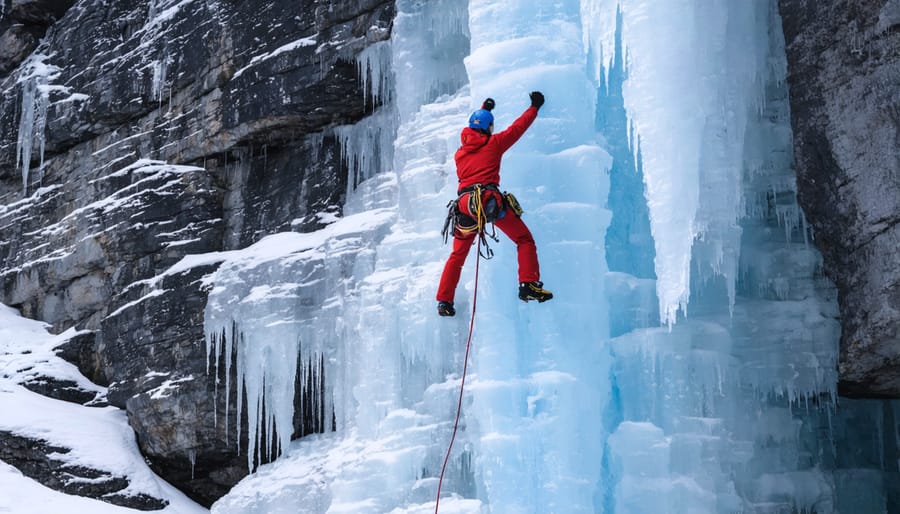
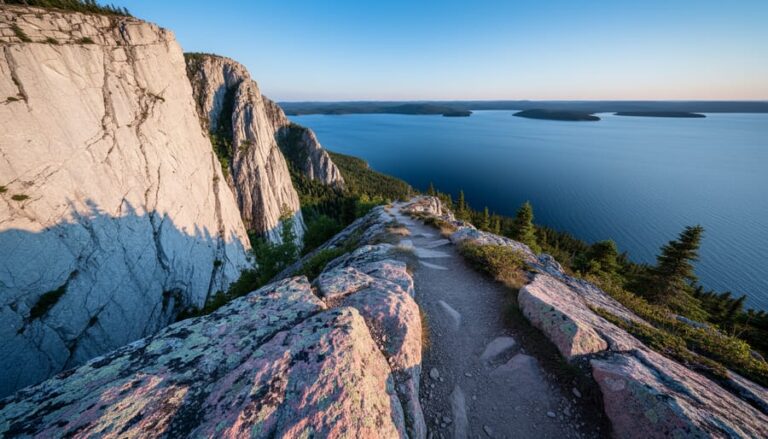
For adrenaline seekers looking to scale frozen waterfalls, Ontario offers some of North America’s most spectacular ice climbing destinations. Bon Echo Provincial Park stands out as a premier location, where towering cliffs meet the frozen waters of Mazinaw Lake. Here, climbers can tackle routes ranging from beginner-friendly pitches to challenging multi-pitch climbs that will test even seasoned veterans.
Orient Bay, located just north of Thunder Bay, is often called Ontario’s ice climbing paradise. The area boasts over 400 routes across various difficulty levels, with ice formations that typically form by mid-December and last well into March. The reliable conditions and easy access make it a favorite among local climbers and visitors alike.
Other notable spots include Diamond Lake near Temagami, featuring spectacular frozen waterfalls and consistently good ice conditions throughout winter. The Nipigon region offers both roadside classics and remote backcountry adventures for those willing to hike in.
Pro tip: Always check ice conditions before heading out, and consider hiring a local guide for your first few climbs. Many locations offer guided experiences that include all necessary equipment. Remember to practice Leave No Trace principles and respect closure periods, which typically occur during the spring thaw to protect nesting birds.
For the best experience, plan your climbing trips between January and March when ice conditions are typically most stable. Early morning starts are recommended to avoid climbing in direct sunlight, which can affect ice quality.
Essential Gear and Safety Tips
Before hitting the slopes for any extreme winter sport, ensuring you have the right essential safety equipment is non-negotiable. Start with a properly fitted helmet designed for winter sports – your regular bike helmet won’t cut it here! Layer up with moisture-wicking base layers, insulating mid-layers, and a waterproof outer shell to stay warm and dry.
Always carry an avalanche beacon, probe, and shovel when venturing into backcountry areas. A fully charged phone in an insulated case and a basic first-aid kit should be in your pack too. Pro tip: pack some hand and toe warmers – they’re lifesavers on those extra chilly Ontario days!
For sports like ice climbing, invest in proper crampons, ice axes, and climbing-specific gear rated for winter use. Keep your gear well-maintained and regularly check for wear and tear. Remember to always check weather conditions before heading out and never ride alone. Consider taking a winter safety course – local outfitters offer excellent programs for beginners. The more prepared you are, the more fun you’ll have pushing your limits safely!
Snowkiting: Flying High Over Ontario’s Winter Plains
Best Snowkiting Spots
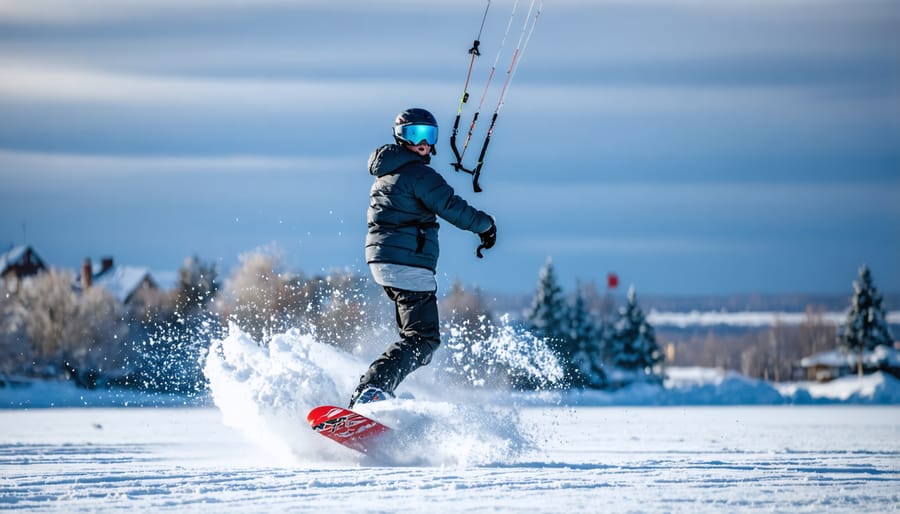
For adrenaline seekers looking to harness the power of winter winds, Ontario offers some of the best snowkiting spots in North America. Lake Simcoe stands out as a premier destination, with its vast frozen surface and reliable winter winds creating perfect conditions for both beginners and experienced kiters. The lake’s wide-open spaces provide plenty of room to practice your technique, while the surrounding shoreline offers convenient access points and parking.
Georgian Bay, particularly around Wasaga Beach and Collingwood, delivers an entirely different snowkiting experience. The bay’s consistent wind patterns and stunning backdrop of the Niagara Escarpment make it a favorite among enthusiasts. During peak winter months, you’ll often spot colorful kites dotting the sky as riders glide across the frozen bay.
Pro tip: Always check ice conditions before heading out, and consider joining one of the local snowkiting communities for safety tips and companionship. The best times for snowkiting are typically from January to March, when ice conditions are most reliable and winds are at their strongest. Don’t forget to pack hand warmers and wear layers – the wind chill can be intense when you’re cruising at high speeds across the ice!
Getting Started with Snowkiting
Ready to catch some wind? Snowkiting combines the thrill of skiing or snowboarding with the power of kite surfing, creating an exhilarating winter experience that’s gaining popularity across Ontario’s snow-covered landscapes.
To get started, you’ll need basic skiing or snowboarding skills – being comfortable with at least intermediate slopes is recommended. Most beginners start with a trainer kite to learn wind control and basic maneuvering techniques. Many Ontario ski resorts now offer snowkiting lessons, where certified instructors will guide you through the fundamentals in a controlled environment.
Essential equipment includes your skis or snowboard, a snow-specific kite (4-12 meters depending on your weight and wind conditions), a harness, safety gear, and warm, windproof clothing. Expect to invest around $1,500-2,000 for a complete beginner setup. Pro tip: start with used equipment or rentals to test the waters before making a big investment.
Look for wide-open spaces with consistent wind conditions – frozen lakes and large fields are perfect for learning. Just remember to always check ice conditions and wind forecasts before heading out!
Winter Fat Biking: Extreme Trail Riding
Epic Winter Biking Trails
For adrenaline seekers looking to push their winter biking boundaries, Ontario’s trail networks offer epic challenges that will test both skill and endurance. The Hydrocut Trails in Waterloo transform into a thrilling winter wonderland, featuring 30km of groomed single-track trails perfect for fat biking adventures. The hard-packed snow creates natural berms and jumps that add an extra layer of excitement to your ride.
Durham Forest’s extensive network becomes a fat biker’s paradise when blanketed in snow, with technical sections that will keep even experienced riders on their toes. Pro tip: The Pine Ridge section is particularly spectacular after a fresh snowfall, offering pristine powder conditions for early morning riders.
For the ultimate winter biking challenge, head to Blue Mountain’s Nordic Centre. The dedicated winter biking trails here range from beginner-friendly loops to expert-level technical descents that will get your heart racing. Don’t miss the infamous “Ice Flow” trail – it’s as challenging as it sounds!
Remember to always check trail conditions before heading out, and make sure your fat bike is equipped with proper winter tires. Many of these locations offer bike rentals if you’re just getting started in the sport.
Winter Biking Safety and Equipment
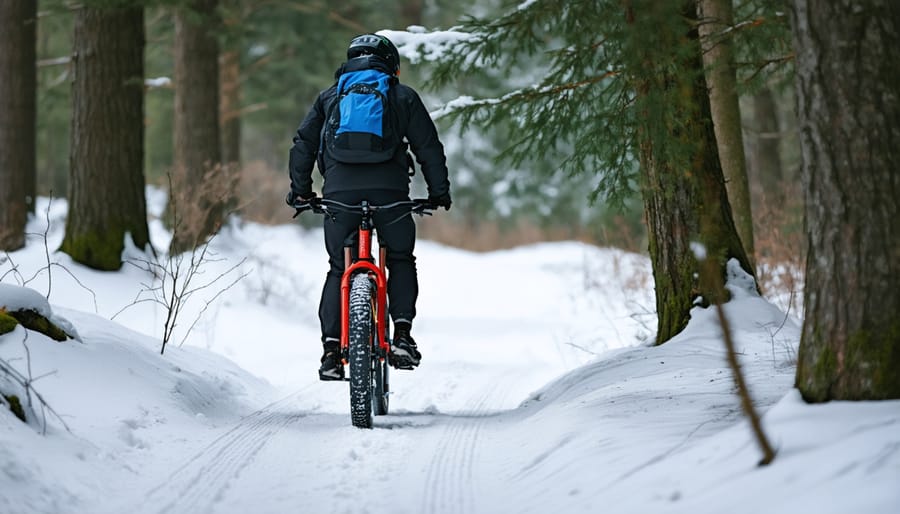
Winter fat biking demands proper preparation and the right gear to ensure both safety and enjoyment on snowy trails. Start with a quality fat bike featuring wide tires (typically 4-5 inches) for optimal stability and traction. Layer your clothing strategically – start with moisture-wicking base layers, add insulating mid-layers, and top with a windproof outer shell.
Essential gear includes studded tires for icy conditions, pogies (handlebar mittens) to keep your hands warm while maintaining control, and bright LED lights for shorter winter days. A helmet is non-negotiable, and consider adding ski goggles to protect your eyes from wind and snow.
Pro tip: Pack a small repair kit with basic tools and a spare tube – winter conditions can be tough on equipment. Always carry a charged phone and let someone know your planned route. Check trail conditions before heading out, and start with easier routes to build confidence in handling snow-packed terrain.
Remember to stay hydrated (even in cold weather) and bring high-energy snacks. Consider joining local winter biking groups – they’re great resources for trail recommendations and safety tips, plus it’s always more fun to ride with others!
Winter Wilderness Camping
Remote Winter Camping Locations
For the ultimate winter wilderness experience, Ontario offers several remarkable remote winter camping destinations that will test your survival skills. Algonquin Park’s backcountry trails provide secluded spots where you can pitch your four-season tent amid pristine snow-covered forests. The Missinaibi Lake Provincial Park offers challenging winter camping with the bonus of possible Northern Lights viewing.
For experienced winter campers, Woodland Caribou Provincial Park presents an untouched wilderness where you might spot its namesake caribou herds. These locations require thorough preparation, including proper winter camping gear and emergency supplies. Remember to check weather conditions and obtain necessary permits before heading out.
Pro tip: Consider booking a guided first trip if you’re new to winter camping. Local outfitters offer instruction in essential skills like snow shelter building and cold-weather fire starting. Always travel with a buddy and inform park officials of your planned route and timeline.
Survival Skills and Equipment
When venturing into extreme winter sports, mastering essential winter survival skills is just as crucial as nailing that perfect trick. Always carry a well-stocked emergency kit containing a multi-tool, fire starter, emergency blanket, and high-energy snacks. Layer your clothing wisely – start with moisture-wicking base layers, add insulating mid-layers, and top with waterproof outer shells.
Pro tip: invest in quality gear specific to your sport. Whether it’s ice climbing equipment or fat bike studded tires, cutting corners on safety gear isn’t worth the risk. Keep a satellite phone or emergency beacon for remote areas, and always check weather conditions before heading out.
Remember to pack extra batteries for all electronic devices – they drain quickly in cold temperatures. Stay hydrated with an insulated water bottle (regular bottles can freeze), and always let someone know your planned route and expected return time. These simple preparations could make all the difference in challenging winter conditions.
As we wrap up our journey through Ontario’s extreme winter sports scene, remember that the true essence of these thrilling activities lies in the perfect balance between adventure and responsibility. While the rush of ice climbing at Tiffany Falls or the exhilaration of snowkiting across frozen lakes can be intoxicating, always prioritize safety first. Proper equipment, training, and weather awareness aren’t just recommendations – they’re essential companions on your winter adventures.
Our province’s winter wonderland offers unprecedented opportunities for pushing your limits, but it’s crucial to do so while respecting and preserving these natural playgrounds for future generations. Whether you’re a seasoned adrenaline junkie or just beginning to explore the extreme side of winter sports, Ontario’s diverse landscape provides the perfect backdrop for your next adventure.
Remember to start within your comfort zone, gradually building your skills and confidence. Connect with local communities, join experienced groups, and never hesitate to seek professional guidance. The memories you’ll create, the skills you’ll develop, and the pristine winter wilderness you’ll experience make these extreme sports worth every careful preparation.
Stay safe, respect nature, and embrace the extraordinary winter adventures that await you in Ontario!





+ There are no comments
Add yours