
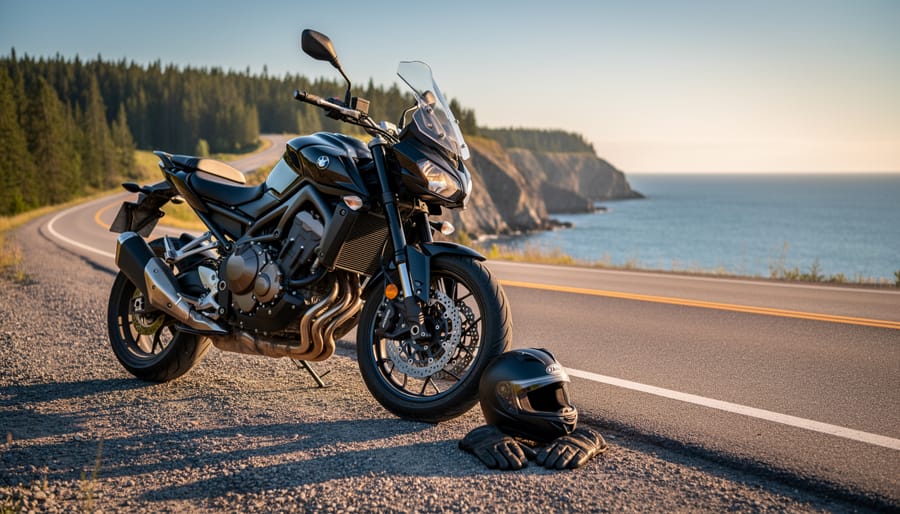
Ontario offers eight exceptional motorcycle routes that deliver everything from Great Lakes vistas to twisting forest roads, each designed to match different skill levels and scenic preferences. The best rides for 2026 span the Algonquin Loop for wildlife encounters, Lake Superior’s dramatic North Shore between Thunder Bay and Sault Ste. Marie, and the Niagara Escarpment Run that combines wine country with Bruce Peninsula wilderness. These aren’t just pretty roads. They’re carefully chosen routes that balance stunning natural scenery with practical considerations like fuel availability, road surface quality, and camping access.
I’ve ridden many of these routes myself, and what sets Ontario’s motorcycle touring apart is the sheer variety packed into a single province. You can carve through the granite landscapes of Muskoka’s Lake Country one weekend, then trace historic waterways along the Rideau Heritage Route the next. The Haliburton Highlands offer technical riders tight switchbacks and elevation changes, while the Frontenac Arch Loop provides gentler curves perfect for newer touring enthusiasts exploring Thousand Islands scenery.
Planning matters. Each route comes with specific insights on where to refuel (stations can be sparse in northern stretches), which seasons offer peak conditions, and how to minimize your environmental footprint while exploring Ontario’s protected natural spaces. Whether you’re after fall color tours through deciduous forests or summer rides past crystalline lakes, these eight routes give you concrete itineraries you can actually follow, not vague suggestions to “go explore.”
How We Ranked These Routes
We evaluated each route against a consistent set of criteria to ensure you get reliable, rider-focused recommendations for 2026. These aren’t just pretty roads, they’re complete touring experiences that deliver on scenery, ride quality, and practical logistics.
Here’s what we considered:
- Scenic diversity: variety of landscapes, natural features, and photo-worthy vistas
- Road quality and character: pavement conditions, curve density, and overall riding enjoyment
- Access to parks and natural attractions: proximity to provincial parks, conservation areas, and wilderness experiences
- Rider amenities: availability of fuel, food, camping, and emergency services along the route
- Skill level balance: whether the route welcomes beginners or demands advanced handling
- Eco-friendly touring potential: opportunities to minimize environmental impact and respect wildlife
Each route was assessed using current 2026 road conditions, seasonal accessibility patterns, and feedback from the riding community. We prioritized routes that offer something special, whether that’s technical challenge, stunning vistas, or a perfect combination of both, while ensuring you can actually complete the ride safely and enjoyably.
1. The Algonquin Loop: Forests, Wildlife, and Winding Roads
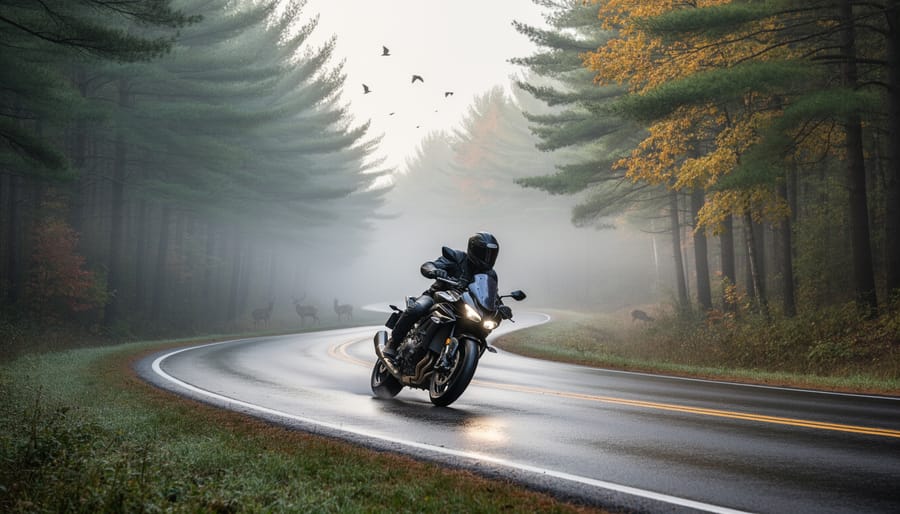
The Algonquin Loop delivers everything Ontario motorcyclists dream about: kilometer after kilometer of smooth asphalt carving through old-growth forest, where the next sweeping curve might reveal a moose grazing roadside or a lake shimmering through the pines. Highway 60, the park’s main corridor, runs 56 kilometers from the West Gate near Dwight to the East Gate at Whitney, and you’ll want to ride it multiple times to catch everything.
Start early from either gate to avoid summer traffic and maximize wildlife viewing. Moose are most active at dawn and dusk, so that 6 a.m. departure pays dividends, I’ve counted seven in a single morning ride. The road itself is a rider’s reward: well-maintained pavement with long sightlines, elevation changes that aren’t punishing, and enough technical curves to keep things interesting without overwhelming newer touring riders.
Plan stops at the Visitor Centre (kilometer 43 from the west) for trail maps and current wildlife reports, and the Lookout Trail (kilometer 39.7) for panoramic views worth the short walk. For overnight trips, Mew Lake Campground offers drive-in sites with decent facilities, while backcountry-accessible sites near Canoe Lake let you combine riding with paddle exploration.
Best riding window runs May through October, though September brings peak colors and fewer bugs. Respect posted speed limits, they’re set for wildlife protection, not revenue. Keep your distance from animals (minimum 30 meters), carry all trash out, and resist the urge to rev your engine in quiet zones. This park has been protected since 1893, and responsible riding ensures it stays accessible.
2. Lake Superior’s North Shore: Thunder Bay to Sault Ste. Marie
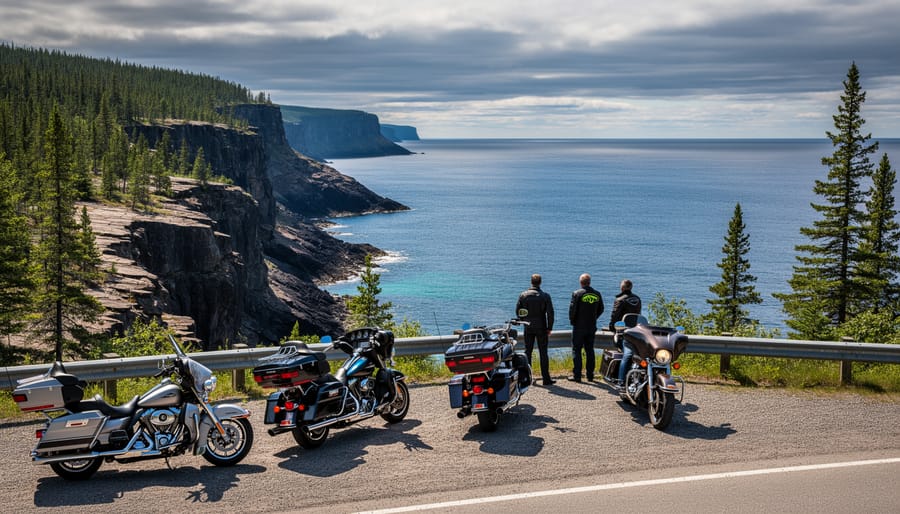
Riding Highway 17 between Thunder Bay and Sault Ste. Marie delivers some of the most dramatic coastal scenery you’ll find anywhere in North America. This 700-kilometre stretch hugs Lake Superior’s northern edge, where the Canadian Shield plunges into the world’s largest freshwater lake. The road twists through rugged rock cuts, reveals sudden panoramas of endless blue water, and passes beneath cliffs that glow pink and orange in the late afternoon sun.
Lake Superior Provincial Park, roughly halfway between the two cities, makes an ideal overnight stop. The Agawa Bay campground offers lakeside sites where you can hear waves crashing against the shore from your tent. Plan your fuel stops carefully here, service stations are sparse, with stretches of 100 kilometres or more between fill-ups. Wawa serves as the main refueling hub midway through the route.
Weather shifts fast along this coast. I’ve ridden through brilliant sunshine, sudden fog banks rolling off the lake, and unexpected squalls all in a single afternoon. Pack waterproof layers you can access quickly, and consider a heated vest for mornings when the lake breeze cuts through even summer gear. The shoulder seasons bring fewer bugs and stunning light, but check park closures before heading out in late fall.
Don’t miss the Agawa Rock Pictographs viewing area or the roadside lookouts north of Montreal River Harbour. Pull over at Katherine Cove for a leg stretch and photos that don’t do justice to the raw, lonely beauty stretching to the horizon.
3. The Rideau Heritage Route: Historic Waterways and Rolling Countryside
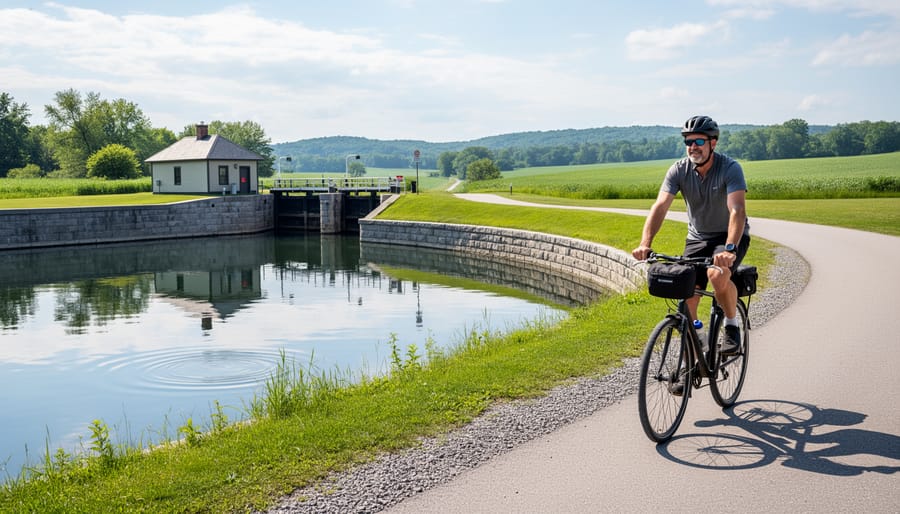
The Rideau Heritage Route offers a refreshing contrast to Ontario’s wilder Shield country, this is where history and scenery merge along smooth, forgiving roads perfect for riders still building confidence. The approximately 200-kilometer journey from Ottawa to Kingston traces the UNESCO World Heritage Rideau Canal through gentle farmland, limestone villages, and waterside vistas that feel lifted from a postcard.
Unlike the tight curves and elevation changes of northern routes, this ride lets you settle into a comfortable rhythm on well-maintained roads like County Road 15 and Highway 2. You’ll pass working lockstations where the canal’s 19th-century engineering still operates daily, offering natural stopping points to stretch, chat with lockmasters, and watch boats navigate the hand-cranked gates.
Plan stops in Perth for its stone architecture and bakery cafes, Merrickville for antique browsing and canal-side lunch spots, and Westport at the head of Upper Rideau Lake. These aren’t just photo ops, they’re genuine small-town experiences where local diners know regulars by name and fresh butter tarts are always on offer.
The route shines in late spring when wildflowers blanket the roadsides and fall when maples frame the waterways in gold. New riders appreciate the minimal traffic, frequent services, and escape routes back to main highways. Build in extra time for spontaneous detours, a farmers’ market, a historical plaque, a perfectly positioned bench overlooking the canal. This route rewards wandering rather than rushing, making it ideal for riders who want substance beyond the scenery.
4. The Frontenac Arch Loop: Thousand Islands Splendor
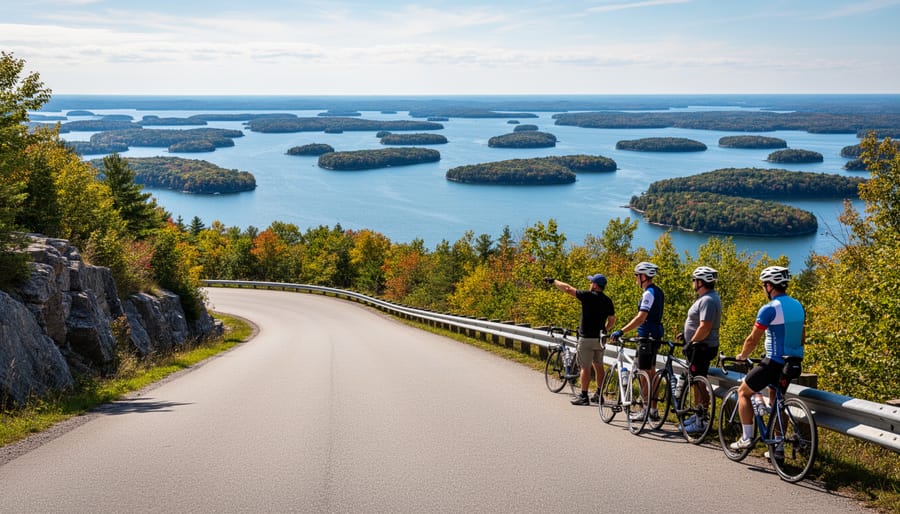
The Frontenac Arch Loop offers a geological marvel on two wheels, tracing the ancient granite bridge that connects the Canadian Shield to the Adirondacks beneath the St. Lawrence River. This route winds through one of North America’s most distinctive biosphere reserves, where billion-year-old rock formations meet the shimmering waters of the Thousand Islands.
Start in Gananoque and follow County Road 5 north toward Perth, a 160-kilometre loop that reveals why this area earned UNESCO recognition. The roads here aren’t about hairpin turns or high-speed sweeps, they’re about rhythm and discovery, flowing through mixed hardwood forests, past granite outcrops, and around sudden glimpses of island-dotted waterways. Highway 15 and County Road 10 complete the circuit, offering varied perspectives on this unique landscape where southern Ontario’s farmland gradually gives way to Shield country.
Frontenac Provincial Park sits at the heart of this route, a 5,214-hectare wilderness reserve that’s perfect for overnight camping or base-camp touring. The park’s backcountry sites require paddling in, but the main entrance parking area welcomes day riders exploring the trail system on foot. For those wanting pavement-accessible camping, Charleston Lake Provincial Park lies twenty kilometres south via County Road 3, offering lakeside sites and modern amenities.
The loop works beautifully as either a leisurely day ride with lunch in Perth’s heritage downtown or a weekend adventure combining camping, hiking, and exploration of the region’s interconnected waterways. Fuel up in Gananoque or Perth, services thin out considerably between these hubs.
5. Muskoka’s Lake Country: Cottage Roads and Granite Outcrops
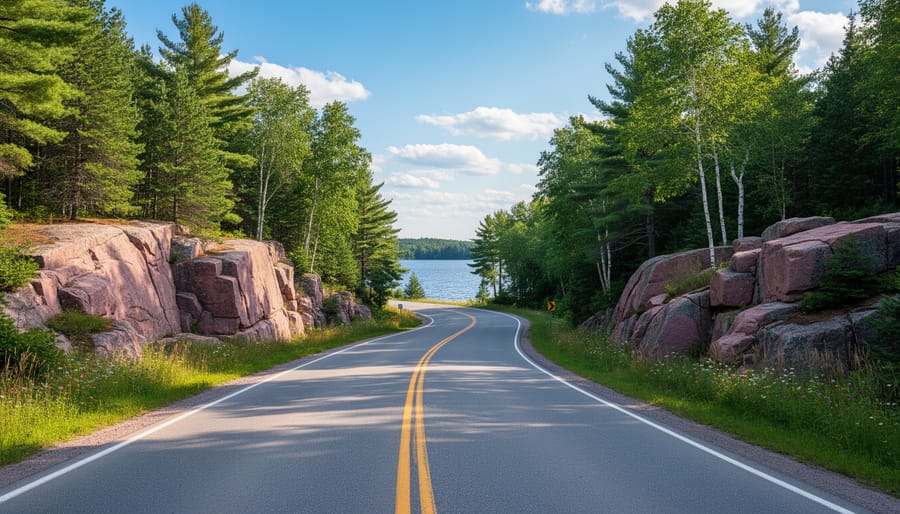
Muskoka delivers postcard-perfect Canadian Shield riding through a maze of granite outcrops, mirror-like lakes, and pine-scented forests that define Ontario’s cottage country character. Highway 141 from Rosseau to Foot’s Bay serves up tight curves carved between rock faces and water views, while Highway 118 offers a faster-paced run from Bracebridge to Baysville with sweeping elevation changes. Highway 169 threads north from Bala through the heart of lake country, passing Torrance Barrens Dark-Sky Preserve and connecting to countless cottage-road loops where you can dial back the pace and soak in the scenery.
Summer weekends bring bumper-to-bumper traffic on main routes as cottagers head north, so plan your riding for weekday mornings or shoulder seasons, early June and September offer empty roads with bonus wildflowers or fall color. Gas up in major towns like Huntsville or Gravenhurst; rural stations close early. For accommodations, Port Carling’s Sherwood Inn welcomes bikers with secure parking, and Dwight has budget-friendly motels right on Highway 60. Arrowhead Provincial Park near Huntsville provides excellent camping with hot showers and easy access to the Highway 11 corridor, book sites well ahead for July and August.
Pack a lock and cover; resort-town parking lots see occasional theft. The reward for navigating the crowds is riding through landscape that captures everything outsiders picture when they think “Canada”, endless blue water, wind-bent pines clinging to pink granite, and that distinct north-country light filtering through the trees.
6. The Niagara Escarpment Run: Wine Country to Bruce Peninsula
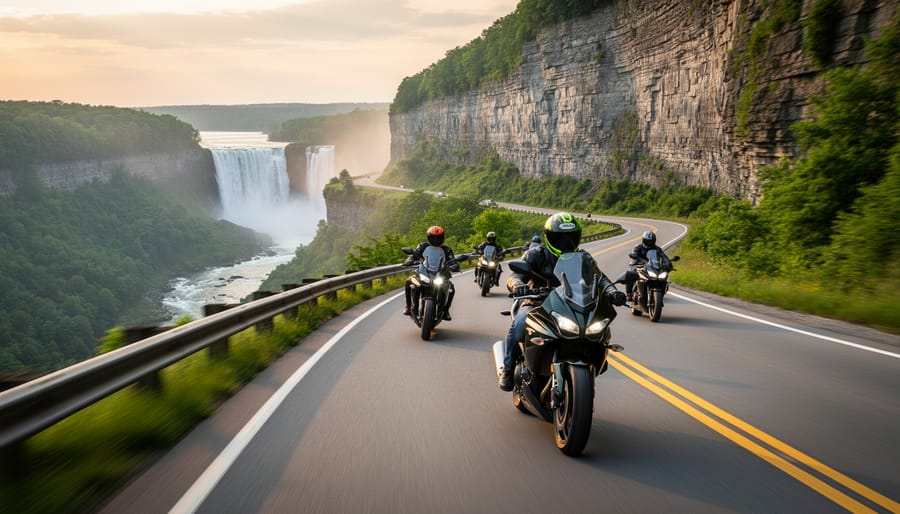
This route delivers some of Ontario’s most dramatic elevation changes without leaving Southern Ontario. Starting in Niagara wine country, you’ll climb the escarpment through a landscape shaped by ancient seas, then follow this limestone spine northwest for over 700 kilometres to where it plunges into Georgian Bay at Tobermory.
The southern section rewards you with world-class wineries between riding sessions. Stop in Jordan or Beamsville to sample VQA wines and grab lunch at vineyard bistros offering locally-sourced menus. As you head north through Hamilton and beyond, watch for roadside fruit stands selling fresh peaches, cherries, and apples depending on season.
The escarpment reveals itself through constant elevation shifts and tucked-away waterfalls. Webster’s Falls near Dundas makes an easy detour, while the Forks of the Credit Road north of Caledon offers tight switchbacks through a forested gorge that’ll test your cornering skills. These twisty sections contrast beautifully with the straighter stretches where you can settle into the rhythm and enjoy sweeping views across the Niagara Peninsula or Georgian Bay.
Bruce Peninsula National Park marks your northern terminus, with the Grotto’s turquoise waters and limestone cliffs providing a stunning finale. From Tobermoy, the Chi-Cheemaun ferry crosses to Manitoulin Island if you want to extend your trip, connecting you to routes along the Northern canoe trail corridor in wilderness territory.
Ride this route May through October. Spring brings rushing waterfalls; autumn paints the escarpment in brilliant colours but draws heavy weekend traffic to wine country and the Bruce.
7. The Haliburton Highlands: Twists, Turns, and Fall Colors
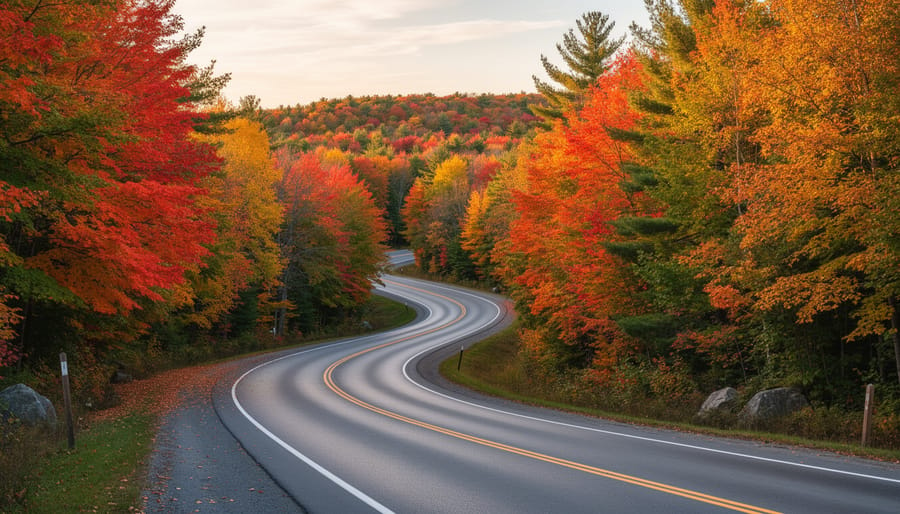
The Haliburton Highlands deliver what many riders consider Ontario’s most rewarding technical riding. This region’s tight curves, sudden elevation shifts, and forested hills make every kilometre engaging, especially through September and early October when the hardwood canopy explodes in crimson and gold.
Your ideal loop starts in Minden, heads north on Highway 35 to Dorset, then cuts east on Highway 118 toward Bancroft before looping back south through Haliburton on County Road 121. This 200-kilometre circuit packs in relentless corners and Shield scenery without pushing into marathon territory. Highway 118 between Carnarvon and Bancroft offers particularly satisfying switchbacks as you climb and descend granite ridges.
Peak colour typically hits between September 20 and October 10, though exact timing shifts with each year’s weather patterns. Mid-week rides in September avoid the weekend traffic that can clog these popular roads during peak foliage. For overnight trips, Haliburton Forest offers backcountry campsites accessible by short hikes from designated parking areas, while Silent Lake Provincial Park provides drive-in camping with excellent facilities.
When planning with routing tools, you’ll find dozens of variations connecting these towns. Local riders often plan route itineraries that explore quieter county roads radiating from the main highways, discovering hidden lookouts and less-travelled pavement.
Ride responsibly on busy fall weekends: these narrow roads attract leaf-peepers, cyclists, and slower-moving traffic. Early morning departures give you clearer roads and better light for photography when mist still clings to the valleys.
8. The Ottawa Valley Tour: River Views and Wilderness Access
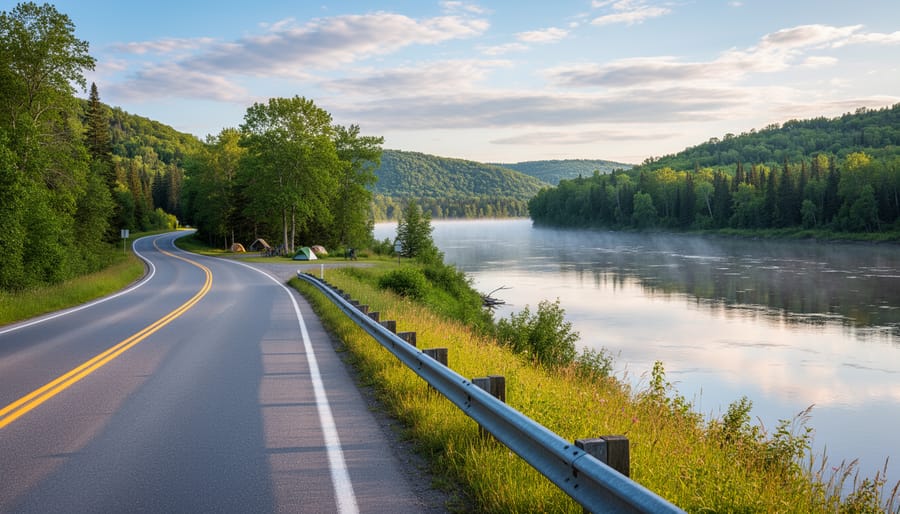
The Ottawa Valley Tour offers riders a compelling blend of wide river vistas and wilderness solitude. Following Highway 17 northwest from Ottawa, you’ll trace the south shore of the Ottawa River through a landscape that transitions from settled farmland to dense boreal forest. The route opens up spectacular views across the water to Quebec’s Laurentian hills, with frequent pullouts where you can pause and watch rafters navigating whitewater or catch the glint of sunset on the river’s broad expanse.
What sets this tour apart is its flexibility. You can ride it as a direct run to Mattawa and beyond, or use it as a jumping-off point to Algonquin’s less-traveled eastern entrances near Brent and Achray. These access roads offer tight, technical riding through old-growth pine stands, a dramatic contrast to the highway’s sweeping curves. For multi-day itineraries, consider combining this route with the Algonquin Loop or continuing north toward Temagami for true backcountry exploration.
Fuel planning matters here. Reliable stations are spaced roughly 80-100 kilometers apart once you pass Pembroke, so top up your tank at Renfrew, Pembroke, or Deep River. Don’t wait until you’re running on fumes. For camping, Samuel de Champlain Provincial Park near Mattawa provides excellent riverside sites with hot showers, while crown land camping options abound for experienced riders who know how to camp responsibly.
When building your itinerary and local tips from fellow riders can prove invaluable for discovering hidden lookouts and seasonal road conditions that don’t appear on official maps.
Planning Your Ontario Motorcycle Scenic Tour
Combining these routes into a multi-day adventure is where the real magic happens. The Algonquin Loop pairs beautifully with the Haliburton Highlands for a long weekend of Shield country riding, while the Frontenac Arch Loop connects naturally to the Rideau Heritage Route for history buffs. Consider travel time between routes, most are 2-4 hours apart, making it easy to sample different landscapes in a week-long tour.
Seasonal timing dramatically shapes your experience. May through June offers cooler temperatures, fewer crowds, and spring wildflowers, though some remote campsites might not open until late May. July and August bring warm weather and full park services but heavier traffic, especially in Muskoka. September through October delivers those legendary fall colors in Haliburton and Algonquin, book camping ahead, as this is peak touring season.
Before you roll out, make sure you’ve covered these essentials:
- Weather-appropriate riding gear including rain protection and layers for Shield country temperature swings
- Spare fuel capacity or detailed fuel stop planning for remote routes like Lake Superior’s North Shore
- Park permits and camping reservations (Ontario Parks bookings open five months ahead for 2026)
- Updated road condition reports from Ontario 511 or regional tourism sites
- Wildlife awareness plan, dusk and dawn are prime moose and deer crossing times
Practice eco-friendly touring by sticking to designated roads and campsites, packing out all waste, and maintaining safe distances from wildlife, moose encounters require at least 50 meters clearance. Keep noise levels respectful in park zones. For current conditions and detailed route maps, check Ontario Parks’ official website and local tourism boards, which update road status weekly during riding season.
Frequently Asked Questions
Looking back on rides I’ve done across Ontario, the same practical questions come up every time I meet riders planning their first touring trips. Here’s what you need to know before you head out.
What’s the best time of year for motorcycle touring in Ontario?
Late May through early October offers the most reliable weather, with September being ideal for fewer bugs, lighter traffic, and spectacular fall colors in routes like the Haliburton Highlands. Northern routes like Lake Superior’s North Shore open fully by mid-May and are most comfortable June through September.
Are these routes suitable for beginner riders?
The Rideau Heritage Route and Frontenac Arch Loop offer gentle curves and good road conditions perfect for newer riders, while the Haliburton Highlands and sections of Muskoka demand more experience with tight turns and elevation changes. Start with easier routes and build confidence before tackling challenging terrain.
Should I camp or stay in hotels along these routes?
Camping in provincial parks puts you right in the scenery and costs less, with excellent facilities at Algonquin, Killarney, and Bruce Peninsula. Hotels and B&Bs work better if you prefer not carrying camping gear or want to ride lighter, with good options in Muskoka towns and along the Niagara Escarpment.
How do I check current road conditions before heading out?
Ontario 511 provides real-time highway updates, while individual park websites list seasonal road closures and construction alerts. Local motorcycle forums and social media groups often share current conditions riders encounter on popular routes.
What should I know about wildlife safety on these rides?
Moose are active at dawn and dusk especially in Algonquin and northern routes, so adjust your speed and stay alert during those hours. Never approach wildlife for photos, store food properly at campsites, and give animals plenty of space if you encounter them on the road.
Where can I find detailed route maps and GPS files?
Ontario Parks websites provide official maps for park routes, while rider communities on platforms like Scenic and Kurviger share GPS tracks for popular touring loops. Print backup maps since cell coverage can be spotty on remote northern stretches.
These answers cover the basics, but every rider develops their own preferences once they spend time on Ontario roads. The key is starting with solid preparation and letting your experience guide future trips.
From the thundering cliffs of Lake Superior to the gentle roll of Rideau’s waterways, these eight routes showcase why Ontario ranks among North America’s premier motorcycle touring destinations. Each offers its own character: the wildlife-rich curves of Algonquin, the technical challenges of Haliburton’s highlands, the geological drama of the Niagara Escarpment. What ties them together is the sheer variety you can experience without crossing a border.
Ride these routes with respect for the landscapes that make them special. Keep your speed appropriate for conditions, pack out what you pack in, and give wildlife the space they need. The parks and backroads that create these memorable experiences depend on all of us treating them as the shared treasures they are.
Your perfect Ontario motorcycle tour might combine three of these routes into a week-long adventure, or it might be a single afternoon exploring a new county road you’ve never tried. The beauty of riding here is that discovery doesn’t end with this list. Between these ranked routes lie hundreds of connecting roads, each with its own vista, each worth exploring. Fire up your bike, check your gear, and find your own favorite stretch of Ontario pavement.


+ There are no comments
Add yours