
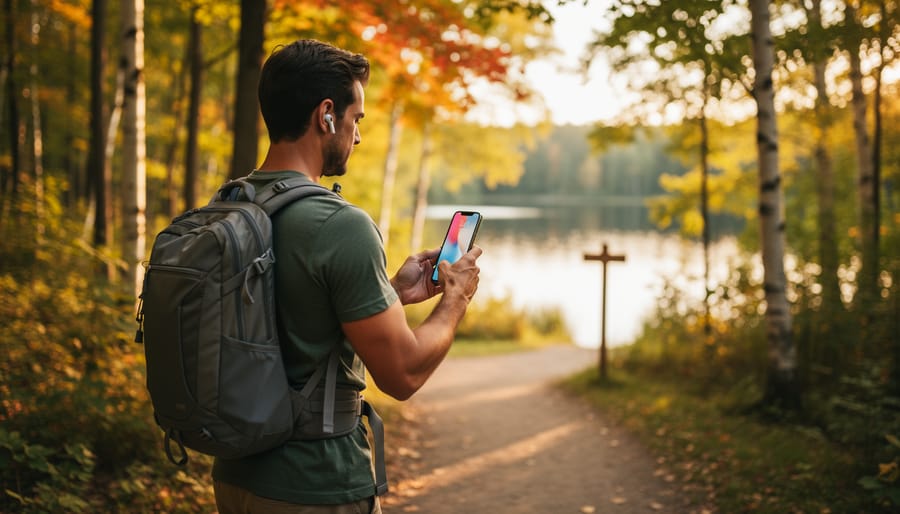
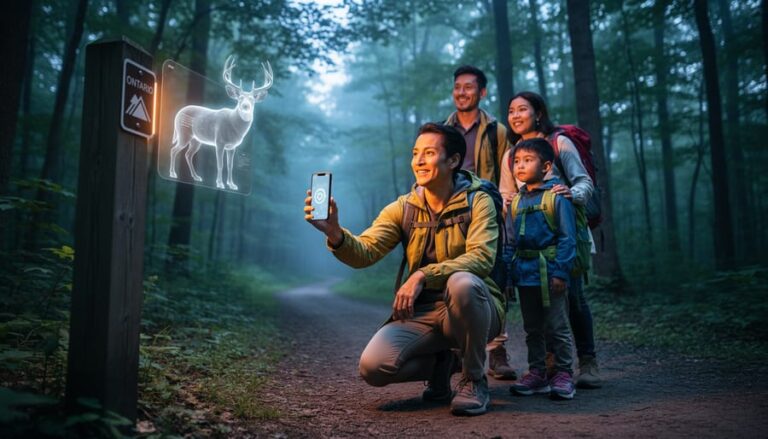
Picture yourself standing at the trailhead of Algonquin Park, pulling out your phone, and asking a question about the best wildlife viewing spots nearby. Within seconds, an AI chatbot responds with personalized recommendations based on the current season, recent animal sightings, and your fitness level. This isn’t science fiction—it’s the emerging reality of online chatbots transforming how we explore Ontario’s natural spaces.
These intelligent digital guides are revolutionizing outdoor tourism by offering instant, customized advice that once required visitor center staff or thick guidebooks. Whether you’re planning a family camping trip to Bruce Peninsula or seeking hidden waterfalls in Muskoka, AI chatbots now provide 24/7 assistance that adapts to your specific interests and needs.
What makes these tools particularly exciting for nature lovers is their ability to enhance your experience without disrupting it. Unlike constantly checking multiple websites or apps, you simply ask questions in plain language—”Where can I see fall colours this weekend?” or “Which trails are stroller-friendly?”—and receive tailored responses that help you make informed decisions quickly.
The technology works by processing vast amounts of park data, visitor reviews, real-time conditions, and tourism information, then delivering relevant answers through natural conversation. For eco-conscious travelers, this means less time planning and more time actually experiencing Ontario’s incredible landscapes, all while reducing paper waste from printed materials and making outdoor adventures more accessible to everyone, regardless of their experience level.
What Makes AI Chatbot Tours Different from Traditional Park Visits
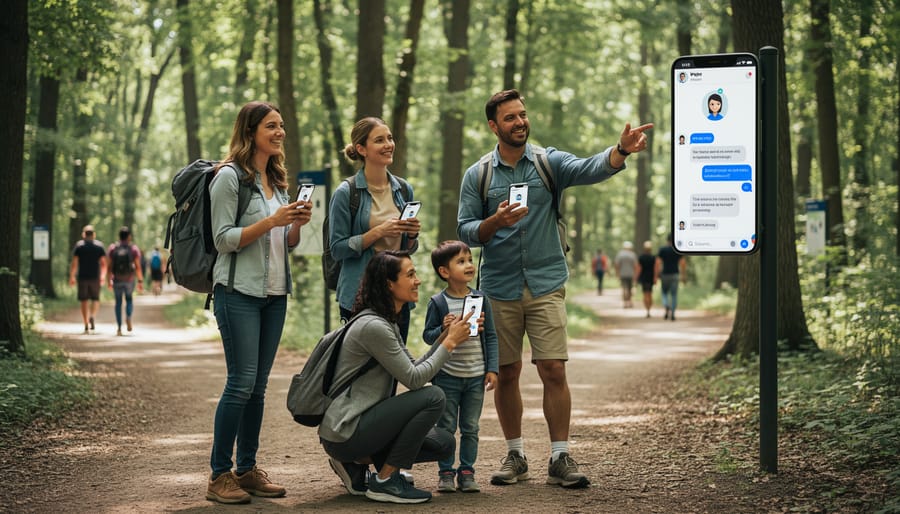
The Story Unfolds as You Walk
Picture this: you’re hiking a woodland trail, and as you round a bend near a massive granite outcrop, your phone chimes gently. The AI chatbot knows exactly where you are and starts sharing a geological story about how this billion-year-old rock formed during the creation of the Canadian Shield. Walk another hundred meters, and it shifts seamlessly to tell you about the Indigenous peoples who used this very path as a trading route centuries ago.
This is the magic of location-aware chatbots. Using your phone’s GPS, these digital guides deliver perfectly timed narratives that match your exact position on the trail. When you pause by a beaver pond, the chatbot might explain the ecological importance of these natural engineers and how they create wetland habitats. Pass through a white pine grove, and you’ll hear about the trees’ cultural significance and their role in Ontario’s logging history.
Unlike traditional audio tours that you control manually, or AR storytelling experiences that require holding up your device, these chatbots work conversationally in the background. You can ask follow-up questions naturally, like “What birds might I see here?” or “Tell me more about that plant,” and receive instant, contextual answers.
The experience feels wonderfully organic, as if a knowledgeable naturalist is walking alongside you, sharing insights precisely when they’re most meaningful to your journey.
Ask Questions, Get Real Answers
One of the most delightful features of AI chatbots on Ontario park trails is their ability to satisfy your curiosity on the spot. Spotted an unusual wildflower along the Bruce Trail? Simply snap a photo, ask the chatbot, and within seconds you’ll learn whether it’s a trillium or a trout lily, plus when it typically blooms. My friend Sarah used this feature last summer when her kids kept asking about mysterious paw prints near their campsite—turns out they were tracking a red fox!
These chatbots excel at answering those spontaneous questions that pop up during your adventures. Want to know why beaver dams are so important to wetland ecosystems? Curious about the best time to spot migrating monarch butterflies? Just ask. The technology draws from extensive databases of local flora, fauna, and conservation information, delivering answers that feel like chatting with a friendly park naturalist.
Here’s an insider tip: the chatbots become smarter with each interaction, learning what visitors most want to know. This means you’re not just getting answers—you’re helping improve the experience for future nature lovers while deepening your own connection to Ontario’s incredible natural spaces.
Real Examples: AI Chatbots Already Working in Ontario’s Outdoors
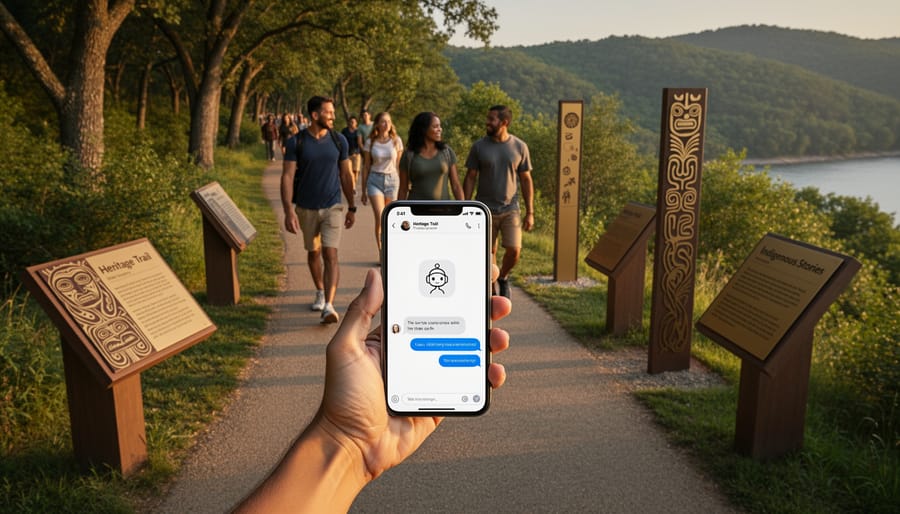
Heritage Trail Storytellers
Imagine walking along a historic portage route and pulling out your phone to hear from someone who actually paddled those waters two centuries ago. That’s the magic heritage trail chatbots are bringing to Ontario’s historic sites. These AI storytellers take you beyond the standard plaques and signs by letting you chat with virtual characters representing different perspectives from the past.
At some trails, you might text with a fur trader describing the challenges of wilderness travel, then switch to hear from an Anishinaabe elder sharing traditional ecological knowledge about the same landscape. The chatbot adapts to your questions, so if you’re curious about what people ate, how they navigated, or why certain places held spiritual significance, you get personalized answers that feel surprisingly human.
Here’s an insider tip: these chatbots often include ecological timelines showing how the landscape has changed over centuries. Ask about specific plants or animals you spot on your hike, and you’ll discover how Indigenous peoples used them and how ecosystems have shifted. It’s like having a knowledgeable guide in your pocket who never gets tired of questions. The technology works offline too once downloaded, making it perfect for remote heritage sites where cell service gets spotty.
Wildlife Encounter Guides
Picture this: you’re hiking through Algonquin Park when you spot mysterious tracks in the mud or hear an unfamiliar bird call echoing through the trees. Instead of wondering what creature passed by, you can now pull out your phone and chat with an AI wildlife guide that helps you identify what you’ve encountered in seconds.
These intelligent chatbots act like having a naturalist in your pocket. Simply describe what you’re seeing—a red bird with black wings, unusual footprints, or even upload a photo—and the AI provides instant identification along with fascinating details about the animal’s behavior and habitat. What really makes this technology shine is its ability to offer safety tips tailored to your specific situation. Encountered a black bear? The chatbot explains proper distance protocols and what behaviors to watch for.
The AI doesn’t just identify species; it connects the dots in the ecosystem around you. Ask about that woodpecker you spotted, and you’ll learn how it relates to the dead trees nearby and which insects it’s hunting. It’s like having a conversation with an expert who makes every wildlife encounter a mini-lesson in Ontario’s incredible biodiversity, helping you appreciate the delicate balance of nature while keeping both you and the animals safe.
How to Get Started with AI-Guided Park Adventures
What You’ll Need Before You Hit the Trail
Good news—getting started with AI chatbot trail guides doesn’t require fancy equipment! Your regular smartphone (Android or iOS from the past 3-4 years) works perfectly fine. Before heading out, download your chosen park’s app or chatbot platform while you’re still home on wifi. Most AI trail companions are lightweight apps under 100MB, though downloading trail maps for offline use can add another 50-200MB depending on park size.
Here’s an insider tip I learned the hard way: cellular data can be spotty once you venture deeper into Ontario’s wilderness areas. Many modern trail chatbots now offer offline modes that download AI responses and trail information beforehand, though you’ll want to check this feature before leaving civilization. If your chosen app requires connectivity, stick to trails closer to park offices or main routes where signal is more reliable.
Battery life is your biggest consideration when combining smart outdoor technology with longer hikes. I always bring a fully-charged portable battery pack (10,000mAh handles a full day easily) and enable low-power mode. The eco-friendly approach? Use airplane mode between chatbot interactions to conserve energy while still accessing downloaded content.
Insider Tips for the Best Experience
Here’s my insider secret: download all your AI chatbot content and maps before you hit the trail. I learned this the hard way during a hike in Algonquin Park when my signal dropped just as the chatbot was about to tell me about a historic portage route. Now I always grab everything while I’m still at the visitor center or parking lot.
Voice commands are your best friend when you’re on the move. Keep your phone in a secure pocket and use voice activation to ask questions hands-free. This way, you can keep your eyes on the trail and your hands free for those tricky rocky sections.
Don’t let the AI completely replace traditional exploration though. I like to use chatbots for about 30 percent of my experience and spend the rest simply being present in nature. Let the AI enhance those quiet moments rather than dominate them. Try this approach: use the chatbot at viewpoints or rest stops, then tuck your phone away while you’re walking between destinations.
For families, designate one person as the “AI guide” who shares interesting facts with the group. This creates conversation and keeps everyone engaged without everyone being glued to their screens.
The Eco-Friendly Benefits You Might Not Expect
Here’s something I didn’t expect when I first started using AI chatbots on park trails: they’re actually doing Mother Nature a solid favor. Think about it – every time you pull up a digital guide instead of grabbing a printed map at the visitor center, that’s one less piece of paper in the world. Multiply that by thousands of visitors across Ontario’s parks, and we’re talking about serious tree-saving potential.
But the eco-benefits go way beyond skipping the paper trail. These digital guides mean parks don’t need as many physical kiosks, interpretation centers, or constantly replaced signage scattered throughout sensitive areas. Less construction, fewer materials, and reduced maintenance crews trampling through delicate ecosystems. It’s a lighter footprint in every sense.
What really impressed me was how chatbots can be genuine conservation educators. During a recent hike, my AI guide gently reminded me about Leave No Trace principles right when I was about to set my backpack on a patch of wildflowers. It wasn’t preachy – just a quick, “Hey, those trilliums are protected species! Mind using that rock instead?” These conversational nudges work way better than stern warning signs.
The chatbots I’ve tried also share fascinating tidbits about local conservation efforts. One explained how my park entrance fee was funding wetland restoration, complete with before-and-after descriptions that made me genuinely excited about habitat recovery. Another gamified the experience, awarding virtual badges for spotting invasive species and logging wildlife sightings that help researchers.
The beauty is that these digital companions can update instantly with current conditions – alerting you to trail closures that protect nesting birds or redirecting traffic away from sensitive areas during migration seasons. It’s real-time conservation education that traditional materials simply can’t match, all while keeping your wilderness experience wonderfully low-impact.
What This Means for Families and Solo Explorers
AI chatbot tours aren’t just a one-size-fits-all novelty—they’re genuinely transforming how different types of visitors experience Ontario’s natural spaces, making adventures more engaging and accessible for everyone.
Families with kids know the struggle: keeping young explorers interested during nature walks can feel like herding squirrels. That’s where chatbot companions shine. Children naturally gravitate toward interactive technology, and when that tech asks them questions, shares fun facts about beaver dams, or turns a forest trail into a scavenger hunt, suddenly the “are we there yet?” complaints disappear. One family I spoke with at Algonquin told me their 8-year-old spent the entire evening asking follow-up questions to their chatbot guide about wolves—something no printed brochure could’ve sparked. The conversational format meets kids where they already are: curious and comfortable with digital interactions.
Solo travelers gain something equally valuable but different: companionship without intrusion. Exploring alone offers freedom, but it can also feel isolating or uncertain. A chatbot provides that friendly voice sharing insights about the trail ahead, safety reminders about weather changes, and even suggestions for the best sunset viewing spots—all without requiring you to join a group tour or worry about keeping pace with strangers. It’s like having a knowledgeable friend in your pocket who never gets tired or judgmental.
The accessibility benefits extend even further. Visual learners can request images and maps, while those who process information better through conversation can ask for explanations in different ways until concepts click. People with mobility considerations can preview trail difficulty through detailed chatbot descriptions before committing to a route, reducing anxiety and helping plan realistic adventures. Audio features support visitors who prefer listening over reading.
Here’s an insider tip: download your chatbot tour content before heading into areas with spotty cell service. Most platforms offer offline modes that still deliver the interactive experience without draining your data or leaving you stranded mid-conversation when the signal drops.
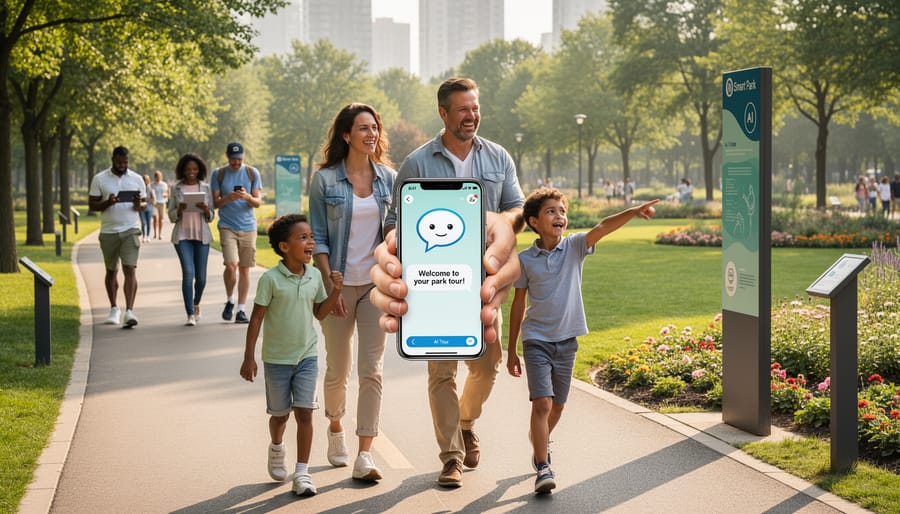
Here’s the truth about AI chatbots in Ontario’s parks: they’re not here to replace the rustling leaves overhead or the thrill of spotting a heron by the water’s edge. Instead, they’re your pocket-sized park companion, quietly enhancing every moment you’re already out there experiencing. Think of them as that knowledgeable friend who knows all the best trails and hidden viewpoints, available whenever you need them.
On your next park visit, I encourage you to give an AI-guided experience a try. Download the park’s app before you head out, start a conversation with the chatbot when you reach a trailhead, and see where the adventure takes you. You might discover a Indigenous history story you never knew existed, or learn why that particular wildflower only blooms in this exact spot. The technology works best when you’re fully present in nature, using it as a tool to deepen your understanding rather than a screen to stare at continuously.
What excites me most about this innovation is how it’s opening Ontario’s incredible outdoor spaces to everyone. Families with curious kids get instant answers to endless questions. Visitors with mobility challenges can plan accessible routes with confidence. International travelers can explore with multilingual support. Nature newcomers feel welcomed rather than intimidated.
The future of outdoor exploration isn’t about choosing between technology and nature. It’s about using smart tools to forge stronger, more meaningful connections with the wild spaces around us. Ontario’s parks have never been more accessible, engaging, or ready to share their stories with you.











+ There are no comments
Add yours