

Standing at the base of a towering cliff face, heart pounding with anticipation, you’re about to embark on one of life’s most exhilarating challenges. Ontario’s diverse climbing landscape offers everything from beginner-friendly crags at Rattlesnake Point to advanced waterfall rappelling adventures in the Frontenac wilderness. Whether scaling the granite walls of Bon Echo Provincial Park or tackling the limestone escarpments of the Niagara region, each expedition promises a unique blend of technical challenge and natural wonder.
Pack your gear, check your ropes, and prepare for an adventure that will test your limits while rewarding you with unparalleled views of Ontario’s spectacular wilderness. From the crisp morning air at the crag to the triumphant moment you reach the summit, climbing expeditions offer more than just physical challenges – they’re transformative experiences that forge lasting connections with fellow climbers and the raw beauty of our natural world.
Start planning your vertical adventure today – the rocks are calling.
Top Rock Climbing Destinations in Ontario
Bon Echo Provincial Park
Standing proudly along the shores of Mazinaw Lake, Bon Echo’s towering 100-meter granite cliffs offer some of Ontario’s most spectacular climbing opportunities. These ancient Canadian Shield cliffs, known as Mazinaw Rock, feature over 200 documented routes ranging from beginner-friendly single pitches to challenging multi-pitch adventures that will test even seasoned climbers.
The cliff face stretches for more than a kilometer, with routes typically ranging from 5.7 to 5.12 in difficulty. What makes Bon Echo truly unique is its boat-access-only approach – climbers must paddle across Mazinaw Lake to reach the base of the routes, adding an exciting dimension to the climbing experience.
Popular multi-pitch routes like “Chicken Delight” and “The Bell Curve” offer stunning views of the lake and surrounding wilderness. The rock quality is exceptional, featuring solid granite with excellent crack systems and face climbing options. However, due to the remote nature of the climbs and water approach, proper planning and safety equipment are essential.
Pro tip: Book your climbing permit in advance during peak season (July-August), and consider hiring a local guide for your first Bon Echo experience.
Lion’s Head
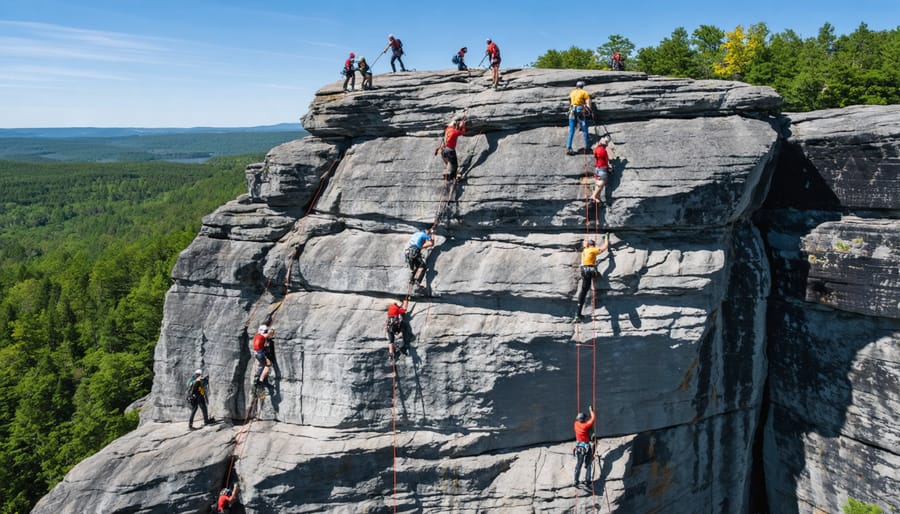
Perched majestically along the Niagara Escarpment, Lion’s Head offers some of Ontario’s most stunning limestone climbing opportunities. The cliffs rise dramatically above the crystal-clear waters of Georgian Bay, creating a breathtaking backdrop for your climbing adventure. With over 200 routes ranging from beginner-friendly to expert-level challenges, these white limestone cliffs have become a must-visit destination for climbers from across North America.
The area is particularly renowned for its pristine rock quality and the unparalleled views of the turquoise waters below. On clear days, climbers can spot Flower Pot Island in the distance while ascending routes that range from 20 to 40 meters in height. The cliff face features numerous pockets, crimps, and technical faces that make each climb unique and engaging.
For the best experience, visit during late spring or early fall when temperatures are moderate and the rock is dry. The main cliff area is accessible via a scenic 15-minute hike through dense forest, offering glimpses of local wildlife and native plants along the way. Remember to pack a camera – the sunset views from the top of these routes are simply unforgettable.
Niagara Glen
Nestled within the Niagara Gorge, the Niagara Glen offers world-class bouldering opportunities amid ancient geological formations. This natural wonderland features over 800 boulder problems scattered across massive limestone blocks that broke away from the gorge thousands of years ago. The area’s unique microclimate creates perfect climbing conditions throughout most of the year, with the best seasons being spring and fall.
What makes the Glen truly special is its mix of technical and powerful problems, ranging from beginner-friendly V0s to challenging V12s. The quality of the rock is exceptional, with features shaped by prehistoric glacial activity. Between climbs, you can explore primitive hiking trails and spot rare Carolinian forest species.
Remember to obtain a bouldering permit from the Niagara Parks Commission before climbing, and always bring a crash pad and climbing partner for safety.
Planning Your Climbing Trip
Best Seasons and Weather Considerations
Ontario’s climbing season typically runs from late spring through early fall, with May to October offering the most favorable conditions. Summer months provide extended daylight hours and warmer temperatures, perfect for tackling challenging routes. However, be prepared for occasional rain showers by packing appropriate gear and checking weather forecasts before heading out.
For those interested in winter climbing conditions, December through March offers unique ice climbing opportunities, though these require specialized equipment and expertise. Spring and fall present ideal temperatures for grip and endurance, but watch out for morning dew on rock surfaces.
Pro tip: The “shoulder seasons” of late September and early May often provide the best climbing conditions, with fewer crowds and comfortable temperatures. Always check local weather reports and consider factors like humidity, which can affect rock grip. After heavy rainfall, allow at least 24 hours for routes to dry completely. Remember that weather conditions can change rapidly in Ontario, so pack layers and rain gear even on sunny days.
Required Permits and Access Information
Before heading out on your climbing adventure in Ontario, you’ll need to secure the proper permits and understand access requirements. Most popular climbing areas require either a day pass or seasonal permit, which you can purchase online or at park offices. For provincial parks like Lion’s Head and Bon Echo, you’ll need a valid park permit displayed in your vehicle.
Some climbing locations are on private property and require specific permission or membership with local climbing organizations. The Ontario Access Coalition (OAC) maintains agreements with landowners and can provide up-to-date access information for many climbing areas.
Parking is typically available at designated lots near major climbing areas, but spaces can fill up quickly during peak season (especially summer weekends). Consider carpooling to reduce environmental impact and ensure parking availability. Some remote locations might require a short hike from parking areas to climbing spots.
Pro tip: Keep permits visible in your vehicle and take photos of any posted guidelines at trailheads – this helps avoid any issues during your climbing day and supports continued access to these amazing spots.

Essential Gear Checklist
Before heading out on your climbing expedition, make sure you’ve got all your essential safety gear packed and ready to go. Here’s your must-have checklist:
Primary Equipment:
– Climbing harness (properly fitted)
– Climbing shoes
– Helmet
– Climbing rope (60m dynamic)
– Chalk bag and chalk
– Carabiners (at least 4)
– Belay device
– Quickdraws (12 recommended)
Personal Items:
– Backpack (30-40L)
– Water bottle
– Energy snacks
– First-aid kit
– Weather-appropriate clothing
– Sun protection
– Emergency whistle
Pro tip: If you’re just starting out, many local climbing gyms and outdoor centers offer rental packages for about $40-60 per day. This is a great way to test equipment before investing in your own gear. Remember to inspect all equipment before each climb, whether it’s yours or rented. For sustainable climbing, consider buying second-hand gear from reputable sources or joining local climbing groups to share equipment.
Local Climbing Groups and Guides
Connecting with local climbing groups and guides is one of the best ways to get started with climbing expeditions in Ontario. The Ontario Rock Climbing Association (ORCA) offers membership opportunities and organizes regular meetups for climbers of all skill levels. They’re an excellent resource for finding climbing partners and learning about the latest routes.
Several professional guiding services operate throughout the province. Alpine Club of Canada – Ontario Section provides guided trips and training courses, perfect for beginners looking to learn proper techniques. For those interested in the Niagara Escarpment, One Axe Pursuits offers certified guides who know the area intimately.
Many outdoor stores, like MEC and Climbers Corner, host climbing workshops and social events where you can meet fellow enthusiasts. These gatherings are great opportunities to pick up local knowledge and safety tips. Local Facebook groups and online forums, such as “Ontario Rock Climbing Community,” are active platforms where climbers share trip reports, arrange meetups, and discuss current conditions.
Pro tip: Many guides offer early-season discounts, and group rates are usually available for parties of four or more.
Safety and Environmental Responsibility
Safety Protocol and Emergency Contacts
Safety should always be your top priority when embarking on a climbing expedition. Before heading out, ensure you’ve shared your detailed itinerary with a trusted friend or family member, including your planned route and expected return time.
Keep emergency contacts readily accessible. Program these numbers into your phone and carry a waterproof paper backup:
– Ontario Provincial Police: 1-888-310-1122
– Local Search and Rescue: (Check specific to your climbing area)
– Nearest hospital emergency department
– Your climbing guide or facility contact
– Park ranger station (if climbing in a provincial park)
Always climb with a partner and maintain a robust first-aid kit in your gear. Your kit should include basic medical supplies, emergency blankets, and any personal medications. Consider taking a wilderness first-aid course – the skills you learn could save a life.
Watch the weather forecast closely and know when to call off a climb. If you spot incoming storms, darkening skies, or feel strong winds picking up, it’s better to postpone than risk your safety. Remember the climber’s golden rule: the mountain will always be there another day.
Check your gear thoroughly before each climb, including ropes, harnesses, and carabiners. If you’re new to climbing, consider hiring a certified guide who can teach you proper safety techniques and emergency procedures. They’ll help you build confidence while ensuring you’re following best practices.
Leave No Trace Principles
When climbing in Ontario’s beautiful outdoor spaces, following Leave No Trace principles isn’t just good practice – it’s essential for preserving these amazing spots for future adventurers. Pack out everything you bring in, including chalk debris and tape. Speaking of chalk, opt for natural-colored varieties that blend with the rock face rather than bright white chalk that stands out.
Stay on established trails and avoid creating new paths to climbing spots. This helps prevent erosion and protects the delicate vegetation around climbing areas. When setting up your gear, use existing anchors whenever possible and avoid placing gear that might damage the rock or vegetation.
Remember to respect wildlife – if you spot any nesting birds on routes, choose another climbing spot. Many of Ontario’s cliffs are home to protected species, so keeping your distance is crucial. Keep noise levels down too – your fellow climbers and the local wildlife will thank you!
Before heading out, check local guidelines as some areas have specific rules about group sizes or seasonal closures. Bring a small trash bag to collect any litter you find, even if it’s not yours. And here’s a pro tip: bring a small brush to clean holds and remove excess chalk at the end of your session.
By following these principles, we ensure these incredible climbing spots remain pristine for years to come. After all, we’re not just climbers – we’re stewards of these natural spaces.
Local Amenities and Accommodations
Camping Options
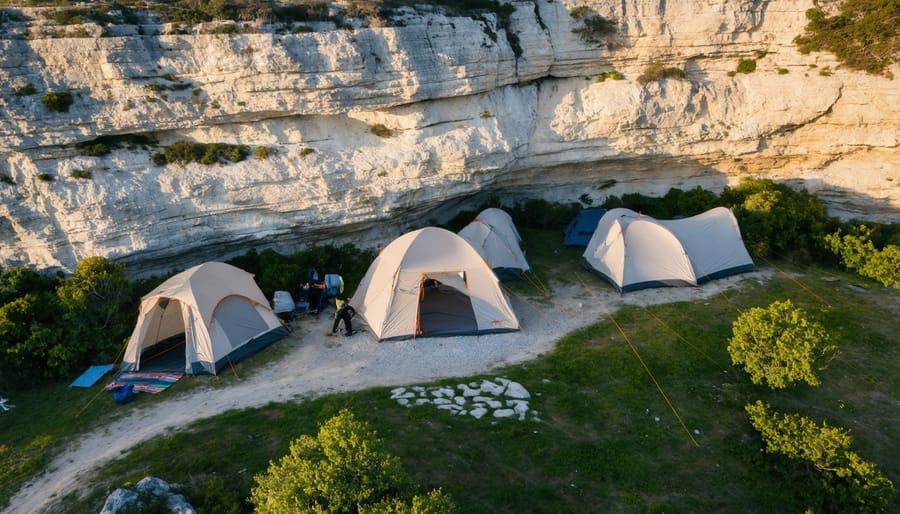
When it comes to resting your head after a day of climbing, Ontario’s climbing areas offer diverse camping options to suit every adventurer’s needs. Most popular climbing destinations feature well-maintained campgrounds within a 15-minute drive of the crags. Bon Echo Provincial Park stands out with its waterfront campsites, offering both comfort camping and traditional tent spots mere minutes from the climbing walls.
For those seeking a more rugged experience, backcountry camping is available at locations like Lion’s Head, where you can pitch your tent closer to the climbing routes. Just remember to secure necessary permits beforehand. Many local climbing areas also have privately owned campgrounds nearby, often providing amenities like hot showers, fire pits, and camping supplies.
Pro tip: Book your camping spots well in advance during peak season (June-September), as sites near popular climbing areas fill up quickly. For winter climbing expeditions, check which campgrounds remain open year-round, as many operate seasonally.
Local Services and Supplies
Several well-stocked outdoor gear shops in Ontario cater to climbing enthusiasts. The Alpine Club Supply Store in Toronto offers expert advice and a wide selection of climbing equipment, while MEC (Mountain Equipment Company) locations across the province provide everything from basic gear to specialized expedition supplies. For last-minute essentials, local outfitters near popular climbing areas like Lion’s Head and Rattlesnake Point keep climbing basics in stock.
Most climbing areas are within easy reach of convenience stores and grocery outlets for snacks and supplies. Many nearby towns also feature outdoor-friendly cafes and restaurants perfect for post-climb meals. For longer expeditions, gear repair services are available in major climbing hubs, and several locations offer equipment rentals for beginners or travelers.
Pro tip: Call ahead to check gear availability, especially during peak season. Many local shops also offer seasonal deals and second-hand equipment sections for budget-conscious climbers.
Planning a successful climbing expedition in Ontario requires careful preparation, but the rewards are truly worth the effort. From the towering cliffs of Lion’s Head to the challenging routes at Rattlesnake Point, our province offers incredible opportunities for extreme sports in Ontario and unforgettable climbing experiences.
Remember to always prioritize safety by double-checking your gear, monitoring weather conditions, and climbing with experienced partners. Join local climbing communities and consider taking guided trips before venturing out independently. The connections you make will prove invaluable for your climbing journey.
Pack light but smart, bringing essential safety equipment and emergency supplies. Consider the environmental impact of your expedition and follow Leave No Trace principles. Many of Ontario’s climbing areas are sensitive ecosystems that need our protection.
Most importantly, start small and build your skills gradually. There’s no shame in beginning with easier routes and working your way up. The climbing community in Ontario is wonderfully supportive, and you’ll find plenty of experienced climbers eager to share their knowledge and help you grow in the sport.









+ There are no comments
Add yours