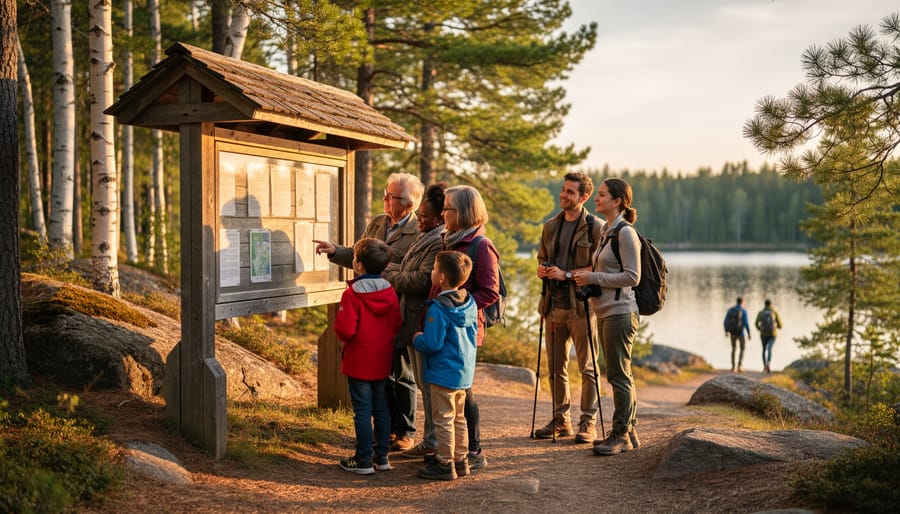
Listen carefully the next time you’re hiking through Algonquin Park or strolling along the Niagara Escarpment. That interpretive sign you’re reading? It’s probably only telling half the story—and only to half the visitors.
Across Ontario’s most beloved natural spaces, a quiet revolution is changing how we experience the outdoors. Parks are discovering that trails, waterfalls, and forests speak different languages to different people. A Mandarin-speaking family from Markham sees the boreal forest through entirely different cultural eyes than a French-Canadian couple from Ottawa. Indigenous visitors carry ancestral stories that predate every English plaque by thousands of years. When parks share their stories in multiple languages—not just translating words, but adapting the narratives themselves—something magical happens. Visitors linger longer at lookouts. They share what they’ve learned with their kids. They return, often bringing friends who’ve never felt welcome in Ontario’s wild spaces.
This isn’t just about being polite or politically correct. Multilingual storytelling transforms casual visitors into engaged stewards who actually remember why that wetland matters or how to stay safe around wildlife. It’s the difference between reading “Do Not Feed Bears” and understanding the interconnected story of why human food disrupts hibernation patterns and endangers both species.
The technical term researchers use—multilingual assessment instruments for narratives—sounds academic and distant. But what it really means is simple: Ontario’s parks are finally learning to welcome everyone’s story while sharing their own. And that welcome starts the moment you read a trailhead sign in your own language, written with your perspective in mind.
Why Parks Need to Speak Your Language
Ontario’s cultural landscape has transformed dramatically over the past few decades. Walk through any of our provincial parks on a summer weekend, and you’ll hear conversations flowing in Mandarin, Arabic, Tagalog, and dozens of other languages. This beautiful diversity isn’t just changing our cities—it’s reshaping how we experience natural spaces and the stories they hold.
Our parks have always been repositories of rich narratives. Indigenous storytelling traditions have been passed down for thousands of years across these lands. French settlers left their mark through place names and historical sites. Now, newcomers from every corner of the globe are adding their voices to this chorus. But here’s the catch: if these stories are only told in English, we’re missing something profound.
I’ll never forget meeting Amara at Algonquin Park’s visitor center last fall. She’d recently arrived from Somalia with her young daughter, and they were exploring Ontario’s wilderness for the first time. When she discovered an interpretive display about the park’s medicinal plants available in her native language, her face lit up. “My grandmother taught me about healing plants back home,” she told me, her voice catching with emotion. “Seeing this in Somali makes me feel like this place welcomes not just my presence, but my knowledge too.”
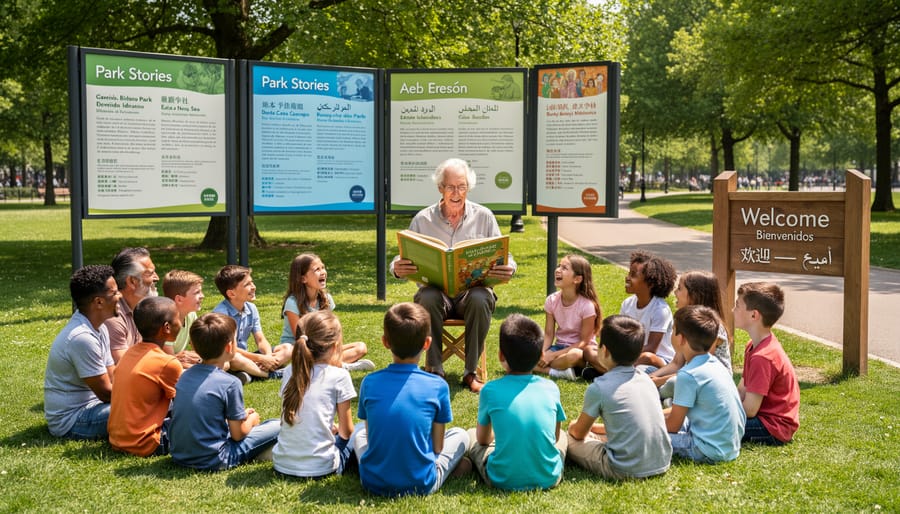
That’s the power of multilingual storytelling in our parks. It transforms visitors from passive observers into active participants. When a French-speaking family from Quebec reads about voyageur routes in their own language, history becomes personal. When Indigenous youth see their creation stories honored in Anishinaabemowin alongside English, cultural pride deepens.
Speaking someone’s language isn’t just about translation—it’s about recognition, respect, and belonging. Our parks become richer, more welcoming spaces when every visitor can connect with the land through stories that speak directly to their heart.
What Makes a Story Work Across Cultures
The Building Blocks: What Gets Assessed
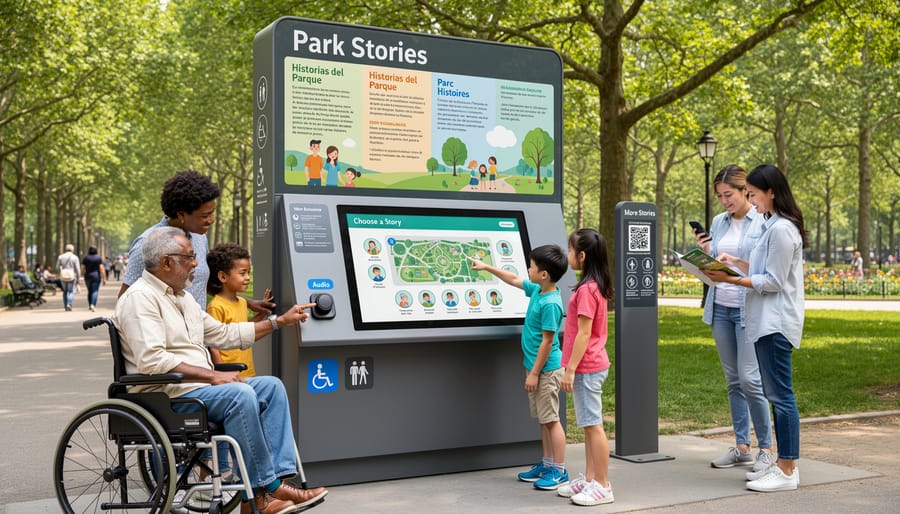
When parks share their stories in multiple languages, they’re not just translating words—they’re creating bridges between cultures. Think of it like this: a great story about Algonquin Park’s logging history should feel just as captivating whether you’re reading it in English, French, Mandarin, or Punjabi. But how do we measure whether these park storytelling experiences actually work across languages?
The magic happens when we assess five key elements. First, narrative structure looks at whether the story flows naturally in each language. At Killarney Provincial Park, the tale of the Group of Seven painters needs the same emotional arc whether told in English or Italian—the language many early European settlers spoke.
Cultural relevance ensures stories connect with diverse backgrounds. Pukaskwa National Park’s Indigenous legends gain depth when shared in Ojibwe alongside English, honoring the original storytellers while welcoming newcomers.
Emotional impact measures whether the feeling hits home. The awe you experience reading about Niagara Glen’s ancient forest should resonate equally in French as it does in English, capturing that same sense of wonder.
Clarity across translations checks that nothing gets lost in translation. When Bruce Peninsula National Park describes the turquoise waters of the Grotto, every language version should paint that vivid picture clearly.
Finally, authenticity keeps stories genuine. Frontenac Provincial Park’s settler heritage narratives maintain their honest voice across languages, avoiding oversimplification or cultural stereotypes.
These building blocks work together like ingredients in your favorite trail mix—each one essential for creating memorable park experiences that welcome everyone.
Beyond Simple Translation
When Ontario parks create multilingual park narratives, simple word-for-word translation just doesn’t cut it. Think about it: if you translate “as Canadian as maple syrup” into Mandarin without context, visitors might miss the warmth and cultural pride behind those words. The same goes for Indigenous place names, local legends, and regional expressions that make our parks uniquely Ontario.
Here’s an insider tip: several provincial parks now partner with community elders and cultural consultants to ensure stories resonate authentically across languages. At Killarney Provincial Park, for instance, Anishinaabe knowledge keepers help translate traditional narratives in ways that preserve their spiritual significance and cultural nuances. These collaborations go beyond dictionaries, capturing the heart of each story.
This approach means when you’re reading about the La Cloche Mountains in French, Spanish, or Japanese, you’re not just getting translated words—you’re experiencing the landscape through culturally relevant imagery and metaphors that actually make sense. It’s this attention to detail that transforms a simple trail sign into a meaningful connection with the land.
Parks Where You’ll Experience This Magic
Frontenac Provincial Park’s Indigenous Narratives
Frontenac Provincial Park beautifully shares Anishinaabe stories through an engaging multilingual approach that brings ancestral voices to life. You’ll encounter traditional narratives presented in Anishinaabemowin, English, and French through interpretive panels, audio recordings, and guided experiences that honor the deep connection between Indigenous peoples and this landscape.
The Big Salmon Lake Trail offers the most immersive storytelling experience, where you’ll find interpretive stations sharing creation stories and traditional ecological knowledge in multiple languages. Download the audio guide before your visit since cell service can be spotty deeper into the park. The recordings feature Anishinaabe elders speaking in their traditional language with translations, creating an authentic connection to the land’s original stewards.
Insider tip: Visit the park office first to grab the self-guided interpretive booklet, which includes phonetic pronunciations of Anishinaabemowin place names and terms. It’s a thoughtful way to engage more respectfully with the territory.
For the richest experience, join one of the seasonal Indigenous-led walking tours offered on weekends during summer months. These guides share personal stories and traditional teachings that you simply won’t find on interpretive panels. Book early, as spots fill quickly. The combination of languages, oral storytelling, and written materials creates a truly memorable way to understand this sacred landscape’s cultural significance.
Algonquin Park’s Bilingual Legacy
Algonquin Park has been weaving together French and English voices since its earliest days, creating a rich tapestry of storytelling that reflects Ontario’s bilingual heritage. When you join one of the park’s interpretive programs, you’ll often hear guides seamlessly switch between languages, sharing Indigenous legends, voyageur tales, and settler stories that shaped this wilderness. It’s a beautiful reminder that nature doesn’t recognize language barriers.
The park’s commitment to both cultures shines through in its eco-friendly Heritage Education Program, where bilingual naturalists lead low-impact walking tours through old-growth forests. During these excursions, you’ll discover how French trappers and English loggers left different marks on the landscape, each with their own way of describing the land. One insider tip: the Sunday evening programs at the Visitor Centre often feature bilingual storytelling around the fire pit, perfect for families wanting an authentic cultural experience.
For a truly immersive adventure, try the self-guided interpretive trails with signage in both official languages. The Spruce Bog Boardwalk and Lookout Trail offer fascinating ecological insights presented bilingually, letting you connect with the landscape through multiple perspectives while treading lightly on this protected wilderness.
Urban Parks Breaking Language Barriers
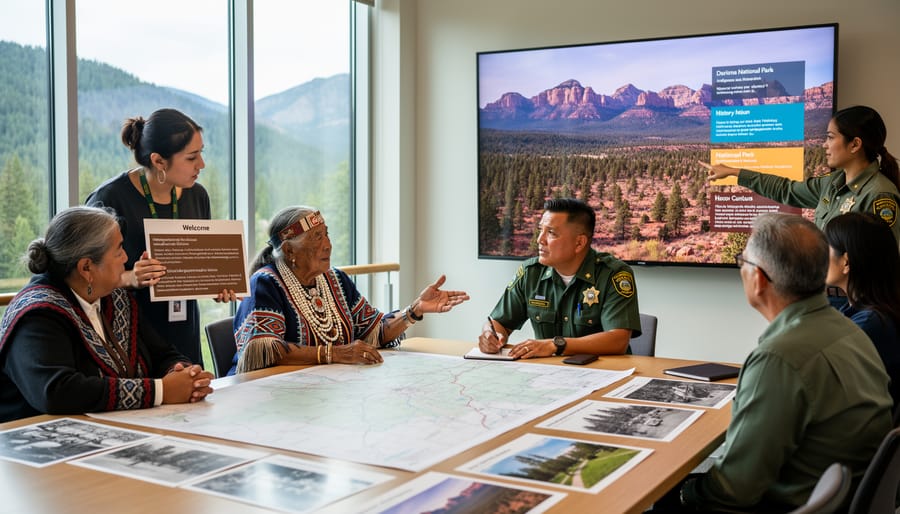
Just outside Toronto, Rouge National Urban Park welcomes visitors in over 20 languages, reflecting the vibrant multicultural communities that call the Greater Toronto Area home. Their trailhead signs feature Indigenous place names alongside English and French descriptions, while seasonal programming often includes storytelling sessions in Mandarin, Tamil, and Punjabi. I stumbled upon a guided nature walk led entirely in Portuguese last spring, and watching families connect with the landscape in their mother tongue was genuinely moving.
Ottawa’s Gatineau Park takes a similarly inclusive approach, with interpretive panels that accommodate the city’s diverse diplomatic community. During winter, their cross-country ski trail maps are available in multiple languages at the visitor center.
Here’s an insider tip that completely changed my park visits: download Google Translate before you go. The app’s camera feature lets you point your phone at any English sign and instantly see it in your preferred language. It works offline too, once you’ve downloaded the language pack. I’ve watched it help newcomer families navigate trail difficulty ratings and wildlife safety information with confidence, turning potential confusion into comfortable exploration.
How These Tools Change Your Park Experience
When parks speak your language, something magical happens. It’s not just about reading signs in your mother tongue—it’s about feeling truly welcomed and understood in Ontario’s incredible outdoor spaces.
Think about safety information for a moment. When trail warnings, wildlife alerts, and emergency procedures are available in multiple languages, families can explore confidently. Parents don’t have to second-guess whether they’ve understood water safety rules correctly, and grandparents joining the adventure can read about poison ivy precautions in their preferred language. This kind of accessibility transforms nervous visitors into relaxed adventurers.
The emotional connection deepens too. When interpretive panels share Indigenous stories, settler history, and natural wonders in various languages, visitors absorb the narrative rather than just snapping photos. A Mandarin-speaking family can discuss the formation of ancient rock formations together, while Portuguese-speaking children can read about local wildlife in words that resonate with them.
I’ll never forget meeting the Santos family at Algonquin during their first Canadian camping trip. Maria confessed she’d been anxious about bringing her elderly mother, who spoke only Portuguese, worried she’d feel isolated. But when they discovered interpretive materials in their language at the visitor center, everything shifted. Her mother spent the evening reading stories about the park’s logging history to her grandchildren, tears in her eyes. “I finally feel like I belong here,” she told me. “This place wants me to understand its stories.”
That’s the real power of multilingual approaches in our parks. They break down invisible barriers and create moments where everyone—regardless of their language background—can form genuine connections with Ontario’s natural heritage. When your park experience includes your language, it becomes your story too, not just a place you’re visiting. These tools transform tourists into storytellers, carrying meaningful memories home that they’ll share for years to come.
Getting Involved in Park Storytelling
Your voice matters in shaping how Ontario’s parks share their stories! Many parks actively seek visitor perspectives to create richer, more inclusive experiences for everyone.
Start by sharing your own connections to the land. Many parks host community consultation sessions where you can contribute oral histories, family stories, or cultural insights that add depth to interpretive programming. I discovered this firsthand when I shared my grandmother’s foraging traditions at a local park meeting – six months later, those stories became part of their seasonal guided walks! Check park websites or visitor centres for upcoming consultation opportunities.
Volunteer interpretation programs offer hands-on ways to become a storyteller yourself. These programs welcome diverse language speakers and cultural backgrounds. You might lead nature walks, staff heritage sites, or help develop cultural programming that reflects your community’s traditions. The training you’ll receive deepens your own connection to these special places while helping others discover them.
Your feedback shapes future storytelling initiatives too. After experiencing multilingual interpretation, take a moment to complete visitor surveys or email park staff with suggestions. Mention which stories resonated, which languages you’d like to see added, or how interpretive materials could be improved.
Here’s an eco-friendly insider tip: while engaging with cultural sites and their stories, practice “take only memories, leave only footprints.” Resist touching rock art, removing artifacts, or altering historical structures. These sites survive for future storytellers when we experience them with respect and care. Photograph freely, listen deeply, and share your experiences online to inspire others – that’s how we keep these stories alive while preserving the places that hold them.
Ontario’s parks are living storybooks waiting to be read in countless languages and through diverse voices. Every trail marker, interpretive display, and ranger-led program tells a chapter of our shared natural heritage, and when these stories speak in multiple languages, they invite everyone into the conversation.
Next time you visit a provincial park, approach it with fresh curiosity. Look beyond the English signage to discover multilingual elements that might have gone unnoticed before. Listen for the cadence of different languages during guided walks. Notice how Indigenous place names restore original meanings to the landscapes we explore. These layers of storytelling transform a simple hike into a rich cultural experience.
The evolution toward inclusive park experiences is ongoing, and you’re part of it. Share your experiences, suggest translations for your favorite trails, and celebrate when you encounter stories told in your home language. Parks Ontario is continually working to ensure every visitor feels welcomed and connected to these remarkable spaces.
Grab your hiking boots, bring your curiosity, and experience our parks as the multilingual treasures they’re becoming. The stories are waiting, speaking in voices as diverse as the visitors who come to listen.







+ There are no comments
Add yours