

Transform your camping experience by strategically blending modern technology with Ontario’s rugged wilderness. Pack a portable solar charger to power essential devices while respecting nature’s rhythm. Download offline trail maps, weather forecasts, and wildlife identification apps before leaving cellular coverage. Position your tent for optimal natural light to maximize device charging efficiency while maintaining that authentic outdoor feel.
Today’s savvy campers navigate the delicate balance between staying connected and unplugging in Ontario’s backcountry. Smart camping tech – from weather-resistant tablets to GPS trackers – enhances safety and convenience without compromising the raw beauty of outdoor adventure. Whether you’re capturing stunning sunrise photos at Algonquin Park or tracking your hiking stats along the Bruce Trail, thoughtfully selected gear amplifies rather than diminishes your wilderness experience.
The key lies in choosing technology that serves a genuine purpose: emergency communication devices for remote areas, energy-efficient lighting systems, and weather monitoring tools that help you make informed decisions. This isn’t about recreating your home office in the woods – it’s about using modern tools to forge a deeper, safer connection with Ontario’s natural landscapes.
Essential Tech Gear for Modern Ontario Camping
Power Solutions and Solar Equipment
Keeping your devices charged in the great outdoors doesn’t have to be a challenge, even in Ontario’s variable climate. A robust 20,000mAh power bank should be your first investment – it’ll keep your phone, GPS, and other small devices running for several days. Look for models with multiple USB ports and fast-charging capabilities for maximum convenience.
Solar chargers have come a long way, and they’re particularly useful during Ontario’s sunny summer months. I’ve found that a 21W foldable solar panel works wonders, even on partly cloudy days. Pro tip: angle your solar panels towards the sun’s path and keep them clear of tree shade for optimal charging.
For longer trips, consider a portable power station with at least 300Wh capacity. These can handle everything from charging laptops to powering small appliances. Just remember to fully charge it before heading out, as backup. For winter camping, keep your power banks and batteries in your sleeping bag at night – the cold can significantly reduce their performance.
Don’t forget to pack a multi-port USB charger and weatherproof cables. These small additions make a huge difference in managing your devices efficiently while keeping everything protected from Ontario’s unpredictable weather.

Navigation and Safety Devices
When venturing into Ontario’s vast wilderness, having reliable navigation and safety devices isn’t just convenient – it’s essential. A quality GPS unit, like the Garmin GPSMAP series, works wonders for tracking your location even in areas where your smartphone loses signal. These rugged devices come preloaded with detailed maps of Ontario’s parks and can help you navigate back to camp even in thick forest cover.
For added peace of mind, consider investing in a satellite communicator such as the Garmin inReach or SPOT X. These compact devices let you send SOS signals and text messages to loved ones, even when you’re deep in Algonquin Park with zero cell coverage. They’re particularly valuable during shoulder seasons when weather can be unpredictable.
Personal locator beacons (PLBs) are another must-have for remote camping. These lightweight devices emit powerful emergency signals that can be picked up by search and rescue teams. Remember to register your PLB with the Canadian beacon registry – it’s free and helps emergency responders reach you faster if needed.
Pro tip: Always carry backup batteries and keep your devices in waterproof cases. The Ontario wilderness is beautiful but can be challenging, and having reliable tech backup makes your adventure both safer and more enjoyable.
Weather Tech and Environmental Monitoring
Staying weather-wise while camping in Ontario has never been more accessible, thanks to portable weather monitoring technology. A compact weather station can be your best friend, especially during those unpredictable spring and fall camping seasons. These handy devices provide real-time data on temperature, humidity, wind speed, and precipitation, helping you make informed decisions about activities and camp setup.
UV monitors are particularly valuable during summer camping trips, when Ontario’s sun can be deceptively strong. These small devices clip onto your backpack or camp table, alerting you when it’s time to seek shade or reapply sunscreen. For those camping near urban areas or during forest fire season, portable air quality sensors help monitor smoke levels and air pollution, ensuring your family’s safety.
Pro tip: Many modern weather monitoring devices now connect to your smartphone via Bluetooth, creating detailed logs of environmental conditions. This data isn’t just useful for your current trip – it helps you plan future camping adventures by identifying patterns in local weather conditions. Remember to choose devices with good battery life and water resistance ratings suitable for Ontario’s diverse weather conditions.
Smart Campsite Setup in Ontario Parks
Tech-Friendly Tent Solutions
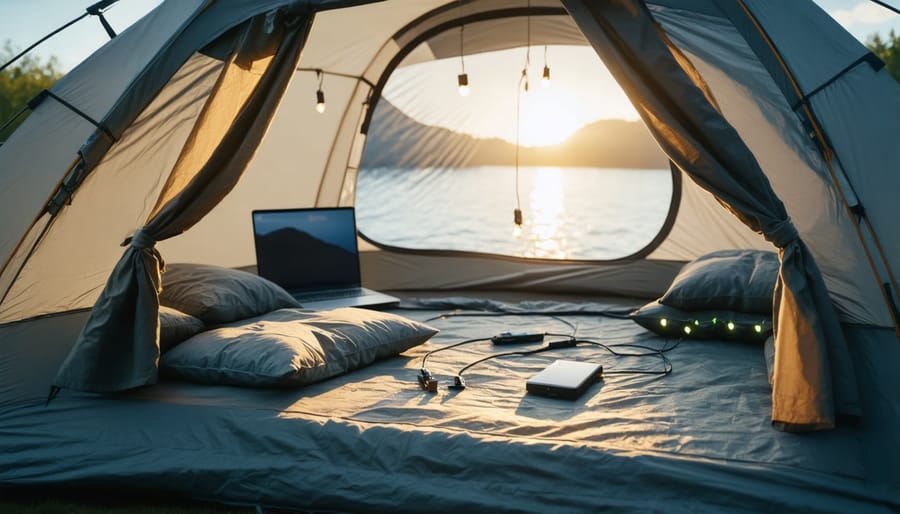
Gone are the days of basic canvas shelters. Today’s tech-savvy campers can enjoy modern camping comfort with innovative tent solutions that seamlessly blend outdoor living with digital convenience. I recently tested several of these high-tech havens in Algonquin Park, and I’m excited to share what’s making waves in Ontario’s camping scene.
Solar-powered tent designs are leading the charge, featuring built-in USB ports and LED lighting systems that harness the sun’s energy during the day. These eco-friendly solutions are perfect for keeping your devices charged while minimizing your environmental impact. Some models even include smart ventilation systems that automatically adjust airflow based on interior temperature and humidity levels.
My personal favorite feature is the integration of smart fabric technology. These materials aren’t just waterproof; they’re engineered to regulate temperature and reduce condensation. Several brands now offer tents with special pockets designed to amplify smartphone speakers naturally, perfect for those rainy evenings when you want to enjoy some music or catch up on podcasts.
For the truly connected camper, look for tents with dedicated tech zones – reinforced, water-resistant compartments specifically designed to protect your gear. Some even come with built-in Wi-Fi signal boosters, though I’d recommend using these sparingly to maintain that authentic wilderness experience we all love about camping in Ontario.
Remember, while these features are impressive, they should enhance, not overshadow, your connection with nature. Choose what works best for your camping style and the areas you plan to explore.
Eco-Friendly Tech Integration
When integrating technology into your camping adventure, it’s essential to minimize your environmental impact while maximizing your outdoor experience. Following proper eco-friendly camping practices means being mindful of how we power and use our devices in nature.
Solar chargers are your best friend in Ontario’s great outdoors. I’ve found that a quality 20W portable solar panel can easily keep smartphones and tablets powered throughout your trip while harnessing clean energy. Position your panel in a sunny spot during the day, and you’ll have plenty of juice for evening stargazing apps or nature photography.
Consider using energy-efficient LED lanterns and headlamps with rechargeable batteries instead of disposable ones. Many modern camping lights now come with built-in solar panels or USB charging capabilities, reducing waste while providing reliable illumination.
For those bringing laptops or cameras, invest in high-capacity power banks that can be pre-charged at home. This reduces the need for generators that can disturb wildlife and other campers. Pro tip: Keep devices in airplane mode when possible – it saves battery life and helps you stay more connected to nature.
Remember to pack silica gel packets to protect your electronics from Ontario’s unpredictable weather, and use biodegradable cases and covers where possible. The key is finding that sweet spot where technology enhances rather than detracts from your wilderness experience.
Digital Tools for Ontario Park Exploration
Trail and Campsite Finding Apps
Finding the perfect campsite in Ontario has never been easier, thanks to several user-friendly apps designed specifically for outdoor enthusiasts. The Parks Canada app is a must-have for exploring our national parks, offering detailed trail maps, campground information, and real-time updates about facility conditions. It’s particularly helpful when visiting some of the top camping destinations in Ontario.
For provincial parks, the Ontario Parks app is your go-to digital companion. It features an intuitive reservation system, trail difficulty ratings, and even offline maps for areas with spotty cell service. Pro tip: download your maps before heading out to save both data and battery life!
AllTrails has become increasingly popular among Ontario campers, offering detailed trail reviews, photos, and GPS tracking features. The app’s community-driven content helps you discover hidden gems and get real feedback from fellow outdoor enthusiasts.
For backcountry adventures, Gaia GPS is worth the investment. Its detailed topographic maps, weather forecasts, and tracking capabilities make it an essential tool for more remote camping experiences. Remember to enable the offline mode to ensure you can navigate even when cell service isn’t available – a common occurrence in Ontario’s wilderness areas.
Wildlife and Plant Identification Tech
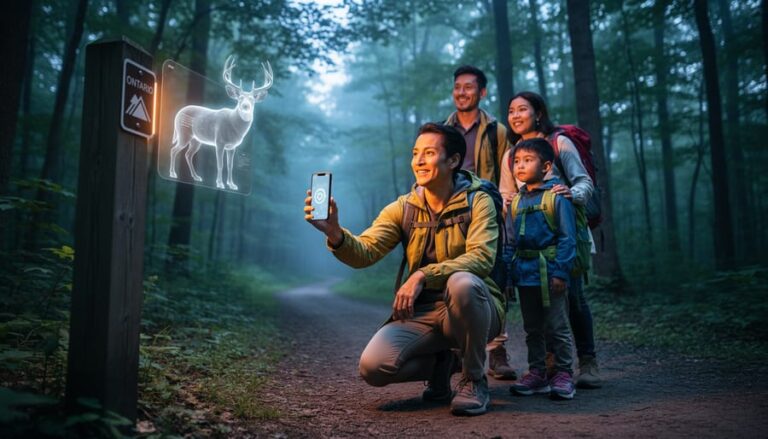
Gone are the days of lugging heavy field guides through the wilderness! Modern camping enthusiasts can now identify Ontario’s diverse wildlife and plant species with just a few taps on their smartphones. Apps like iNaturalist and Seek have become essential companions for curious campers, offering instant identification of everything from delicate wildflowers to mysterious mushrooms.
My personal favorite is the Merlin Bird ID app, which has revolutionized bird watching in Ontario’s campgrounds. Not only can it identify birds by sight, but it also recognizes bird songs – perfect for those dawn chorus moments when you’re wondering what’s making that distinctive call outside your tent.
For plant identification, apps like PictureThis and PlantSnap are incredibly reliable for identifying local flora. They’re particularly helpful when foraging for safe berries or avoiding poison ivy during your wilderness adventures. Just remember to download the offline databases before heading into areas with spotty reception!
Pro tip: Create a digital nature journal using these apps to track your wildlife encounters. Many of them allow you to build personal libraries and share observations with the scientific community, making your camping trip both fun and valuable for wildlife research.
Remember to practice responsible wildlife viewing – keep your distance and never disturb animals or plants while taking photos for identification.
Photography and Documentation Tech
Weather-Resistant Camera Gear
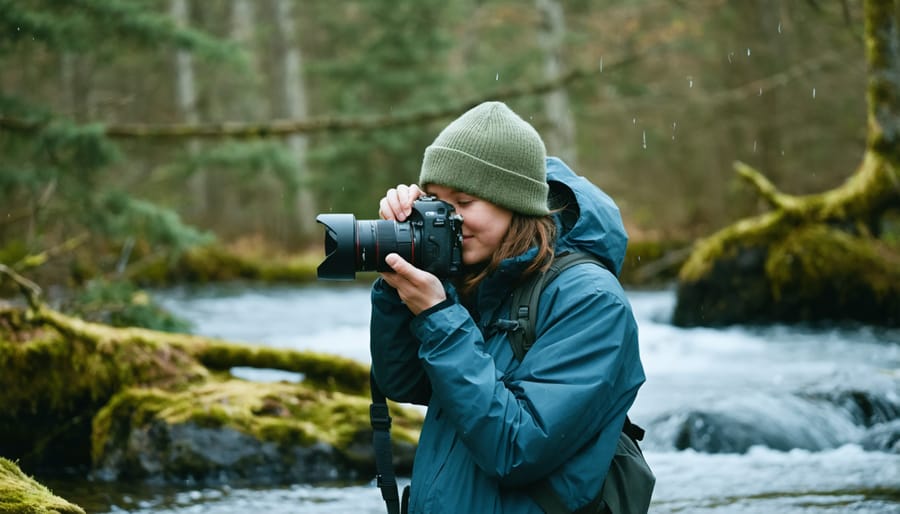
Ontario’s unpredictable weather can be tough on camera equipment, but with the right gear and protection, you can capture those magical camping moments in any conditions. A weather-sealed mirrorless camera like the Olympus OM-D E-M5 Mark III or the Sony A7 III offers excellent resistance to moisture and dust – perfect for those misty Algonquin mornings or sudden summer showers.
For added protection, I always pack silica gel packets and a few heavy-duty zip-lock bags. These simple items have saved my gear more times than I can count during unexpected downpours. A quality rain cover is essential – the Peak Design Shell provides excellent protection while still allowing easy access to controls. Pro tip: keep a microfiber cloth in a waterproof container to wipe off condensation when moving between temperature extremes, like from your air-conditioned car to a humid summer trail.
Action cameras are another fantastic option for Ontario’s varied conditions. The latest GoPro models are waterproof right out of the box and perfect for capturing everything from canoe trips to winter camping adventures. For smartphone photographers, consider a rugged case like the Lifeproof FRĒ, which offers complete protection while maintaining touch sensitivity.
Remember to store your gear in a waterproof camera bag with padding when hiking or portaging. I recommend the Lowepro DryZone series – they’re practically bulletproof against Ontario’s elements and float if accidentally dropped in water.
Social Sharing and Documentation Apps
While camping is about disconnecting from the digital world, some apps can actually enhance your outdoor experience without taking away from nature’s magic. I’ve found that sharing apps like iNaturalist are perfect for identifying and documenting wildlife you encounter on Ontario’s trails – it’s like having a naturalist in your pocket!
For those Instagram-worthy sunset shots over Georgian Bay or that moose sighting in Algonquin Park, consider using apps that can schedule posts for when you’re back in cellular range. This way, you can capture the moment without getting caught up in immediate sharing. The AllTrails app has become my go-to for tracking and sharing hiking routes with fellow campers, complete with offline capabilities for those remote Ontario campgrounds.
When it comes to documenting your adventure, apps like Day One or Journey let you keep a digital camping journal with photos, weather data, and location stamps. These create wonderful memories to look back on during winter months. For group camping trips, shared photo albums through Google Photos or Apple’s shared albums work wonderfully – everyone can contribute their snapshots while keeping phone time to a minimum.
Remember, the key is moderation. Try setting specific times for documentation, perhaps during meal breaks or just before turning in for the night. This helps maintain that crucial connection with nature while still preserving your memories for years to come.
As we wrap up our journey through tech-enhanced camping, remember that technology should complement, not overshadow, your outdoor experience. The key is finding that sweet spot where modern conveniences support your adventure without disconnecting you from nature’s rhythms.
Consider setting designated “tech times” during your camping trip – perhaps checking weather updates in the morning or capturing sunset photos in the evening. This structured approach helps maintain the authentic camping experience while benefiting from digital tools.
Remember to practice “leave no trace” principles with your devices. Pack out all batteries, keep charging sessions minimal, and respect quiet hours when using speakers or other audio equipment. Your fellow campers will appreciate your thoughtfulness, and you’ll be doing your part to preserve Ontario’s pristine wilderness.
Pro tip: Before heading home, take a moment to reflect on which tech elements truly enhanced your experience and which ones you could do without next time. Every camper’s needs are different, and finding your personal balance takes time and experimentation.
Most importantly, don’t forget why you came camping in the first place – to connect with nature, create lasting memories, and perhaps disconnect from the daily digital grind. Let technology be your helpful companion rather than the main focus of your outdoor adventure. After all, the most powerful connections often happen when we look up from our screens and into the starlit Ontario sky.






+ There are no comments
Add yours