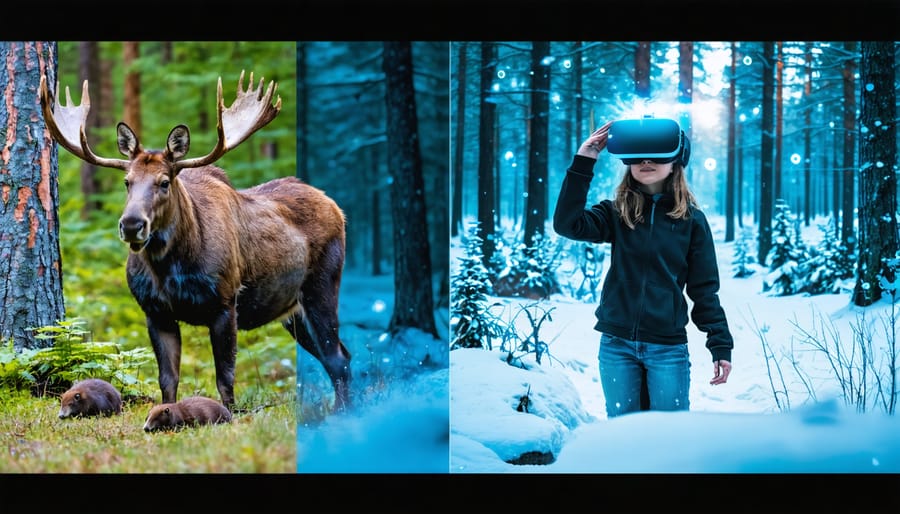
Step into a new dimension of learning as virtual reality transforms traditional education into an immersive adventure that brings Ontario parks to life and beyond. Through VR headsets, students now walk alongside dinosaurs, explore the human bloodstream, and conduct virtual chemistry experiments with unprecedented safety and engagement. This revolutionary technology demolishes geographical barriers, allowing learners to visit ancient Rome, dive into coral reefs, or explore distant galaxies—all from their classroom.
Unlike traditional textbooks and videos, educational VR creates lasting memories through experiential learning, boosting retention rates by up to 75% compared to conventional methods. Students don’t just memorize facts; they live them, developing deeper understanding through hands-on interaction with complex concepts. From medical students practicing surgical procedures to elementary school children discovering ecosystems, VR technology offers a risk-free environment for exploration and mistake-making—essential components of genuine learning.
As costs decrease and accessibility increases, educational VR stands poised to revolutionize how we teach, learn, and understand our world, making the impossible not just possible, but practical.
Step Inside Ontario’s Virtual Wilderness

Available VR Experiences
Step into the wild from the comfort of your classroom or living room with our cutting-edge VR experiences that are transforming your wilderness experience like never before. Our most popular program, “Ontario Wildlife Explorer,” lets you track moose through Algonquin’s forests and observe beaver colonies building their dams in real-time. Young naturalists love our “Junior Forest Guardian” series, where they can identify tree species, learn about ecosystem relationships, and even participate in virtual conservation projects.
For aspiring ornithologists, “Birds of Ontario” offers an up-close look at native species in their natural habitats, complete with interactive bird call recognition exercises. The “Great Lakes Discovery” program takes you beneath the waves to explore underwater ecosystems and learn about aquatic species conservation.
These immersive experiences are available at our visitor centers throughout Ontario parks, and many can be accessed through our mobile app for at-home learning. Each program includes guided narratives from experienced naturalists and interactive elements that make learning both fun and memorable.
Seasonal Wildlife Highlights
Experience Ontario’s diverse wildlife year-round through our immersive VR programs that change with the seasons. In spring, join virtual bird-watching expeditions to witness the return of migratory species and observe nesting behaviors up close. Watch as great blue herons build their nests and catch fish in pristine wetlands.
Summer brings exciting opportunities to virtually track black bears in their natural habitat and observe monarch butterflies during their remarkable transformation. Our popular “Night Forest” program lets you experience nocturnal animals like owls and flying squirrels in action without disturbing their natural routines.
Fall programming showcases the incredible moose rutting season and follows the journey of Canada geese as they prepare for their southern migration. You’ll get front-row seats to witness the changing colors of the forest and its inhabitants preparing for winter.
Winter sessions focus on resilient species like snowy owls, red foxes, and white-tailed deer, allowing you to observe how these remarkable animals adapt to Ontario’s coldest season – all from the comfort of our climate-controlled viewing room.
Learning Through Virtual Encounters
Interactive Learning Features
Virtual reality brings learning to life through a variety of engaging tools and features that make education feel more like an adventure than a lesson. Students can reach out and manipulate 3D models of molecules, historical artifacts, or astronomical objects with their virtual hands, getting a tangible sense of scale and structure that traditional textbooks simply can’t match.
One of the most impressive features is the ability to zoom in and out of complex systems. Imagine shrinking down to explore the inner workings of a plant cell or expanding your view to witness the dance of planets around distant stars. These perspective shifts create powerful “aha” moments that stick with learners long after the headset comes off.
Real-time feedback loops help students learn through trial and error in a safe environment. Whether practicing surgical techniques or conducting virtual chemistry experiments, learners receive immediate guidance on their actions without real-world consequences. Multi-user environments enable collaborative learning, where students and teachers can interact in the same virtual space regardless of their physical location.
Voice commands and gesture controls make navigation intuitive, while customizable learning paths adapt to each student’s pace and learning style. Progress tracking tools help educators monitor engagement and understanding, allowing them to adjust their teaching strategies accordingly. The immersive audio and haptic feedback features create a multi-sensory experience that enhances information retention and keeps students thoroughly engaged.
Conservation Through Connection
Virtual reality isn’t just about showing wildlife – it’s about making us feel deeply connected to it. When you put on a VR headset and find yourself eye-to-eye with a majestic moose or swimming alongside a sturgeon, something magical happens. These encounters create lasting emotional bonds that inspire us to protect these incredible creatures.
Through VR experiences, visitors can explore Ontario’s wilderness areas and their inhabitants in ways previously impossible. Imagine following a beaver family as they build their lodge or watching peregrine falcons teach their chicks to fly – all while staying completely still and silent, without disturbing their natural behaviors.
These intimate virtual encounters help us understand wildlife challenges firsthand. When you witness a turtle struggling to nest on a shrinking beach or see how urban development affects migration patterns, conservation becomes personal. It’s no longer just about statistics – it’s about protecting creatures we’ve come to know and care about.
Local conservation programs are already seeing the impact. After experiencing virtual encounters with endangered species, visitors are more likely to support protection efforts, modify their behaviors, and even volunteer for wildlife initiatives. It’s proof that when technology helps us connect with nature emotionally, we become better stewards of our environment.

Planning Your Virtual Safari

Where to Find VR Programs
Ready to explore virtual reality in Ontario’s great outdoors? You’ll find amazing VR wildlife experiences at several locations throughout the province. The Science North center in Sudbury offers immersive virtual encounters with local wildlife, while the Royal Ontario Museum in Toronto features rotating VR exhibits that bring prehistoric creatures to life.
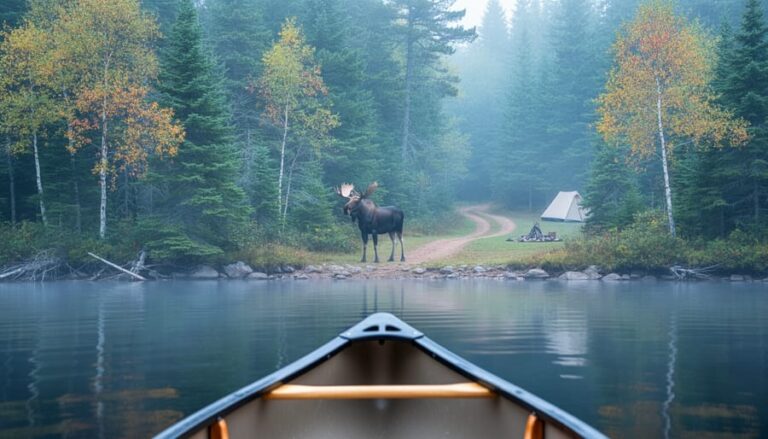
Several of Ontario’s smart park facilities now include VR stations where visitors can experience wildlife in their natural habitats. The Algonquin Visitor Centre, for instance, offers a virtual canoe trip where you can spot moose and beavers without getting wet!
For a truly unique experience, check out Science World at Peterborough Museum, where their VR lab lets you dive deep into the Great Lakes ecosystem. The Canadian Museum of Nature in Ottawa also features seasonal VR programs, perfect for rainy day visits.
Pro tip: Many of these locations offer special pricing for families and educational groups, so be sure to ask about available discounts when planning your visit.
What to Expect
Getting ready for your first educational VR experience is exciting! Before you arrive, wear comfortable clothing and closed-toe shoes – you’ll be moving around, even though you’re in a virtual space. If you wear glasses, no worries – most VR headsets are designed to fit comfortably over them.
When you arrive, our friendly staff will guide you through a brief orientation. They’ll show you how to properly wear and adjust the VR headset, use the hand controllers, and navigate the virtual space safely. Don’t worry if you’ve never tried VR before – our team is experienced in helping first-timers feel comfortable.
The virtual wildlife sessions typically last 45-60 minutes, with regular breaks built in to prevent any motion sensitivity. During your experience, you’ll be in a designated safe space with plenty of room to move. A guide will always be present to ensure your comfort and safety while helping you make the most of your virtual adventure.
Some participants might experience mild disorientation when first starting – this is completely normal and usually passes quickly. We recommend taking breaks whenever needed, and our staff will check in with you regularly.
For the best experience, we suggest arriving 15 minutes before your scheduled time. Remember to bring your sense of adventure and curiosity! While the animals may look incredibly real in VR, you can’t pet them – but you can get amazingly close to observe their behaviors and habitats in ways that wouldn’t be possible in the real world.
Most sessions accommodate up to six participants at once, making it perfect for families or small groups looking to share the experience together.
Future of Virtual Wildlife Education
As we look ahead, Ontario’s parks and wildlife centers are gearing up for an exciting transformation in how we connect with nature through virtual reality. Several groundbreaking initiatives are set to launch in the next few years, promising to revolutionize wildlife education and conservation awareness.
Coming in 2024, the “Wild Ontario” VR program will allow users to track and observe nocturnal animals like wolves and owls in their natural habitats – something that’s typically challenging for regular park visitors to experience. This program will feature seasonal changes, letting viewers witness how animals adapt throughout the year.
Parks across the province are also developing interactive VR exhibits that will connect multiple locations in real-time. Imagine watching a bear fishing for salmon in Algonquin Park while another visitor observes moose behavior in Killarney Provincial Park – all through interconnected VR stations that allow users to share their discoveries.
Education centers are incorporating artificial intelligence to create more responsive and personalized learning experiences. These smart systems will adapt to each user’s interests and knowledge level, making wildlife education more engaging for everyone from young children to seasoned naturalists.
Perhaps most exciting is the development of “take-home” VR experiences. Soon, visitors will be able to download companion apps that extend their park visits, allowing them to revisit and learn more about the wildlife they encountered during their stay. These apps will include regular updates with new animal behaviors and seasonal events.
For schools and educational groups, new curriculum-aligned VR programs are being designed to supplement classroom learning. These programs will feature guided virtual field trips led by park naturalists, complete with interactive elements and real-time questions and answers.
Conservation efforts will also benefit from these technological advances. Virtual reality will help track and monitor wildlife populations, with citizen scientists contributing through VR-enhanced observation programs. This combination of technology and community involvement promises to create more effective and engaging ways to protect Ontario’s diverse wildlife.
Virtual reality wildlife education represents a groundbreaking bridge between technology and nature, offering an incredible opportunity to foster deep connections with the natural world. Through these immersive experiences, people of all ages can develop a profound appreciation for wildlife and their habitats, even in urban settings where access to nature might be limited.
What makes VR wildlife education truly special is its ability to inspire conservation mindsets and environmental awareness without disturbing actual wildlife. Students can observe bears fishing for salmon, follow monarch butterfly migrations, or dive alongside whales – all while maintaining a safe and comfortable learning environment. These powerful experiences often spark a desire to protect and preserve the natural world they’ve virtually explored.
The impact of VR wildlife education extends beyond the classroom. Many participants report increased interest in visiting parks, joining conservation efforts, and making eco-friendly lifestyle changes after their virtual encounters. It’s particularly heartening to see children’s eyes light up as they discover the wonders of nature through this technology, often leading to family discussions about wildlife protection and environmental stewardship.
As we look to the future, VR wildlife education stands as a valuable tool in our mission to connect people with nature, fostering the next generation of environmental stewards who will help protect our precious natural heritage for years to come.






+ There are no comments
Add yours