
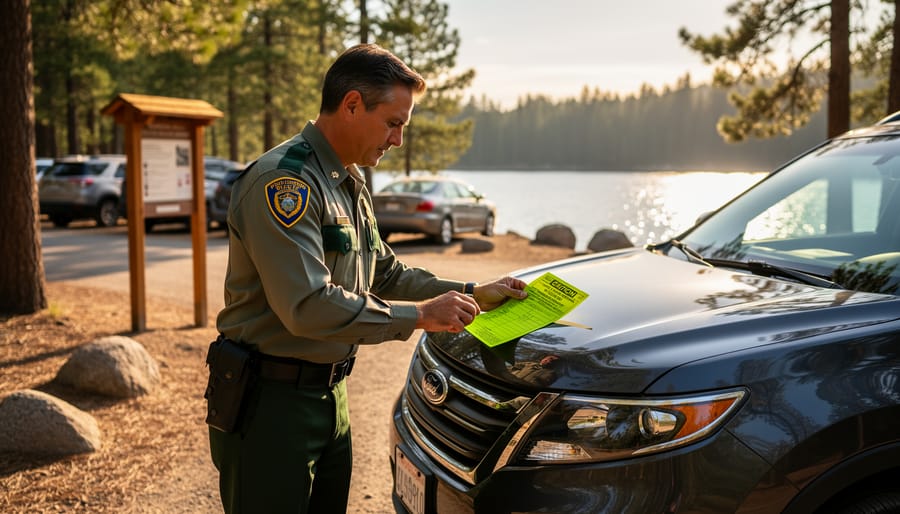
Check your permit requirements before every park visit, even if you’ve been there before—regulations change seasonally and some areas require advance reservations that, if skipped, can result in fines ranging from $125 to $500. Download official park apps or bookmark permit websites on your phone so you can verify current rules in real-time.
Keep all permits, receipts, and confirmation emails readily accessible during your trip—either as screenshots on your phone or printed copies in your vehicle’s glove compartment. Park wardens and conservation officers conduct routine checks, and having documentation immediately available prevents misunderstandings that could escalate into unnecessary citations.
Understand that permit violations aren’t just financial headaches. A single citation can lead to court appearances, administrative fees that double the original fine, and in serious cases, restrictions on accessing certain parks or conservation areas in the future. These penalties exist to protect Ontario’s fragile ecosystems and ensure everyone can enjoy these spaces safely.
Set phone reminders for permit expiration times, especially for day-use passes that expire at specific hours. Many violations happen simply because visitors lose track of time while hiking or swimming. That peaceful afternoon can turn stressful when you return to your vehicle and find a ticket waiting because your parking permit expired an hour earlier—a completely avoidable situation with a simple alarm.
The good news? Most violations are entirely preventable through basic planning and awareness.
Why Parks Actually Need Permits (And Why Rangers Care)
I’ll be honest with you—when I first started exploring Ontario’s provincial parks, I thought permits were just another annoying fee. But after chatting with a few park rangers over campfires and learning what actually happens behind the scenes, my perspective completely changed.
Think of permits as your park’s membership card. Every dollar you spend on that camping or backcountry permit directly funds the conservation work that keeps these natural spaces thriving. That money goes toward trail maintenance, invasive species removal, water quality monitoring, and habitat restoration projects. When you buy a permit, you’re literally investing in the future of the wilderness you’re enjoying today.
Here’s something most visitors don’t realize: permits are also crucial safety tools. When rangers know exactly who’s in the backcountry and where they’re planning to be, they can respond quickly in emergencies. I’ve heard stories from park staff about successful search and rescue operations that started because someone’s permit raised a red flag when they didn’t check out on time. That’s not bureaucracy—that’s a lifeline.
Permits also help manage visitor numbers to prevent overcrowding and environmental damage. Popular parks like Algonquin have limited campsites for good reason. Without this system, fragile ecosystems would suffer from overuse, trails would erode faster, and your peaceful wilderness experience would feel more like a shopping mall parking lot.
Rangers aren’t out to ruin your weekend—they genuinely care about protecting these spaces. They enforce permit requirements because they’ve seen firsthand what happens when too many people crowd sensitive areas or when emergencies arise with no record of who’s out there. Understanding this context helps explain why they take violations seriously and why those fines exist in the first place.
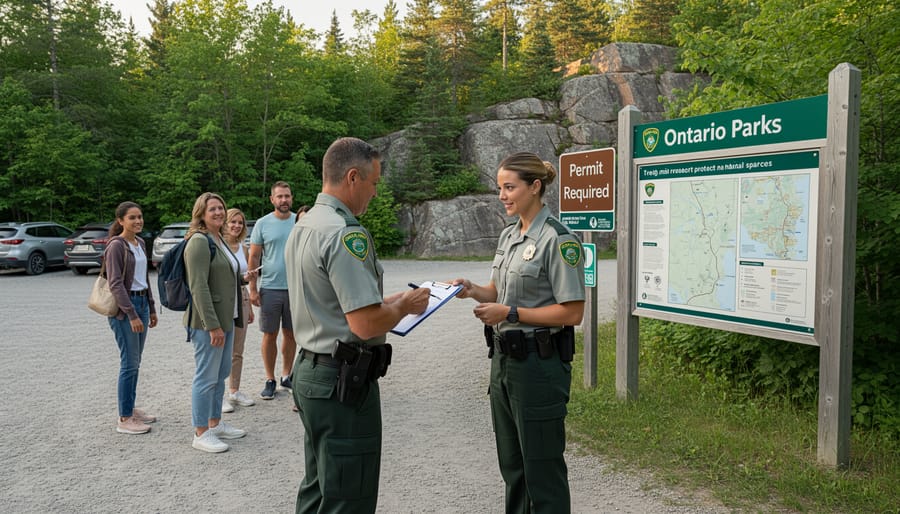
The Real Cost of ‘Just This Once’
Camping and Overnight Violations
Setting up your tent in an unauthorized spot or camping without proper backcountry camping permits can lead to some pretty serious fines. In Ontario’s provincial parks, you’re looking at penalties ranging from $65 to $5,000 depending on the severity of the violation. Most first-time offenses for camping without a reservation typically result in fines between $150 and $300, plus you’ll be asked to pack up and leave immediately.
Here’s an insider tip: park wardens and conservation officers conduct regular patrols, especially during peak summer weekends and long holiday periods. They check permits at campsites, often early morning or around dinner time when campers are most likely to be present. Overstaying your permit? Expect an additional $35 per night on top of potential violation fines.
The good news is these penalties are entirely avoidable. Always book your sites in advance, mark your checkout dates clearly, and if your plans change, contact park staff immediately. Many parks offer flexible rebooking options, and rangers appreciate proactive communication. Remember, these rules protect fragile ecosystems and ensure everyone gets their fair chance to enjoy Ontario’s incredible wilderness spaces.
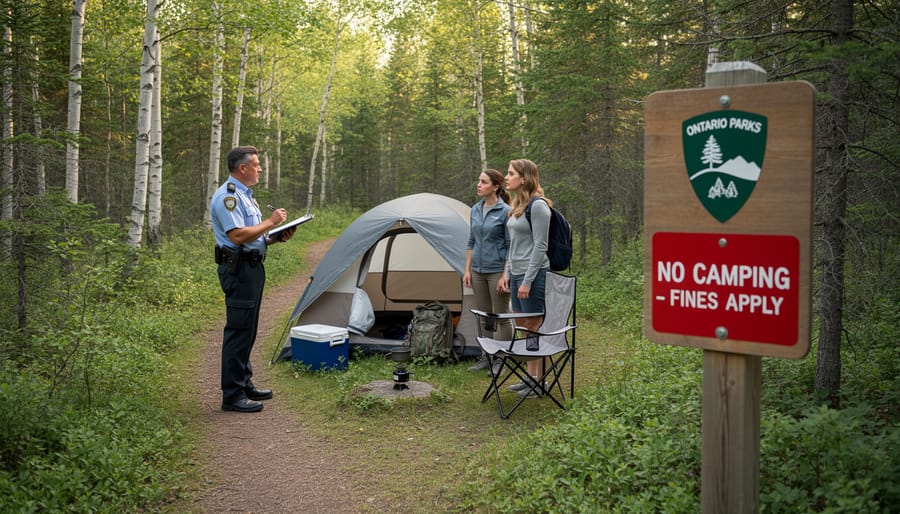
Day Use and Parking Penalties
Showing up to Algonquin or Killbear without day-use permits can put a serious dent in your wallet. The standard fine for entering a provincial park without proper permits starts at $75, but can climb to $150 depending on the park and circumstances. I learned this the hard way when a friend forgot to display their permit at Presqu’ile—the conservation officer was understanding but firm about the $90 ticket.
Parking violations carry their own penalties too. Parking outside designated areas will cost you $60 to $100, while blocking access roads or emergency routes can result in fines up to $200 plus towing fees. At busy parks like Sandbanks during summer weekends, enforcement is particularly active.
Here’s an insider tip: if you’re traveling with multiple vehicles, ensure each one has its own permit. Overcrowding a single vehicle to avoid extra permit fees might seem clever, but exceeding posted vehicle capacity can result in a $110 fine for safety violations. Parks Ontario takes vehicle limits seriously, especially on narrow access roads where overcrowded cars pose real hazards to other visitors and wildlife.
Special Activity Permit Violations
Ontario’s provincial parks have some pretty specific rules about activities that need special permits, and the fines reflect how seriously these regulations are taken. Fishing without a valid Ontario fishing license can cost you between $200 and $500, depending on the circumstances. I once watched a conservation officer politely educate an angler at Algonquin Park who genuinely didn’t realize his license had expired – friendly reminder that you can check your license status online before your trip!
Drone operators need to pay special attention too. Flying drones without proper authorization can result in fines starting at $500, with federal penalties potentially reaching into the thousands for serious violations. Parks are sensitive habitats where noise and aerial disturbances can stress wildlife, especially during nesting season.
Planning a group event, wedding, or commercial photography session? You’ll need a special events permit. Operating without one typically brings fines between $300 and $1,000. The good news? Most park offices are super helpful in processing permit applications quickly when you reach out in advance. Pro tip: applying early not only keeps you compliant but often gives you better site selection options for your special occasion.
What Actually Happens When You Get Caught
Picture this: you’re setting up your tent in what seems like the perfect spot when a park ranger approaches. Your heart might skip a beat, but here’s what you should know about how this usually unfolds.
Most rangers aren’t looking to ruin your day. They genuinely want you to enjoy Ontario’s parks safely and legally. When they encounter a violation, they typically start with a conversation, not a citation. They’ll ask to see your permits and identification, then assess the situation. Your attitude during this interaction matters more than you might think.
If it’s a first-time, minor violation and you’re cooperative, many rangers have discretion to issue a warning instead of a fine. I’ve heard countless stories from visitors who received educational warnings about things like improper food storage or camping in restricted areas. Rangers appreciate when people acknowledge mistakes and genuinely want to correct them. Being defensive or argumentative? That’s the fastest way to turn a potential warning into a formal citation.
When a citation is issued, the ranger will hand you a Provincial Offences Notice that looks similar to a traffic ticket. It includes details about the violation, the fine amount, and payment instructions. You’ll typically have 15 days to pay or arrange a court date if you wish to dispute it. Payment can usually be made online, by mail, or in person at designated locations.
Here’s an insider tip: if you pay promptly, the matter typically ends there. Ignoring the citation, however, leads to escalation. Additional administrative fees get tacked on, and unpaid fines can eventually result in a court summons or even affect your ability to renew vehicle registration.
The bottom line? Treat rangers with respect, be honest about mistakes, and handle any citations promptly. Most enforcement situations resolve smoothly when visitors cooperate and take responsibility.
Beyond the Fine: Hidden Consequences Nobody Talks About
Here’s something most people don’t realize until it’s too late: that violation stays with you longer than you’d think. When you receive a ticket for a permit violation in Ontario, you’re not just dealing with the immediate fine. You’re actually getting a provincial offense record that follows you around like an unwanted camping companion.
I learned this from a friend who tried to book a backcountry site at Algonquin the following year. His previous violation meant he was temporarily banned from making reservations through the Ontario Parks system. Imagine planning your annual canoe trip only to discover you can’t even access the booking portal. It’s the kind of consequence that hits you months later when you least expect it.
The ripple effects extend beyond your own adventures too. Every time someone occupies a campsite without a permit, they’re essentially stealing that spot from someone who played by the rules and tried to book legitimately. During peak season, when families are frantically refreshing their screens hoping for a cancellation, violations mean those sites never even become available. You’re not just breaking rules; you’re disappointing fellow nature lovers who might have been planning their trip for months.
And here’s the kicker about repeat offenses: Ontario’s system tracks violations, and fines escalate significantly. What started as a $115 ticket can balloon to $230 or more for subsequent violations. Conservation officers have access to your history, so that “oops, I forgot” excuse won’t fly twice.
The lesson? Those permits exist to protect everyone’s access to these incredible spaces. Respecting them means respecting your fellow adventurers and your future self.
How to Stay on the Right Side of Park Rules
Easy Ways to Keep Track of Your Permits
Keeping your permits organized doesn’t have to be complicated! Here’s my tried-and-true system: as soon as I book a camping spot or reserve a day-use area, I set a phone reminder for the week before my trip. This gives me time to print my confirmation and tuck it somewhere safe (I’ve learned the hard way that relying solely on digital copies can backfire when there’s no cell service).
Most Ontario parks have fantastic apps now that store your permits digitally, which is super handy. Download your confirmation PDFs before you leave home, though – trust me on this one! I keep mine in an offline folder on my phone.
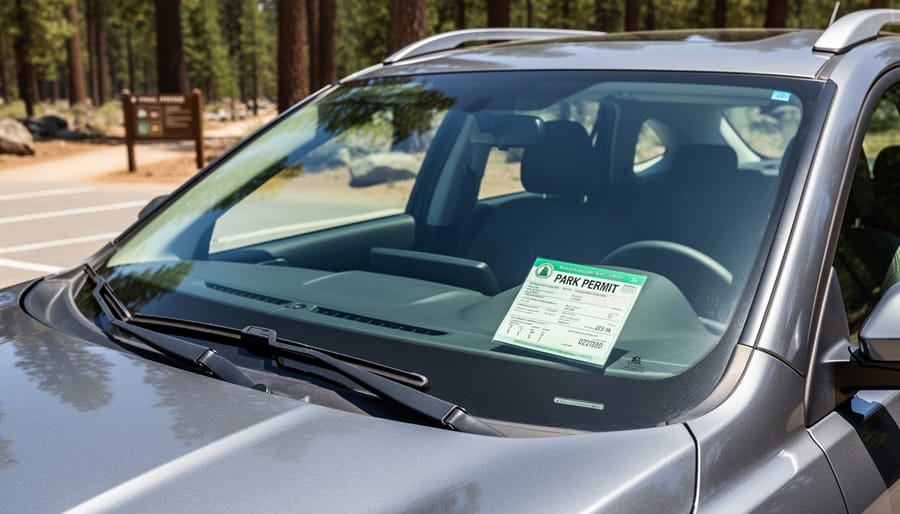
Here’s an insider tip: slide your printed permit under your windshield visor or attach it to your dashboard with a clip. Conservation officers can quickly verify you’re legit without interrupting your hike or fishing session. It’s also smart to snap a photo of your permit with your phone as backup.
For overnight trips, I pack my permits in a waterproof bag along with my park map. That way, everything’s in one place if a ranger stops by your campsite for a friendly check-in.
When Plans Change: The Right Way to Cancel or Modify
Life happens! If you need to cancel, do it as early as possible—most Ontario Parks sites allow cancellations online through your reservation account. The earlier you cancel, the better your chances of receiving a partial refund, though understanding refund policies beforehand saves headaches later. Insider tip: Post your cancelled dates on social media or park-specific Facebook groups so fellow campers can snag your spot. This eco-friendly approach helps reduce last-minute no-shows and ensures popular sites stay fully utilized. Your cancelled weekend could become someone else’s dream getaway!
What to Do If You Made an Honest Mistake
We’ve all been there—you’re enjoying a beautiful day in nature when suddenly you realize you might have made a mistake. Maybe you forgot to display your permit, ventured into an area you didn’t realize was restricted, or genuinely misunderstood the rules. Here’s the good news: if it was an honest mistake, there are ways to handle the situation that can work in your favor.
If you encounter a park ranger or conservation officer, the best approach is simple honesty. Explain your situation calmly and respectfully. Rangers aren’t out to ruin anyone’s day—they’re there to protect our natural spaces. I once watched a fellow camper who’d accidentally set up in a no-camping zone have a friendly conversation with a ranger, and because he was cooperative and immediately packed up, he received just a warning rather than a fine.
If you do receive a ticket you believe is unfair, you have options. The ticket should include information about contesting it. You can typically request a meeting with a provincial offences officer to explain your circumstances, or you may choose to dispute it in court. Keep any evidence that supports your case—photos, timestamps, or witness statements can be helpful.
The appeals process exists for a reason. Many first-time offenders who demonstrate genuine remorse and cooperation find understanding from officials. Remember to keep all documentation, respond within the stated timeframes, and consider seeking advice from legal resources if needed. Ontario’s justice system recognizes that honest mistakes happen, especially in complex natural environments with varying regulations.
Here’s the thing about permits and fines: they’re not just bureaucratic red tape. When you follow permit rules, you’re actually joining a community of people who care deeply about protecting Ontario’s incredible natural spaces. Every time you display that vehicle permit on your dashboard or pack out your campfire ashes properly, you’re helping ensure these parks will be around for your kids and grandkids to explore.
I like to think of permit compliance as your unofficial membership card to Ontario’s conservation community. Rangers and park staff genuinely appreciate visitors who take the time to understand the rules, and you’d be surprised how often that respect opens doors to insider knowledge about hidden trails or the best wildlife viewing spots.
The bottom line? Nobody wants to deal with fines or court dates when they could be paddling a pristine lake or hiking through old-growth forest. A few minutes spent getting the right permits and understanding basic regulations means more time enjoying everything Ontario’s parks have to offer. So grab that permit, respect the rules, and get out there. These wild spaces are waiting for you, and when we all do our part, they’ll stay beautiful and accessible for generations to come. Happy exploring, and thanks for being part of the solution.








+ There are no comments
Add yours