

Check the Ontario Parks website’s event calendar between March and October when most dark-sky astronomy programs run, filtering specifically for “astronomy” or “stargazing” workshops to find current offerings. Book at least 2-3 months ahead for popular summer slots at designated Dark Sky Preserves like Killarney Provincial Park, as these outdoor workshops fill quickly during peak meteor shower dates.
Download a stargazing app like SkySafari or Stellarium at least one week before your workshop to familiarize yourself with constellation identification, making the expert-led session far more rewarding when you can already spot Cassiopeia or Ursa Major on your own.
Pack red-filtered flashlights or headlamps rather than white lights, as red light preserves night vision essential for seeing the Milky Way’s faint glow. Dress in layers even during summer months since temperatures can drop 10-15 degrees after sunset, and bring a reclining lawn chair or thick blanket so you can comfortably look upward for extended periods without neck strain.
Register for workshops coinciding with new moon phases when skies are darkest, avoiding full moon dates that wash out fainter celestial objects. Many parks offer free informal “star parties” in addition to paid structured workshops, giving you flexibility if formal programs are fully booked. These educational experiences transform your understanding of light pollution’s impact while connecting you with Ontario’s incredible natural darkness, a diminishing resource that fewer than 20% of Canadians can access from their homes.
Why Ontario Parks Are Perfect for Stargazing

Ontario’s Dark-Sky Preserve Network
Ontario boasts an impressive network of designated Dark-Sky Preserves that offer some of the most spectacular stargazing opportunities in North America. These protected areas maintain strict lighting policies to minimize light pollution, creating ideal conditions for both amateur astronomers and seasoned stargazers to explore the cosmos.
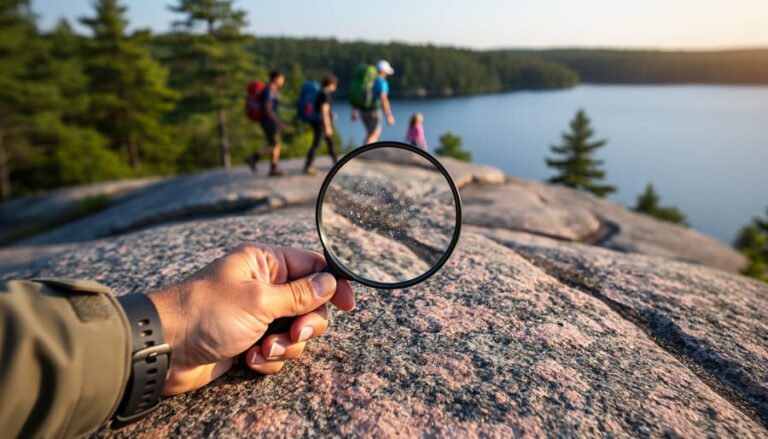
Killarney Provincial Park, with its stunning quartzite ridges and crystal-clear Georgian Bay waters, earned its Dark-Sky Preserve designation in 2017. The park’s remote location means you can witness the Milky Way arching overhead in jaw-dropping detail. I’ll never forget my first night there – standing on a granite outcrop, watching meteors streak across the sky while loons called in the distance. The combination of natural beauty and astronomical wonders is simply unforgettable.
Lake Superior Provincial Park takes stargazing to another level with its vast, dark skies stretching over Canada’s largest lake. The park’s Agawa Bay area offers convenient access points where you can set up your telescope right by the water’s edge. On clear nights, you might spot the Northern Lights dancing above the horizon, adding an extra layer of magic to your astronomy session.
For a more accessible option, Torrance Barrens Dark-Sky Reserve near Gravenhurst provides excellent viewing just a couple of hours from the Greater Toronto Area. This was Ontario’s first designated dark-sky site, and it remains a favourite among local astronomy clubs. The open barrens landscape means there’s nothing blocking your view of the horizon, perfect for catching planets as they rise.
Insider tip: Visit during the new moon phase for the darkest skies possible, and bring red-filtered flashlights to preserve your night vision while exploring these remarkable preserves.
Best Times to Visit for Stargazing
Timing your stargazing adventure can make all the difference between a magical night under the stars and a cloudy disappointment. I learned this the hard way during my first attempt at Killarney Provincial Park, when I showed up during a full moon and could barely see the Milky Way!
New moon phases are your best friend for astronomy workshops – typically occurring once a month, these moonless nights offer the darkest skies and most spectacular star views. Most Ontario Parks workshops are intentionally scheduled around these dates. Fall and winter months, particularly September through March, provide the longest nights and clearest skies, though you’ll need to bundle up. Summer workshops are popular but come with shorter darkness windows and occasional humidity haze.
Here’s an insider tip: avoid booking workshops during long weekends like Victoria Day or Canada Day. These peak camping times mean more campfires, flashlights, and vehicle headlights competing with your view. Mid-week sessions, especially Tuesday through Thursday, guarantee quieter parks and darker skies. Always check weather forecasts a few days ahead – clear, cold nights with low humidity produce the sharpest views. Some parks even offer rain-check policies for completely clouded-out sessions, so don’t hesitate to ask when booking your spot.
What to Expect at a Dark-Sky Workshop
Hands-On Telescope Time
Here’s where the magic really happens. Once darkness settles in, facilitators set up high-quality telescopes and binoculars that you’ll get to use throughout the evening. Don’t worry if you’ve never looked through a telescope before—the guides are pros at helping first-timers find their focus and understand what they’re seeing.
You’ll typically observe crowd favorites like Saturn’s rings, Jupiter’s moons, and the craters on our own moon in stunning detail. During summer months, you might catch glimpses of the Andromeda Galaxy or the Hercules Cluster. Facilitators will carefully aim each telescope at different celestial targets, then invite you to take turns peering through the eyepiece. They’ll explain exactly what you’re looking at and answer any questions that pop up.
Many workshops also provide binoculars, which are perfect for scanning the Milky Way or spotting constellations. The facilitators move between groups, ensuring everyone gets quality viewing time with each instrument. They’re patient about adjusting equipment and helping you locate objects in the sky. Pro tip: ask them to show you how to find these objects on your own—many facilitators love sharing tricks for amateur stargazing you can use after the workshop ends.
Learning to Navigate the Night Sky
The best part about these astronomy workshops? You don’t need any prior knowledge to jump right in. I remember my first session feeling completely lost under the vast night sky, but within an hour, I could confidently point out Cassiopeia and the Big Dipper like an old pro.
Most workshops kick off with the basics of constellation identification. Instructors guide you through recognizing patterns using simple techniques like the “fist method” to measure angular distances between stars. You’ll learn memorable stories behind constellations that make them stick in your mind. Trust me, once you hear about Orion the Hunter chasing the Pleiades sisters across the sky, you’ll never forget where to find them.
The hands-on approach really makes the difference. Workshops typically provide laminated star charts that you’ll learn to orient with the night sky, comparing the paper map to the celestial dome above. Many parks also introduce you to astronomy apps like SkySafari or Stellarium, which work offline – perfect for remote locations with spotty reception.
Understanding how the sky moves throughout the night becomes surprisingly intuitive once instructors explain Earth’s rotation. You’ll grasp why constellations appear to shift westward and why certain stars are only visible during specific seasons. It’s like unlocking a secret code that’s been hanging above us all along.
Stories Behind the Stars
When you look up at the night sky, you’re not just seeing distant balls of gas—you’re witnessing stories that have captivated humanity for millennia. Ontario’s dark-sky educational workshops bring these narratives to life, blending cutting-edge science with rich cultural traditions that deepen your stargazing experience.
Many programs incorporate Indigenous astronomy perspectives, sharing how First Nations communities have used the stars for navigation, seasonal planning, and storytelling for thousands of years. You’ll discover how the same constellations you recognize have entirely different meanings across cultures. For instance, what Western astronomy calls the Big Dipper appears as a bear, canoe, or celestial calendar in various Indigenous traditions.
Workshop facilitators often weave together Greek mythology, modern astrophysics, and local Indigenous knowledge, creating a tapestry of understanding that makes each celestial object more meaningful. You might learn how Orion’s Belt guided ancient travelers while simultaneously exploring the nebula within it where new stars are born.
This multicultural approach enriches your experience immeasurably, transforming a simple stargazing session into a journey through human history and scientific discovery. It’s storytelling that connects you to both the cosmos and the land beneath your feet.
Top Ontario Parks Offering Astronomy Workshops

Killarney Provincial Park
Nestled along the rugged shores of Georgian Bay, Killarney Provincial Park earned its Dark-Sky Preserve designation in 2018, making it one of Ontario’s premier stargazing destinations. The park’s white quartzite ridges and pink granite landscapes create a stunning foreground for your night sky photography – trust me, you’ll want to bring a tripod.
The park’s astronomy workshops typically run from May through September, with programs suitable for everyone from curious kids to serious astrophotographers. Local astronomers lead evening sessions at George Lake, where you’ll learn constellation navigation and get hands-on time with professional telescopes. Here’s an insider tip: the Granite Ridge Trail offers incredible elevation for stargazing, but it’s a challenging hike, so scout it during daylight first.
For camping, George Lake Campground puts you closest to workshop locations, though sites book up fast – reserve at least three months ahead for summer weekends. If you prefer creature comforts, Killarney Mountain Lodge sits just outside the park boundary and offers cozy accommodations with easy access to dark skies.
Pack warm layers even in summer – those Canadian Shield rocks release their daytime heat quickly after sunset, and you’ll be standing still for extended periods. The park’s remote location means minimal light pollution but also limited cell service, so download offline maps before arriving.
Lake Superior Provincial Park
Perched along the rugged northeastern shore of Lake Superior, this provincial park offers astronomy programs that blend celestial observation with some of Ontario’s most breathtaking scenery. The park’s remote location means exceptionally dark skies, and on clear nights, you’ll witness the Milky Way stretching dramatically over the lake’s vast horizon.
The park occasionally hosts guided stargazing sessions during summer months, often led by passionate amateur astronomers who share their knowledge while you’re surrounded by the sounds of waves lapping against ancient Precambrian rock. These programs typically meet at Agawa Bay Campground, where the open shoreline provides unobstructed views in multiple directions.
Here’s an insider tip: accessibility here requires more planning than southern parks. The nearest major town is Wawa, about 45 minutes south, so stock up on supplies before arriving. Cell service is extremely limited throughout the park, which actually enhances the experience of disconnecting under the stars.
The park offers basic amenities including flush toilets and showers at main campgrounds, but expect a true wilderness experience. Bring warm layers even in summer, as lakeside temperatures drop significantly after sunset. The combination of dramatic coastal landscapes and pristine dark skies makes the extra effort worthwhile for dedicated stargazers seeking an authentic northern Ontario adventure.
Other Notable Parks
Beyond the internationally recognized dark-sky preserves, several other Ontario Parks offer fantastic astronomy programming that’s worth exploring. These hidden gems might not have the same designation, but they deliver equally memorable stargazing experiences.
Bon Echo Provincial Park stands out with its dramatic granite cliffs and relatively dark skies. The park occasionally hosts astronomy events where you can gaze at stars reflecting off Mazinaw Lake’s glassy surface – it’s absolutely magical. The contrast between the towering rock faces and the endless sky creates a unique viewing experience you won’t find elsewhere.
Quetico Provincial Park, nestled in northwestern Ontario’s wilderness, offers some of the most pristine dark skies in the province. While formal workshops here are less frequent, the park’s backcountry camping opportunities provide unparalleled self-guided stargazing. Paddling out to a remote campsite and watching the Milky Way unfurl above you feels like stepping back in time.
Frontenac Provincial Park, surprisingly close to Kingston, punches above its weight for astronomy education. Their occasional stargazing programs benefit from knowledgeable staff who make complex concepts accessible to families. It’s a fantastic option if you’re based in eastern Ontario and want a quick overnight trip.
Insider tip: Many parks without formal programs still welcome independent astronomy clubs who set up impromptu viewing sessions. Check park bulletin boards or ask staff about upcoming visits – you might stumble upon a passionate group of amateur astronomers eager to share their telescopes and knowledge with curious newcomers.
Making the Most of Your Workshop Experience
What to Bring
Packing smart makes all the difference between shivering through a stellar show and savoring every moment under the stars. Start with warm layers—even summer nights get surprisingly chilly once the sun sets, and you’ll be sitting still for extended periods. I learned this the hard way during my first stargazing session when I foolishly wore just a hoodie in July and spent half the night distracted by goosebumps!
A red flashlight is essential astronomy etiquette. White light ruins everyone’s night vision, which takes about 20 minutes to develop. Red light lets you read star charts and navigate without disrupting the group’s adapted eyes. Most workshops request this specifically, and fellow stargazers will definitely appreciate your consideration.
Bring a comfortable camping chair with a reclining back—trust me, your neck will thank you after gazing upward for hours. A blanket adds extra warmth and coziness.
Optional items include binoculars for closer moon and planet views, a thermos of hot chocolate, and bug spray during warmer months. Some enthusiasts bring notebooks to sketch observations or record what they’ve learned. Keep it simple though—the workshop typically provides telescopes and teaching materials, so you can focus on the experience rather than equipment.
Photography Tips for Beginners
You don’t need a fancy telescope to capture stunning memories of your stargazing adventures. Your smartphone can work wonders when photographing the night sky—just prop it against something stable, use night mode if available, and experiment with longer exposure settings. For those with basic cameras, a tripod makes all the difference. Set your ISO between 1600-3200, open your aperture wide (f/2.8 or lower if possible), and try 15-30 second exposures to start.
Here’s an insider tip: include silhouettes of trees or park structures in your foreground to add depth and story to your shots. The contrast between dark earth and starlit sky creates magical compositions that’ll transport you back to that moment every time you look at them.
Remember, while capturing these memories, be mindful of your light usage. Red flashlights preserve night vision for everyone, and turning off your phone’s screen between shots helps minimize light pollution. These small gestures ensure the pristine darkness that makes Ontario’s parks so special remains unspoiled for wildlife and fellow stargazers alike.

Being a Responsible Night Sky Observer
Here’s a little secret from seasoned stargazers: the best observers leave no trace of their visit. When you’re heading out for a night under the stars, bring a red-filtered flashlight or headlamp instead of bright white lights. Red light preserves your night vision and doesn’t disturb other observers or the wildlife around you.
Stick to established trails and viewing areas, even in darkness. Ontario’s nocturnal residents like owls, bats, and flying squirrels are busy hunting and navigating during your stargazing session. Keep noise to a minimum and resist the urge to venture off-path for that perfect viewing spot. You’ll find that practicing sustainable practices enhances everyone’s experience while protecting the delicate ecosystem.
Pack out everything you bring in, including food wrappers and water bottles. Consider carpooling to dark-sky sites to reduce light pollution from vehicle headlights and minimize your carbon footprint. These small actions ensure Ontario’s pristine dark skies remain accessible for future astronomers to enjoy.
Booking Your Dark-Sky Adventure
Ready to claim your spot under the stars? Booking a dark-sky astronomy workshop in Ontario Parks is easier than you might think, and I’m here to walk you through it.
Most parks list their engaging programs on their individual websites and through the Ontario Parks reservation system. Killarney Provincial Park and Algonquin Park typically post their astronomy workshop schedules in early spring for summer programs, so bookmark those pages and check back in March or April. You can also sign up for park newsletters to get early notification when registration opens, because popular sessions fill up fast.
Cost-wise, expect to pay between 15 and 40 dollars per person for a standard evening workshop. Multi-day programs with camping instruction can run 75 to 150 dollars, but these often include equipment use and all materials. Many parks offer family packages that provide better value if you’re bringing kids, and children under six often attend free.
Here’s an insider tip: combine your workshop with a full camping experience. Book a campsite for the weekend and attend the astronomy program on your first or second night. This gives you extra evenings to practice your newfound stargazing skills without the workshop crowds. Bruce Peninsula and Killarney both have excellent campgrounds within walking distance of their dark-sky viewing areas.
For eco-conscious travelers, consider carpooling with fellow astronomy enthusiasts or choosing parks accessible by public transit connections. Bring reusable water bottles and pack out everything you bring in. The darker the skies, the lighter your environmental footprint should be.
There’s something profoundly humbling about standing beneath a canopy of stars, suddenly aware of your place in an ancient, vast universe. That moment of connection—when you first spot Saturn’s rings through a telescope or trace the Milky Way stretching overhead—stays with you long after you return home. It’s a gift we rarely give ourselves in our screen-filled, light-polluted daily lives.
The beauty of Ontario’s dark-sky workshops is that they make this transformative experience accessible to everyone. You don’t need fancy equipment or years of study—just curiosity and a willingness to look up. These programs offer more than astronomy lessons; they provide a rare opportunity to unplug, slow down, and rediscover wonder. Many participants describe their workshop experience as a reset button for the soul.
Ready to embark on your own cosmic journey? Start planning your visit today. Check park websites for upcoming workshop dates, keeping in mind that spring through fall offers the warmest stargazing conditions, though winter skies can be breathtakingly clear. Book early, especially for popular programs at Killarney and Algonquin. Pack your warmest layers, bring your questions, and prepare for an evening that will change how you see the night sky forever. The universe is waiting.






+ There are no comments
Add yours