

Check Arizona’s official fire restrictions at azstateparks.com or the Forest Service website before you pack your camping gear—restrictions change daily during fire season, and what was permissible yesterday might land you with a hefty fine today. Download offline maps showing current restriction zones since cell service disappears quickly in Arizona’s backcountry, and screenshot the specific regulations for the county you’re visiting.
Planning a southwestern adventure from Ontario means encountering an entirely different fire reality than back home. While you’re used to campfires crackling beside Muskoka lakes, Arizona’s arid landscape demands serious respect. Current restrictions typically fall into three stages: Stage 1 limits open flames to designated fire rings, Stage 2 bans all wood and charcoal fires while permitting gas stoves, and Stage 3 closes recreation areas entirely when wildfire risk peaks.
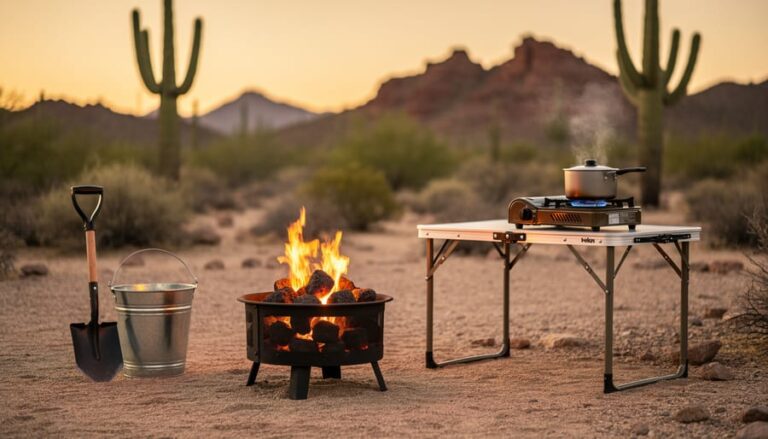
Replace your traditional campfire dreams with propane alternatives—a portable gas fire pit delivers the same gathering-spot warmth without the risk. Pack a JetBoil or similar gas camping stove for cooking; they’re lightweight, efficient, and perfectly legal under most restriction levels. Bring battery-powered lanterns instead of candles, and keep a shovel and water bucket in your vehicle regardless of restriction stage.
Arizona’s fire season mirrors our Ontario summer, typically running May through September, but drought conditions increasingly extend restrictions year-round. The state’s zero-tolerance enforcement means rangers will cite violations immediately, with fines starting at $5,000. Respect these rules—they protect both the stunning desert ecosystems you’ve traveled to experience and the communities calling this rugged landscape home.
Understanding Fire Restrictions in Arizona Right Now
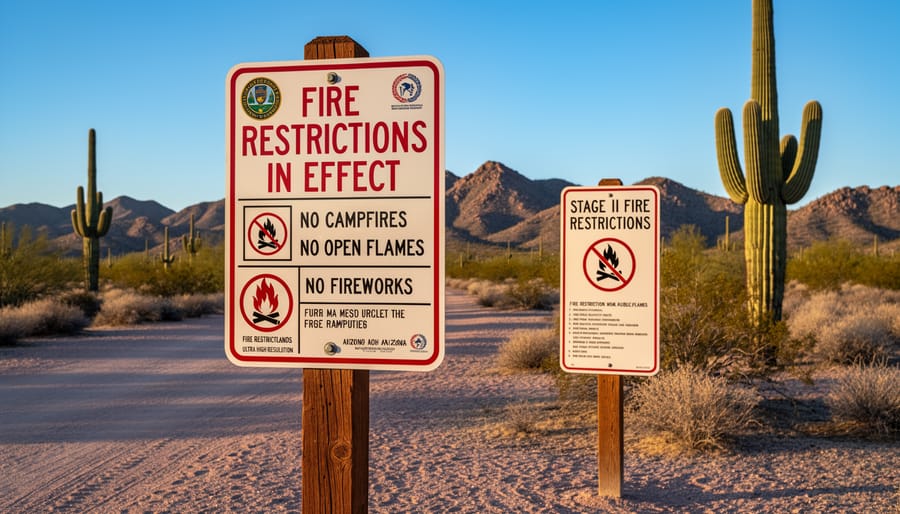
Where to Find Today’s Fire Restriction Updates
Getting real-time fire restriction updates in Arizona is easier than you might think, and staying informed can save your camping trip from unexpected disruptions. The Arizona Department of Forestry and Fire Management website is your go-to resource, offering county-by-county restriction maps updated daily during fire season. I always bookmark their page before heading south from Ontario—it’s become as essential as checking trail closures and alternatives back home.
For mobile-friendly options, download the free Ready for Wildfire app, which sends push notifications when restrictions change in your selected areas. Arizona Fire Info on social media provides quick updates too, perfect for those already on the road. Many national forests also have dedicated fire restriction hotlines you can call for immediate information.
Here’s an insider tip: sign up for InciWeb alerts before your trip. This inter-agency system emails you when fire activity or restrictions change near your camping location. Park rangers told me most visitors miss this resource entirely. Also consider downloading offline maps through apps like Gaia GPS, as cell service in remote Arizona camping areas can be spotty when you need updates most.
What Each Restriction Stage Means for Your Campfire Plans
Arizona’s fire restriction system operates differently from what you’re used to back in Ontario, so let’s break down what each stage actually means for your camping adventure.
Stage 1 restrictions are the mildest level you’ll encounter. Think of this as Arizona’s way of saying “be extra careful.” You can still enjoy campfires in developed campgrounds with established fire rings, but wood and charcoal fires are off-limits in dispersed camping areas. Here’s the good news: you can still use your portable camp stove with shut-off valves. Smoking is restricted to enclosed vehicles or developed recreation sites only.
When Stage 2 restrictions kick in, things get more serious. All wood and charcoal campfires are prohibited, even in established fire rings at developed campgrounds. This catches many Ontario visitors off-guard since we’re so accustomed to evening campfires being part of the experience. However, you can still cook meals using portable stoves with on/off switches in cleared areas. My insider tip? Pack a small portable propane stove as backup – they’re lifesavers during restrictions.
During fire closures, the most severe level, essentially all fire use is banned except in rare circumstances. Even smoking is prohibited outdoors.
Here’s an eco-friendly suggestion that works wonderfully: embrace the restriction as an opportunity to experience Arizona’s incredible stargazing without campfire smoke obscuring your view. The desert sky at night is absolutely spectacular, and you’ll actually appreciate the forced perspective shift. Plus, you’re protecting these precious desert ecosystems from devastating wildfires that can destroy habitats for generations.
Smoke and Air Quality: Planning Your Outdoor Adventures Safely
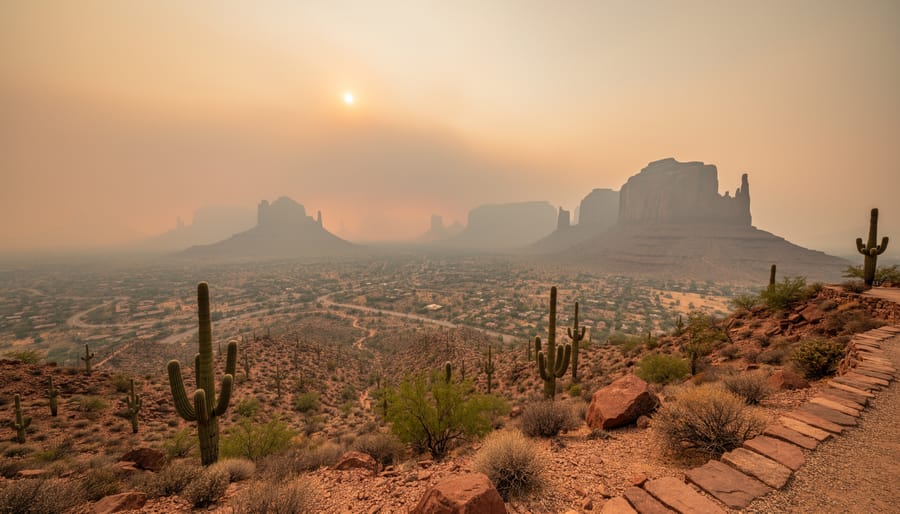
Reading the Air Quality Index Like a Pro
Think of the Air Quality Index as your outdoor adventure weather forecast, but for breathing! The AQI runs from 0 to 500, and here’s your quick decoder: 0-50 is green (go enjoy yourself!), 51-100 is yellow (sensitive folks should take it easy), 101-150 is orange (time to rethink that challenging hike), and anything above 150 means it’s probably smart to stay indoors or head home early.
Coming from Ontario, you’re used to generally clean air—our typical summer days hover around 20-40 on the AQI. When Arizona wildfires kick up, you might see numbers jump to 150 or higher, making the air look hazy and smell smoky. That’s like comparing a clear Georgian Bay morning to standing downwind from a campfire all day.
Here’s an insider tip: Download a free AQI app before your trip. Check it each morning like you’d check trail conditions back home. If the number’s creeping above 100, swap that strenuous canyon hike for exploring indoor attractions or visiting higher elevations where air quality often improves. Your lungs will thank you, and you’ll still have amazing stories to share.
When Smoke Should Change Your Plans
When you step outside and notice haze obscuring distant mountains or catch the distinct smell of smoke, it’s time to reconsider your outdoor plans. I learned this lesson during a camping trip when I pushed through poor air quality—spending the day coughing and feeling sluggish taught me that sometimes flexibility beats stubbornness.
Check your weather app’s air quality index before heading out. If it reads above 100, vulnerable family members (kids, seniors, anyone with asthma) should stay indoors. Above 150, even healthy adults should limit outdoor activities.
Watch for these warning signs: difficulty breathing, chest tightness, or irritated eyes and throat. If you experience these symptoms, head indoors immediately. Keep windows closed and run air conditioning on recirculation mode to filter out particles.
Rather than letting smoke ruin your adventure, pivot to indoor experiences. Arizona offers incredible museums, geological exhibits, and visitor centers that bring the landscape indoors through interactive displays. The approach mirrors finding alternative outdoor activities when conditions change unexpectedly.
Pack N95 masks in your travel kit—they’re game-changers for unavoidable outdoor moments during smoky conditions. Stay hydrated, as smoke exposure increases dehydration. Remember, protecting your health ensures you’ll enjoy many more adventures ahead.
Camping Responsibly During Fire Restrictions
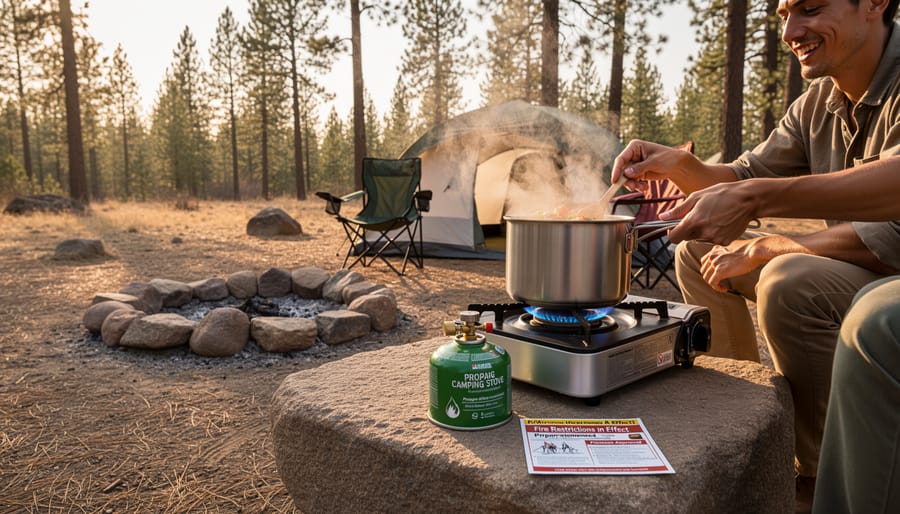
Campfire Alternatives That Still Feel Like Camping
Here’s the good news: fire restrictions don’t mean your camping trip loses its magic. I learned this firsthand during my first Arizona adventure when Stage 2 restrictions caught me off-guard. Instead of sulking, I discovered propane fire pits—they’re completely legal under most restrictions and honestly? They’re game-changers. No smoke in your eyes, instant warmth at the flip of a switch, and you can still roast marshmallows to golden perfection.
Portable camp stoves approved under fire restrictions work beautifully for cooking. I’ve made incredible one-pot meals on my little Coleman that rivaled anything cooked over open flames. Pro tip: bring a Bluetooth speaker and queue up crackling fire sounds—it adds that cozy campfire ambiance without the flames.
String up some solar-powered lanterns around your site for that warm, flickering glow. They’re eco-friendly, create beautiful atmosphere, and you’re helping protect Arizona’s stunning desert landscapes from wildfire risk. On my last trip, our propane setup became the gathering spot for neighboring campers who were equally amazed at how authentic it felt.
The reality? Adapting to fire restrictions actually simplified our camping routine while keeping everyone safer. You’ll still make memories, share stories under the stars, and wake up to Arizona’s breathtaking sunrises—just with a little creative thinking.
Essential Gear for No-Fire Camping
When fire restrictions are in place, you’ll need to rethink your camping setup, but trust me, you won’t sacrifice comfort or those memorable outdoor moments. I’ve adapted my gear over the years, and honestly, some of these alternatives have become my go-to choices even when fires are allowed.
Your camp stove becomes your best friend during restriction periods. A reliable propane or butane camping stove lets you whip up everything from morning coffee to gourmet trail meals without breaking any rules. I personally love compact canister stoves for their simplicity, but if you’re car camping, a two-burner propane stove gives you more cooking flexibility. Pack extra fuel—it’s surprisingly easy to underestimate how much you’ll need.
For lighting, LED lanterns and headlamps replace the campfire’s glow beautifully. Look for warm-toned LEDs that create that cozy ambiance you’d normally get from flames. String lights powered by rechargeable batteries add a magical touch to your campsite while staying eco-friendly.
Don’t forget a quality cooler to keep perishables fresh, and consider meal-prepping at home to minimize cooking time and fuel use. Insider tip: freeze water bottles to use as ice packs—they keep food cold and give you drinking water as they melt. Pack layers for warmth since you won’t have fire heat, and bring extra blankets for chilly evenings under the stars.
Why Arizona’s Fire Season Matters to Ontario Travelers
If you’re an Ontario traveler planning a desert adventure, understanding Arizona’s fire season can make the difference between an amazing trip and a frustrating one. Back home, we’re used to fire concerns peaking in late summer, but Arizona’s fire season runs quite differently—typically heating up from April through June, well before our own fire risks intensify.
This timing matters because Arizona’s desert climate operates on a completely different schedule than Ontario’s temperate forests. While we’re enjoying spring blooms and mild temperatures, Arizona is experiencing its driest, windiest conditions of the year. The desert landscape dries out after winter rains, creating the perfect storm for wildfire activity. Understanding this rhythm helps you plan your camping trips strategically—consider visiting during Arizona’s milder winter months (November through March) when fire restrictions tend to be lighter and temperatures are incredibly pleasant for outdoor activities.
Here’s an insider tip: just as checking current conditions before heading to your favorite Ontario trail is essential, monitoring Arizona’s fire restrictions should become part of your pre-trip routine weeks before departure. The restrictions can escalate quickly based on rainfall, humidity, and wind patterns.
From an eco-friendly perspective, respecting these fire restrictions isn’t just about following rules—it’s about protecting fragile desert ecosystems that take decades to recover from fire damage. Unlike Ontario’s forests, which naturally regenerate after fires, Arizona’s saguaro cacti and desert vegetation can be permanently destroyed. By planning around peak restriction periods and adapting your camping style accordingly, you’re helping preserve these ancient landscapes for future generations of travelers to enjoy.
What to Do If You Spot a Wildfire
If you’re exploring Arizona’s backcountry and spot smoke or flames, staying calm and acting quickly can make all the difference. Here’s what you need to know to respond safely and effectively.
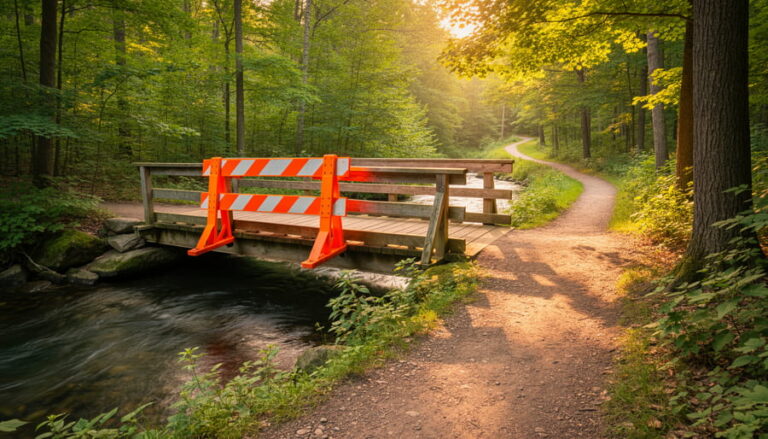
Your first step is to call 911 immediately. Don’t assume someone else has already reported it—every call helps emergency responders pinpoint the fire’s location and size. Share your exact location using landmarks, GPS coordinates, or trail markers. If you’re familiar with trail closures from back home, you’ll appreciate how vital accurate information is for understanding closures and keeping everyone safe.
Once you’ve reported the fire, assess your surroundings. If the fire is small and distant, carefully move away from it, heading toward established trails or roads. Never try to fight a wildfire yourself—leave that to trained professionals. Keep your evacuation route in mind and avoid heading uphill, as fires spread faster on slopes.
Here’s an insider tip: Download offline maps before your Arizona adventure. Cell service can be spotty in remote areas, but having a downloaded map ensures you can navigate even when connectivity fails.
If you’re camping, grab your essentials quickly—identification, car keys, phone, and water—and evacuate immediately. Don’t waste time packing everything. Your safety matters more than gear.
Remember, wildfires move unpredictably. Wind shifts can change everything in minutes, so trust your instincts. When in doubt, get out and get to safety fast.
Respecting fire restrictions isn’t just about following rules—it’s about protecting the incredible landscapes we travel so far to experience. Whether you’re exploring Arizona’s desert canyons or Ontario’s boreal forests back home, fire safety is a shared responsibility that connects outdoor enthusiasts everywhere. When we adapt our camping plans, choose the right gear, and stay informed about current conditions, we’re ensuring these wild spaces remain beautiful for future adventurers.
Think of it this way: the same respect you show for Ontario’s backcountry translates perfectly to Arizona’s unique terrain. Both provinces and states face their own fire challenges, and by being mindful travelers, we contribute to conservation efforts wherever we roam. Check those restriction levels before you leave, pack your propane stove instead of your campfire grill, and embrace the adventure of trying something new.
Arizona’s stunning vistas are waiting for you—towering saguaros, painted sunsets, and star-filled skies that’ll take your breath away. With a little preparation and a commitment to responsible outdoor practices, you can enjoy every moment safely and sustainably. Happy trails, and remember: the best adventures are the ones where we leave no trace but take home incredible memories.

+ There are no comments
Add yours