
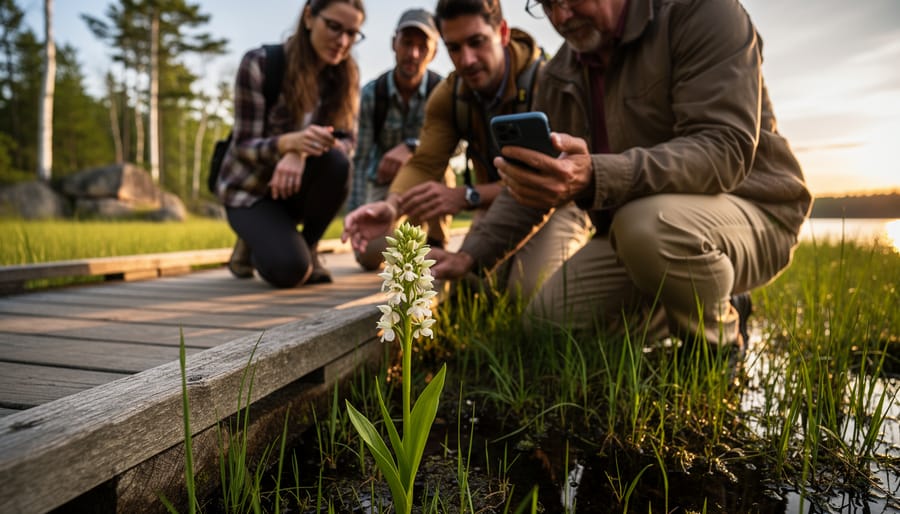
Step into any Ontario park and you’re walking through a living library—each tree, bird call, and wildflower telling the story of ecosystems that have evolved over thousands of years. Biodiversity conservation isn’t just about protecting nature; it’s about preserving the intricate web of life that makes our provincial parks so extraordinary, from the rare Massasauga rattlesnakes in Georgian Bay to the delicate orchids tucked along Algonquin trails.
Ontario’s 340 parks protect over 9 million hectares of diverse habitats, safeguarding species you won’t find anywhere else on Earth. When you visit these spaces, you’re not just a tourist—you’re part of an active conservation story. Every interpretive program you join, every guided hike you take, and every citizen science initiative you participate in helps researchers understand and protect these ecosystems better.
The beauty of biodiversity conservation in Ontario parks is how accessible it is. You don’t need a biology degree to make a difference. Families can join BioBlitz events to catalog species, photographers contribute valuable data through wildlife observations, and day-trippers support habitat restoration simply by staying on designated trails. These parks offer hands-on learning experiences where you’ll discover why that fallen log matters, how controlled burns regenerate forests, and what makes certain wetlands irreplaceable.
Whether you’re seeking your first glimpse of a threatened species or hoping to teach your kids about ecosystem connections, Ontario parks transform conservation from abstract concept into unforgettable adventure.
What Biodiversity Really Means in Ontario’s Backyard
When you step into one of Ontario’s parks, you’re not just seeing trees and trails—you’re witnessing biodiversity in action. But what does that actually mean? Simply put, biodiversity is the incredible variety of life all around you: every species of plant, animal, and tiny organism, plus the different habitats they call home and even the genetic differences within each species.
Think about your last park visit. Maybe you spotted a white-tailed deer nibbling near the trail, heard the distinct call of a common loon echoing across the lake, or noticed brilliant red trilliums carpeting the forest floor in spring. Each of these encounters represents a thread in Ontario’s rich biodiversity tapestry.
Ontario’s provincial parks protect an amazing range of ecosystems. You’ll find everything from the rocky Canadian Shield landscapes of Algonquin, where black bears and moose roam among towering white pines, to the Carolinian forests of southern parks like Rondeau, home to species you won’t find anywhere else in Canada—like the spiky-shelled spiny softshell turtle. Wetlands buzz with dragonflies and chorus frogs, while windswept shorelines along the Great Lakes provide crucial stopover points for migrating monarch butterflies and songbirds.
Here’s an insider tip: biodiversity isn’t just about the “celebrity” species. Those mushrooms sprouting from a rotting log? They’re breaking down organic matter and feeding the soil. The minnows darting in the shallows? They’re feeding larger fish and keeping aquatic ecosystems balanced. Everything connects.
Genetic diversity matters too, though it’s harder to see. Those seemingly identical eastern white cedars along the cliff might actually have different genetic traits that help some survive droughts while others resist pests—nature’s insurance policy against change.
When you understand that every hike, paddle, or campfire moment happens within this complex web of life, the parks become even more fascinating. You’re not just a visitor—you’re part of the story.
The Threats Our Parks Are Fighting Against
Ontario’s parks face real challenges, but here’s the thing—understanding these threats helps us appreciate just how incredible the ongoing habitat restoration efforts truly are.
Take a walk through Rondeau Provincial Park and you might spot garlic mustard carpeting the forest floor. This invasive plant looks harmless enough with its delicate white flowers, but it’s actually choking out native wildflowers that trilliums and other woodland species depend on. Park staff discovered it spreading near popular trails, likely hitchhiking on visitors’ boots. The good news? They’ve organized volunteer pull-days where families help remove it—turning a threat into a hands-on learning opportunity.
Climate change is rewriting the rulebook across Ontario’s parks. At Algonquin Provincial Park, researchers have noticed moose populations shifting their patterns. Warmer winters mean more ticks survive, affecting these iconic animals. Meanwhile, southern species like opossums are appearing farther north than ever recorded. It’s like watching nature’s map get redrawn in real-time.
The story gets more complex when you consider habitat fragmentation. Picture Presqu’ile Provincial Park—a peninsula surrounded by development. Birds migrating through have fewer places to stop and refuel. That’s why protecting these remaining green spaces matters so much. Every marsh, every forest patch serves as a crucial rest stop on journeys spanning thousands of kilometers.
Human impact doesn’t always look dramatic. Sometimes it’s as simple as feeding ducks at a park beach. Those bread crumbs? They contribute to algae blooms that disrupt aquatic ecosystems. Or consider light pollution from nearby towns affecting nocturnal species in parks like Sandbanks, where night-flying insects struggle to navigate.
Here’s an insider tip: when you visit parks, stick to marked trails. Those shortcuts through the underbrush? They fragment habitat and spread invasive seeds. Clean your boots between parks too—it’s a simple action that prevents hitchhiking invaders.
The beautiful part is that parks aren’t fighting these battles alone. Every visitor who learns about these challenges becomes part of the solution, turning awareness into action one park visit at a time.
How Ontario Parks Teach Conservation (And Why It Works)
Hands-On Programs for All Ages
Ontario Parks offers incredible opportunities to get your hands dirty—literally—while making a real difference for local wildlife. The conservation education programs span everything from leisurely guided nature walks to intensive citizen science projects that contribute to actual research.
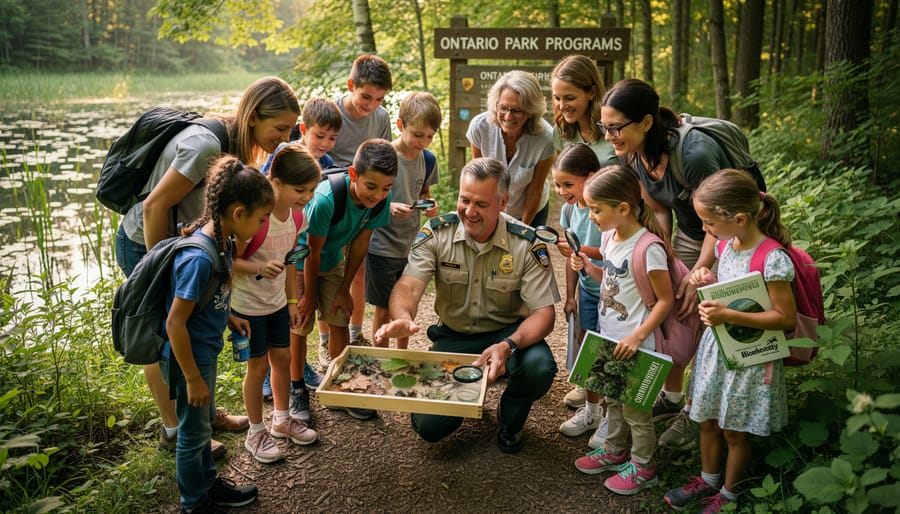
Interpreter-led programs are your gateway to understanding biodiversity up close. Park naturalists lead fascinating excursions where you might help identify bird species during migration counts or learn to recognize native plants versus invasive ones. These programs typically run on weekends during peak season (May through October), and here’s an insider tip: book at least two weeks ahead for popular parks like Algonquin or Killarney, as spots fill quickly.
Junior naturalist activities spark curiosity in young conservationists. Kids earn badges by completing nature scavenger hunts, building insect hotels, or participating in pond dipping sessions. My nephew became obsessed with salamanders after one of these programs at Frontenac Provincial Park—he still talks about it two years later.
Citizen science projects let you contribute meaningful data to ongoing research. You might monitor frog calls using smartphone apps, document butterfly populations along designated trails, or help with turtle nesting surveys. These programs welcome all skill levels, and staff provide training on-site.
Early morning and twilight programs often yield the best wildlife sightings, so don’t sleep in. Many parks also offer specialized workshops during shoulder seasons (April and late October) when crowds thin out but biodiversity remains rich. Check individual park websites a month before your visit, as program schedules vary and some require advance registration. Bring comfortable walking shoes, water, and your curiosity.
Self-Guided Learning Adventures
Ontario Parks make it wonderfully easy to explore biodiversity at your own pace, whether you’re an early bird who loves sunrise walks or someone who prefers a leisurely afternoon ramble.
Most parks feature well-marked interpretive trails with educational signage that turns a simple hike into a fascinating learning experience. These signs aren’t just dry facts—they tell stories about the plants, animals, and ecosystems you’re walking through. I love how Algonquin Park’s Spruce Bog Boardwalk uses engaging graphics and simple explanations to reveal why certain plants thrive in acidic conditions. It’s like having a friendly naturalist walking beside you.
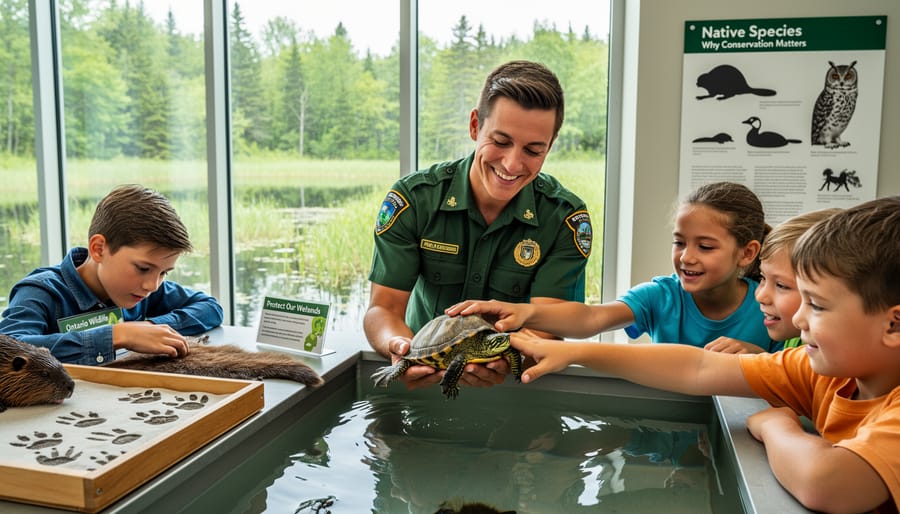
Visitor centers are absolute goldmines for self-guided learners. Many feature interactive displays, touch-tables with specimens, and detailed exhibits about local species. Pro tip: grab the free trail guides available at most centers—they’re packed with insider information about what to look for during different seasons.
Discovery zones cater perfectly to families, with hands-on activities that make learning tactile and fun. Kids can examine animal tracks, identify bird calls, and even solve ecology puzzles.
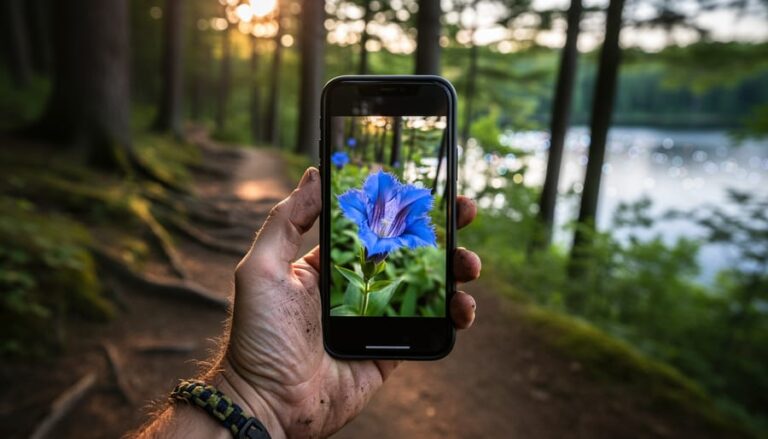
The real game-changer? Park-specific mobile apps and digital guides. Download these before your visit (cell service can be spotty), and you’ll have species identification tools, audio tours, and even augmented reality features right in your pocket. The iNaturalist app works brilliantly in Ontario parks—snap a photo of that mysterious wildflower, and the community helps identify it while contributing to biodiversity data.
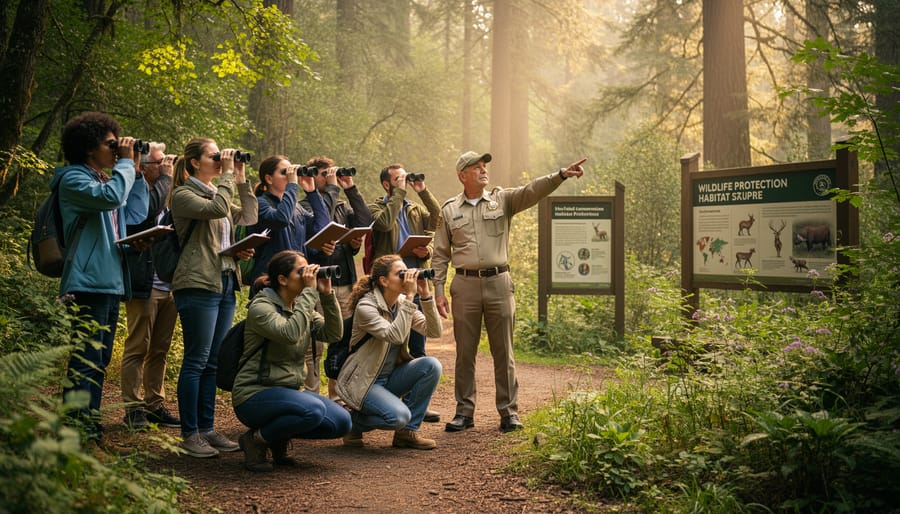
Remember to bring binoculars, a notebook, and your curiosity. The best discoveries happen when you slow down and really observe.
Special Events and Seasonal Experiences
There’s something magical about joining dozens of fellow nature enthusiasts at dawn for a BioBlitz, armed with nothing but curiosity and a smartphone app. I’ll never forget my first one at Presqu’ile Provincial Park, where our team discovered 47 different species in just four hours – from tiny lichens to soaring hawks. These intensive biodiversity surveys turn everyone into citizen scientists, and parks across Ontario host them throughout the warmer months. No experience necessary; just show up ready to learn.
Bird banding demonstrations offer another unforgettable window into conservation work. Watching researchers gently extract songbirds from mist nets, record their measurements, and attach tiny numbered bands feels like witnessing nature’s backstage pass. Long Point Provincial Park runs regular demonstrations during spring and fall migrations, and there’s something profoundly moving about holding a ruby-throated hummingbird in your palm before releasing it skyward.
If you visit Sandbanks Provincial Park or Pinery Provincial Park between May and September, you might catch turtle monitoring activities. Park naturalists and volunteers track nesting sites, protect eggs from predators, and sometimes assist hatchlings on their journey to water. I once helped shield a dozen tiny painted turtles as they scrambled toward the lake – an experience that made conservation feel incredibly personal and immediate.
Many parks also host seasonal festivals celebrating local biodiversity. Algonquin Provincial Park’s Howl nights in August let visitors join the iconic wolf howls, while spring wildflower festivals at parks like Mono Cliffs showcase ephemeral blooms you’d otherwise miss. Check park websites before visiting, as these special events often require advance registration and fill up quickly.
Parks Where Conservation Education Comes Alive
Ready to witness biodiversity conservation in action? Ontario’s park system offers incredible eco-adventure opportunities where learning meets exploration. Here are five standout destinations that bring conservation education to life across diverse ecosystems.
Algonquin Provincial Park stands as Ontario’s conservation classroom, where the park’s naturalist programs have been inspiring visitors for decades. The Sunday Creek Trails offer guided nature walks where interpreters share fascinating insights about the park’s 2,400-plus lakes and the species that depend on them. Don’t miss the Visitor Centre’s captivating exhibits on wildlife corridors and forest regeneration. Insider tip: Join the early morning wolf howls in August—it’s an unforgettable way to connect with the park’s apex predators while learning about their crucial role in maintaining ecosystem balance. Visit during shoulder seasons to minimize your environmental footprint and enjoy quieter trails.
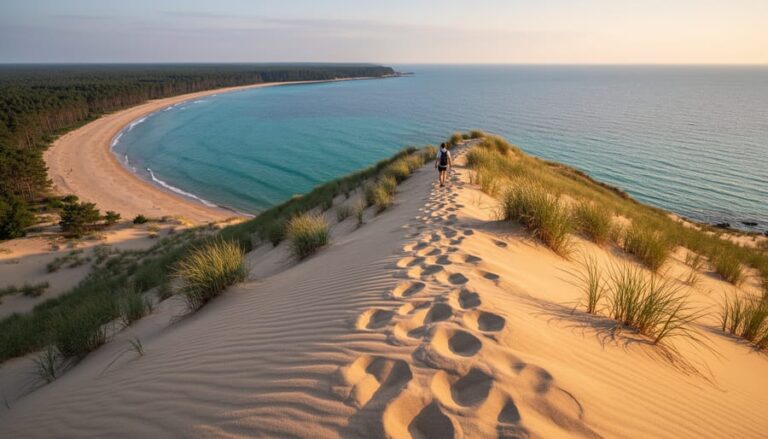
Pinery Provincial Park on Lake Huron’s shores protects one of Ontario’s rarest ecosystems: oak savanna habitat. The park’s interpretive programs focus on this endangered landscape, home to species found nowhere else in the province. Walk the Carolinian Trail with a naturalist to discover why this small patch of southern habitat matters so much. The visitor centre runs engaging programs about reptile conservation, including the endangered Fowler’s toad. Eco-friendly visiting tip: Stick to designated boardwalks to protect fragile dune vegetation and always dispose of waste properly to keep wildlife safe.
Presqu’ile Provincial Park transforms into a birder’s paradise each spring and fall, making it perfect for learning about migratory species conservation. The Marsh Boardwalk Trail provides front-row seats to wetland biodiversity, while park naturalists offer guided bird banding demonstrations that reveal the science behind conservation monitoring. The lighthouse area offers exceptional opportunities to witness massive bird migrations—bring binoculars and a field guide.
Killarney Provincial Park showcases the Canadian Shield’s rugged beauty while teaching visitors about ecosystem recovery. The park’s La Cloche Silhouette Trail area reveals landscapes still healing from historic acid rain damage, offering powerful lessons about environmental restoration. Join ranger-led canoe programs on George Lake to learn about aquatic biodiversity and water quality monitoring.
Rondeau Provincial Park protects Canada’s southernmost Carolinian forest, hosting educational programs about rare species conservation. The marsh trail system provides excellent opportunities to spot diverse wildlife while learning about wetland protection. Time your visit for spring migration when the park comes alive with warblers, and participate in citizen science bird counts to contribute directly to conservation research.
How Your Visit Actually Helps Protect Wildlife
Every time you visit an Ontario park, you’re doing more than just enjoying a beautiful day outdoors—you’re actively supporting biodiversity conservation in ways that create real, measurable impact. Your entrance fees don’t just disappear into a general fund; they directly fund habitat restoration projects, endangered species monitoring programs, and the wildlife recovery initiatives that are helping threatened populations bounce back across the province.
Here’s an insider tip: many visitors don’t realize that participating in interpretive programs multiplies their conservation contribution. When you join a guided nature walk or attend an evening presentation, you’re helping justify continued funding for education staff who conduct crucial species surveys and habitat assessments during their regular duties. These front-line naturalists often spot the first signs of ecological changes that trigger conservation responses.
Beyond your visit, there are simple ways to amplify your impact. Consider becoming a citizen scientist by downloading apps like iNaturalist before your trip—park staff actually use visitor observations to track species distribution and biodiversity health. Snap photos of wildflowers, birds, or insects you encounter, and your contributions become part of valuable long-term datasets.
Supporting park stores makes a difference too. Purchasing field guides or local crafts generates revenue that supplements conservation budgets, while choosing eco-friendly souvenirs over disposable items demonstrates visitor values that influence park management decisions.
The most powerful contribution? Sharing your experiences. When you post photos, write reviews, or tell friends about discovering a rare orchid or spotting nesting turtles, you’re building public support for protecting these spaces. Every visitor who leaves inspired becomes an advocate for the wild places and creatures that make Ontario parks truly extraordinary.
Tips for Making Your Next Park Visit a Conservation Learning Experience
Transform your next park adventure into a meaningful conservation experience with these practical tips that’ll deepen your connection to Ontario’s incredible biodiversity.
Start with smart packing choices that minimize your impact. Bring reusable water bottles, pack snacks in cloth bags rather than single-use plastics, and toss a pair of binoculars into your daypack. A field guide specific to Ontario wildlife makes an excellent conversation starter and helps identify species you encounter. Park naturalist Sarah Chen from Algonquin Provincial Park suggests keeping a small notebook for sketching observations—it’s far more engaging for kids than just taking photos.
Speaking of photography, practice ethical wildlife documentation. Stay at least 30 meters from animals, never feed or bait them for better shots, and resist the urge to pick flowers or disturb nests for that perfect Instagram moment. “The best wildlife photos come from patient observation, not interference,” Chen reminds visitors.
Turn your hike into an interactive learning experience with simple conversation starters. Ask children to count how many different bird calls they hear, or challenge them to spot three types of pollinators. Try the “web of life” game—pick any plant or animal and discuss what eats it and what it eats, illustrating interconnectedness right on the trail.
Practice Leave No Trace principles by staying on marked trails, packing out everything you bring in, and leaving natural objects where you find them. That beautiful pinecone might be someone’s dinner.
Join scheduled interpretive programs when available—these ranger-led walks offer insider knowledge you’d never gain alone. Many parks also offer citizen science opportunities where you can contribute real data to conservation research projects.
Finally, extend the learning beyond your visit. Discuss what you observed over dinner, research species you couldn’t identify, or plant native species in your garden to support local biodiversity. Every park visit becomes more meaningful when it connects to ongoing conservation awareness in your daily life.
Remember that family watching the monarch butterflies? Their morning visit turned into an annual tradition. The daughter who carefully counted caterpillars now volunteers at her local conservation area, teaching others what she learned in the park that day. That’s the beautiful ripple effect of connecting with nature—one small moment can spark a lifetime of caring for our wild spaces.
Your own conservation story starts with a single step onto the trail. Whether you’re planning a weekend camping trip, joining a guided nature walk, or simply exploring a new park with your family, you’re becoming part of Ontario’s biodiversity network. Each visit deepens your connection to the land and its creatures.
Ready to make your next adventure count? Book a Discovery program at your nearest Ontario Park—many offer hands-on species monitoring experiences perfect for beginners. Download the iNaturalist app before you go and document what you find; your observations contribute to real scientific research. Pack your binoculars, grab your curiosity, and head out. The monarchs, turtles, and ancient forests are waiting. Your conservation journey begins now, and the parks are your classroom.







+ There are no comments
Add yours