
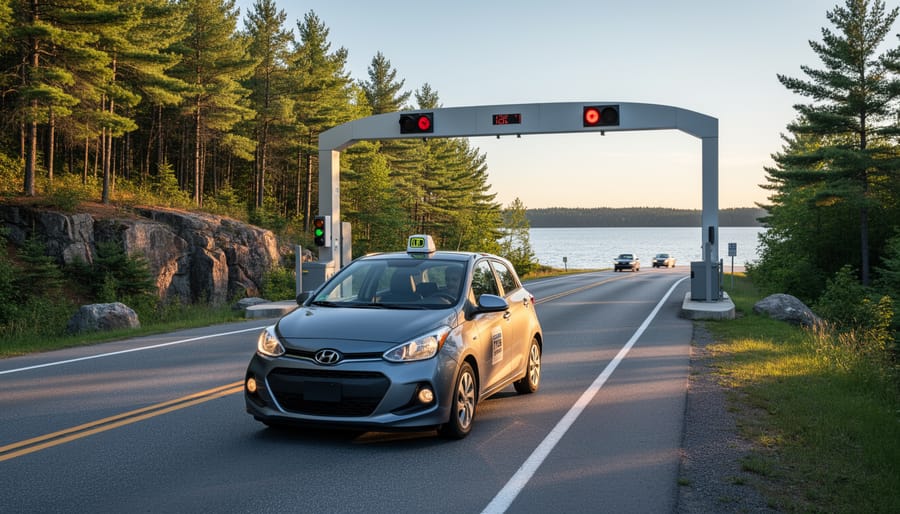
Check your Zipcar account dashboard within 48 hours of passing through any toll—charges appear automatically under your trip details, eliminating surprise bills and letting you track costs in real-time. Download toll receipts directly from your account history to verify charges match your actual route, especially when exploring multiple parks in one day.
Request a transponder-equipped vehicle when booking if you’re heading to destinations like Algonquin Park or Niagara Falls, where 407 ETR or highway tolls can add $15-40 to your trip. Zipcar’s toll program bills your account at the actual toll rate plus a small convenience fee, typically $1-2 per toll, which beats rental car companies charging daily transponder fees whether you use tolls or not.
Plan toll-free routes using Google Maps’ “avoid tolls” setting before departing—you’ll often discover scenic backroads that save money while revealing hidden conservation areas and roadside attractions most tourists miss. For Bruce Peninsula or Tobermory trips, Highway 6 offers a completely toll-free journey with stunning Georgian Bay views.
Set up trip alerts in your Zipcar app to receive toll notifications immediately after each charge posts, giving you peace of mind during multi-day adventures. This transparency means you can budget accurately for weekend getaways without waiting weeks for mysterious charges to appear on your credit card statement.
The beauty of car-free living shouldn’t mean missing Ontario’s incredible outdoor spaces—understanding how Zipcar handles tolls removes one more barrier between you and your next hiking adventure.
Why Zipcar Makes Sense for Park Adventures
If you’re living car-free in Toronto or another Ontario city, the pull of provincial parks and conservation areas can feel frustratingly just out of reach. That’s where Zipcar becomes your ticket to adventure. I’ve met countless urban dwellers who discovered that occasional car rentals open up an entirely new world of weekend possibilities without the burden of vehicle ownership.
Let’s talk numbers for a moment. Owning a car in Ontario costs the average driver between $9,000 and $12,000 annually when you factor in insurance, parking, maintenance, and gas. Compare that to a Zipcar day trip to Algonquin or Bruce Peninsula: you’re typically looking at $80-120 for the vehicle rental, plus gas and any tolls. Even if you take one park adventure monthly, you’re saving thousands while still accessing nature whenever the mood strikes.
The flexibility factor really shines for spontaneous trips. Spotted a gorgeous weather forecast for the coming weekend? Book a Zipcar Thursday evening and you’re hiking backcountry trails by Saturday morning. No need to coordinate with friends who own vehicles or commit to rigid bus schedules that limit your exploration time.
From an environmental perspective, car-sharing services like Zipcar reduce the overall number of vehicles on roads. Studies show that each shared vehicle replaces up to 13 privately owned cars, meaning less manufacturing demand and reduced urban congestion. You’re making an eco-conscious choice while still enjoying the freedom wheels provide.
Zipcar works beautifully for day trips and overnight camping excursions within 200-300 kilometers of your city. Think trips to Killarney, Sandbanks, or Elora Gorge. For longer multi-week road trips, traditional rentals might offer better value, but for those spontaneous nature escapes that define Ontario summers, Zipcar hits the sweet spot between convenience and cost.
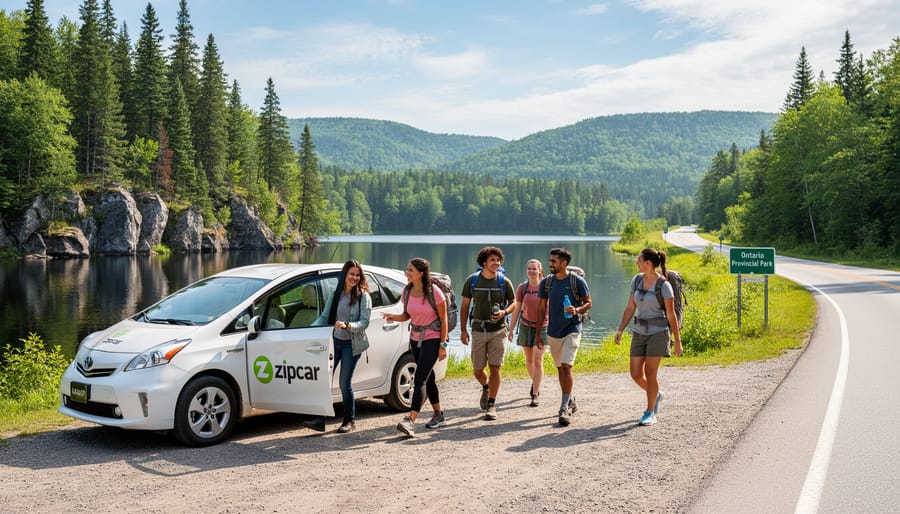
The Toll Reality: What You’ll Encounter Getting to Ontario’s Parks
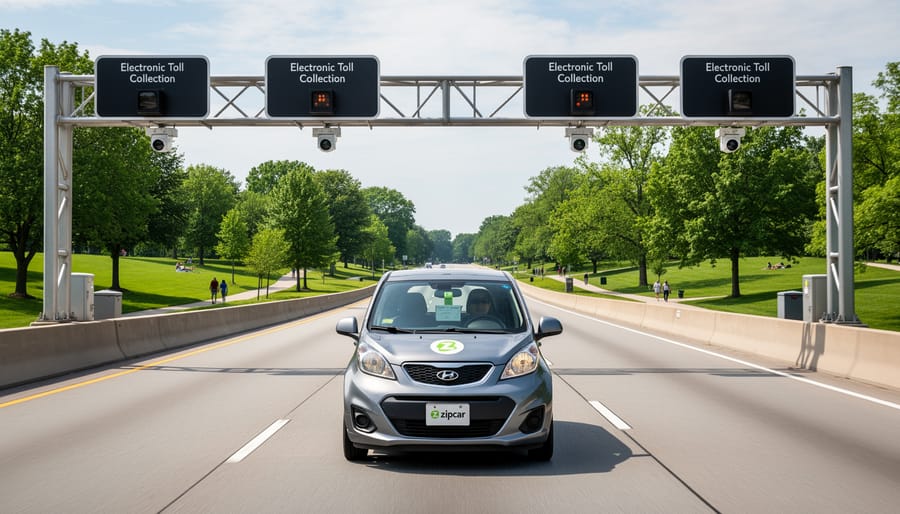
Common Toll Routes to Popular Destinations
Planning your escape to Ontario’s natural wonders? Here’s what to expect toll-wise on popular routes from major cities.
Heading to Algonquin Park from Toronto means taking Highway 400 North, which is toll-free all the way. The same goes for routes to Frontenac Provincial Park near Kingston—you’ll cruise along Highway 401 without passing through any toll booths. Good news for budget-conscious adventurers!
The Bruce Peninsula is similarly toll-free from most Ontario cities. Whether you’re coming from Toronto, Ottawa, or London, you’ll enjoy scenic drives on highways that won’t charge you a cent extra.
However, if you’re using Highway 407 ETR to bypass Toronto traffic when heading north or east, those charges will apply. This privately-operated toll highway can save you significant time during rush hour, but expect costs ranging from fifteen to thirty dollars depending on distance traveled. Your Zipcar account will automatically be billed for these tolls within a few weeks.
One insider tip: leaving early Saturday morning means you can skip the 407 entirely and still make great time to trailheads. You’ll save money and enjoy quieter highways as you head toward your outdoor adventure.
How Zipcar’s Toll System Actually Works
The Transponder in Your Zipcar
Here’s the good news: you don’t need to fumble with change or stress about missed toll booths. Every Zipcar comes equipped with a built-in transponder that does all the heavy lifting for you. Think of it as your invisible travel companion, quietly communicating with toll systems as you cruise toward your destination.
When you drive through toll plazas on highways like the 407 ETR or heading toward cottage country, the transponder automatically registers the charge. You won’t need to stop, tap, or wave anything—just keep driving. It’s honestly one of those “set it and forget it” conveniences that makes the whole car-sharing experience feel seamless.
After your trip, you’ll receive an itemized receipt showing exactly which tolls you encountered and when. Each toll appears as a separate line item, so there’s complete transparency. The charges typically show up within a few days of your reservation ending, though some tolls (especially on the 407) can take up to two weeks to process.
One insider tip: snap a quick photo of your odometer and dashboard clock at toll plazas if you’re curious about tracking costs in real-time. This helps you estimate expenses before the official receipt arrives, making budgeting for those spontaneous park adventures much easier.
Understanding Your Bill After the Trip
After your adventure exploring Ontario’s beautiful trails and parks, you’ll want to keep an eye on your Zipcar account for toll charges. Here’s what to expect: toll fees typically show up on your bill within 5-10 business days after your trip, though some can take up to three weeks depending on the toll operator’s processing time.
The charges appear as separate line items on your Zipcar invoice, showing the exact toll location, date, and amount. Zipcar adds a small administrative fee (usually around $2-3) for each toll processed, which covers the convenience of not needing your own transponder or stopping to pay. This fee applies per toll event, not per individual charge, so if you pass through the same toll plaza multiple times in one day, you’ll see one admin fee plus the combined toll amounts.
Pro tip: Check your account a couple of weeks after your return to verify all charges match your route. If you kept a mental note of which toll roads you used (like Highway 407 heading to Bruce Peninsula), you can cross-reference them with your statement. Most members find the system refreshingly transparent – no surprises, just straightforward billing that lets you focus on planning your next outdoor escape rather than worrying about paperwork.
Insider Tips to Minimize Toll Costs
Toll-Free Alternate Routes Worth Considering
Sometimes the scenic route isn’t just prettier—it’s also lighter on your wallet. If you’re heading to Algonquin Park from Toronto, consider taking Highway 11 instead of the 407 ETR. Sure, it adds about 20-30 minutes to your journey, but you’ll save roughly $25-30 in tolls each way. The drive north through smaller communities like Orillia offers charming roadside stops and genuinely beautiful lakeside views.
For Niagara-bound adventurers, the QEW via local roads through Hamilton and St. Catharines avoids the 407 entirely. You might add 15 minutes compared to the toll route, but honestly? The extra time gives you a chance to spot farm stands selling fresh peaches in season—a bonus your passengers will appreciate.
Here’s my insider tip: departing early morning or later evening often means lighter traffic on free routes, making the time difference almost negligible. I’ve found that what you “lose” in minutes, you gain in reduced stress and extra cash for trail snacks or park permits. Download offline maps before leaving, since some alternate routes pass through areas with spotty cell coverage. The trade-off is usually worth it, especially for budget-conscious adventurers making multiple park trips throughout the season.
When Paying the Toll Is Actually Worth It
Sometimes that toll road charge is absolutely money well spent, especially when you’re racing the sunrise for a hike or maximizing a precious weekend. If you’re heading to Algonquin Park for a dawn paddle session, those saved highway minutes mean you’ll actually catch the mist rising off the lake instead of arriving mid-morning when everyone else does. The same goes for longer trips to places like Killarney or Tobermory – paying $15 in tolls can shave an hour off your drive, giving you more trail time and less windshield time. I’ve found toll roads particularly worthwhile when weather windows are tight or you’re squeezing in a day trip between work commitments. Plus, the smoother highway traffic means less stress and better fuel efficiency, which Zipcar members appreciate since you’re covering the gas anyway. Think of it as paying for convenience and extra adventure hours rather than just road access.
Real-World Example: A Weekend Trip to Frontenac Provincial Park
Last September, my friend Maya and I decided to escape Toronto for a weekend camping trip to Frontenac Provincial Park. Neither of us owns a car, so we booked a Zipcar on Thursday evening for a Friday-to-Sunday adventure. Here’s how the toll situation played out.
We picked up a Honda CR-V Friday morning around 8 AM and had two route options: the toll-free Highway 7 route (about 3 hours) or the faster Highway 401 East route (2.5 hours) that uses the tolled Highway 407 ETR for a portion. Eager to maximize our hiking time, we chose the 407.
The trip up was seamless. We cruised along the 407 for about 25 kilometers before merging onto the 401, then continued north toward Sydenham. The drive was gorgeous once we hit the backroads, with fall colours just starting to appear. We didn’t think twice about the toll because Zipcar handles everything automatically through their transponder.
Our weekend was incredible—canoeing, hiking the Slide Lake Loop Trail, and sleeping under the stars. Sunday afternoon, we drove back using Highway 7 to save on tolls, which added about 30 minutes but took us through charming small towns where we grabbed local honey and fresh apple cider.
The final bill arrived three days later. The Zipcar rental for 72 hours cost us 198 dollars (split between us), plus about 65 dollars in gas. The Highway 407 toll came to 12.40 dollars for our Friday morning stretch. Total per person: roughly 137 dollars for an entire weekend of freedom and adventure.
The lesson? Factor in roughly 15 to 20 dollars extra for tolls if you’re taking highways to parks east or north of Toronto. Check your route beforehand, decide whether the time savings justify the cost, and remember that Zipcar makes the payment process completely hassle-free. No stopping, no cash, no stress.
What to Do If Something Goes Wrong
Even with careful planning, toll-related hiccups can happen on your adventure-filled road trips. The good news? Most issues are surprisingly easy to resolve.
If you notice an unexpected toll charge on your Zipcar invoice, first double-check your route using a maps app to confirm which toll roads you actually used. Sometimes we forget about smaller tolls along the way. If the charge still seems incorrect, contact Zipcar’s customer support within 30 days with your trip details and the specific charge in question. They’re generally quite responsive and can review transponder records.
Transponder troubles are another common snag. If you suspect the in-car transponder isn’t working—perhaps you heard repeated beeping at a toll booth or got an error message—snap a quick photo of the device and its location in the vehicle. Report it immediately through the Zipcar app or website so you’re not held responsible for any missed tolls. Pro tip: Always do a quick visual check of the transponder during your pre-trip vehicle inspection.
For billing disputes, keep your trip summary and any relevant screenshots. Zipcar typically processes toll charges within a few weeks of your trip, so patience is key. If charges appear months later or seem duplicated, that’s definitely worth questioning.
Here’s an eco-friendly insider tip: Keeping detailed notes of your routes not only helps resolve billing issues but also helps you discover toll-free scenic alternatives for future adventures. Sometimes the slower, prettier route becomes your new favorite way to reach Ontario’s natural treasures.
Making Your Car-Free Park Adventure Smooth
Ready for a fantastic park adventure? Here’s how to make your Zipcar journey as smooth as the highway ahead.
Book strategically to maximize your time. Reserve your Zipcar a week or two in advance, especially during peak summer weekends when availability gets tight. I’ve learned the hard way that waiting until Thursday to book a Saturday trip often means settling for whatever’s left. Consider booking longer blocks – a full day reservation often costs less per hour than cobbling together shorter trips, plus you won’t feel rushed to return before sunset.
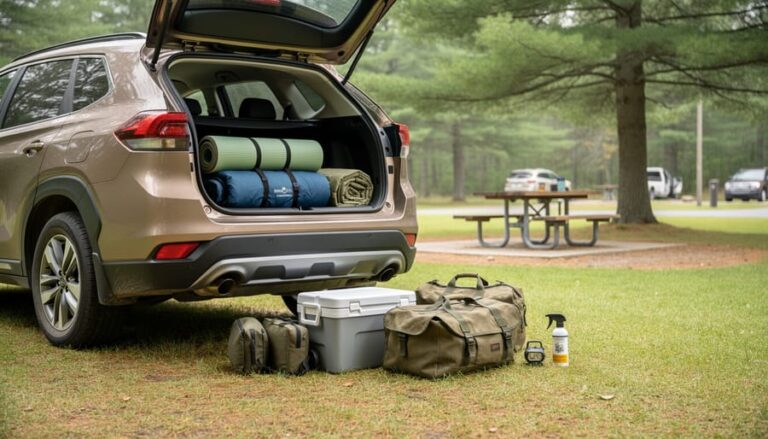
Pack smart for a car-free lifestyle. Since you’re borrowing the vehicle, bring reusable bags for groceries and gear – they fold up easily for your transit ride home. Keep a small emergency kit with phone chargers, snacks, and a reusable water bottle. Pro tip: download offline maps of your destination before leaving home, just in case cell service gets spotty near remote parks.
Understand the fuel policy before you go. Zipcar requires you to return vehicles with at least a quarter tank of gas. Use the gas card in the vehicle’s glove compartment for refueling – it’s already linked to your account. Most parks have gas stations within a few kilometers of their entrances, so plan for a quick fill-up on your return journey.
Embrace eco-friendly practices that align with your car-free values. Carpool with friends to split costs and reduce your carbon footprint per person. Choose hybrid or electric Zipcars when available – they’re often the same price and help keep those beautiful parks pristine for future visitors.
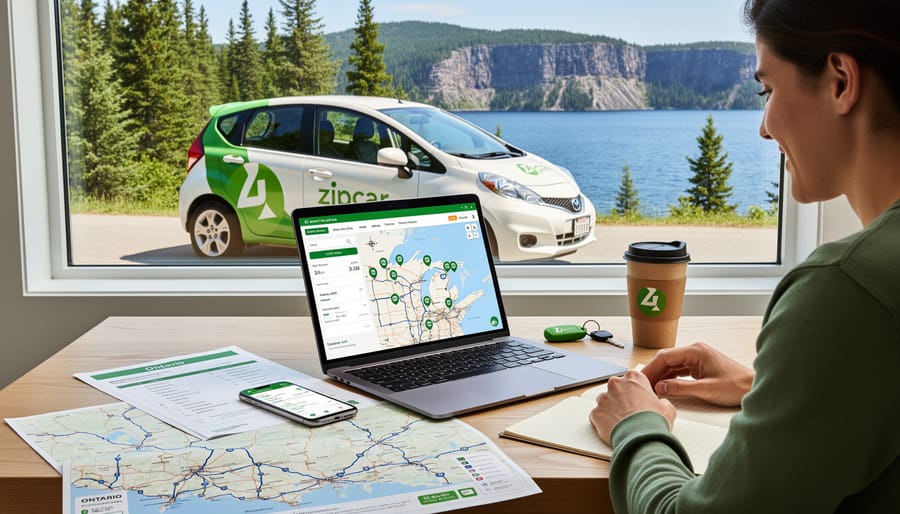
Don’t let toll concerns keep you from discovering the breathtaking trails, pristine lakes, and stunning vistas waiting just beyond the city. Now that you know exactly how Zipcar handles tolls—with automatic transponders and straightforward billing—there’s nothing standing between you and your next outdoor adventure. The beauty of this system is its simplicity: you drive, the tolls get processed automatically, and you receive a clear breakdown later. No fumbling for change, no unexpected surprises.
For car-free residents, Zipcar opens up a world of possibilities that public transit simply can’t reach. Those hidden waterfalls in the Dundas Valley, the rugged coastlines along Georgian Bay, the peaceful canoe routes through Algonquin—they’re all accessible without the commitment of car ownership. You’re doing something wonderful for the environment too, sharing vehicles instead of adding another car to the road.
So pack your hiking boots, grab your camping gear, and hit the road with confidence. Ontario’s natural wonders are calling, and you now have all the knowledge you need to answer. The parks are waiting, the trails are open, and your Zipcar adventure starts whenever you’re ready.







+ There are no comments
Add yours