Map your program’s learning outcomes across every grade level in a simple spreadsheet, creating columns for each year and rows for core concepts that deepen progressively. Start by identifying 3-5 “big ideas” in your subject area—like ecosystem interconnection or geological processes—then describe how students encounter these concepts with increasing complexity from kindergarten through grade 8.
Build backward from your most advanced grade’s outcomes, asking yourself what foundational knowledge students need in earlier years to succeed. A grade 8 student analyzing food web disruptions, for example, needs earlier experiences identifying individual species, understanding predator-prey relationships, and recognizing habitat dependencies—each step becoming a checkpoint in your alignment template.
Connect each grade’s learning goals to specific park-based activities that match developmental stages. Younger students might explore sensory nature walks and simple classification games, while older learners tackle data collection, hypothesis testing, and ecosystem modeling. This progression ensures your interactive outdoor programs don’t accidentally repeat content or leave critical gaps that frustrate both educators and students.
Test your alignment by selecting one concept and tracing it vertically through your template—can you clearly articulate how understanding deepens year over year? If a grade 5 teacher can’t see what students learned in grade 4 or what they’ll need for grade 6, your template needs refinement.
The beauty of vertical alignment in outdoor education is watching students return to the same forest or wetland year after year, each visit revealing new layers of understanding. When done right, a simple trail becomes a living laboratory where learning builds naturally, just like the ecosystems students study.
What Vertical Curriculum Alignment Actually Means (And Why It Matters for Your Students)
Think of vertical curriculum alignment like building a trail through the forest. You wouldn’t start hikers at the summit without first teaching them basic skills, right? That’s exactly how effective outdoor education should work—each grade level builds on what students learned before, creating a clear path from simple observations to complex environmental understanding.
Here’s what this looks like in action at Ontario parks: When Grade 3 students visit, they’re learning to identify different tree species by their leaves, bark, and overall shape. It’s hands-on nature learning at its finest—touching rough oak bark, collecting maple leaves, spotting the distinctive white birch. They’re building their nature vocabulary and observation skills.
Fast forward to Grade 5, and those same students return with sharper eyes and bigger questions. Now they’re not just naming trees—they’re understanding how those trees form ecosystems. They discover how sugar maples provide food for insects, which feed birds, which distribute seeds. They’re connecting the dots between individual species and the web of life around them.
By Grade 8, students are ready for the summit. They’re analyzing how human activities impact these forest ecosystems they’ve come to know so well. Climate change effects on maple syrup production, invasive species threatening native trees, sustainable forestry practices—these concepts make sense because they’re built on years of foundational knowledge.
Without this alignment, every park visit becomes an isolated event. Students might enjoy the fresh air and freedom, but the learning doesn’t stick or grow. With vertical alignment, each experience deepens their connection to nature and their ability to think critically about environmental challenges.
The magic happens when educators intentionally design these progressive experiences. A Grade 3 teacher mentions that students will revisit these same trails in future grades. A Grade 5 program references what students learned two years ago. By Grade 8, students feel genuine ownership of these natural spaces—they’re not just visiting a park, they’re returning to a living classroom where they’ve grown alongside the trees.
The Template That Makes Planning Actually Simple
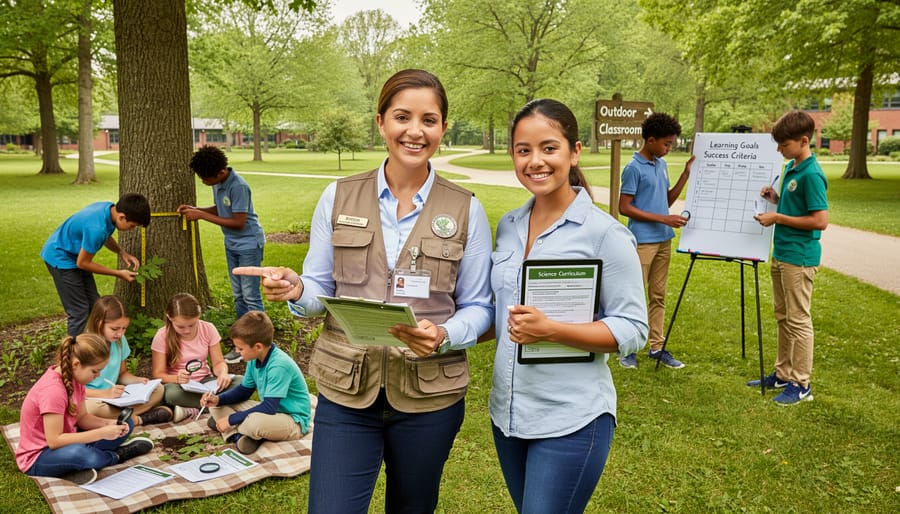
The Building Blocks: What Goes Into Your Template
Think of your template as a roadmap that shows how learning adventures grow alongside your students. At its heart, you’ll need four essential building blocks that work together beautifully.
First up are your grade levels. This is where you’ll map out who’s participating at each stage. In Ontario Parks programs, we typically work with primary (Grades 1-3), junior (Grades 4-6), and intermediate (Grades 7-8) groups, though you can customize these divisions to fit your needs.
Next comes curriculum expectations, which connect your outdoor experiences to what students are actually learning in school. For example, our ecology park workshops tie directly into science standards about habitats, ecosystems, and environmental stewardship.
The third piece is skill progressions, and here’s where things get exciting. Let’s say you’re teaching wildlife tracking. Grade 2 students might start by identifying basic animal footprints in snow or mud. By Grade 5, they’re measuring stride patterns and predicting animal behavior. Grade 8 students? They’re using tracking data to understand population dynamics and habitat health. Each level builds naturally on the last.
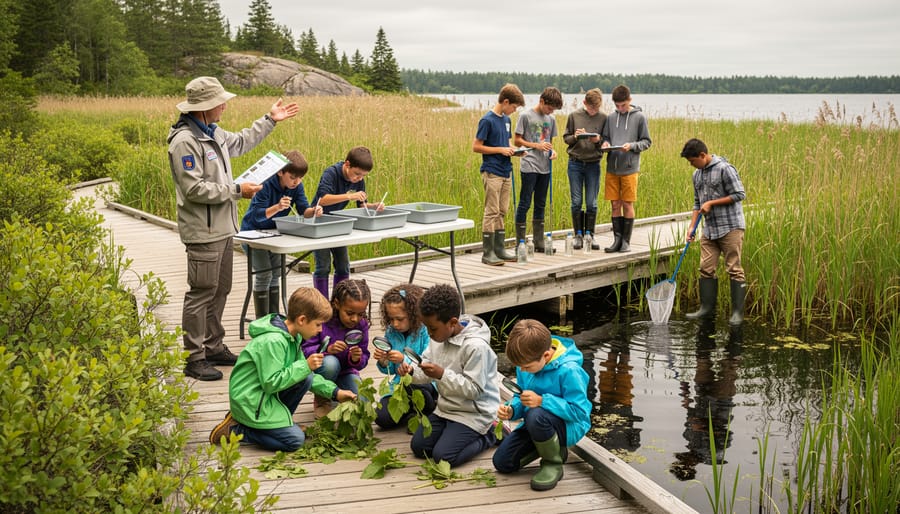
Finally, you’ll detail your program activities. Think hands-on experiences that evolve in complexity. In water quality testing programs, younger students dip thermometers and observe insects with magnifying glasses. Older students conduct pH tests, analyze macroinvertebrate samples, and draw conclusions about ecosystem health.
Here’s an insider tip: include a progression chart that shows the journey at a glance. For survival skills workshops, you might show how fire-building evolves from understanding the fire triangle (primary) to practicing proper techniques (junior) to planning complete wilderness emergency responses (intermediate).
This structured approach ensures every student gets challenged appropriately while building toward genuine outdoor expertise over time.
Mapping Your Park Experience to Real Learning Goals
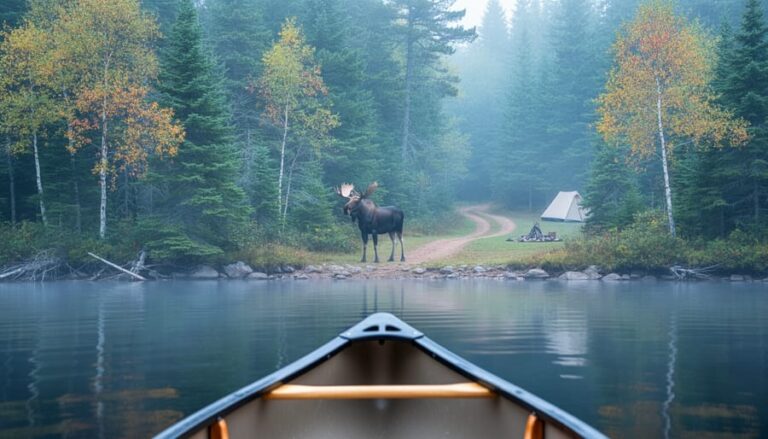
Here’s where the magic happens – you get to play educational detective! I remember sitting with a group of teachers at Algonquin Park, brainstorming over hot chocolate, when someone had that lightbulb moment: “Wait, canoeing teaches physics, environmental science, AND geography all at once!” That’s exactly the kind of golden connection you’re looking for.
Start by listing your park activities in one column and your curriculum expectations across different grades in another. Take canoeing, for instance. For Grade 3, you might connect it to basic forces and motion (what happens when we push the water with our paddle?). By Grade 6, that same activity explores efficiency, mechanical advantage, and energy transfer. Grade 10 students can dive into vector analysis and Newton’s laws using the exact same canoe stroke. See how one activity grows with your students?
Here’s an insider tip that’s saved me countless hours: look for activities with built-in progression. Campfire building is my personal favorite. Primary students learn about fire safety and basic needs. Intermediate grades explore combustion, responsible resource use, and Leave No Trace principles. Secondary students can investigate chemical reactions, calculate energy output, and discuss climate impact. One activity, nine years of learning potential.
Don’t overlook the quiet achievers either. A simple nature journal works wonders across grades. Kindergarteners draw what they see. Grade 4s document observations scientifically. Grade 8s analyze ecosystems and create field guides. Senior students conduct authentic research and data collection. Same notebook, completely different depths of learning.
My favorite trick? Create a simple chart with activities down the left side and grade bands across the top. Fill in just three curriculum connections per activity to start. You’ll quickly spot those golden opportunities where outdoor experiences naturally support literacy, numeracy, science, and social studies simultaneously. Hiking, for example, seamlessly integrates map reading, measurement, observation skills, and historical understanding of Indigenous trails.
The real breakthrough comes when you realize you don’t need dozens of different activities. You need flexible, rich experiences that can be approached from multiple angles as students mature. That’s the beauty of park-based learning – nature’s complexity mirrors curriculum complexity perfectly.
Real Stories: How Teachers Are Using This at Frontenac and Beyond
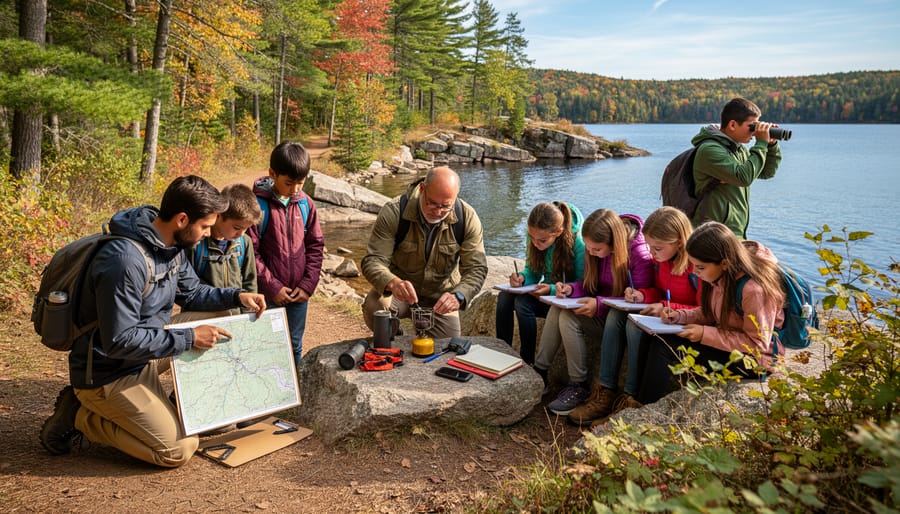
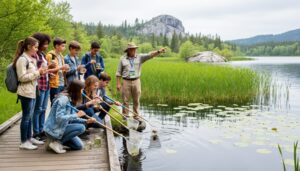
When Sarah Thompson brought her Grade 3 class to Frontenac Provincial Park last spring, she wasn’t sure how the experience would connect to what her students had learned the previous year. But thanks to the park’s vertically-aligned curriculum approach, she discovered her students were building on pond ecosystem concepts they’d explored in Grade 2, now diving deeper into food webs and energy transfer. “The kids immediately made connections,” Sarah recalls. “One student pointed at a dragonfly nymph and said, ‘That’s a secondary consumer, just like we talked about last year, but now I understand why it matters!'”
This kind of lightbulb moment is exactly what vertical alignment creates, and educators across Ontario are seeing remarkable results with their outdoor education programs.
Mark Chen, a program coordinator from Peterborough, faced initial pushback when proposing aligned programming. “Teachers worried it would be too rigid,” he admits. “But once we showed them how each grade level explored the same forest trail with increasing complexity—from simple tree identification in Grade 4 to understanding succession patterns in Grade 8—they got excited.” His group now visits Frontenac annually, and student engagement scores have jumped 40 percent.
The environmental literacy benefits have been particularly striking. Jennifer Walsh noticed her Grade 6 students naturally adopted eco-friendly practices after experiencing progressively deeper environmental content over three years. “They weren’t just learning about Leave No Trace principles; they understood the why behind them,” she explains. “Students who’d studied soil composition in Grade 4 and water quality in Grade 5 could explain how their lunch waste might impact the watershed. That’s not something you can teach in a single visit.”
Even the challenges have led to unexpected wins. When Kim Patel discovered her Grade 7 curriculum overlapped with Grade 5 content, she initially panicked. Working with park educators, she reframed the Grade 7 experience to focus on climate change impacts on the same ecosystems younger students had studied. “It was actually perfect,” Kim reflects. “Students already knew the baseline; now they could analyze changes and propose solutions.”
Perhaps the most touching story comes from veteran teacher Robert Lin, who brought the same group of students to Frontenac every year from Grades 4 through 8. “Watching them grow from wide-eyed kids collecting leaves to thoughtful young adults debating conservation strategies—that’s the power of aligned learning,” he shares. “They didn’t just visit a park; they developed a relationship with a place.”
Your First Steps: Starting Small and Building Smart
Ready to bring vertical alignment to your park programs? Here’s the good news: you don’t need to overhaul everything at once. Start with what you know works, then build from there.
Begin by connecting with your local park education coordinator early in the school year—ideally before September. These folks are absolute goldmines of knowledge about seasonal programming opportunities and can help you understand what different age groups have already experienced at the park. I’ve found that a simple coffee chat in August can transform your entire year’s planning. Share your grade level goals, and they’ll often reveal which programs naturally scaffold from one year to the next.
If you’re designing curriculum-aligned park programs for multiple grades, start small with just two consecutive grade levels. For example, align your Grade 3 forest ecosystem visit with Grade 4’s biodiversity unit. Once you see how concepts connect, expanding to more grades becomes surprisingly intuitive.
Timing matters more than you might think. Spring programs are incredibly popular, so book these six months ahead. Fall offers spectacular teaching moments with migration and seasonal change, plus you’ll face smaller crowds. Winter programs? They’re educational treasures that most groups overlook, giving you premium access to park resources.
For varying group sizes and abilities, embrace flexible station-based activities. Parks naturally accommodate this approach—one group examines tree bark patterns while another tracks animal signs nearby. Mixed-ability groups actually enrich the experience when older students mentor younger ones during joint visits.
Here’s an insider eco-friendly tip: rather than providing printed materials for every student, create one laminated field guide per small group. Students pass them around, reducing waste while encouraging collaboration. Also, establish a “leave no trace” challenge across all grade levels—kindergarteners learn to stay on trails while Grade 8s calculate their carbon footprint.
Remember, vertical alignment grows organically. Your first year might feel experimental, but you’re planting seeds for something remarkable.
Remember those Grade 2 students we met at the beginning, tentatively approaching the pond with wide eyes? Picture them now in Grade 6, confidently leading younger students on a wetland exploration, explaining complex food webs and identifying species by their calls. That’s the magic of vertically aligned learning experiences in Ontario’s parks. When each visit builds deliberately on the last, students don’t just accumulate facts—they develop genuine relationships with the natural world around them.
Your next step is simple: whether you’re planning your first school trip or your tenth, think beyond the single visit. Reach out to park educators and ask about programs that connect across grade levels. Better yet, share your vertical curriculum alignment plans with them—they’re often thrilled to help shape experiences that grow with your students.
Imagine a generation of Ontario students who see parks not as occasional field trip destinations, but as outdoor classrooms where they’ve built years of memories, skills, and understanding. Students who return with their own families because these places hold deep personal meaning. That future starts with one intentional conversation about how this year’s learning can connect to next year’s adventure. The trails are waiting, and the journey of progressive discovery is calling.



+ There are no comments
Add yours