
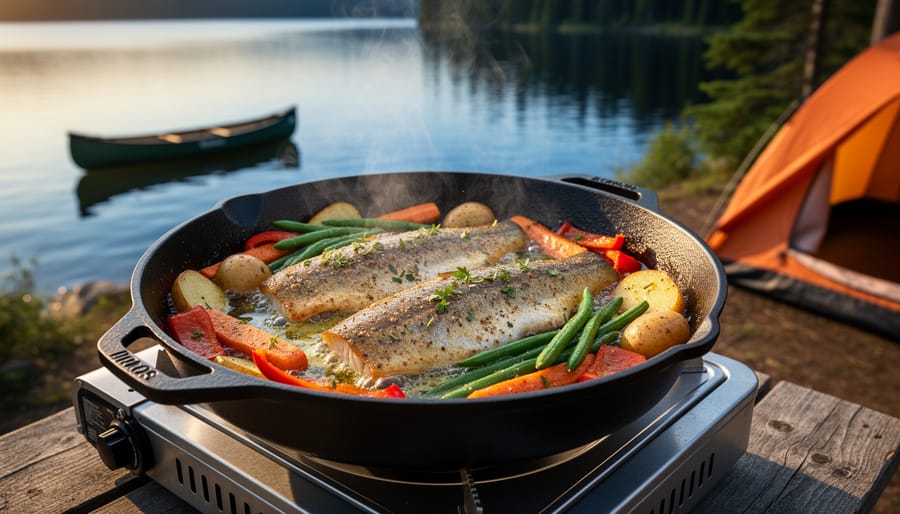
Picture this: the sun setting over your lakeside campsite, casting golden light across the water while the aroma of garlic-butter trout and herb-roasted vegetables wafts from your camp stove. This isn’t a scene from a luxury resort. This is culinary camping, and it’s transforming how outdoor enthusiasts experience Ontario’s wilderness.
Gone are the days when camping meals meant surviving on burnt hot dogs and soggy sandwiches. Culinary camping elevates outdoor cooking into an art form without requiring a culinary degree or a trailer full of equipment. It’s about bringing intentionality and creativity to campfire cooking, turning mealtime into a highlight of your trip rather than an afterthought.
The beauty of this approach lies in its simplicity. You don’t need fancy gadgets or gourmet ingredients flown in from distant markets. Ontario’s natural bounty provides incredible opportunities for fresh, local ingredients, from farmers’ markets near provincial parks to wild edibles you can forage responsibly along the trail. Combined with smart meal planning and a few key techniques, you’ll create restaurant-quality dishes using portable gear that fits easily into your backpack or canoe.
Whether you’re car camping with family at Algonquin, backcountry paddling through Killarney, or setting up base camp for a weekend hiking adventure, culinary camping adds a layer of comfort and joy to your outdoor experience. It transforms cooking from a chore into a cherished ritual, bringing people together around the campfire while deepening your connection to the landscape.
The reward? Memorable meals that fuel your adventures and create stories you’ll share for years, all while treading lightly on the environment you came to enjoy.
What Exactly Is Culinary Camping?
Remember those nights around the campfire where you roasted hot dogs on sticks and called it dinner? Culinary camping takes that experience and transforms it into something extraordinary—without losing the magic of cooking under the stars.
At its heart, culinary camping is about treating your outdoor meals with the same care and creativity you’d give to a dinner party at home. It’s the difference between simply fueling up to survive and actually savoring every bite while surrounded by nature’s beauty. Think fresh ingredients, thoughtful preparation, and meals that become the highlight of your camping trip rather than just a necessary task.
What sets culinary camping apart from traditional camping cooking is the intention behind it. Instead of relying on canned beans and pre-packaged meals, you’re bringing along quality ingredients—maybe some Ontario-grown vegetables from a farmers market, artisan bread, or locally sourced meats. You’re using real cooking techniques, not just boiling water and calling it good.
I’ll never forget the first time I pan-seared fresh trout beside a lake in Algonquin Park, finishing it with butter and herbs I’d packed in a small container. That meal tasted better than anything from a five-star restaurant, partly because of the effort, but mostly because of the setting and the people I shared it with.
That’s another key element: culinary camping is inherently social. It’s about gathering around the camp stove, sharing the cooking duties, and creating memories together. There’s something deeply satisfying about preparing a beautiful meal in the outdoors—it slows you down and connects you to both the food and your surroundings in a way that grabbing a protein bar never could.
The best part? You don’t need to be a professional chef. Culinary camping is accessible to anyone willing to put a little extra thought into their meal planning and try something beyond the usual camping fare.
Why Ontario Parks Are Perfect for Your Culinary Adventures
Farm-to-Campsite: Ontario’s Local Food Advantage
Ontario’s culinary camping scene gets a delicious boost from the province’s thriving local food movement. Many popular camping destinations sit surprisingly close to farmers’ markets and artisan food producers, making it easy to stock up on fresh, seasonal ingredients before you pitch your tent.
Planning a trip to Algonquin Park? Stop at the Huntsville Farmers’ Market on Thursday mornings for farm-fresh eggs, local honey, and handcrafted cheeses. Heading to Prince Edward County Provincial Park? The county is famous for its wineries, but don’t miss the farm stands dotting County Road 8, where you’ll find heirloom tomatoes, sweet corn, and fresh-baked bread that’ll make your campsite meals memorable.
Here’s an insider tip: call ahead to small-scale producers near your destination. Many farmers welcome visitors by appointment, and you might score items not available at regular markets. I once picked up smoked trout directly from a producer near Bon Echo Provincial Park, it became the star of our lakeside dinner that evening.
Time your camping trips with harvest seasons for the best selection. June brings strawberries and asparagus, August offers peak tomatoes and peaches, while September delivers apples and squash perfect for campfire cooking. Don’t forget Ontario craft breweries and cideries often have farm shops attached.
Beyond shopping, consider foraging for wild ingredients to complement your locally-sourced haul. This farm-to-campsite approach transforms ordinary camping into a true culinary adventure while supporting Ontario’s food producers.
Parks That Welcome Food Enthusiasts
Ontario’s provincial parks offer some truly spectacular settings for culinary camping adventures, and several stand out for their cooking-friendly facilities. Let me share some favorites that consistently win over food-loving campers.
Algonquin Park tops the list with its backcountry sites featuring established fire pits and surprisingly convenient access to freshwater sources. The park’s Mew Lake Campground is particularly popular among culinary campers for its larger sites that accommodate elaborate cooking setups. Insider tip: sites 119-123 offer extra privacy and space for spreading out your outdoor kitchen.
Killarney Provincial Park provides breathtaking waterfront sites where you can literally watch the sunset while preparing dinner. The George Lake Campground features covered cooking shelters—absolute lifesavers during unexpected rain showers. These shelters come equipped with picnic tables and nearby water taps, making meal prep considerably easier.
For group culinary adventures, consider Presqu’ile Provincial Park. Their group camping areas include communal cooking spaces with multiple fire pits and prep tables, perfect for hosting collaborative cooking sessions. The beach proximity means fresh lake breezes and stunning dining views.
Bon Echo Provincial Park offers something special: campsites with built-in food prep areas and excellent drainage. Sites 63-67 provide panoramic cliff views—imagine plating your gourmet creation with that backdrop! The park’s relatively flat terrain also makes hauling cooking gear less strenuous.
Pro tip: Book these popular culinary-friendly sites several months in advance, especially for summer weekends. Winter camping at these locations offers a quieter, equally rewarding experience for adventurous food enthusiasts.
Essential Gear for Culinary Camping Success
Beyond the Basic Camp Stove
Your basic camp stove got you through beginner trips, but you’re ready to level up. Let me share what’s actually worth hauling into the backcountry.
A portable grill grate changed everything for me during a trip to Algonquin Park. It weighs almost nothing, balances perfectly over your fire pit, and suddenly you’re grilling marinated vegetables and perfectly seared fish. Look for fold-flat models that slip into side pockets without hogging valuable pack space.
Cast iron Dutch ovens are the holy grail of campfire cooking, but here’s my insider tip: only bring one if you’re car camping or have a short portage. At 10-15 pounds, they’re beasts to carry. That said, nothing else makes campfire pizza, no-knead bread, or bubbling peach cobbler quite like cast iron does. The heat distribution is unmatched.
For canoe trips, I swear by a lightweight griddle pan. Pancakes, quesadillas, and stir-fries become ridiculously easy, and it cleans up faster than multiple pots. Skip the fancy camping toasters and pie irons unless weight isn’t a concern—they’re one-trick ponies that take up precious space.
My eco-friendly suggestion? Invest in quality over quantity. One versatile piece of well-made equipment beats five mediocre gadgets. Choose items that multitask, pack efficiently, and will last decades. Your back and the environment will thank you when you’re not replacing cheap gear every season.
The Culinary Camper’s Prep Kit
Transforming your campsite into an outdoor kitchen doesn’t require hauling restaurant equipment into the wilderness. The secret lies in choosing versatile, lightweight tools that earn their spot in your pack. Here’s what I’ve learned after countless meals cooked under Ontario’s starlit skies.
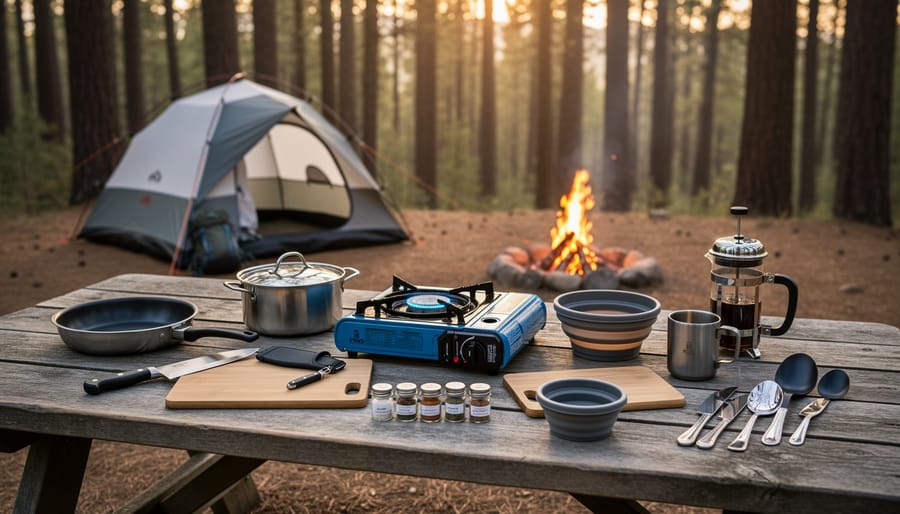
Start with a quality cast-iron skillet or a lightweight titanium pot set. Cast iron distributes heat beautifully and doubles as a griddle, while titanium saves precious weight. My personal go-to is a 10-inch cast-iron pan that’s accompanied me from Algonquin to Lake Superior’s shores.
Pack your spices in small, reusable containers or invest in eco-friendly bamboo spice tubes. A simple blend of garlic powder, smoked paprika, cumin, and dried herbs transforms basic ingredients into memorable meals. Don’t forget quality salt and pepper – these workhorses deserve premium status.
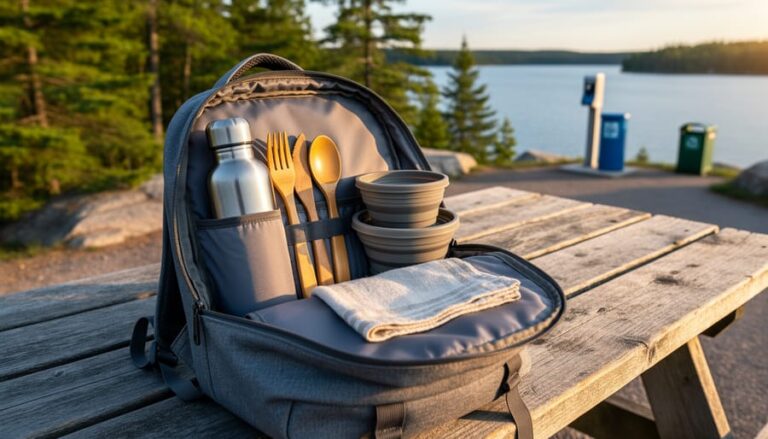
Include a sharp knife with a protective sheath, a lightweight cutting board, and silicone spatulas that won’t melt over the campfire. Bring reusable bamboo utensils instead of disposable plastics, and opt for beeswax wraps rather than plastic wrap for food storage.
Here’s an insider tip: freeze your marinades in reusable silicone bags before your trip. They’ll keep your cooler cold and be perfectly thawed by dinner time. Pack multi-purpose items like a good thermos that keeps morning coffee hot and can double as a food warmer.
For sustainable camping cooking, choose biodegradable soap, bring mesh bags for washing produce, and pack collapsible silicone containers that minimize waste. I always carry a small container of olive oil in a leak-proof bottle – it’s invaluable for everything from sautéing to preventing food from sticking.
Mastering Outdoor Cooking Techniques That Impress
The Art of Campfire Cooking (Without Burning Everything)
Here’s the truth about campfire cooking: those Instagram-perfect meals happen because someone learned to read their fire. The good news? You can too, and it’s easier than you think.
Start by building your fire at least 45 minutes before cooking. You’re not cooking over flames—you’re cooking over coals. Those glowing embers provide steady, controllable heat without the charred-on-the-outside, raw-on-the-inside disasters. Hold your hand about six inches above the coals. If you can keep it there for 5-6 seconds, that’s medium heat, perfect for most dishes. Two seconds? That’s high heat for searing.
Here’s an insider tip from years of campsite cooking across Ontario: create heat zones. Push more coals to one side for direct, high heat (think searing that fish you caught), and keep fewer coals on the other for gentle, indirect cooking. This setup saved my bacon—literally—during a rainy trip to Killarney when I needed to crisp breakfast sausages without incinerating them.
Safety comes first, always. Keep a bucket of water nearby, never leave fires unattended, and check campground regulations before cooking. Many Ontario parks have specific fire bans during dry periods.
Master these traditional outdoor cooking techniques, and you’ll develop an intuition for your fire. Practice with simple recipes first—foil packet vegetables or grilled fish—before attempting that ambitious Dutch oven lasagna.
One-Pot Wonders and Foil Packet Magic
Here’s my secret for campfire cooking success: embrace the methods that let you relax by the fire instead of hovering over a stove. One-pot meals and foil packets are absolute game-changers, and I learned this the hard way after spending my first camping trip frantically juggling three pans on a temperamental camp stove.
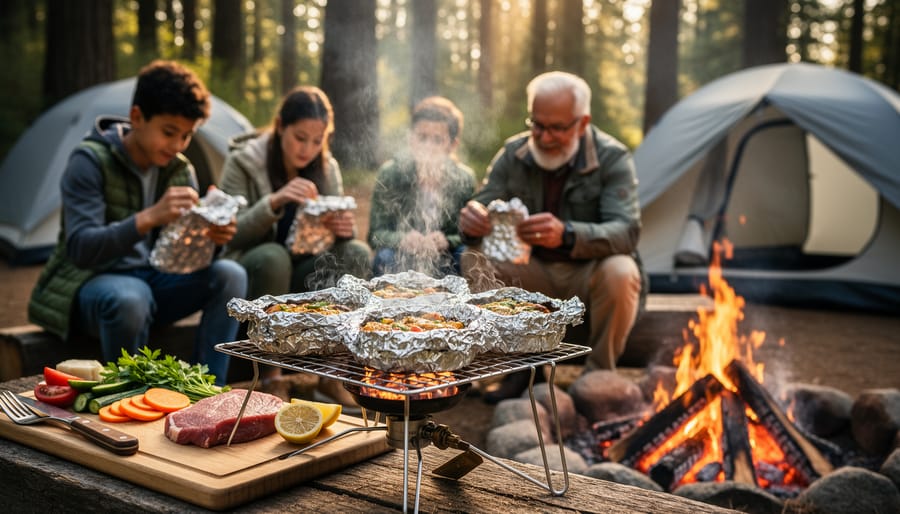
Start with foil packet meals, which are basically foolproof gifts you prepare for your future hungry self. Layer sliced potatoes, your choice of protein, vegetables, and seasonings in heavy-duty aluminum foil, seal tightly, and nestle into campfire coals for 20-30 minutes. My go-to combination features Ontario-caught trout with lemon slices, cherry tomatoes, and fresh dill. The beauty? Zero dishes to wash afterward.
For one-pot wonders, think hearty chilis, pasta dishes, or campfire stews that improve as flavors meld together. A cast iron Dutch oven becomes your best friend here. I’ve made everything from shakshuka for breakfast to jambalaya for dinner in the same pot. Pro insider tip: prep ingredients at home and store in reusable containers to minimize waste and maximize your relaxation time at the campsite. These methods prove that simple doesn’t mean boring, it means more time enjoying Ontario’s stunning wilderness.
Slow and Low: Dutch Oven Mastery
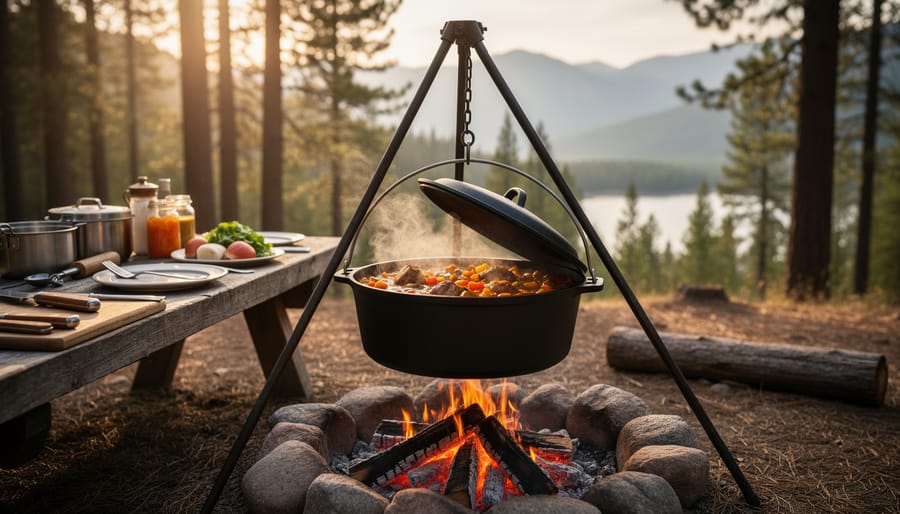
If there’s one piece of cookware that transforms wilderness cooking from ordinary to extraordinary, it’s the Dutch oven. This heavy cast-iron pot with a tight-fitting lid is essentially a portable oven that lets you bake bread, simmer stews, and create fall-apart-tender braises right at your campsite.
The magic happens through even heat distribution. Nestle your Dutch oven in hot coals, pile more embers on the lid, and you’ve created an oven that surrounds your food with consistent temperature. I once baked a rustic sourdough loaf beside Lake Superior that rivaled anything from my home kitchen – the crackling crust echoing off the quiet shoreline is a memory I treasure.
Start simple with a one-pot chili or stew. As confidence builds, try overnight cinnamon rolls (prep the dough at home), herb-roasted chicken with root vegetables, or even a fruit cobbler for dessert. The key is patience – let those coals do their work without constantly peeking.
Insider tip: season your Dutch oven properly before the trip and bring a sturdy trivet to lift the lid safely. For eco-conscious campers, use sustainably sourced charcoal or collect deadfall wood responsibly. Your taste buds and the Ontario wilderness will thank you.
Menu Planning That Works in the Woods
Prepping at Home, Thriving at Camp
Here’s my secret to stress-free campsite cooking: do the heavy lifting at home. I learned this the hard way after spending an hour chopping vegetables by headlamp because I’d forgotten how early darkness falls in Ontario’s wilderness.
Start by prepping ingredients a day or two before your trip. Marinate proteins, chop vegetables, and measure out spices into small containers or ziplock bags. I like to create “meal kits” where everything for one dish goes into a single bag, labeled with cooking instructions. Your future campfire self will thank you.
For food storage, invest in quality airtight containers that prevent cross-contamination and keep things fresh. Freeze water bottles to use as ice packs – they’ll keep your cooler cold and provide drinking water as they melt. Pack your cooler strategically: items you’ll need first go on top, and keep raw meats separate and at the bottom where it’s coldest.
Here’s an insider tip: pre-cook grains like rice or quinoa at home. They reheat beautifully over camp stoves and cut your cooking time dramatically. You can also partially cook potatoes and root vegetables, then finish them over the fire for that smoky flavor everyone loves.
Consider eco-friendly reusable silicone bags instead of disposable plastic – they’re durable, easy to clean, and one less thing ending up in landfills. Your prep work at home means more time enjoying Ontario’s stunning landscapes and less time frantically assembling dinner.
Seasonal Menus for Ontario Camping
Ontario’s distinct seasons offer incredible opportunities to match your camp menu with what nature provides. In spring, when evenings still carry a chill, I love preparing hearty one-pot stews with root vegetables and warming spices. The cool mornings are perfect for slow-cooking oatmeal with maple syrup and dried cranberries over your campfire.
Summer camping screams for fresh grilling adventures. Think marinated Ontario trout wrapped in foil with lemon and herbs, grilled corn on the cob, and vibrant vegetable skewers. Pack fresh berries for simple desserts and pair meals with local artisan beverages to celebrate the season.
Fall brings my favorite camping cuisine. This is when I embrace harvest-inspired dishes like butternut squash soup, apple-stuffed pork chops, and campfire-roasted root vegetables. The cooler temperatures mean you can bring heartier ingredients without worrying about spoilage.
Insider tip: Visit local farmers’ markets near your campground before heading into the wilderness. You’ll find seasonal produce at peak freshness, support local growers, and discover ingredients that naturally suit your camping season.
Culinary Camping Experiences You Can Join
Ready to take your culinary camping skills to the next level? Ontario offers some fantastic organized experiences where you can learn from experts, connect with fellow food-loving campers, and discover new techniques in stunning natural settings.
Several provincial parks host seasonal outdoor cooking workshops that go beyond basic campfire skills. These hands-on sessions might cover everything from Dutch oven baking to smoking fish over cedar planks. I’ve attended a few of these, and what I love most is the relaxed atmosphere where everyone shares tips and inevitably swaps stories about their best (and worst) camping meals. You’ll often find these workshops scheduled during shoulder seasons when parks are less crowded, making for a more intimate learning experience.
For those interested in connecting with Indigenous culinary traditions, some parks partner with local Indigenous educators to offer foraging walks and traditional food preparation demonstrations. These experiences provide invaluable knowledge about edible plants, ethical harvesting practices, and cooking methods that have sustained people in these landscapes for thousands of years.
Private outdoor education companies also run multi-day culinary camping retreats in Ontario’s backcountry. These typically combine paddling or hiking with gourmet meal preparation at carefully selected campsites. While they require a bit more investment, participants rave about the chef-led instruction and the chance to challenge themselves in beautiful, remote locations.
Looking for something more casual? Check social media groups dedicated to Ontario camping, where members regularly organize informal meetups centered around food. These grassroots gatherings often feature potluck-style meals where everyone contributes a dish, creating wonderful opportunities to taste new recipes and make friends who share your passion for outdoor cooking.
The camping community is incredibly welcoming, so don’t hesitate to join in, regardless of your skill level.
Leave No Trace: Cooking Responsibly in Nature
Here’s the thing about culinary camping that separates it from a backyard barbecue: you’re cooking in someone else’s home. And by “someone,” I mean the bears, loons, and countless other creatures who call Ontario’s wilderness their permanent address. Pursuing gourmet meals outdoors comes with a responsibility to leave those spaces exactly as you found them—or better.
Let’s start with the obvious but often overlooked: pack out everything you pack in. And I mean everything. That onion skin you tossed into the fire? It doesn’t fully burn and contaminates the ash. Those coffee grounds you dumped behind a tree? They acidify the soil and attract wildlife. Keep a dedicated garbage bag (better yet, use reusable containers) for all food scraps, packaging, and waste. I’ve started using silicone bags for meal prep, which eliminate single-use plastics entirely and keep things organized.
Water conservation becomes trickier when you’re washing fancy cookware. Instead of running through gallons at the campsite tap, try the three-basin method: scrape dishes clean first, use minimal water with biodegradable soap in one container, rinse in another, and do a final rinse in the third. Dispose of this greywater at least 70 meters from any water source, scattering it widely so the soil can filter it naturally. Pro tip: wipe greasy pans with a piece of bread before washing—it removes most residue and you can eat the “pan bread” or pack it out.
The aromatic herbs and sizzling proteins that make culinary camping special also make you incredibly interesting to wildlife. Store all food, toiletries, and scented items in bear-proof containers or hang them properly between trees. Cook and eat at least 100 meters from where you sleep, and never bring food into your tent—yes, even that late-night chocolate bar.
Finally, consider your fuel source. Portable gas stoves have minimal impact compared to campfires, which scar landscapes and consume local wood. If you do build a fire, use existing fire rings, burn only small sticks you can break by hand, and let everything burn completely to ash. Remember: responsible cooking isn’t just about following rules—it’s about ensuring Ontario’s wild spaces remain pristine for the next generation of outdoor chefs.
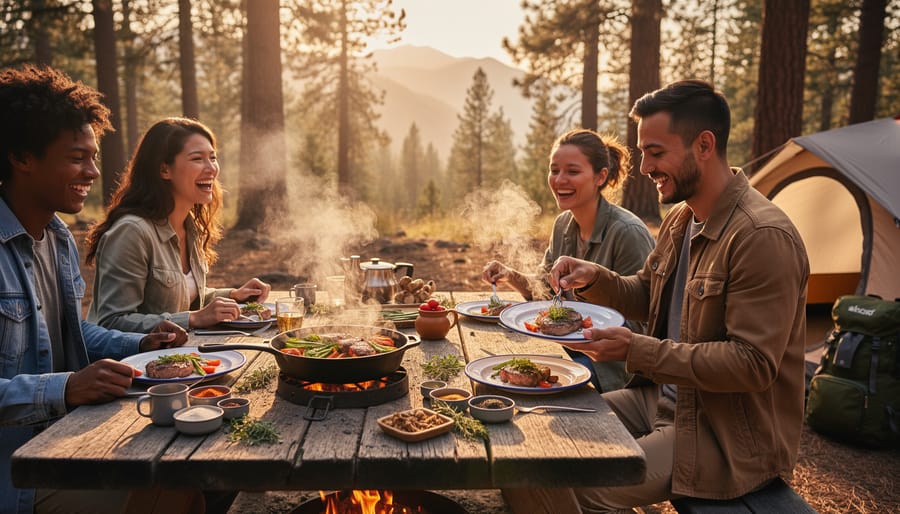
Here’s the truth about culinary camping: it’s not about preparing Instagram-worthy plates or mimicking restaurant-quality presentations in the wilderness. It’s about those moments when the scent of wood smoke mingles with sizzling garlic, when you share a sunset meal with people you care about, and when you realize that simple food tastes extraordinary when you’re surrounded by Ontario’s natural beauty.
Your first culinary camping experience doesn’t need to be perfect. Maybe your pancakes will stick to the pan, or your coffee will be too strong. That’s all part of the adventure. What matters is that you’re trying something new, connecting more deeply with your surroundings, and creating stories you’ll retell around future campfires.
Start small on your next trip. Pick one special meal to focus on rather than overhauling your entire camping menu. Bring a favorite spice blend from home. Try grilling fresh vegetables instead of relying solely on canned goods. Each small step builds confidence and transforms ordinary camping into something more memorable.
Ontario’s diverse parks and Ontario’s culinary adventures are waiting for you to explore them with fresh eyes and an adventurous palate. So pull out your camping gear, sketch out a simple menu, and start planning your culinary camping trip. The wilderness is calling, and dinner’s going to be delicious.





+ There are no comments
Add yours