
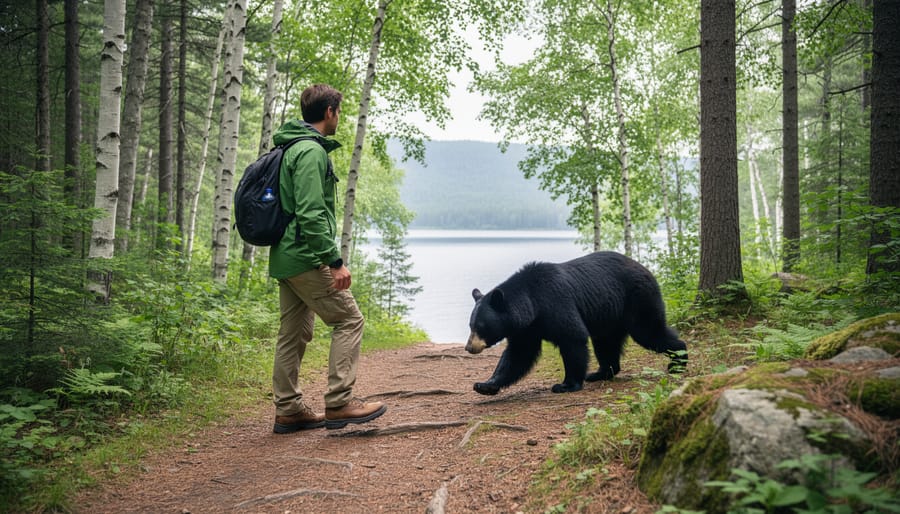
Picture this: You’re hiking through a sun-dappled Ontario trail when movement catches your eye. A black bear ambles across the path fifty meters ahead, or a moose lifts its massive head from a wetland pool. Your heart races. What happens next depends entirely on how prepared you are for this moment.
Ontario’s provincial and national parks harbor incredible wildlife—from timber wolves and black bears to beavers, white-tailed deer, and over 300 bird species. These encounters are part of what makes exploring our wilderness so thrilling, but they demand respect and knowledge. Each year, thousands of visitors experience memorable wildlife moments that become cherished stories, while others face dangerous situations that could have been avoided with proper preparation.
The difference between a magical wildlife encounter and a frightening one often comes down to three things: recognizing animal behavior before situations escalate, carrying the right safety gear, and knowing exactly how to react in those crucial first seconds. Whether you’re camping in Algonquin, paddling through Killarney, or day-hiking in Bruce Peninsula, you’re entering spaces where wild animals live, hunt, and raise their young.
This guide will walk you through identifying Ontario’s most commonly encountered species, essential safety protocols that work, and insider tips for responsibly observing wildlife while protecting both yourself and these magnificent creatures. Because the best encounters are the ones where everyone—human and animal alike—walks away safely.
The Wildlife You’re Most Likely to Meet
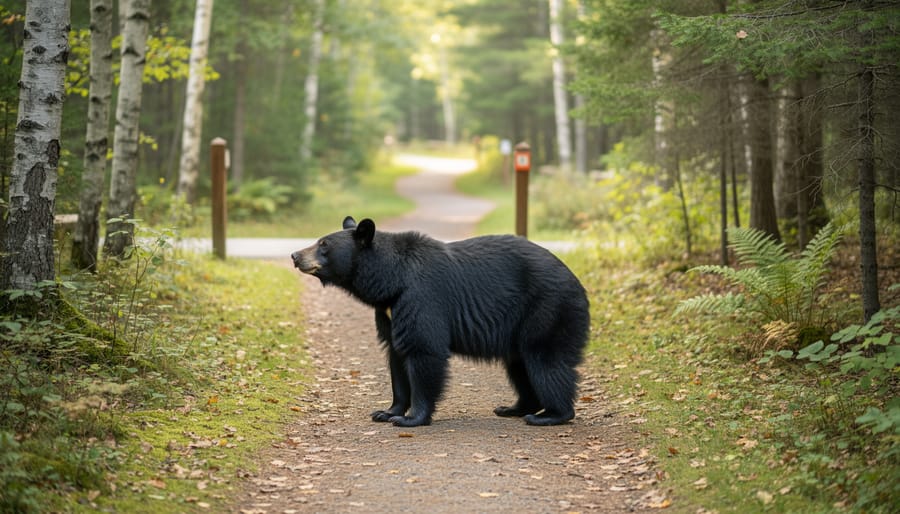
Black Bears: Ontario’s Most Misunderstood Neighbor
Let me share a secret with you: black bears are way more scared of you than you’ll ever be of them. I’ve crossed paths with these gentle giants during berry season, and honestly, they’re pretty awkward about the whole thing. They’d much rather shuffle away than start any trouble.
Here’s what you need to know about Ontario’s most misunderstood neighbor. Black bears are most active during dawn and dusk, especially from May through October when they’re building up fat reserves for winter. They love forested areas near water sources and have a serious sweet tooth for berries, nuts, and yes, your unattended cooler.
That myth about bears being aggressive? Total nonsense. These guys are actually incredibly shy. They might stand on their hind legs, but they’re just trying to get a better look at you, not planning an attack. The real problem happens when people leave food accessible, teaching bears that humans equal easy meals.
My insider tip? Make noise while hiking. I sing terribly off-key, which works brilliantly. Carry bear spray, store food in your car’s trunk, and never approach cubs. Their mom’s nearby, and that’s the one situation where bears get protective. Respect their space, and you’ll have an amazing story without the drama.
Moose, Deer, and Other Large Mammals
Ontario’s northern parks offer incredible opportunities to spot moose, especially during early morning hours around marshy areas and lakeshores. Algonquin Park’s Highway 60 corridor is legendary for moose sightings between May and October, with dawn and dusk being prime viewing times. I’ve found that paddling quietly along shallow bays gives you the best chance of seeing these magnificent creatures feeding on aquatic plants.
White-tailed deer are more commonly spotted throughout provincial parks, particularly in mixed forest areas near meadows. They’re most active during twilight hours, so plan your hikes accordingly. Pukaskwa National Park and Killarney Provincial Park both offer excellent deer viewing opportunities along their hiking trails.
Here’s an insider tip: bring binoculars and stay in your vehicle when observing moose on roadways. These animals can weigh over 1,000 pounds and become aggressive if approached on foot, especially cows protecting calves in spring. Keep at least 30 meters distance and never feed wildlife.
For the most eco-friendly experience, stick to designated viewing areas and trails. This minimizes habitat disruption while maximizing your chances of memorable encounters with Ontario’s gentle giants.
Reading the Signs: How to Spot Wildlife Before They Spot You
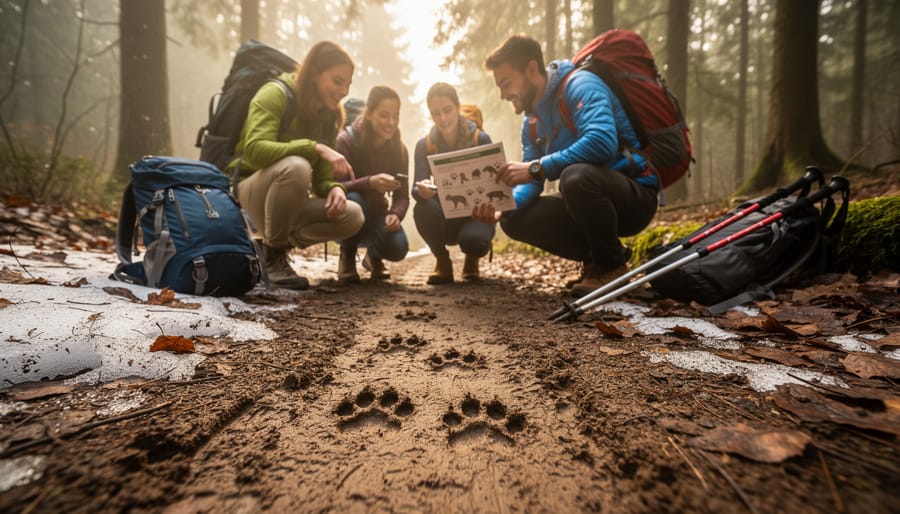
I’ll never forget the morning I learned to truly read the forest. My guide, a seasoned naturalist in Algonquin Park, stopped me mid-stride and pointed to a muddy patch beside the trail. “That’s a fresh moose print,” she whispered. “See how the edges are still sharp? He passed through less than an hour ago.” Suddenly, the woods transformed from a quiet backdrop into a living storybook, each page filled with clues about the creatures sharing our space.
Learning to spot these signs before you stumble upon the animals themselves isn’t just a safety skill—it’s your ticket to a richer wilderness experience. When you’re immersing yourself in nature, understanding these markers helps you anticipate encounters and adjust your route accordingly.
Start with tracks. In soft mud or snow, you’ll find perfect impressions. Deer leave heart-shaped prints, while bear tracks show five toes and claw marks. Raccoon prints look surprisingly like tiny human hands. Check trail edges and stream banks where animals naturally travel.
Scat tells its own tale. Fresh droppings indicate recent activity—black bear scat often contains berry seeds or insect parts, while coyote scat includes fur and bone fragments. The fresher it looks, the closer you might be to its maker.
Look up, too. Claw marks on tree trunks reveal bear territories, while stripped bark suggests deer browsing. Beaver activity is unmistakable—gnawed stumps with pencil-point tops scattered near water.
Your ears are equally valuable. Learn the alarm calls—a blue jay’s harsh screech or a chipmunk’s rapid chirping often signals a predator nearby. Rustling in undergrowth, snapping branches, or heavy breathing all warrant a pause and assessment.
Here’s my insider tip: observe without touching. Photographing tracks and scat from a respectful distance protects both you and the ecosystem. Disturbing these signs can stress animals and disrupt their natural behaviors. The goal is witnessing their world, not changing it.
Your Wildlife Encounter Playbook
If You Meet a Bear
My heart nearly stopped when I rounded a bend on the Coastal Trail in Pukaskwa and spotted a black bear about thirty meters ahead. That moment taught me everything I’d read about bear safety was absolutely vital.
First things first: stay calm and don’t run. Running triggers a bear’s chase instinct, and trust me, you can’t outrun them. I slowly reached for my bear spray while assessing the situation. The bear hadn’t noticed me yet, which was ideal.
Start making noise. I cleared my throat and spoke in a firm, calm voice: “Hey bear, just passing through.” The bear looked up, seemed uninterested, and ambled off the trail. Perfect scenario.
If the bear doesn’t leave, back away slowly while facing it. Never turn your back. Keep talking in that same steady voice. Make yourself appear larger by raising your arms or opening your jacket.
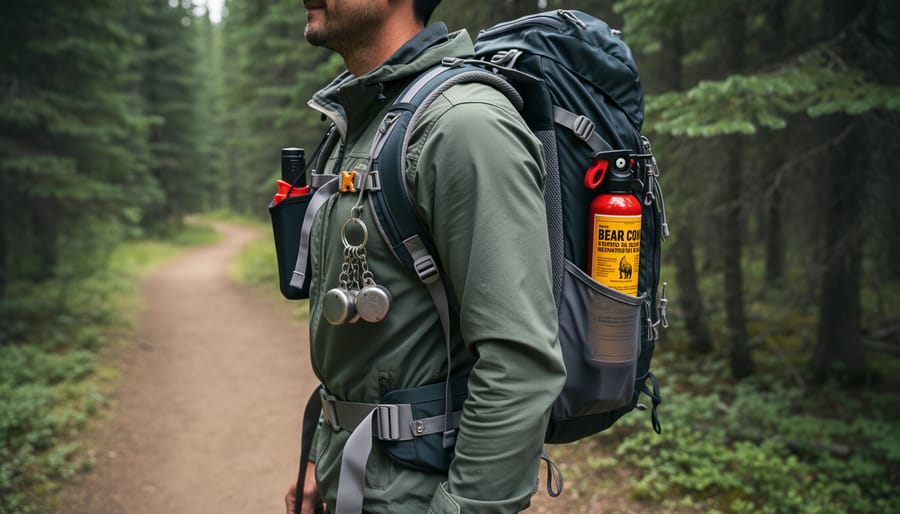
Here’s an insider tip: always hike with bear spray clipped to your belt, not buried in your pack. Those precious seconds matter. I practice removing the safety tab at home so it’s muscle memory.
If a bear approaches, use your spray when it’s within seven to ten meters. Aim slightly downward to create a fog barrier between you and the bear.
Moose, Wolves, and Other Wild Encounters
Ontario’s wilderness is home to magnificent creatures like moose and wolves, and while encounters are thrilling, respecting their space is essential. Moose, despite their seemingly gentle appearance, are surprisingly fast and can become aggressive if they feel cornered, especially cows protecting calves. If you spot one, keep at least 30 meters distance and never position yourself between a mother and her young.
Wolves are typically shy and avoid humans, but if you do encounter one, make yourself appear larger, maintain eye contact, and back away slowly without turning your back. Never run, as this triggers their chase instinct.
Insider tip: Learning animal body language is your best safety tool. Flattened ears, raised hackles, or repetitive head movements signal distress. A moose laying its ears back or a wolf standing stiffly means you’re too close.
For eco-friendly wildlife watching, bring binoculars instead of approaching for photos. Remember, these animals aren’t accustomed to humans, and stress from encounters can affect their survival. Stay on marked trails, keep noise levels moderate, and if an animal changes its behavior because of your presence, you’re too close. The best encounters are ones where wildlife continues their natural routines, completely undisturbed by your respectful observation.
What to Keep in Your Pack
Before you head out on your solo hiking adventures or group excursions, packing the right gear can make all the difference when encountering wildlife. Bear spray tops the list—it’s your most effective deterrent for aggressive animals and should be attached to your hip belt for quick access, not buried in your backpack. I learned this lesson after fumbling through my pack during a tense moment with a curious black bear!
Add a whistle or small air horn to your essential kit. These lightweight noise makers help alert animals to your presence on quiet trails. A fully charged phone or satellite communicator ensures you can call for help in emergencies, though cell service isn’t guaranteed in remote areas.
Pack a small first-aid kit with bandages and antiseptic for minor scrapes. Binoculars let you observe wildlife safely from a distance—my favorite eco-friendly tip is choosing models from companies with sustainability commitments. Don’t forget a headlamp with extra batteries for early morning or evening hikes when animal activity peaks.
Finally, bring a waterproof bag for storing food and scented items. Keeping odors contained protects both you and the animals by preventing unwanted encounters around campsites.
Best Parks for Responsible Wildlife Watching
Ontario’s parks offer incredible opportunities to observe wildlife in their natural habitats, and knowing where to go can transform a casual hike into an unforgettable encounter. Whether you’re an experienced naturalist or just starting your wildlife watching journey, these destinations combine accessibility with genuine wilderness experiences.
Algonquin Provincial Park remains the crown jewel for wildlife enthusiasts, and for good reason. The Highway 60 Corridor provides easy access to some of the best moose viewing in the province. Your best bet? Head out at dawn or dusk between mid-May and late June along the roadway, particularly near the wetlands at kilometer 13 and 23. A park ranger once told me that patient observers who arrive before sunrise often spot multiple moose in a single morning. The park’s wolf howling programs in August offer spine-tingling evening encounters that connect you with these elusive predators in a completely respectful way.
For a hidden gem experience, Presqu’ile Provincial Park delivers exceptional bird watching, especially during spring and fall migrations. The marsh boardwalk trail becomes a theatre of avian activity from late April through May. Bring binoculars and arrive mid-morning when shorebirds are most active. Local birders recommend the north beach area for spotting rare species, and the park’s naturalist programs provide expert guidance without disturbing nesting areas.
Killarney Provincial Park offers dramatic landscape combined with wildlife diversity. The Granite Ridge Trail provides opportunities to spot white-tailed deer, especially in early morning hours during summer months. Keep your distance and move slowly – animals are more likely to continue natural behaviors when observers remain calm and quiet.
Lake Superior Provincial Park rewards adventurous visitors willing to paddle its coastlines. The Agawa Bay area sees black bears foraging along shorelines during berry season in late summer. Kayakers should maintain at least 100 meters distance and never approach bears on land. One experienced paddler shared that observing from the water actually provides safer, less intrusive viewing than trail encounters.
Remember to practice leave-no-trace principles at every location. Pack out all food waste, stay on designated trails, and use telephoto lenses or binoculars rather than approaching animals. These simple practices ensure wildlife remains wild and these incredible viewing opportunities continue for future generations. Many parks now offer wildlife viewing blinds and designated observation areas that minimize human impact while maximizing your chances of memorable encounters.
Keeping Wildlife Wild: How to Be a Respectful Observer
Here’s something magical: every time we give wildlife the space they need, we’re essentially giving them the gift of staying wild. And isn’t that what makes these encounters so special in the first place?
Let’s talk photography first. That zoom lens on your camera? It’s there for a reason! Keep at least 30 meters from most wildlife, and triple that for bears or moose. I know it’s tempting to inch closer for that perfect shot, but our wildlife photography tips will show you how stunning images can be from a respectful distance. Your safety aside, animals that become too comfortable with humans often face sad consequences down the line.
Here’s an insider tip that truly makes a difference: never, ever feed wildlife. That adorable chipmunk begging at your picnic table? Feeding it teaches animals to associate humans with food, which can lead to aggressive behavior and, tragically, often means wildlife officers have to intervene. Proper food storage isn’t just about protecting your snacks; it’s about protecting the animals themselves.
Embrace Leave No Trace principles like they’re your outdoor mantra. Pack out everything you pack in, stay on designated trails, and keep noise levels reasonable. When you spot wildlife, pause, observe quietly, and resist the urge to approach or follow them. Animals have daily routines just like us, and our presence can disrupt feeding, resting, or caring for young.
Think of yourself as a privileged guest in their home. Your respectful behavior today ensures these incredible encounters remain possible for generations to come.
Every encounter with wild animals in Ontario’s parks is a gift, a fleeting moment that reminds us we’re guests in their home. These experiences, whether it’s watching a moose wade through morning mist or catching the flash of a fox’s tail disappearing into the undergrowth, stay with us long after we’ve returned to our everyday lives. But with this privilege comes real responsibility. The choices we make, from how we store our food to the distance we maintain from wildlife, directly impact these creatures and the pristine spaces they inhabit.
As you plan your next adventure into Ontario’s wild places, remember that the best wildlife encounters happen when we slow down and tune in. Pack your bear spray, secure your snacks, and download those trail maps, but also bring something equally important: patience and respect. Here’s an insider tip that transforms ordinary hikes into extraordinary experiences: find a comfortable spot, sit quietly for twenty minutes, and simply observe. You’ll be amazed at what emerges when the forest forgets you’re there. Now get out there, stay alert, and let Ontario’s wilderness work its magic on you.












+ There are no comments
Add yours