
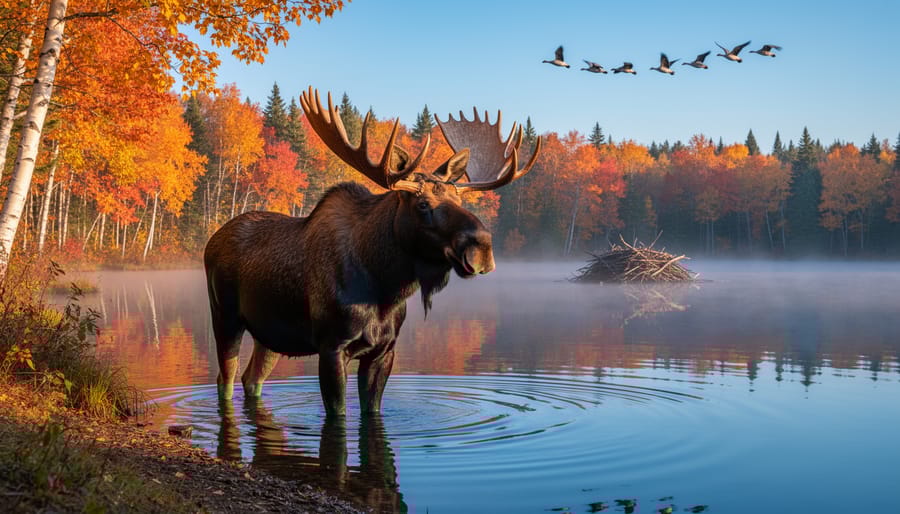
Time your wildlife viewing adventures around Ontario’s dramatic seasonal shifts to witness remarkable animal behaviors you’ll find nowhere else. Spring brings black bears emerging from dens with newborn cubs, while summer evenings fill with beaver activity at twilight. Fall transforms forests into wildlife highways as moose enter their spectacular rutting season, and winter offers your best chance to spot elusive lynx against fresh snow.
Ontario’s forests pulse with a four-season rhythm that dictates everything from when white-tailed deer fawns take their first wobbly steps to when thousands of migrating birds fill the canopy overhead. Each season unveils distinct wildlife spectacles, from March’s chorus of spring peepers signaling amphibian breeding season to December’s wolf packs traveling frozen lakes in search of prey.
Understanding these seasonal patterns means the difference between a disappointing outing and witnessing a once-in-a-lifetime moment. A May visit to Algonquin Park positions you perfectly for moose calving season, when protective mothers frequent roadside salt licks. Visit that same location in October, and you’ll encounter bull moose with massive antlers sparring for dominance, their bellowing calls echoing through hardwood forests ablaze with autumn color.
The seasonal cycle also determines practical considerations that shape your entire experience. Summer’s abundance of berries draws bears to forest edges, making sightings more likely but requiring extra food storage precautions. Winter’s deep snow restricts many animals to predictable travel corridors, concentrating wildlife along frozen waterways and making tracking easier despite shorter daylight hours.
Whether you’re planning your first camping trip or your fiftieth backcountry expedition, matching your visit to seasonal wildlife patterns elevates every outdoor experience while supporting responsible, low-impact nature observation that protects Ontario’s incredible biodiversity for generations to come.
Spring Awakening: When the Forest Comes Back to Life
The Great Thaw and Early Risers
When Ontario’s forests begin their slow awakening, it’s like watching nature hit the snooze button one last time before finally rolling out of bed. The great thaw typically kicks off in late March, and the first creatures to emerge aren’t always who you’d expect.
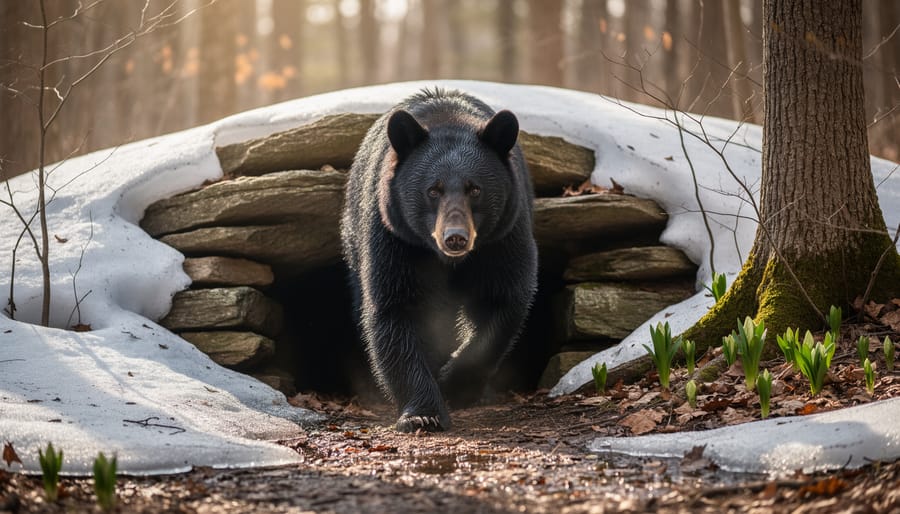
Black bears are actually among the earliest risers, shuffling out of their dens as early as March or April. They’re groggy, cranky, and desperately hungry after months of hibernation. You’ll often spot them near forest edges, searching for emerging vegetation and leftover winter-kill. Around the same time, chipmunks dart from their underground burrows, their frantic energy a stark contrast to the bears’ sluggish movements.
But the real magic happens underfoot and overhead. As temperatures climb above freezing, amphibians emerge from their winter hideaways, filling vernal pools with their chorus of spring peepers and wood frogs. Listen closely on rainy April evenings and you’ll hear nature’s symphony in full swing.
Here’s an insider tip: maple syrup season creates unexpected wildlife hotspots. Animals are drawn to the sweet sap dripping from tapped trees and the increased human activity disturbs leaf litter, exposing insects and grubs underneath.
Speaking of bugs, the explosion of insect life in May triggers a cascade effect up the food chain. Suddenly, migratory birds flood back, bats become active again, and the forest buzzes with new energy.
Birds Return and Breeding Season Begins
There’s something magical about waking up to the sound of songbirds after months of winter silence. Usually around late March and early April, the first wave of migrants starts arriving in Ontario’s forests, and trust me, it’s like nature’s symphony warming up for the main performance.
The red-winged blackbirds are typically the early risers, staking their claims in wetlands and marshes throughout the province. You’ll hear their distinctive “conk-la-ree” call echoing across places like Point Pelee National Park and Presqu’ile Provincial Park, both incredible spots for catching the spring migration. Speaking of Point Pelee, if you’re a serious birder, plan your visit for early May. This narrow peninsula acts like a natural funnel for migrating warblers, vireos, and thrushes, and on a good morning, you might spot over 100 species in a single day.
Waterfowl begin returning to Ontario’s thawing lakes and rivers in waves. Canada geese and mallards are among the first, often arriving while ice still clings to shorelines. By mid-April, you’ll see loons returning to their breeding territories on northern lakes, their haunting calls signaling that spring has truly arrived.
Keep your ears open for woodpecker activity too. Drumming intensifies as males establish territories and attract mates. Pileated woodpeckers become particularly vocal and visible during this time, their loud calls and distinctive rectangular holes easy to spot in mature forests.
For the best wildlife watching experience, head out during early morning hours when birds are most active and bring binoculars for respectful distance viewing.
Insider Tips for Spring Wildlife Watching
Spring in Frontenac Provincial Park means mud season, and honestly, that’s when you’ll catch some of the best wildlife action. Here’s my insider advice: invest in waterproof hiking boots that go above your ankles. Trust me on this one—the trails can be wonderfully mucky, especially along the creek beds where amphibians are most active.
For your pack, bring binoculars, a camera with a zoom lens, and layers you can shed as temperatures rise throughout the day. I always tuck a small towel in my bag for wiping down muddy equipment. The best time to visit is early morning between 6-8 AM when animals are most active after cool nights.
Here’s a local secret: the less-traveled Big Salmon Lake Trail offers incredible spring wildlife viewing without the crowds. You’ll spot returning songbirds and sometimes even black bears foraging for fresh greens. Another hidden gem is the wetland area near Big Clear Lake where you can watch beavers rebuilding their lodges.
Practice eco-friendly observation by staying at least 30 meters from wildlife and never feeding animals—it disrupts their natural foraging patterns. Use designated trails to protect fragile spring vegetation, and if you’re photographing, zoom in rather than approaching closer. Spring wildlife are often caring for young, so giving them space isn’t just courteous—it’s essential for their survival.
Summer Abundance: Raising the Next Generation
Babies Everywhere: Fawns, Cubs, and Kits
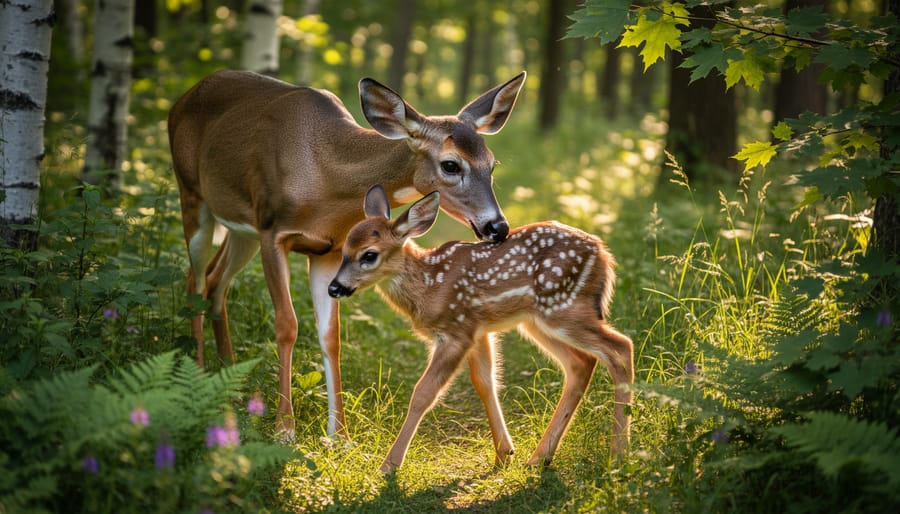
Spring brings an irresistible wave of adorableness to Ontario’s forests, and you’ll need serious willpower to maintain proper wildlife etiquette. White-tailed deer fawns appear in late May and early June, their spotted coats providing perfect camouflage among dappled forest shadows. Mother deer often leave their fawns hidden in tall grass while foraging nearby, and this is where well-meaning hikers sometimes make mistakes. A seemingly abandoned fawn is almost certainly waiting for mom to return.
Fox kits emerge from their dens around the same time, tumbling and playing near burrow entrances during early morning and evening hours. Beaver kits begin exploring outside their lodges in June, practicing their swimming skills in calm waters. Black bear cubs, born during winter hibernation, venture out with their protective mothers as temperatures warm.
Here’s your insider tip: if you spot baby wildlife, admire from a distance and move along quickly. Never approach, touch, or attempt to “rescue” young animals. Mother animals are usually watching from nearby, and human interference can cause permanent abandonment. Keep at least 30 meters back from deer fawns and 100 meters from bear cubs.
The eco-friendly approach? Use binoculars or a zoom lens for closer views. If an animal changes its behavior because of your presence, you’re too close. Report truly orphaned or injured wildlife to Ontario’s Ministry of Natural Resources rather than intervening yourself. Remember, these adorable babies have sharp-toothed, fiercely protective parents who won’t appreciate uninvited admirers.
The Buzz of Summer Activity
Summer evenings in Ontario’s forests come alive with activity you won’t see during the day. As dusk settles over the landscape, a whole new cast of characters emerges. White-tailed deer venture out from their daytime hideaways, beaver families get busy with their nightly construction projects, and if you’re really lucky, you might spot a porcupine waddling along the forest floor. The hour just before dark is prime time for nocturnal wildlife viewing, when diurnal and nocturnal animals briefly share the same space.
Nothing says Ontario summer quite like the haunting call of a loon echoing across a calm lake at sunset. These iconic birds are most vocal during breeding season from May through August, with their wails and tremolos carrying for miles across the water. Listen for them especially during the early morning and evening hours.
Summer storms play a fascinating role in wildlife behavior. Just before a thunderstorm hits, you’ll notice animals feeding with unusual intensity. They instinctively know to fuel up before hunkering down during heavy weather. After storms pass, watch for increased foraging activity as creatures emerge hungry and ready to take advantage of insects stirred up by the rain.
The best wildlife watching happens during those golden hours around dawn and dusk when animals are most active and comfortable. Pack some bug spray and patience, find a quiet spot near water or forest edges, and let the show come to you.
Beat the Heat: When and Where to Spot Wildlife
Summer heat sends wildlife seeking relief during the coolest parts of the day, making dawn and dusk your golden hours for spotting active animals. I’ve had my best encounters within two hours of sunrise, when deer emerge to graze and beavers finish their nighttime construction projects. As temperatures climb, head to water sources like streams, lakes, and wetlands where animals congregate to drink and cool off.
Here’s an insider tip: set up your observation point near water in early morning, then retreat to shade during midday when wildlife does the same. Always maintain a respectful distance of at least 30 meters from any animal you encounter.
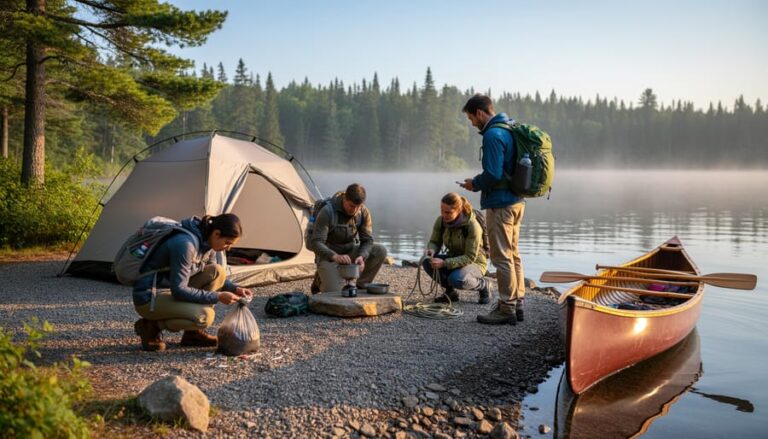
When camping during peak wildlife season, practice eco-friendly coexistence by storing all food and scented items in bear-proof containers or suspended from trees. Keep your campsite clean, as food waste attracts unwanted visitors and disrupts natural foraging patterns. Use designated trails to minimize habitat disturbance, and remember that quiet observers see more wildlife than loud hikers. Your patience and respect create better experiences for both you and Ontario’s summer residents.
Autumn Preparation: The Rush Before Winter
Fattening Up and Stocking Larders
As autumn’s chill settles over Ontario’s forests, wildlife enters what I like to call the “all-you-can-eat buffet” phase. You’ll notice an incredible shift in animal behavior that’s absolutely fascinating to witness during your fall hikes.
Black bears enter hyperphagia, a state where they consume up to 20,000 calories daily – that’s roughly 40 Big Macs! Their metabolic rate actually changes, allowing them to pack on 30 pounds per week. Watch for torn-apart logs and overturned rocks as bears hunt for grubs and insects with single-minded determination.
Squirrels become the forest’s busiest workers, frantically gathering acorns and nuts. Here’s an insider tip: listen for the constant patter of falling acorns in oak-heavy areas like Algonquin Park. A single squirrel can cache thousands of nuts, and remarkably, they’ll remember about 80% of their hiding spots using spatial memory and scent markers.
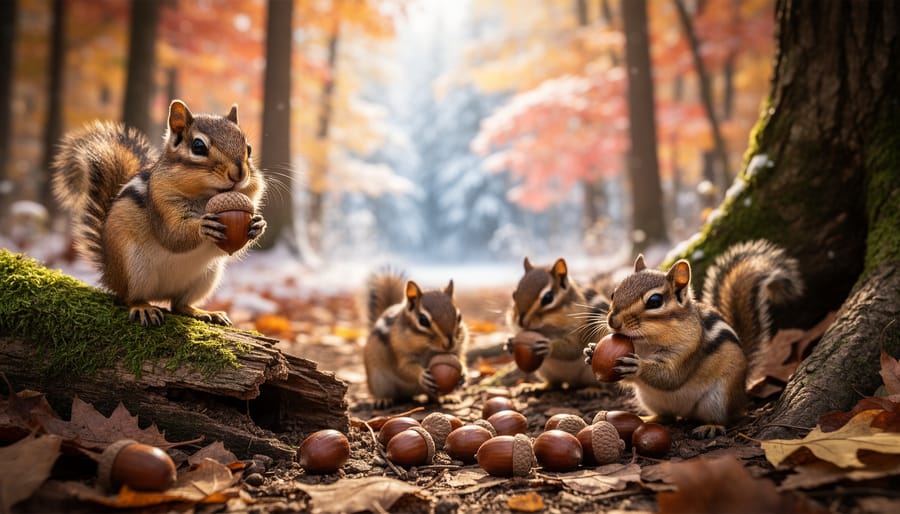
Chipmunks take a different approach, creating elaborate underground pantries that can hold up to eight pounds of seeds and nuts. Unlike squirrels who scatter-hoard, chipmunks store everything in their burrow systems – it’s like having a basement freezer!
Meanwhile, beavers work overtime repairing their lodges and adding fresh mud that will freeze solid, creating fortress-like winter homes. The science behind all this preparation is remarkable: animals must achieve specific body fat percentages to survive winter. Bears need 25-30% body fat, while chipmunks require precise calculations of stored food versus metabolic needs during their periodic winter wake-ups.
The Spectacular Fall Migration
Every autumn, Ontario transforms into one of North America’s busiest wildlife highways. While leaves blaze orange and red, millions of creatures take to the skies in an ancient journey southward that’s absolutely breathtaking to witness.
The star performers are undoubtedly the birds. From late August through November, over 400 species funnel through Ontario along several major fall migration routes. Hawks, eagles, and thousands of songbirds follow the Great Lakes shorelines, using these natural guides to navigate. Point Pelee National Park becomes a birder’s paradise in September, when warblers and thrushes gather strength before crossing Lake Erie.
But birds aren’t the only travelers. Monarch butterflies stage their own spectacular exodus, with millions passing through southwestern Ontario heading to Mexico. Watch for them nectaring on goldenrod and asters in late September, building energy for their 3,000-kilometer journey. It’s mind-boggling that these delicate creatures, weighing less than a gram, make this epic voyage.
Here’s an insider tip: don’t overlook the lesser-known migrations. Thousands of silver-haired bats head south in October, often visible at dusk along lake shorelines. Common green darner dragonflies migrate too, traveling in swarms that can number in the thousands.
Time your visit for mid-September to catch the peak action across multiple species. Bring binoculars, dress in layers for changeable weather, and practice eco-friendly viewing by keeping respectful distances. These migrations have occurred for millennia, and witnessing them connects us to nature’s timeless rhythms.
Insider’s Guide to Fall Wildlife Experiences
Fall is hands-down my favorite season for wildlife watching, and here’s why: those brilliant orange and red leaves actually make animals easier to spot against the forest backdrop. When the canopy thins out, you’ll catch glimpses of wildlife you’d completely miss during summer’s dense foliage.
Head to Algonquin Park’s Highway 60 Corridor early morning for incredible moose sightings. They’re incredibly active during fall rut, and the contrast of their dark bodies against golden maples makes for stunning photos. Pro tip: bring a zoom lens and stay in your vehicle for the safest, most ethical viewing experience.
For smaller critters, check out Bruce Peninsula National Park where chipmunks frantically gather acorns and you might spot migrating hawks riding thermal currents above the escarpment. The cooler temperatures mean animals are more active throughout the day, not just at dawn and dusk.
Photography enthusiasts, this is your moment. The soft autumn light between 7-9am creates magical conditions, and animals preparing for winter are less skittish as they focus on foraging. Remember to keep at least 30 meters from wildlife and never feed them, no matter how adorable they seem.
Fall’s biggest advantage? Fewer crowds mean quieter trails, making wildlife encounters more likely and meaningful.
Winter Survival: The Quiet Season That’s Not So Quiet
Who’s Actually Sleeping? Hibernation Myths Debunked
Here’s a winter secret that might surprise you: most animals you think are hibernating are actually just sleeping in! True hibernators like groundhogs and jumping mice drop their body temperature to near-freezing and barely breathe for months. They’re essentially in suspended animation and can’t be woken up even if you tried.
Black bears, though? They’re the light sleepers of the winter world. Bears enter a state called torpor, where their metabolism slows down but their body temperature only drops slightly. A mother bear can even wake up to give birth and nurse her cubs mid-winter! If you’re snowshoeing through Algonquin Park and notice a disturbed den, give it a wide berth – those bears can wake up if bothered.
Meanwhile, plenty of Ontario wildlife stays fully active all winter. Red foxes hunt through the snow using their incredible hearing to detect mice tunneling beneath the surface. Great grey owls and snowy owls thrive in winter conditions, and wolves continue their pack hunts across frozen landscapes. Even white-tailed deer remain active, though they create “deer yards” in sheltered areas with less snow to conserve energy.
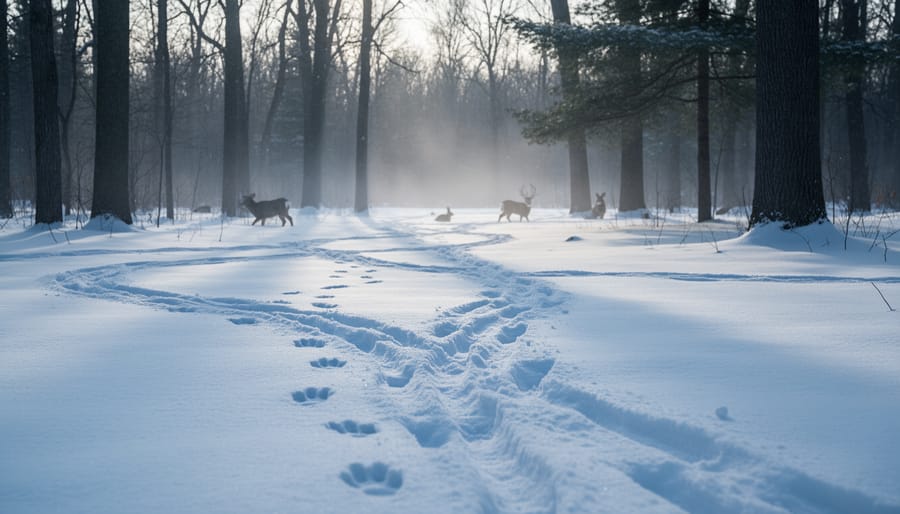
Insider tip: Winter is actually fantastic for wildlife tracking! Fresh snow reveals the nighttime dramas – fox trails, rabbit escape routes, and fisher tracks. Visit after a light snowfall for the best tracking conditions, and bring a field guide to decode the stories written in snow. Just remember to dress warmly and stick to marked trails for safety.
Reading the Winter Forest: Tracks and Signs
Winter transforms Ontario’s forests into a storyteller’s paradise, where fresh snow becomes nature’s diary. Every creature leaves its signature, and learning to read these signs opens up a secret world that most visitors miss on their first snowshoe outing.
After a fresh snowfall, the forest floor becomes a canvas of activity. Those hopping patterns with paired prints? Likely a snowshoe hare making its midnight rounds. The distinctive canine tracks in a straight line suggest a red fox on the hunt, while the larger, wandering prints of a white-tailed deer reveal their browsing route. Learning to identify animal tracks is easier than you think, and it adds incredible depth to your winter hikes.
Look beyond footprints too. Scattered seed shells beneath a hemlock indicate a red squirrel’s feeding station, while gnawed bark at the base of young trees shows where hungry rabbits have been dining. Dark cavities in older trees often shelter roosting owls or sleeping raccoons.
Here’s an insider tip: head out early morning after fresh snow for the clearest story. Tracks from the previous night’s activity will be crisp and easy to follow. Bring a simple field guide or use a tracking app on your phone for quick identification.
Remember to observe from a distance and never disturb dens or feeding areas. These signs represent survival strategies that wildlife depends on throughout Ontario’s challenging winters.
Winter Wildlife Watching Without Disturbing the Peace
Winter wildlife watching requires extra sensitivity—animals are burning precious calories just to survive the cold. That moose you spot isn’t posing for photos; she’s conserving energy to make it through until spring. Give wildlife at least 70 meters of space, and if an animal changes its behavior because of you, you’re too close.
Snowshoeing offers quieter wildlife observation than skiing. Algonquin Park’s Mizzy Lake Trail rewards patient observers with glimpses of otters, fishers, and winter birds without the crowds. Pack binoculars, a thermos of something warm, and dress in layers you can adjust without stopping for long periods.
Here’s an insider tip: early morning tracks in fresh snow tell yesterday’s stories. Follow them with your eyes, not your feet. Photographing tracks and scat disturbs nothing while still creating memorable wildlife documentation. Silent River Provincial Park offers excellent tracking opportunities with minimal human traffic, making it perfect for respectful winter wildlife enthusiasts who understand that the best encounters happen when animals don’t even know you’re there.
There’s something profoundly humbling about watching the forest transform through all four seasons. Each time I return to my favorite trail in Ontario, I’m reminded that these seasonal shifts aren’t just calendar changes—they’re a carefully choreographed dance of survival, adaptation, and renewal that’s been happening for thousands of years.
The black bears preparing their dens in autumn, the chickadees fluffing their feathers against January’s chill, the chorus frogs announcing spring’s arrival, and the white-tailed deer nurturing spotted fawns in summer meadows—these aren’t isolated moments. They’re interconnected chapters in an ongoing story that never truly ends, just cycles endlessly forward.
Here’s my insider tip: you haven’t really experienced Ontario’s wilderness until you’ve visited the same location in all four seasons. Pick a park close to home and make it your seasonal sanctuary. You’ll notice patterns that casual visitors miss—the exact week the warblers return, where the foxes den each winter, which maple trees the porcupines favor.
When you do venture out, remember that we’re guests in these animals’ homes. Keep a respectful distance, never feed wildlife, and stick to marked trails to minimize your impact. Bring binoculars instead of getting too close, and please, leave no trace behind.
Witnessing these seasonal transformations has deepened my commitment to conservation in ways I never expected. When you’ve watched a family of otters teach their young to fish in spring, then see that same riverbank frozen solid months later, you understand just how resilient—and how vulnerable—these ecosystems truly are. That understanding transforms us from mere visitors into stewards, and that’s when the real magic happens.





+ There are no comments
Add yours