

Every autumn, millions of birds embark on one of nature’s most spectacular journeys, transforming Ontario’s skies into bustling aerial highways. From the majestic Tundra Swans soaring over Lake Erie to the vibrant warblers darting through Point Pelee’s treetops, these seasonal migrations paint a breathtaking portrait of survival and instinct. Driven by an internal compass that responds to Earth’s magnetic field, changing daylight hours, and weather patterns, birds navigate thousands of kilometers between their breeding grounds in the north and winter havens in the south.
This remarkable phenomenon follows specific flyways – nature’s equivalent of bird superhighways – with the Atlantic and Mississippi Flyways intersecting right through Ontario’s heartland. These ancient routes, shaped by geography and refined over millennia, offer birds essential rest stops at our Great Lakes, wetlands, and forests. Whether you’re a seasoned birder or simply nature-curious, understanding these migration patterns opens a window into one of our planet’s most fascinating natural cycles.
Today’s birds face unprecedented challenges from climate change and habitat loss, making their twice-yearly journeys increasingly perilous. Yet their unwavering determination to follow these age-old routes continues to inspire and amaze, reminding us of nature’s remarkable resilience and the vital importance of preserving their pathways for generations to come.
Ontario’s Prime Migration Corridors
The Lake Erie-Lake Ontario Corridor
The Lake Erie-Lake Ontario corridor serves as a vital superhighway for countless bird species during their annual migrations. This natural pathway, shaped by the Great Lakes, creates an ideal route for birds traveling between their breeding grounds in the north and wintering areas in the south. Similar to Canadian geese migration patterns, many species follow this corridor due to its favorable geography and abundant rest stops.
The corridor’s unique features make it particularly attractive to migrating birds. The shorelines provide essential navigation landmarks, while the surrounding wetlands and forests offer crucial feeding and resting areas. During peak migration seasons, typically in spring (March to May) and fall (September to November), thousands of birds can be spotted following this route daily.
What makes this corridor truly special is its diversity of species. From tiny warblers to impressive hawks, the pathway welcomes both songbirds and larger species. Local hotspots like Point Pelee National Park and the Niagara Peninsula become bustling rest areas during migration seasons, offering bird enthusiasts incredible viewing opportunities.
For the best bird-watching experience along this corridor, try visiting early morning or late afternoon when birds are most active. Remember to bring binoculars and maintain a respectful distance to avoid disturbing these amazing travelers on their incredible journey.
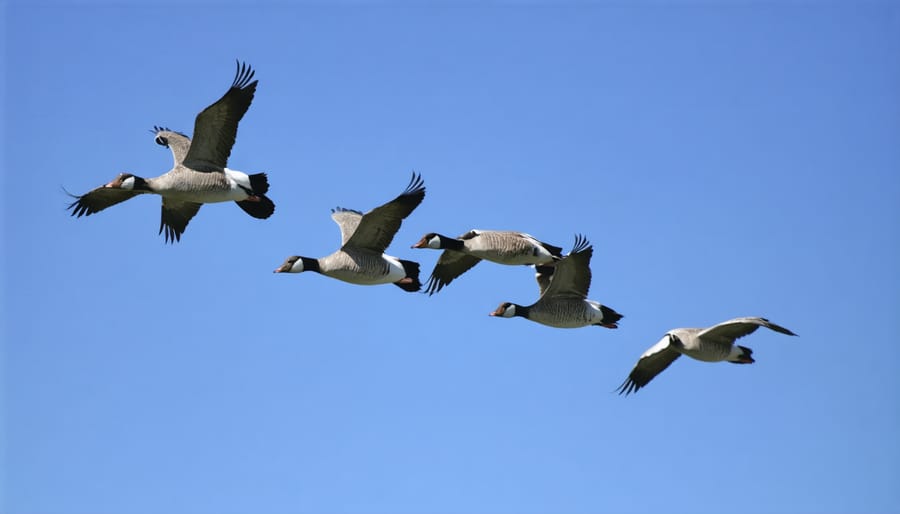
The Ottawa Valley Flyway
The Ottawa Valley serves as a vital migratory corridor for countless birds making their seasonal journeys across Ontario. This natural flyway, formed by the Ottawa River and its surrounding valley, creates a perfect navigation route that birds have used for thousands of years. During peak migration periods in spring and fall, the skies come alive with dozens of species following this ancient path.
In spring, typically from March to May, waterfowl lead the parade, with Canada geese and various duck species being among the first to arrive. They’re followed by songbirds like warblers, thrushes, and sparrows, who time their arrival with the emergence of insects and spring buds. Fall migration begins as early as August, with shorebirds leading the way, followed by the spectacular sight of hawks and eagles soaring on thermal currents through September and October.
The valley’s unique geography, combining wetlands, forests, and open fields, provides essential rest stops for these weary travelers. Popular viewing spots include Morris Island Conservation Area near Fitzroy Harbour and the Pembroke Waterfront, where observers can witness everything from tiny kinglets to magnificent bald eagles.
Tip: Early morning hours offer the best viewing opportunities, especially on clear days with light winds. Remember to bring binoculars and dress in layers – spring and fall temperatures can be unpredictable along the river.

Seasonal Migration Calendar
Spring Migration (March-May)
As winter’s grip loosens, Ontario’s skies come alive with the spectacular spring migration. From March through May, millions of birds make their journey northward, following ancient pathways known as flyways. The most prominent of these is the Atlantic Flyway, which channels birds through the Great Lakes region, making Ontario a prime spot for witnessing this natural phenomenon.
Early March brings the first wave of waterfowl, with Tundra Swans and Canada Geese leading the charge. By April, the migration reaches its peak as warblers paint the trees with splashes of yellow, blue, and orange. These tiny songbirds travel thousands of kilometers from South and Central America, stopping in Ontario’s woodlands to rest and refuel.
Some of the most exciting species to watch for include the Baltimore Oriole, with its brilliant orange plumage, and the Ruby-throated Hummingbird, which times its arrival with the blooming of spring flowers. Point Pelee National Park becomes a hotspot during this season, sometimes hosting over 300 species in a single day!
Pro tip: The best time for spring bird watching is early morning, just after sunrise. The birds are most active then, and the morning light makes for perfect viewing conditions. Pack a thermos of hot coffee and dress in layers – spring mornings can be chilly!
For an eco-friendly viewing experience, stick to marked trails and viewing platforms. Many birds are exhausted from their long journey, and minimizing disturbance helps ensure their successful migration. Consider joining a local birding group or guided tour to learn from experienced watchers and enhance your migration viewing experience.
Remember to bring binoculars and a field guide, and don’t forget your camera – spring migration offers some of the year’s best bird photography opportunities!
Fall Migration (August-November)
As summer winds down, Ontario’s skies come alive with the spectacular fall migration. This southbound journey typically begins in late August, reaching its peak in September and October, with some species continuing their travels into November. The cooling temperatures and shortening days trigger an instinctive response in our feathered friends, prompting them to begin their journey to warmer climates.
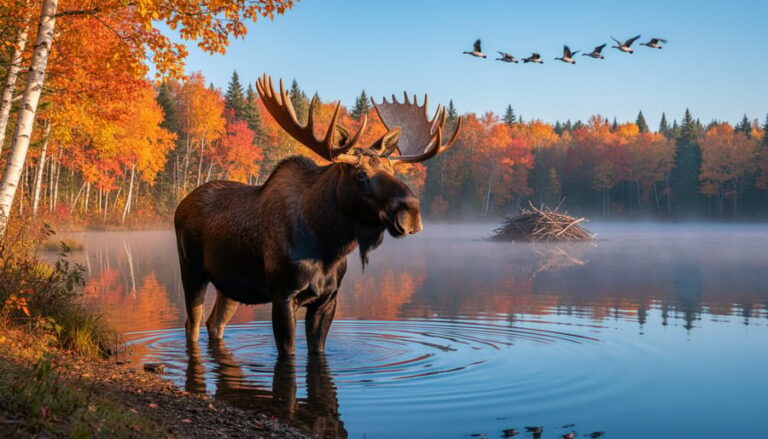
During this season, you’ll witness the impressive V-formations of Canada Geese, their distinctive honking announcing their departure. Waterfowl like ducks and swans follow suit, while songbirds often travel under the cover of darkness. Hawks and other raptors take advantage of thermal currents along the Great Lakes, creating magnificent soaring displays during clear, sunny days.
Some of our most colorful visitors, including warblers and tanagers, trade their bright breeding plumage for more subdued tones before heading south. Monarch Point on Lake Ontario and Point Pelee National Park become crucial stopover points, where birds rest and refuel during their long journey. These locations offer excellent opportunities for bird watching, especially during the early morning hours when activity is at its peak.
Pro tip: For the best fall migration viewing, try to plan your visits on days following cold fronts, when birds are most likely to be on the move. Don’t forget to bring binoculars and a field guide to help identify the various species. The crisp autumn air and colorful foliage provide the perfect backdrop for witnessing this remarkable natural phenomenon.
Remember to maintain a respectful distance from resting birds and avoid disturbing their essential feeding activities. These brief stops are crucial for their successful migration to their winter destinations.
Best Viewing Locations in Ontario Parks
Point Pelee National Park
Point Pelee National Park, the southernmost tip of mainland Canada, serves as one of North America’s most spectacular bird migration hotspots. This unique peninsula that juts into Lake Erie acts as a natural funnel, concentrating thousands of birds into a relatively small area during their spring and fall migrations.
Every spring, typically from March through May, the park becomes a paradise for bird enthusiasts as waves of colorful warblers, thrushes, and other songbirds make their way north. The park’s location makes it the first landfall for many birds crossing Lake Erie, turning it into a crucial rest stop where exhausted travelers can recover before continuing their journey.
The Tip, as locals call it, offers the best viewing opportunities, especially during early morning hours when birds are most active. Visitors can spot up to 50 different species in a single day during peak migration periods. The park’s varied habitats, including Carolinian forest, marshlands, and beach areas, provide essential refuge for different species.
For the best experience, arrive at sunrise when the park opens, and don’t forget to check the daily bird sighting boards at the Visitor Centre. Spring migration peaks in early May, coinciding with the famous Festival of Birds, while fall migration offers excellent hawk-watching opportunities from September through November.
Insider tip: Visit on slightly overcast days with light winds from the south – these conditions often ground more birds, making them easier to spot.
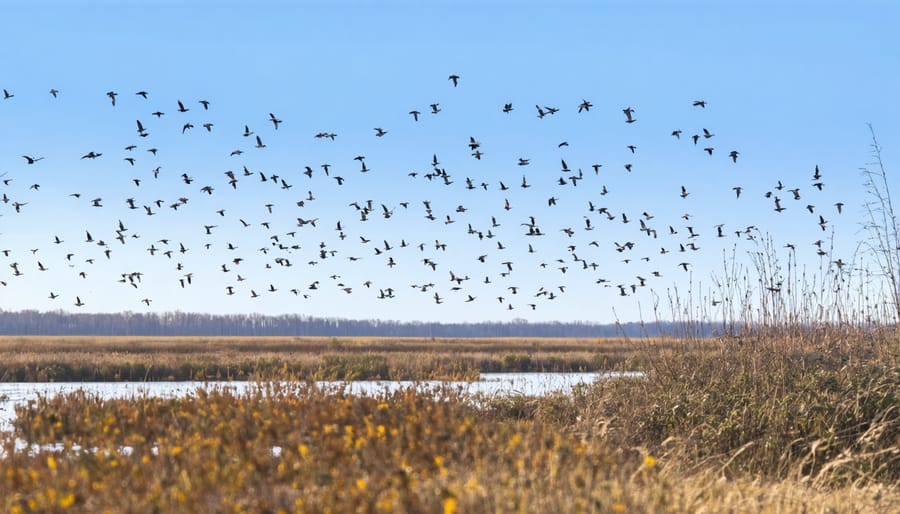
Presqu’ile Provincial Park
Presqu’ile Provincial Park stands as one of Ontario’s premier destinations for witnessing the spectacle of bird migration. Located on a peninsula jutting into Lake Ontario, this natural wonder creates a perfect stopover point for thousands of birds during their spring and fall journeys.
During peak migration periods, typically March to May and August to October, visitors can observe an impressive variety of species. The park’s unique geography acts as a natural funnel, concentrating birds along the shoreline and making it easier for birdwatchers of all experience levels to spot them.
The lighthouse area and Owen Point Trail offer exceptional viewing opportunities, especially during early morning hours when birds are most active. Warblers, thrushes, and waterfowl are common sights, while lucky observers might catch glimpses of rare shorebirds feeding along the beach areas.
Pro tip: Visit during weekdays in early May for the best viewing experience with fewer crowds. The park’s nature center offers free bird checklists and helpful staff who can point you toward recent sightings. Don’t forget to bring binoculars and a field guide!
For an eco-friendly visit, stick to marked trails and maintain a respectful distance from resting birds. Consider joining one of the park’s guided bird walks, offered regularly during peak migration seasons, to learn from experienced naturalists while supporting conservation efforts.
Long Point Provincial Park
Long Point Provincial Park, jutting 40 kilometers into Lake Erie, serves as one of North America’s most crucial stopover points for migrating birds. This remarkable sand spit creates a natural funnel that channels thousands of birds during their spring and fall migrations, making it a premier destination for bird enthusiasts and nature lovers alike.
During peak migration periods, typically from March to May and August to October, the park becomes a bustling hub of avian activity. Birds use this peninsula as a vital resting spot before continuing their journey across Lake Erie, with some species traveling from as far as South America to their breeding grounds in the Canadian Arctic.
The park’s diverse habitats, including marshlands, sandy beaches, and Carolinian forests, provide essential resources for over 380 bird species. Visitors can observe everything from tiny warblers and vireos to impressive waterfowl and raptors. The Long Point Bird Observatory, established in 1960, conducts regular monitoring and banding programs, contributing valuable data to bird conservation efforts.
For the best bird-watching experience, arrive early in the morning when birds are most active. The park’s observation platforms and walking trails offer excellent viewing opportunities. Remember to bring binoculars, wear muted colors, and maintain a respectful distance from the birds. The nearby Long Point Eco-Adventures offers guided bird-watching tours for those seeking expert insight into this extraordinary natural phenomenon.
Tips for Viewing Migration
To make the most of your bird migration viewing experience, timing and preparation are essential. Plan your visit during peak migration periods, typically early morning or late afternoon when birds are most active. Bring binoculars, a field guide, and download a bird identification app to enhance your experience.
Dress in layers and wear muted colors to avoid startling the birds. Consider investing in a good camera with a zoom lens to capture these magnificent moments. For the best viewing spots, arrive at least 30 minutes before sunrise to set up your viewing position quietly.
Weather plays a crucial role in migration patterns. Clear days with light winds from the north are ideal for spotting southbound migrants in fall. Spring migration often picks up after a warm front moves through. Some species are also active during night wildlife viewing opportunities, especially during full moons.
Remember to maintain a respectful distance from the birds and follow wildlife watching safety tips. Never use recordings or artificial sounds to attract birds during migration, as this can disrupt their natural patterns and deplete their essential energy reserves.
Consider joining a local birding group or guided tour for expert insights and shared experiences. Many conservation areas offer educational programs during peak migration seasons, providing excellent opportunities to learn from experienced naturalists.
Bird migration is truly one of nature’s most spectacular shows, and Ontario offers front-row seats to this amazing journey. From the graceful V-formations of Canada geese to the colorful warblers dotting our trees, these seasonal travelers remind us of nature’s incredible rhythms. Whether you’re an experienced birder or simply nature-curious, witnessing these migrations can be a life-changing experience. Pack your binoculars, grab a field guide, and head to one of Ontario’s many bird-watching hotspots this season. The best part? Every migration is unique, offering new discoveries and memorable moments. Remember to practice responsible bird-watching and preserve these natural spaces for future generations. By understanding and appreciating bird migration patterns, we become better stewards of our environment and the remarkable creatures that call it home.









+ There are no comments
Add yours