

Study the elevation profile before race day and understand that the Sleeping Giant Loppet features approximately 450 meters of cumulative elevation gain over its 50-kilometer course, with the most challenging climbs concentrated in the first half. The terrain rises from Thunder Bay’s shoreline at roughly 200 meters above sea level to peaks near 400 meters, creating rolling hills that test endurance rather than presenting one massive ascent.
Train specifically for sustained climbing by incorporating hill repeats into your weekly routine at least eight weeks before the event. Focus on maintaining consistent effort during 3-5 minute climbs rather than explosive power, as the Sleeping Giant’s gradual inclines demand steady pacing and smart energy management.
Practice your technique on both ascents and descents since the downhill sections offer recovery opportunities but require confident skiing skills to maximize efficiency. Many participants lose time and energy by tensing up on descents instead of using them to rest their climbing muscles.
Pack nutrition strategically for the elevation changes, carrying quick-energy gels or chews specifically for the uphill sections where your body burns fuel fastest. The combination of distance and elevation makes this course more demanding than flat loppets of similar length, so fuel early and often to avoid bonking on those later climbs when fatigue sets in.
The Sleeping Giant’s Terrain: More Than Just a Number
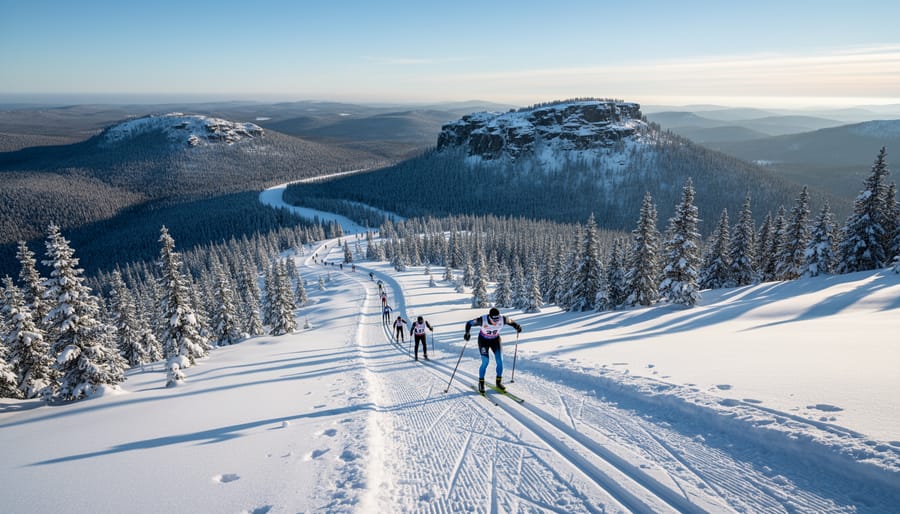
Understanding the Course Profile
Let me be straight with you: the Sleeping Giant Loppet isn’t your average flat and easy ski race. The elevation profile here tells a story of rolling terrain that’ll test your legs and reward your efforts with stunning lakeside views.
The 5km course is the most beginner-friendly option, featuring approximately 65 meters of cumulative elevation gain. You’ll encounter gentle rollers throughout, with the steepest climb coming around the 2.5km mark—a gradual ascent that’s challenging but manageable for newer skiers. Think of it as a taste of what the Giant has to offer without overwhelming your quads.
Step up to the 10km distance, and you’re looking at roughly 140 meters of elevation gain. The course loops back on itself, so you’ll tackle those early climbs twice. The trickiest section? There’s a punchy hill around kilometer 7 that catches many skiers off guard when their legs are already feeling tired. My insider tip: save some energy for this one rather than burning it all in the first half.
The 25km course is where things get serious, with approximately 320 meters of total climbing. You’ll face multiple challenging ascents spread throughout the distance, with the most demanding climbs positioned between kilometers 15 and 20. The descents can be equally technical, requiring solid control and confidence in your downhill skiing technique.
The good news? The course doesn’t feature any brutal, sustained climbs. Instead, expect rolling terrain that keeps you honest throughout your race.
Why Elevation Matters for Cross-Country Skiing
If you’ve only skied on flat trails, the Sleeping Giant’s elevation profile will be a whole different beast – and I mean that in the best way possible! Think of it like this: flat courses let you settle into a rhythm and maintain steady speed, but elevation changes turn skiing into a strategic chess match with your own energy reserves.
Here’s what really happens on those hills: climbing burns roughly twice the calories of flat skiing, and your heart rate can spike 20-30 beats per minute on sustained climbs. I’ve watched even seasoned skiers make the rookie mistake of attacking the first climb too aggressively, only to hit the wall by kilometer 15. The key is pacing yourself like you’re managing a battery – you’ve got limited charge, so spend it wisely.
Downhills aren’t rest periods either. They demand core strength, balance, and technical skill to maintain control while your legs scream for recovery. The really smart skiers I’ve talked to treat descents as active recovery, using efficient tuck positions to conserve energy while still moving fast.
The Sleeping Giant course rewards those who train specifically for elevation. That means incorporating hill repeats, strength training, and practicing your technique on varied terrain – not just logging kilometers on flat ground.
Training for the Giant: Preparing Your Body for the Climb
Building Climbing Strength
Getting your legs ready for those relentless climbs doesn’t have to mean suffering through endless hill repeats in the cold, though a few definitely help! Start by building your foundation with stair climbing at home or at work. One past participant from Thunder Bay swears by her office building’s six-floor staircase, which she tackles three times a day with ski poles in the weeks leading up to the race.
If you have access to a gym, the StairMaster becomes your best friend. Try interval sessions: alternate between moderate climbing for three minutes and intense one-minute bursts. This mimics the varied terrain you’ll encounter on race day. Resistance band exercises targeting your glutes and quads also work wonders for explosive uphill power.
For on-snow training, seek out any hills in your area and practice your herringbone and side-step techniques. A local coach suggests doing hill intervals where you ski hard uphill for two minutes, recover on the descent, and repeat six to eight times. The beauty of this approach is that it builds both strength and the mental toughness you’ll need when you’re halfway up that seemingly endless incline.
Don’t forget core work either. Planks, Russian twists, and single-leg balances strengthen the stabilizing muscles that keep your technique solid when fatigue sets in. Aim to train consistently three to four times weekly for at least six weeks before the Loppet.
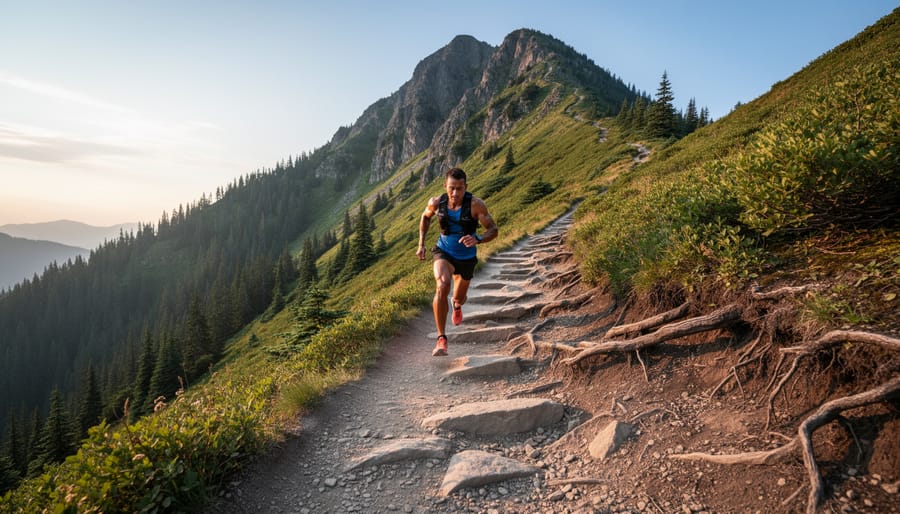
Mastering Downhill Control
Here’s something I learned the hard way during my first Sleeping Giant Loppet: what goes up must come down, and sometimes that descent feels even tougher than the climb! Those downhills can really test your technique and nerve, but with the right approach, you’ll fly down like a pro.
First up, resist the urge to lean back. I know it feels natural when you’re picking up speed, but keeping your weight centered over your skis gives you much better control. Bend your knees slightly and stay loose – tension is your enemy here. Think of yourself as a shock absorber, ready to adjust to bumps and turns.
Try the half-snowplow technique if things get too speedy. Form a gentle wedge with your skis to control your pace without completely braking. It saves energy compared to a full snowplow and keeps you moving efficiently. On steeper sections, don’t be shy about taking a wider line across the trail to reduce the gradient.
Here’s an insider tip: practice your downhill skills on smaller hills before race day. Many Ontario cross-country ski centers have perfect training terrain. And remember, there’s absolutely no shame in stepping to the side if you need a breather or feel uncomfortable with the speed. Safety first, always! The views from those descents are spectacular, so enjoy the ride down.
Race Day Strategy: Using Elevation to Your Advantage
Pacing Through the Elevation Changes
The secret to conquering Sleeping Giant’s elevation isn’t about attacking every hill—it’s about reading the terrain like a story and knowing which chapters to skim through versus which ones deserve your full attention.
Start conservatively on those first rolling hills. I know the adrenaline will be pumping, but trust me, skiers who blast out of the gate often find themselves struggling by kilometer 15. Think of the opening 10 kilometers as your warm-up act, keeping your effort at about 70-80% of maximum.
When you hit the signature climbs between kilometers 15 and 25, this is where strategy becomes critical. On steep pitches exceeding 8-10% grade, don’t be afraid to herringbone or side-step if needed—maintaining momentum matters less than conserving energy for what’s ahead. Save your aggressive pushes for moderate climbs where good technique pays dividends.
The descents offer golden recovery opportunities. Tuck into an efficient glide position, focus on your breathing, and let gravity do the work. Grab water and fuel during these sections since you won’t need both hands for poling.
After kilometer 35, reassess your energy reserves. If you’ve paced well, you can gradually increase effort on the remaining climbs. The final 10 kilometers tend to flatten out—perfect for a strong, steady finish that’ll leave you grinning at the end.
Fueling for the Climbs
Tackling Sleeping Giant’s elevation demands smart fueling strategies that’ll keep your energy steady through those climbs. Start loading up on complex carbs two days before the race—think whole grain pasta, oatmeal, and sweet potatoes. My go-to breakfast on race morning is banana oatmeal with honey, eaten at least two hours before the start.
During the race, aim to consume 30-60 grams of carbs per hour. I’ve found that locally-made energy bars from Thunder Bay shops work beautifully and support the community. Pack lightweight options like date-based energy balls or maple syrup packets—nothing says Ontario quite like pure maple for that mid-race boost!
Hydration is absolutely critical, especially on those sun-exposed sections. Carry at least one water bottle and sip regularly rather than gulping. Consider adding electrolyte tablets to prevent cramping on those steep climbs.
Here’s an insider tip: stash a small reusable flask with your favorite sports drink at the aid stations beforehand, reducing single-use plastic waste. The course marshals appreciate eco-conscious racers! And don’t forget to test everything during training—race day is never the time to experiment with new nutrition.
The Reward: Why the Elevation Makes It Worth It
After pushing through those challenging climbs, you’ll discover why skiers return to Sleeping Giant year after year. The payoff isn’t just about finishing—it’s about the moments that take your breath away, both literally and figuratively.
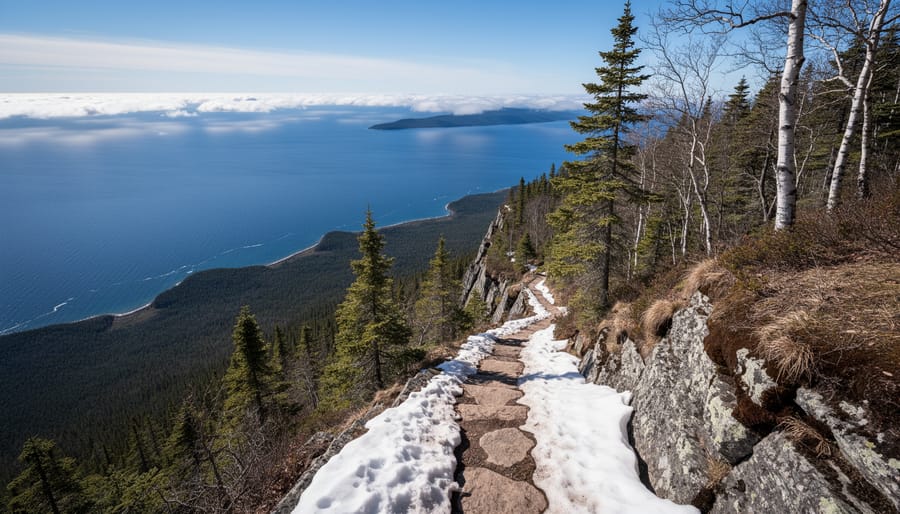
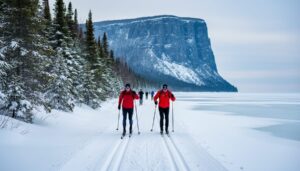
Picture this: you’re gliding along the ridgeline after conquering that steep ascent, and suddenly Lake Superior stretches endlessly before you, its winter surface a patchwork of ice and open water. On clear days, the visibility extends for miles, with the rugged shoreline creating a dramatic backdrop that few other ski courses can match. The elevation puts you right at eye level with the giant’s “profile,” offering perspectives that most park visitors never experience.
“I’ve skied dozens of loppets across North America, but nothing compares to that moment when you crest the hill and see Superior laid out below you,” shares Sarah Chen, a seven-time Sleeping Giant Loppet participant from Toronto. “It makes every burning muscle worth it.”
The elevated sections also offer incredible wildlife viewing opportunities. Keep your eyes open for soaring eagles and ravens riding the thermal currents along the cliffs—an insider tip that many first-timers miss while focusing solely on their technique.
Local veteran skier Marcus Lindstrom puts it perfectly: “The elevation challenge separates this race from flat, forgettable courses. You earn these views. When you’re up there, surrounded by snow-laden pines with that massive lake sparkling in the winter sun, you feel genuinely alive and connected to this incredible landscape.”
The sense of accomplishment at the finish line carries a special weight too. You haven’t just completed a ski race—you’ve conquered a geological giant while experiencing one of Ontario’s most spectacular natural environments from a truly unique vantage point.
Planning Your Sleeping Giant Loppet Adventure
Ready to tackle those elevation changes at the Sleeping Giant Loppet? Here’s everything you need to know about planning your visit.
The Loppet typically takes place in late January or early February when snow conditions are optimal. Registration opens months in advance and spots fill quickly, so mark your calendar and register early through the official Sleeping Giant Loppet website. Early bird pricing often saves you a few dollars too.
For accommodations, Thunder Bay offers plenty of options just 45 minutes from the park. Many participants prefer staying closer at the cozy Sleeping Giant Guest House or nearby Nipigon lodges. Book well ahead during Loppet weekend as everything fills fast.
The park provides heated change areas, hot refreshments, and hearty post-race meals. Parking is free but arrives early since spots near the start line disappear quickly on race day.
Insider tip: Scout the course during a pre-race practice day if you can. Many locals do a casual ski-through the day before to familiarize themselves with those challenging elevation sections. Also, pack extra layers since temperatures can dip significantly, especially on those exposed ridge sections where wind chill becomes a factor.
Don’t forget your Parks Canada day pass, required for park entry. Consider arriving a day early to rest, check out your gear, and soak in the stunning Lake Superior views. Your legs will thank you when tackling those climbs.
The Sleeping Giant’s elevation profile isn’t something to fear—it’s an opportunity to truly test yourself against one of Ontario’s most spectacular natural landmarks. Yes, those climbs will challenge you, and yes, your legs might protest on race day, but here’s the truth: with the right preparation and mindset, conquering this course becomes one of those incredible outdoor experiences you’ll replay in your mind for years to come.
Think of it this way—you’re not just skiing or running a race. You’re moving through ancient landscape, tracing paths along Thunder Bay’s stunning shoreline, and earning every single view the hard way. That’s what makes crossing the finish line so deeply satisfying.
Start your training early, respect the terrain, and pack smart on race day. Listen to your body, embrace the uphills as part of the adventure, and remember that every participant around you is tackling the same Giant. The camaraderie alone makes it worthwhile.
Ready to take on the challenge? Check the official Sleeping Giant Provincial Park website for current trail conditions and register for the next Sleeping Giant Loppet. Your unforgettable Ontario adventure awaits—time to lace up and show that Giant what you’re made of.






+ There are no comments
Add yours