
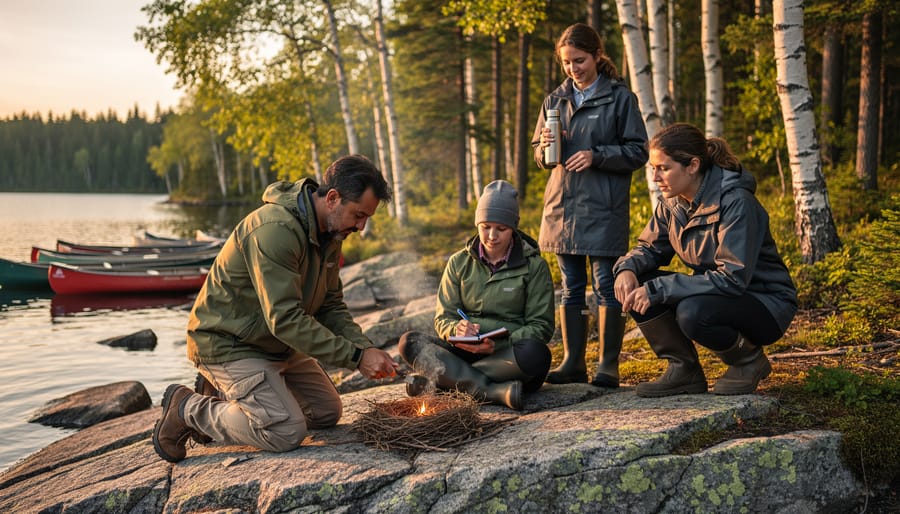
Check Ontario Parks’ seasonal workshop calendars three months ahead of your planned visit—popular programs like winter survival skills and spring maple syrup tapping fill up fast, especially at highly-rated locations such as Algonquin Park and Killarney Provincial Park. Register through the park’s official website or call directly to ask staff about prerequisite skills, as some workshops welcome complete beginners while others expect basic camping knowledge.
Pack layers for temperature fluctuations during outdoor workshops, since you’ll spend 2-4 hours outside regardless of weather conditions. Instructors teach rain or shine, so waterproof boots and a quality rain jacket matter more than fancy gear. Bring a reusable water bottle, snacks, and a small notebook—you’ll want to jot down techniques while your instructor demonstrates fire-starting methods or tracking patterns.
Choose workshops aligned with your genuine interests rather than perceived difficulty levels. Someone passionate about bird identification will engage more deeply in a spring migration workshop than forcing themselves through a “beginner-friendly” paddling session they find boring. Park naturalists design programs to build confidence progressively, so that anxious first-timer learning wilderness navigation will receive the same attention as the experienced hiker expanding their skills.
Connect with fellow participants before the session ends—swapping contact information creates accountability partners for practicing new skills between workshops. Many outdoor enthusiasts in Ontario Parks programs return seasonally, building a community that shares trail recommendations, gear tips, and encouragement. These relationships often prove more valuable than the technical skills themselves, transforming occasional park visitors into confident outdoor adventurers who explore year-round.
Why Outdoor Skills Matter More Than You Think
Let me tell you about my friend Sarah’s first solo camping trip. She’d pitched her tent dozens of times in her backyard, but when a sudden storm rolled across Algonquin at 2 AM, she realized she’d never learned to properly secure guy lines or position her tent to handle wind and rain. She spent a miserable night holding her tent poles while everything got soaked. Sound familiar?
Here’s the thing: outdoor skills aren’t just about dramatic survival scenarios you see on TV. They’re about transforming those “oh no” moments into “I’ve got this” confidence. When you know how to read weather patterns, you’ll pack that extra tarp before the rain starts. When you understand fire-building principles, you won’t waste an hour trying to light damp wood while your dinner plans evaporate.
Beyond practical wilderness safety practices, these skills fundamentally change your relationship with nature. Instead of viewing the outdoors as unpredictable or intimidating, you’ll start seeing it as readable and welcoming. That mysterious bird call becomes a species you can identify. Those edible plants along the trail become a fascinating discovery rather than just greenery.
Self-reliance grows naturally from these abilities too. There’s genuine empowerment in knowing you can navigate by map and compass if your phone dies, or purify water from a stream when you’ve run through your supply. You’ll venture further, explore deeper, and worry less.
Most importantly, mastering outdoor skills opens doors to experiences many people miss. Backcountry camping, winter adventures, and remote paddling routes become accessible when you’re equipped with the right knowledge. Ontario’s wilderness becomes your playground, not just a place you visit nervously.
What You’ll Actually Learn at These Workshops
Spring: Navigation and Fire-Starting Fundamentals
As the snow melts and Ontario awakens from winter, spring becomes the perfect season to master foundational outdoor skills that could one day save your life. The mild seasonal weather conditions make it comfortable to spend extended time outdoors practicing navigation and fire-starting without the intensity of summer heat or winter cold.
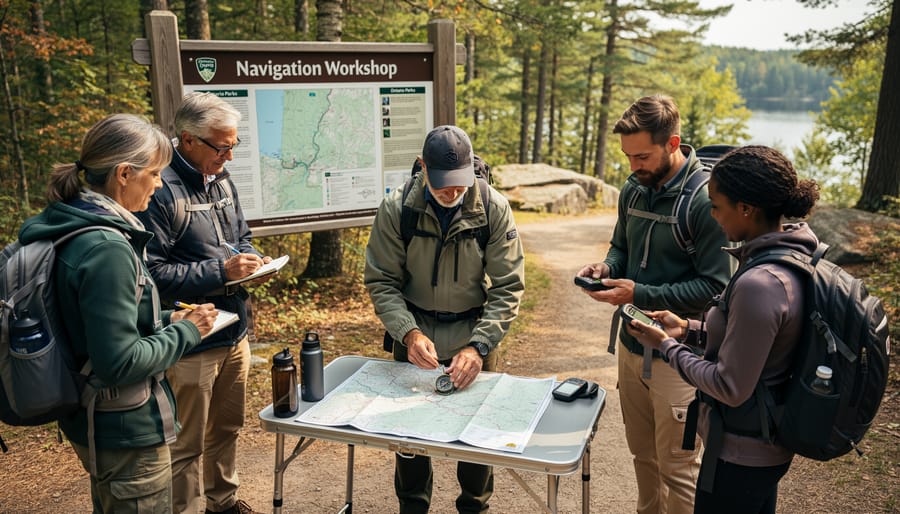
Spring workshops focus on essential wayfinding skills including topographic map reading, compass navigation, and GPS basics. Instructors teach you how to orient yourself in unfamiliar terrain, identify landmarks, and plot routes confidently. The budding landscape provides excellent visual markers for practicing these techniques, with emerging foliage offering just enough challenge without summer’s dense vegetation.
Fire-starting sessions cover multiple methods from traditional friction techniques to modern fire starters, emphasizing wet-weather skills since spring conditions are often damp. You’ll learn fuel selection, fire lay structures, and Leave No Trace principles for responsible campfires.
Insider tip: Spring’s muddy trails actually enhance learning as they reveal animal tracks and make it easier to understand how terrain affects navigation choices. The season’s unpredictable weather also teaches adaptability, preparing you for real backcountry scenarios where conditions rarely cooperate perfectly.
Summer: Water Skills and Wilderness First Aid
Summer’s warm weather creates perfect conditions for developing water-based skills that complement your summer trail adventures. Ontario Parks workshops focus on essential aquatic abilities like canoeing safety, where you’ll master proper paddling techniques, capsizing recovery, and reading water conditions. Instructors guide you through hands-on practice sessions right on park lakes, giving you real confidence before your backcountry trips.
Water purification sessions teach critical skills for extended wilderness stays. You’ll learn multiple methods from filtration systems to chemical treatments, plus how to identify safe water sources. This knowledge proves invaluable when camping beyond developed areas.
Swimming safety workshops go beyond basic strokes, covering cold water survival, rescue techniques, and how to assist others in distress without putting yourself at risk. These practical sessions take place in controlled environments with certified lifeguards present.
Wilderness first aid rounds out summer programming with essential emergency response training. You’ll practice treating common injuries like cuts, sprains, and heat exhaustion through realistic scenarios. Insider tip: bring a notepad to record the instructors’ field-tested tricks for improvising medical supplies from camping gear. These summer workshops prepare you for confident, safe outdoor adventures throughout the season.
Fall: Shelter Building and Cold Weather Prep
As temperatures drop and leaves paint the landscape in brilliant oranges and reds, fall workshops in Ontario Parks shift focus to essential cold-weather survival skills. I’ll never forget my first emergency shelter workshop at Algonquin Park—I was amazed at how quickly our instructor transformed fallen branches and pine boughs into a surprisingly cozy debris hut that actually kept us warm overnight.
These autumn sessions teach you practical shelter construction techniques, from building lean-tos and A-frame shelters to creating insulated ground beds using natural materials. You’ll master the art of site selection, learning to identify spots protected from wind while avoiding potential hazards like dead standing trees. The layering system becomes your best friend here—instructors break down the science behind base layers, insulation, and weatherproof outer shells.
Insider tip: September workshops offer the best learning conditions before the real chill sets in, plus you’ll catch incredible foliage. Pack hand warmers and a thermos of hot chocolate for breaks between shelter-building sessions. Many parks combine these workshops with fall camping experiences, letting you test your new skills immediately.
Don’t skip the friction fire demonstrations—watching someone create flames using only wood and determination is genuinely inspiring and might just save your life someday.
Winter: Ice Safety and Cold-Weather Survival
Ontario’s winter transforms parks into stunning classrooms where you’ll master essential cold-weather skills that could save your life. Learning to assess ice thickness is fundamental—remember the golden rule: clear blue ice needs at least 4 inches for walking, 5-7 inches for snowmobiles, and 8-12 inches for small vehicles. Always test with an auger or ice chisel as you go, and stay away from pressure cracks and areas near moving water.
Hypothermia prevention starts with dressing in layers and staying dry. Workshop instructors teach the “cotton kills” principle—opt for wool or synthetic materials that insulate even when wet. Here’s an insider tip: pack extra mitts and socks in waterproof bags, and carry high-calorie snacks to fuel your internal furnace.
Ontario’s winter camping adventures teach shelter building, including quinzee construction and four-season tent setup. You’ll discover how to insulate sleeping areas with pine boughs and keep water bottles from freezing overnight.
Snowshoeing and cross-country skiing workshops focus on safe navigation techniques and reading terrain for avalanche-prone areas. Learning proper equipment sizing and weight distribution makes winter travel enjoyable rather than exhausting, opening up frozen landscapes you’d never reach otherwise.
Finding the Right Workshop for Your Experience Level
Here’s the truth: most people overthink their skill level when choosing outdoor workshops. I’ve watched countless would-be adventurers talk themselves out of amazing experiences because they worried they weren’t “ready.” Let’s fix that.
Start by being honest about where you stand. Complete beginner? Own it! Never lit a fire without matches, can’t tell north from south without your phone? Perfect. That’s exactly what beginner workshops are designed for. These sessions typically assume zero prior knowledge and focus on building confidence alongside skills. You’ll be surrounded by fellow newcomers, and trust me, there’s something wonderfully reassuring about everyone fumbling with fire-starting techniques together.
Intermediate workshops expect you’ve got the basics down. Think of it this way: if you’ve successfully camped a few times, know how to pitch a tent without instructions, and can navigate a simple trail, you’re probably ready to level up. These programs dig deeper into techniques like advanced shelter building, wildlife tracking, or extended backcountry trips.
Advanced workshops? These are for folks who’ve spent significant time outdoors and want specialized training. Winter survival, advanced bushcraft, or wilderness first aid courses fall here.
Here’s my insider tip: when in doubt, call the park directly. Program coordinators genuinely want you to have a positive experience and will honestly guide you toward the right fit. They’d rather place you appropriately than have you struggle or feel bored.
Remember, building outdoor skills is progressive. Nobody starts as a wilderness expert. Each workshop plants seeds for future adventures. Start where you are, learn consistently, and watch your confidence bloom. The Ontario wilderness isn’t going anywhere, and there’s always another season to grow your skills.
The Best Ontario Parks for Skills Workshops
Frontenac Provincial Park: Backcountry Excellence
If you’re craving genuine wilderness immersion, Frontenac Provincial Park delivers backcountry experiences that’ll sharpen your outdoor edge. Tucked between Kingston and Ottawa, this park’s maze of lakes and granite ridges creates the perfect classroom for advanced wilderness skills.
The park’s canoe-camping workshops are legendary among paddling enthusiasts. You’ll navigate through interconnected waterways while learning route planning, portaging techniques, and how to set up low-impact campsites on Canadian Shield terrain. Insider tip: spring workshops offer cooler temperatures for portaging, though black fly season requires good bug netting know-how.
What sets Frontenac apart is its rugged, unforgiving landscape that demands real skill. Rocky shorelines teach you creative campsite selection when flat ground is scarce. The park’s naturalist-led programs cover wilderness navigation using topographic maps and compasses—essential when you’re deep in the backcountry without cell service.
Multi-day expeditions here build genuine confidence. You’ll practice water purification from lake sources, bear-safe food storage using rope systems, and leave-no-trace camping principles that protect this fragile ecosystem. The staff includes experienced paddlers who share practical wisdom you won’t find in guidebooks, making every trip a masterclass in self-reliance.
Algonquin Provincial Park: Comprehensive Programming
Algonquin Park truly shines when it comes to comprehensive outdoor education. The park runs one of Ontario’s most extensive workshop calendars, offering programs nearly every weekend from May through October. I’ve found their instructors to be genuine experts who’ve spent decades navigating these waters and trails—they share skills with infectious enthusiasm rather than intimidating technical jargon.
What makes Algonquin special is the incredible variety of learning environments. You might start your morning practicing navigation skills in dense forest, then spend the afternoon perfecting your J-stroke on a pristine lake. The park’s massive size means workshops can access everything from beginner-friendly shorelines to challenging backcountry terrain.
Insider tip: Book popular programs like wilderness survival or wildlife tracking at least six weeks ahead—they fill up fast, especially during fall colour season. The park’s east side offers quieter workshop settings if you prefer smaller groups. Many instructors also incorporate Leave No Trace principles throughout their teaching, making these workshops perfect for eco-conscious learners wanting to minimize their environmental footprint while building outdoor confidence.
Killarney Provincial Park: Advanced Terrain Training
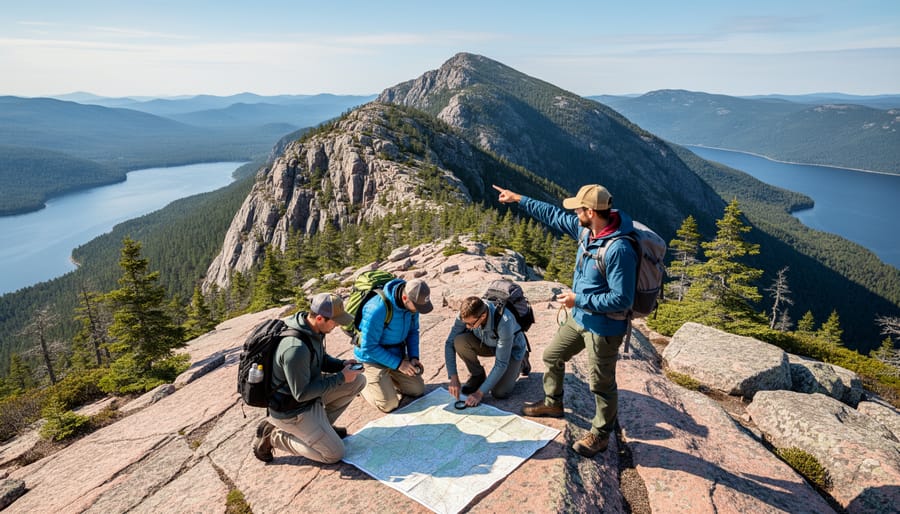
If you’re ready to level up your navigation skills, Killarney Provincial Park is your ultimate training ground. The park’s famous white quartzite ridges and complex terrain will challenge even experienced hikers, making it ideal for advanced map and compass workshops. Trust me, there’s something incredibly satisfying about successfully plotting your route through Killarney’s backcountry.
The stunning contrast between the pink granite of the La Cloche Mountains and the turquoise waters of Georgian Bay creates unforgettable learning moments—you’ll actually remember your lessons because the landscape is so distinctive. Spring and fall workshops here teach you to navigate through varied conditions, from misty mornings to changing seasonal markers.
Insider tip: Book workshops that include overnight camping to practice navigation skills in low-light conditions. The park’s challenging topography means what you learn here translates anywhere. Plus, instructors often share eco-friendly route planning techniques that minimize your impact on this UNESCO Biosphere Reserve while building genuine wilderness confidence.
What to Bring and How to Prepare
Getting ready for your outdoor skills workshop doesn’t require a shopping spree, but a few key items will make your experience much more comfortable. Start with layered clothing that you can adjust throughout the day. Spring and fall workshops call for a moisture-wicking base layer, an insulating mid-layer like fleece, and a waterproof outer shell. Summer participants should pack a wide-brimmed hat, breathable long sleeves for sun protection, and don’t forget the bug spray. Winter adventurers need insulated boots rated for at least -20°C, warm mittens, and a quality toque.
Here’s an insider tip: Ontario Parks typically provides specialized equipment for workshops like fire-starting kits, orienteering compasses, or shelter-building tools. However, you’ll need to bring personal items like a refillable water bottle, snacks, and your own backpack. Check your confirmation email for the specific list, as requirements vary by program.
For footwear, broken-in hiking boots with ankle support are your best friend. I learned this the hard way during my first navigation workshop when new boots left me hobbling by lunchtime. Choose eco-friendly options when possible, like boots from companies with sustainable practices or bring reusable food containers instead of single-use plastics.
Mental preparation matters too. Come with an open mind and remember that making mistakes is part of learning. Download any recommended reading materials beforehand, and consider journaling your experience. Pack a notebook to record techniques you’ve learned, which becomes invaluable when practicing at home.
Finally, bring genuine curiosity and patience with yourself. These skills took our ancestors lifetimes to perfect, so embrace the learning curve and enjoy connecting with nature at a deeper level.
Making the Most of Your Workshop Experience
Here’s my secret from years of workshop hopping: the real learning happens in the margins. Don’t just show up, absorb, and leave. Before each session, I jot down three specific questions I want answered. Even seemingly silly ones. Last spring, I asked a tracking instructor if raccoons really wash their food (they don’t, actually – they’re feeling for inedible bits). That one question opened up a fascinating conversation about animal behaviour that half the group joined.
Bring a weatherproof notebook everywhere. Sketch what you see, even badly. I still reference my terrible drawings of fire lay configurations from five years ago. Between sessions, practice obsessively. Those knots you learned? Tie them while watching TV. The bird calls? Practice in your car. Muscle memory is everything.
Exchange contact info with fellow participants. I’ve joined a foraging group that started from a single workshop connection. We now scout mushroom spots together and share seasonal finds. The instructors, too, are usually thrilled to stay connected through email or social media – many answer follow-up questions months later.
Pack snacks to share during breaks. It sounds simple, but breaking bread together transforms strangers into trail buddies. I’ve learned as much from chatting with other participants about their favourite hiking spots as from the formal instruction.
Remember, the workshop is just your jumping-off point. The real skill development comes from applying what you’ve learned week after week in Ontario’s incredible backcountry.
There’s something truly transformative about standing in the woods and realizing you can read the forest like a book, or confidently building your first campfire, or navigating through unfamiliar terrain with just a map and compass. These outdoor skills workshops don’t just teach techniques—they unlock a deeper relationship with nature and build genuine confidence that extends far beyond the trail.
Whether you’re dreaming of backcountry adventures or simply want to feel more comfortable on your next camping trip, taking that first step is easier than you think. Start by checking the Ontario Parks website for their seasonal workshop calendar, where you’ll find programs running year-round, each designed to match the season’s unique opportunities. Spring and fall offer particularly comfortable conditions for beginners who might find summer heat or winter cold intimidating.
Here’s an insider tip: don’t wait for perfection. You don’t need fancy gear or prior experience to join most beginner workshops. Show up with curiosity, comfortable clothes, and an open mind. Many parks offer half-day introductory sessions that fit easily into weekend getaways, making it simple to test the waters before committing to longer programs.
The wilderness is calling, and you’re more capable than you realize. Register for that workshop you’ve been eyeing, embrace the learning curve, and discover what you can accomplish when nature becomes your classroom.







+ There are no comments
Add yours