

Pack out every battery, charger, and broken headlamp when you leave Ontario’s backcountry—these items contain toxic materials that leach into soil and waterways when left behind. Drop them at any Ontario Electronic Stewardship depot (over 1,400 locations provincewide) after your camping trip, where they’ll be recycled free of charge through the province’s regulated program.
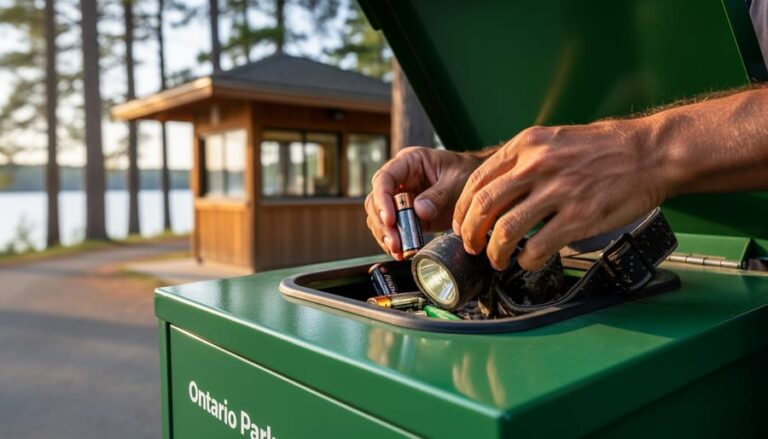
Check with park offices before your adventure, as some Ontario Parks locations now offer designated e-waste collection bins for dead batteries and small electronics at gatehouses and visitor centers. This convenience means you won’t need to store corroded AA batteries in your backpack for the entire drive home.
Before planning your park visit, audit your gear and replace dying electronics at home rather than mid-trip. Failed GPS units and camera batteries create unnecessary waste in remote locations where disposal options don’t exist, and you’ll avoid the frustration of dead equipment during your adventure.
Download the Recycle My Electronics app to locate the nearest drop-off point along your route home—many are conveniently positioned near highway exits. The program accepts everything from old camp radios to solar chargers, ensuring your outdoor adventures leave zero electronic footprint in Ontario’s pristine wilderness areas.
Understanding Ontario’s e-waste system transforms you from casual visitor to environmental steward, protecting the same wild spaces you love exploring.
Why E-Waste Is Different from Regular Camping Trash
The Hidden Hazards in Your Gadgets
Here’s something most campers don’t realize: that innocent-looking phone battery or solar charger in your backpack contains a cocktail of hazardous materials that nature definitely wasn’t designed to handle. I learned this the hard way after finding a corroded battery pack near a backcountry campsite last summer.
Let’s talk about what’s actually inside your gadgets. Lithium-ion batteries contain toxic heavy metals like cobalt, nickel, and manganese. When these leak into soil or water, they don’t just disappear. They accumulate in the ecosystem, affecting everything from microorganisms to the fish you might catch for dinner. Even more concerning, many devices contain lead, mercury, and cadmium – substances that can contaminate groundwater supplies serving nearby communities.
Solar chargers and portable power banks add flame retardants and plasticizers to the mix. When exposed to Ontario’s freeze-thaw cycles, these materials break down faster than you’d expect, releasing chemicals into pristine wilderness areas.
The takeaway? That cracked phone screen or swollen battery isn’t just trash – it’s a potential environmental time bomb. Treating your electronics with care during outdoor adventures protects the places we love exploring.

Real Impact: What Happens When E-Waste Ends Up in Nature
Picture this: a family finishes their camping trip at Algonquin Park, and in their rush to pack up, an old smartphone slips behind their cooler, left behind on the campsite. Within weeks, rain seeps into the device, leaching toxic lead and mercury into the soil. These chemicals don’t just disappear—they travel through groundwater toward nearby lakes where loons nest and families swim.
Last year, park maintenance crews collected dozens of discarded electronics from campsites and trails across Ontario. One particularly troubling incident involved old batteries found near a beaver dam in Killarney Provincial Park. The corroded batteries contaminated a small tributary, affecting fish populations downstream.
Here’s an insider tip: wildlife can’t distinguish between food and e-waste. Curious raccoons and foxes have been spotted chewing on abandoned earbuds and charging cables, mistaking shiny plastics for prey. The consequences are heartbreaking—digestive blockages and poisoning.
The ripple effects extend to everyone. Contaminated water requires expensive treatment before it’s safe for park visitors, and cleanup operations divert resources from trail maintenance and conservation programs we all cherish. By properly disposing of our electronics before heading into nature, we’re protecting the wild spaces that make Ontario unforgettable.
What to Do With Dead Batteries and Broken Electronics at Ontario Parks
In-Park Disposal Options (When They Exist)
Here’s the reality: most Ontario Parks don’t have dedicated e-waste collection bins on-site. It’s not part of the standard waste management setup you’ll find at campgrounds, which typically focus on regular garbage, recycling, and organic waste. This aligns with Ontario Parks camping rules that emphasize pack-in, pack-out principles for most items.
That said, it never hurts to ask. I’ve discovered that some park offices, particularly at larger provincial parks like Algonquin or Killarney, occasionally accept small electronic items as a courtesy if you speak with staff directly. They might have arrangements with local municipalities for disposal runs.
Here’s an insider tip: approach the park office during quieter hours (mid-morning on weekdays works best) and politely inquire if they can point you toward the nearest e-waste depot. Many park staff are locals who know the area well and can provide directions to nearby recycling facilities in towns like Huntsville, Parry Sound, or Bancroft.
If you’re planning an extended stay and accumulating dead batteries from headlamps or portable speakers, consider bringing a small designated bag to store these items until you can access proper disposal facilities on your way home. It’s a simple step that makes a meaningful environmental difference.
Taking It Home: Best Practices for Transport
After a weekend exploring Ontario’s beautiful parks, you might find yourself with a few e-waste items heading home: dead batteries from your headlamp, a broken phone charger, or perhaps that camping speaker that finally gave up the ghost. Here’s my go-to system for safely storing these items until you can drop them off at a proper recycling depot.
First, designate a waterproof container specifically for e-waste. I use a sturdy plastic bin with a tight-fitting lid that lives in my garage. For batteries especially, store them in individual sealed plastic bags or wrap the terminals with tape to prevent potential short circuits. Trust me, you don’t want loose batteries rolling around together!
Keep broken electronics separate from batteries when possible, and if something contains a lithium battery (like old phones or tablets), place it in a cool, dry spot away from direct sunlight. I learned this the hard way when a forgotten device overheated in my car.
Consider keeping a small waterproof bag in your vehicle year-round for collecting e-waste on the go. It’s amazing how quickly items accumulate! This simple habit ensures you’re always ready to transport items safely and prevents that “what do I do with this” moment when you’re unpacking from a camping trip.

Where to Recycle E-Waste After Your Ontario Parks Adventure
Ontario Electronic Stewardship (OES) Program Explained
Here’s the good news: recycling your old electronics in Ontario is completely free and easier than you might think. The Ontario Electronic Stewardship (OES) program takes the hassle out of responsible disposal, accepting everything from smartphones and laptops to cameras, GPS devices, and even those tangled headphones collecting dust in your glove compartment.
I remember the first time I dropped off my outdated camping gear electronics at a depot. I was amazed at what they accepted: portable radios, dead batteries from my headlamp, an ancient digital camera, and even old power cords. The depot staff were friendly and helped me sort everything in minutes.
The program accepts a wide range of items including computers, tablets, televisions, printers, audio equipment, telecommunications devices, and small household appliances like microwaves. Most rechargeable and single-use batteries are also welcome, which is perfect for outdoor enthusiasts who go through batteries regularly.
Finding your nearest drop-off location couldn’t be simpler. Visit the OES website and use their handy depot locator tool by entering your postal code. Many locations are conveniently situated at municipal waste facilities, retail stores, and community centers. Before your next park adventure, check if there’s a depot along your route home – it’s a perfect opportunity to lighten your load while doing something positive for Ontario’s environment. Most depots accept items year-round during regular business hours, making eco-friendly disposal fit seamlessly into your busy schedule.
Municipal Drop-Off Points Worth the Detour
When you’re exploring Ontario’s wilderness, you don’t want dead batteries and broken gadgets weighing down your conscience. The good news? Several municipal drop-off centers are strategically located near popular Ontario Parks, making it easy to dispose of e-waste responsibly on your way home.
Heading to Algonquin? The Huntsville Waste Facility on Bethune Drive accepts electronics year-round and sits just 45 minutes from the Highway 60 corridor. It’s the perfect pit stop before you hit the highway home. Locals swear by arriving mid-morning on weekdays to avoid weekend crowds.
If you’re exploring Bruce Peninsula, swing by the Wiarton Waste Depot on Frank Street. This facility handles everything from old GPS units to portable speakers, and it’s located right along the route back to southern Ontario. Pro tip: grab lunch at one of Wiarton’s waterfront cafes after dropping off your items—you’ve earned it.
For Frontenac region adventurers, the Rideau Lakes Township depot near Perth welcomes e-waste during Saturday morning hours. The staff are incredibly helpful and can answer questions about what qualifies as electronic waste.
Most municipal sites accept items free of charge for residents, though some request proof of address. Call ahead to confirm hours, especially during holiday weekends, and remember that proper disposal today means cleaner parks for tomorrow’s adventures.
Smart Packing: Reduce E-Waste Before You Even Leave Home

Rechargeable Everything: Your New Camping Best Friend
Here’s my camping confession: I used to pack a ridiculous number of disposable batteries for every trip. Flashlights, lanterns, portable speakers—you name it, I had AAs for it. Then I did the math. One season at Algonquin cost me nearly $80 in batteries alone, and all that packaging became e-waste heading straight to landfills.
Switching to rechargeable batteries and investing in eco-friendly camping gear completely changed my camping game. A quality battery charger and set of rechargeables costs around $40 upfront but pays for itself within two trips. Better yet, pair them with a compact solar charger—perfect for those extended backcountry adventures when electrical hookups aren’t available.
My insider tip? Look for multi-use devices that eliminate redundancy. A headlamp with USB charging replaces both flashlights and extra batteries. A solar power bank keeps your phone and emergency devices charged without creating waste. These investments not only reduce your environmental footprint but also lighten your pack. When it’s finally time to retire these items, Ontario’s recycling programs accept them, keeping harmful materials out of our beautiful parks and waterways.
The Minimalist Electronics Packing List
Here’s my honest advice after years of camping across Ontario: you need way less tech than you think. Your phone for safety and photos? Absolutely. A portable charger? Sure. But that tablet, gaming device, extra laptop, and wireless speaker? Leave them home.
I’ve watched countless campers haul entire electronics stores into the wilderness, only to spend their trip worried about dead batteries, damaged screens, and keeping everything dry. That’s not a vacation—that’s stress with a view.
The real magic happens when you disconnect. Instead of streaming music, listen to loons calling across the lake at dawn. Trade screen time for star-gazing, where the Milky Way becomes your entertainment system. Pack a paperback instead of an e-reader if it gets wet by the campfire—no big deal.
Beyond enhancing your experience, packing light reduces e-waste risk. Fewer devices mean less chance of accidental damage that turns perfectly good electronics into trash. And when gear does break in the backcountry, you’re stuck either carrying out e-waste or facing the temptation to improperly dispose of it.
My minimalist approach: one phone, one camera if you’re passionate about photography, and one shared charger per group. Everything else? Let nature provide the entertainment. You’ll return home refreshed, not scrambling to replace water-damaged gadgets.
How Ontario Parks Are Leading the Way in Sustainable Waste Management
Parks to Watch: E-Waste Champions
Several Ontario Parks are leading the charge when it comes to sustainable waste management, and some are even testing innovative approaches to e-waste collection.
Algonquin Provincial Park has become a standout example with its comprehensive recycling stations at major access points. Park staff have reported that campers respond positively when provided clear signage about what belongs where. While there isn’t on-site e-waste collection yet, the park actively educates visitors about nearby drop-off locations in Huntsville and Whitney.
Killarney Provincial Park partnered with local municipalities in 2023 to distribute information cards at check-in, reminding visitors about e-waste disposal options before and after their stay. It’s a simple touch that makes a real difference.
Sandbanks Provincial Park is piloting a seasonal e-waste collection bin at their main office during summer months, accepting small items like batteries and old phones. This forward-thinking approach could become a model for other high-traffic parks.
Keep an eye on park websites and bulletin boards for updates on these programs. Your participation helps these initiatives grow and inspires other parks to follow suit.
How Your Actions Help Protect Ontario’s Water and Wildlife
Every time you properly dispose of batteries from your headlamp or pack out that broken phone charger, you’re making a real difference. Here’s the thing many people don’t realize: electronics contain heavy metals like lead, mercury, and cadmium that can leach into soil and groundwater when improperly discarded. In Ontario’s delicate park ecosystems, these toxins can contaminate the lakes where fish spawn and the wetlands that filter our drinking water.
By participating in Ontario’s e-waste recycling program, you’re helping keep these harmful materials out of natural areas where wildlife like loons, turtles, and otters thrive. Think of it this way: that old GPS device you recycle instead of tossing gets processed safely, and its materials get reused rather than polluting the pristine waters you came to enjoy. Your small action ripples outward, protecting the very landscapes that make Ontario parks so special for future generations of adventurers.
Being a responsible visitor to Ontario’s incredible parks doesn’t have to be complicated. By following the simple “leave it out, pack it out” rule with your electronics, taking advantage of nearby recycling depots before or after your trip, and choosing rechargeable batteries over single-use ones, you’re making a real difference. Every small action counts when thousands of nature lovers like you visit these beautiful spaces each year.
Think of your next park adventure as a chance to connect with nature while protecting it for future generations. Whether you’re paddling through Algonquin’s pristine lakes, hiking the Bruce Peninsula’s rugged trails, or camping under the stars at your favorite provincial park, you can feel good knowing you’re part of the solution. Pack smart, recycle responsibly, and spread the word to fellow outdoor enthusiasts about proper e-waste disposal.
So grab your gear, charge up those devices, and get ready to explore the natural wonders waiting for you across Ontario. Your commitment to being a waste-conscious visitor means these spectacular landscapes will remain unspoiled for your children and theirs to enjoy. Happy trails, and remember – take only photos, leave only footprints!












+ There are no comments
Add yours