
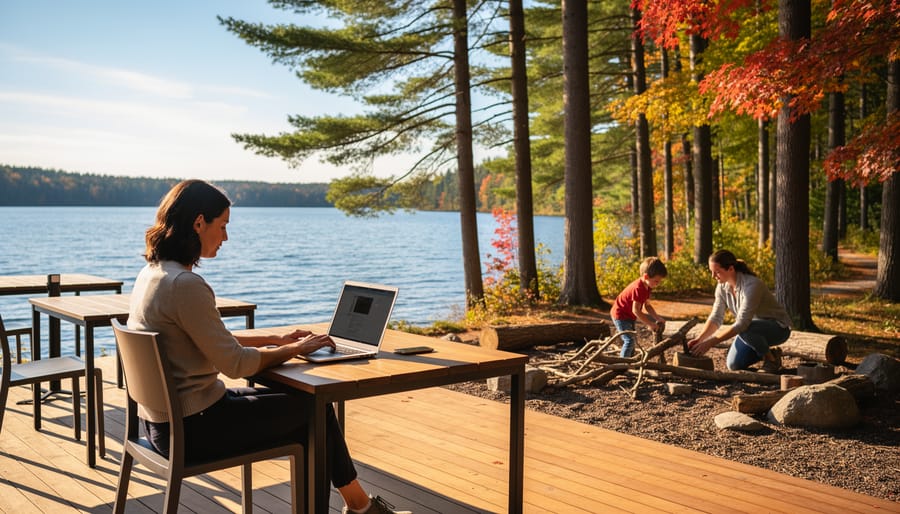
Picture this: You’re answering emails beside a sun-dappled window while your toddler builds block towers just steps away, then stepping outside for a lakeside lunch break before an afternoon client call. This isn’t a fantasy—it’s the emerging reality of coworking spaces with integrated childcare popping up across Ontario’s parks and conservation areas.
Remote work transformed where we can earn our living, but parents quickly discovered that working from home with kids isn’t the productivity win everyone promised. You can’t take a Zoom call while mediating sibling disputes, and “just one more episode” isn’t a sustainable childcare strategy. Traditional daycare solves one problem but creates another: you’re stuck inside four walls when Ontario’s spectacular outdoors beckons.
Enter the brilliant hybrid solution gaining momentum across the province. Forward-thinking parks now offer dedicated workspaces equipped with reliable WiFi, comfortable seating, and professional amenities—paired with licensed childcare or supervised nature programs that keep kids engaged, active, and learning. Your children explore forest trails with trained educators while you finish that presentation. When you clock out, you’re already where you want to be: outdoors, with your family, ready to explore.
This arrangement delivers what modern parents desperately need: productive work time, quality childcare, and immediate access to nature-based family experiences—all without burning hours commuting between separate locations. It’s childcare that doesn’t feel like compromise, and work-life balance that actually balances.
What Makes Park-Based Coworking Different (And Why Parents Are Obsessed)
Picture this: You’re answering emails while your toddler discovers beetles under a maple tree twenty feet away. Your laptop’s perched on a proper desk with reliable WiFi, coffee’s within reach, and instead of Paw Patrol blaring in the background, you’re hearing birdsong and genuine laughter from kids playing outdoors.
This is park-based coworking with childcare, and it’s becoming Ontario parents’ not-so-secret weapon against work-from-home burnout.
Unlike traditional daycare where you’re still stuck at your kitchen table fighting distractions, these spaces bring your office and your child’s care together in nature. The difference? Your three-year-old isn’t stuck indoors staring at toys while you’re in another room feeling guilty about missing their childhood. Instead, they’re genuinely thriving outside while you’re actually getting work done.
The guilt factor alone makes this revolutionary. Parents tell me they can focus during a video call knowing their kids are literally climbing trees and making mud pies with qualified educators nearby, not parked in front of screens. One mom from Burlington shared that her daughter now identifies different tree species, something that never happened during their old daycare days.
These aren’t makeshift remote workspace solutions either. We’re talking purpose-built facilities with proper desks, charging stations, and high-speed internet, paired with structured outdoor programming for children. The setup recognizes that modern parents need both professional infrastructure and quality childcare, just preferably not in separate locations requiring an hour of commuting between them.
The productivity boost is real too. Fresh air during lunch breaks, quick check-ins with your kids between meetings, and the mental clarity that comes from working surrounded by forest rather than dirty dishes. Parents report feeling more present both at work and with their children, which is pretty much the holy grail of work-life balance.

Where to Find Family Coworking Spaces in Ontario Parks

Frontenac Provincial Park’s Pioneer Program
Nestled in the rugged Canadian Shield wilderness just north of Kingston, Frontenac Provincial Park offers families a unique opportunity to combine working from Ontario parks with incredible outdoor education through their Pioneer Program. This hands-on heritage experience lets kids aged 6-12 dive into 19th-century settler life while parents tackle their workday from nearby picnic areas with surprisingly decent cell coverage.
The best time to visit is mid-May through September, with Tuesday and Wednesday typically being quieter days. Arrive early, around 9 AM, to secure parking at the Big Salmon Lake day-use area, which offers the most reliable connectivity. Pack a portable charger, noise-cancelling headphones for conference calls, and bug spray (the blackflies can be fierce in June).
Here’s an insider tip: bring a lightweight camping chair and set up near the outdoor amphitheater. You’ll be close enough to check on activities while maintaining your workspace. The program runs from 10 AM to 3 PM, giving you solid focus time. Parents rave about how engaged their children become learning traditional skills like fire-starting and butter-churning. Pack extra snacks and water bottles, as the pioneer activities work up quite an appetite.
Other Ontario Parks Joining the Movement
The family coworking movement is spreading across Ontario’s park system faster than you might think! While Algonquin leads the charge, several other provincial parks are testing the waters with their own versions of this game-changing amenity.
Sandbanks Provincial Park on Lake Ontario recently piloted a summer program that paired WiFi-enabled picnic pavilions with supervised beach activities for kids. Parents rave about knocking out conference calls while their little ones build sandcastles just steps away. The park’s planning team is now exploring year-round options based on overwhelming positive feedback.
Up north, Killarney Provincial Park is experimenting with “quiet work zones” near their visitor centre, complete with charging stations and surprisingly strong cellular coverage. They’re partnering with a local childcare provider to offer half-day nature programs during peak season.
Even smaller parks like Frontenac Provincial Park are getting creative, designating certain campsites as “remote work friendly” with enhanced connectivity and creating informal parent networks where families can share childcare duties while others work.
Insider tip: Many parks are still in the planning stages, so reach out directly to your favourite park’s administration office to express interest. Your feedback genuinely shapes what programs get greenlit! The more families who speak up, the faster this movement grows.
Seasonal Considerations and Booking Tips
Most coworking-childcare facilities in Ontario parks operate seasonally, typically from late May through early September when families are most likely to visit. A few year-round parks offer these services during March Break and winter holidays, perfect for adventurous remote workers who don’t mind bundling up the kids for outdoor play.
Here’s an insider tip: book at least two to three weeks ahead during peak summer months, especially for multi-day stays. Weekdays fill up fast with savvy parents who’ve discovered this game-changing setup. For spontaneous visits, try calling on Sunday evenings when cancellations often open up Monday spots.
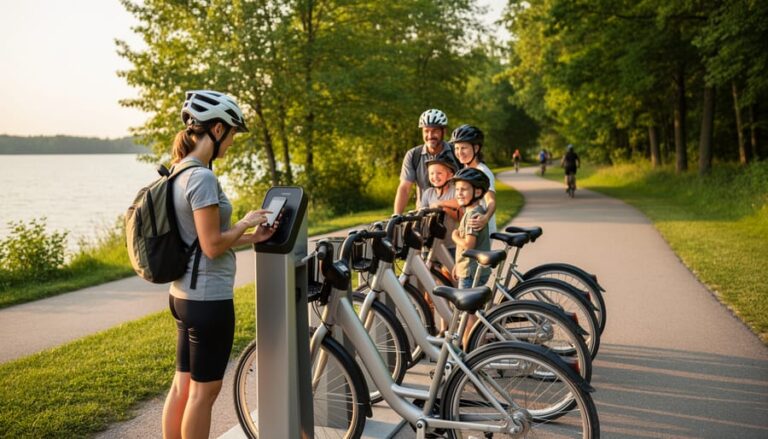
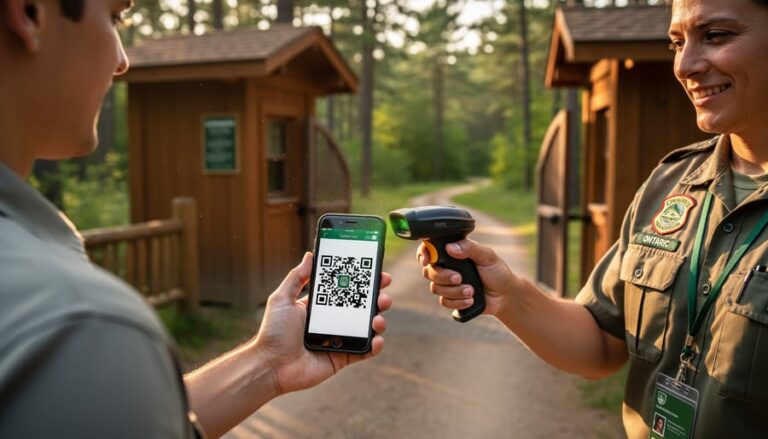
Most facilities require advance registration through park websites or by phone. Some parks offer drop-in childcare for a few hours, but coworking spaces typically need reservations. Pro tip: join park newsletter lists in early spring to catch early-bird booking windows and package deals that bundle camping with workspace access. Eco-friendly bonus: many facilities offer discounts for families arriving by bike or public transit, making your work-vacation even greener.
What Your Kids Actually Do While You’re Working
Age Groups and Activity Options
Most facilities offering combined coworking and childcare recognize that one size definitely doesn’t fit all when it comes to kids. You’ll typically find programming thoughtfully divided by age groups, ensuring your little one gets age-appropriate activities while you tackle that video conference.
For toddlers (18 months to 3 years), expect gentle play-based learning with sensory activities, story time, and outdoor exploration. Many programs incorporate nature themes, like identifying leaves or watching birds at feeders, which feels especially magical when you’re at a park-based facility. Care ratios are lower here, meaning more attentive supervision for your youngest adventurers.
Preschoolers (3 to 5 years) enjoy more structured activities including arts and crafts, guided nature walks, and early literacy games. Here’s an insider tip: facilities near conservation areas often take advantage of their surroundings with scheduled outdoor playtime, letting kids burn energy while you’re crushing deadlines.
School-age children (6 to 12 years) typically get the most varied programming. Think STEM activities, organized sports, creative workshops, and extended nature programming like junior naturalist programs or trail challenges. Some locations offer homework support too, which is clutch during the school year.
The real beauty is the flexibility. During summer months, many facilities expand their offerings with full-day camps, while shoulder seasons might feature drop-in options or half-day programs. This adaptability means you can customize your workday around what genuinely works for your family, not the other way around.

The Outdoor Learning Advantage
There’s something magical about watching kids explore the forest while you tackle your morning emails. Parents using Ontario’s coworking-childcare facilities consistently rave about the outdoor learning component that sets these programs apart from traditional daycare.
Sarah, a graphic designer from Toronto, shares her experience: “My daughter spent three hours building fairy houses from pine cones and bark while I finished a client presentation. She learned about ecosystems without even realizing it was educational.” These nature-based experiences replace screen time with hands-on discovery, from identifying bird calls to understanding seasonal changes.
The eco-friendly approach extends beyond activities. Many facilities use solar power, composting systems, and natural building materials, teaching environmental stewardship through daily practice. Children help maintain pollinator gardens and learn water conservation during handwashing routines.
Research shows outdoor play boosts creativity, problem-solving skills, and physical health. Parents notice improved sleep patterns and reduced anxiety in their children after park-based days. One father noted his son’s vocabulary expanded dramatically after weekly nature walks with educators who encouraged curiosity about every mushroom and beetle discovered along the trail.
Making It Work: Real Stories from Remote-Working Parents
Sarah Chen remembers the exact moment she decided to try park-based coworking. “I was hunched over my laptop at the kitchen table while my five-year-old built a block tower that kept crashing into my chair,” she laughs. “I thought, there has to be a better way.” Now a regular at Presqu’ile Provincial Park’s seasonal coworking hub, Sarah credits the arrangement with saving both her sanity and her freelance design business.
What surprised her most? “The kids actually play better outdoors. My daughter spends two hours at nature camp, then comes back muddy and happy while I finish my afternoon calls. We both get what we need.”
Toronto-based journalist Marcus Williams discovered similar benefits at Algonquin Provincial Park. “My son struggles with traditional daycare settings, but the outdoor-focused programs here click with him,” he shares. His insider tip: book your coworking spot for Tuesday through Thursday. “Weekends get busy with regular campers. Midweek, you’ll have better WiFi bandwidth and quieter work conditions.”
The challenges? Parents are honest about the learning curve. Emma Rodriguez from Mississauga admits her first attempt was chaotic. “I packed my laptop but forgot the charger, didn’t realize the childcare needed advance booking, and my toddler had a meltdown during my video call.” Her solution: she now keeps a dedicated park bag with backup supplies and always confirms childcare availability 48 hours ahead.
What keeps families returning? Beyond the obvious work-life balance, parents mention unexpected perks. “My kids have made friends they see every week. It’s become our community,” Sarah notes. Marcus appreciates the cost savings compared to urban coworking spaces, while Emma loves the eco-friendly aspect. “We’re teaching our kids to appreciate nature while getting work done. That feels pretty special.”
Their collective advice: start with a trial day, embrace flexibility, and remember that some days won’t go perfectly—and that’s okay too.
What You Need to Know Before Your First Visit
Before you pack up your laptop and head to one of Ontario’s innovative coworking-childcare facilities, here’s what you’ll want to know to make your first visit smooth and successful.
Start by checking the facility’s WiFi capabilities. Most locations offer reliable high-speed internet, but it’s worth confirming bandwidth availability, especially if you’ll be videoconferencing. I always recommend downloading any large files beforehand as a backup plan. Many parks now feature enhanced park amenities that include dedicated work zones with strong connectivity.
Pack smartly for both work and play. Bring your laptop, chargers, noise-cancelling headphones, and a mobile hotspot as insurance. For your kids, include weather-appropriate outdoor clothing, extra layers, sunscreen, bug spray, water bottles, and a small backpack. Most facilities provide childcare supplies, but bringing comfort items like a favorite stuffed animal helps with transitions.
Cost-wise, expect to pay between seventy-five and one hundred fifty dollars per day, depending on the facility and season. Some locations offer half-day rates or membership packages that reduce costs for frequent visitors.
The dress code for kids is simple: comfortable, practical outdoor wear they can get dirty in. Think adventure-ready clothing rather than Sunday best.
Weather contingencies are built into most programs. Indoor activity spaces provide rainy-day alternatives, though many outdoor programs continue in light rain with proper gear. Facilities typically communicate weather-related schedule changes via text or email.
Here’s an insider tip: arrive fifteen minutes early on your first visit to complete paperwork and help your child settle into the new environment. Book midweek when possible for a quieter, more personalized experience, and don’t hesitate to communicate your work schedule needs upfront so staff can plan engaging activities during your critical meeting times.
Ready to embrace a whole new way of experiencing Ontario’s outdoors with your family? Coworking and childcare in provincial parks isn’t just a trendy concept—it’s a genuine game-changer for remote-working parents who refuse to choose between career responsibilities and quality time with their kids.
The beauty of this innovative approach lies in its dual benefits. While you tackle that important video call or meet your deadlines with the forest as your backdrop, your children are building social skills, connecting with nature, and creating memories that last far beyond childhood. It’s the ultimate win-win that traditional office life simply can’t offer.
Here’s my insider tip: Start by visiting park websites in advance to check availability and book your spot. Some locations fill up quickly during peak seasons, especially summer months. Pack your essentials the night before—reliable WiFi hotspot backup, headphones for focus, and weather-appropriate gear for your little ones.
Ontario is truly leading the way in family-friendly outdoor innovation, recognizing that modern families need flexible solutions that honor both work and play. This isn’t about compromising—it’s about elevating both experiences simultaneously.
So why wait? Choose your park, mark your calendar, and discover how seamlessly productivity and parenting can blend against Ontario’s stunning natural canvas. Your laptop, your kids, and that pine-scented breeze are waiting. Trust me, once you experience this balance firsthand, you’ll wonder why you didn’t try it sooner.








+ There are no comments
Add yours