
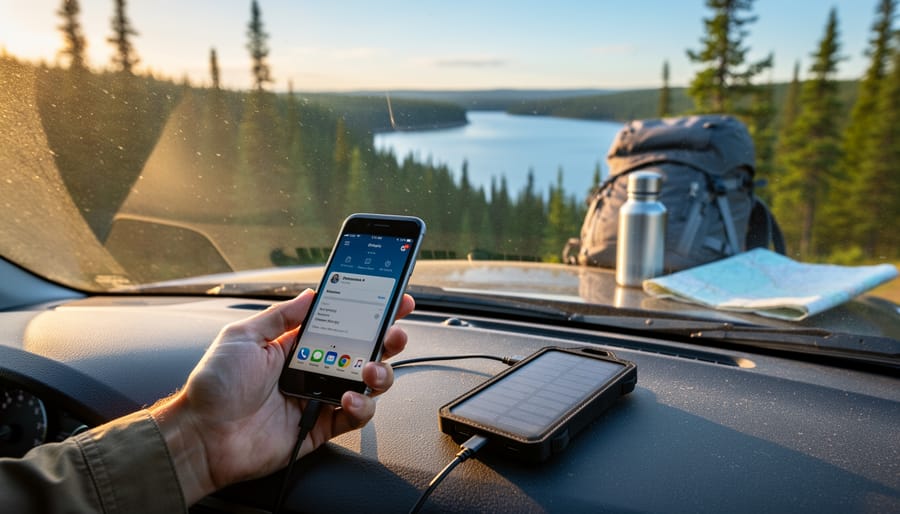
Track your digital carbon footprint by monitoring the data usage of your travel planning apps and websites. Every search for camping spots, every photo uploaded from your Frontenac Park hike, and every streaming session of nature documentaries adds to your environmental impact. Download carbon tracking apps like Carbonalyser or Greenly to measure the emissions from your online activities in real-time.
Reduce unnecessary data consumption before your next Ontario adventure by downloading offline maps, guidebooks, and trail information while connected to Wi-Fi powered by renewable energy. A single hour of HD video streaming can produce up to 150 grams of CO2 emissions, equivalent to driving a kilometer in a car. Instead of streaming music during your drive to Algonquin, create playlists and download them beforehand.
Switch to eco-friendly search engines like Ecosia that plant trees with ad revenue, especially when researching provincial parks and outdoor activities. Clear your browser cache and email inbox regularly, as stored data requires energy-intensive servers to maintain. Those hundreds of camping confirmation emails and forgotten newsletter subscriptions contribute to ongoing emissions.
Consider the digital footprint of your travel photos and videos. That 4K video of sunrise over a frozen lake might look stunning, but it consumes massive storage and bandwidth when shared on social media. Compress images before posting and share selectively rather than uploading entire albums. Practicing environmental stewardship extends beyond the physical trail to every digital choice you make while planning and documenting your outdoor experiences.
The Digital Trail You Leave Behind

Every Click Counts: Breaking Down Your Travel Tech
Let’s get real about your digital travel habits. That perfect Ontario road trip you’re planning? It starts way before you hit Highway 401, and every tap, swipe, and search leaves a tiny carbon trail.
Think about it: you’re comparing hotels on three different booking platforms, each page refresh pulling data from servers somewhere. Those servers need power, cooling systems, and infrastructure – all consuming energy. A single hotel search can generate around 4.6 grams of CO2, and if you’re like most travelers, you’re checking prices multiple times before committing. Multiply that by flight comparisons, car rental searches, and restaurant reviews, and you’ve already racked up emissions before packing your bags.
Now picture yourself at Algonquin Park. You snap 500 photos of that incredible sunset over Canoe Lake (because why choose just one?). Every photo automatically backs up to cloud storage – that’s data traveling to massive server farms and being stored indefinitely. A typical weekend trip might generate 2-5GB of photos and videos, all requiring constant energy to maintain.
Here’s something most campers don’t realize: streaming music or downloading podcasts at your campground uses way more energy than listening offline. That Spotify playlist you’re streaming by the fire? It’s pulling data continuously instead of playing files already stored on your device. The same goes for navigation apps constantly refreshing your location when you could download offline maps beforehand.
Even staying connected “just to check emails” at remote locations means your device is working harder, searching for signals, and draining battery faster – requiring more frequent charging cycles that tap into campground power grids or portable generators.
Simple Ways to Track Your Digital Footprint
Apps That Actually Help
I’ve tested dozens of carbon tracking apps during my camping trips across Ontario, and honestly, most are clunky or too complicated for everyday use. But a few gems actually make sense for travelers and outdoor enthusiasts.
My top pick is Capture, which I’ve been using for six months now. It’s refreshingly simple—just answer a few questions about your lifestyle, and it calculates your footprint automatically. The app connects to your bank account (securely, I promise) and tracks purchases, categorizing them by carbon impact. When I drove from Toronto to Algonquin last summer, it automatically flagged my gas purchases and suggested carpooling alternatives for future trips.
For hikers and park visitors, try Klima. It’s particularly good at tracking transportation, which is usually your biggest contributor. The app offers offset options too, though I recommend focusing on reduction first. One insider tip: use Klima’s “trip mode” before heading to provincial parks—it gives you real-time suggestions for lowering emissions during your journey.
If you’re into detailed data, Joro breaks down every aspect of your digital and physical footprint. It’s perfect for tech-savvy travelers who want to understand how streaming trail maps or posting Instagram photos from Tobermory affects their overall impact.
The key is picking one app and sticking with it for at least a month. You’ll start noticing patterns—like realizing that downloading offline maps before trips saves both data and emissions.
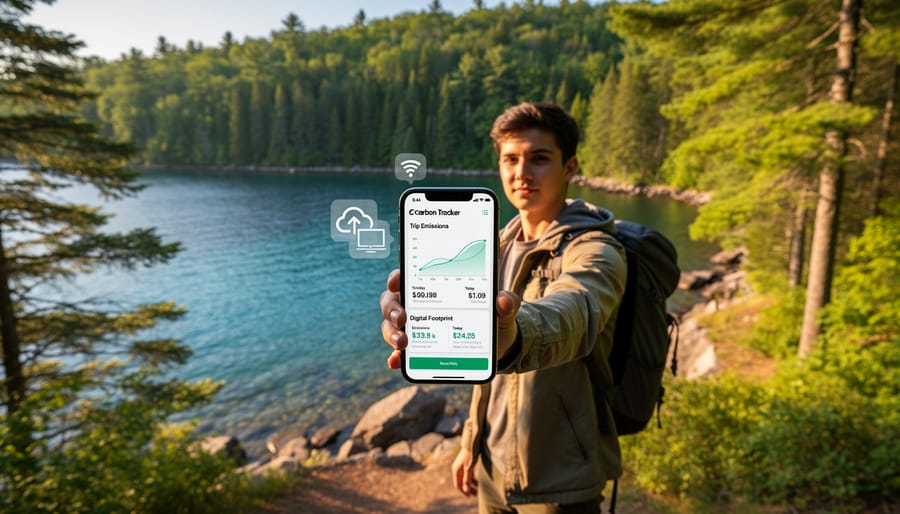
Manual Tracking Made Easy
You don’t need fancy apps to get a handle on your digital carbon footprint while exploring Ontario’s wilderness. Let me share some simple tricks I’ve picked up along the way.
Start with your data usage. Most phones show your monthly data consumption in settings. As a rough estimate, every gigabyte of data you stream or download generates about 30 grams of CO2. So if you uploaded 50 photos from your Algonquin Park hike to social media, that’s roughly 150MB or about 4.5 grams of CO2.
For cloud storage, think of it this way: storing 100GB of photos and videos in the cloud produces around 20 kg of CO2 annually. That’s like driving your car about 80 kilometers. If you’ve been backing up every single camping trip snapshot since 2015, those numbers add up quickly.
Device charging is easier to calculate. A smartphone battery typically holds 10-15 watt-hours of energy. Charging it daily for a year uses about 5 kilowatt-hours, which translates to roughly 2 kg of CO2 depending on Ontario’s energy grid mix.
Here’s an insider tip: jot these numbers down in a travel journal during your next weekend getaway. You’ll quickly spot patterns and find easy ways to lighten your digital load.
Eco-Friendly Digital Habits for Ontario Explorers
Before You Leave Home
Here’s a simple truth I learned the hard way: those fifteen minutes you spend frantically downloading trail maps and campsite reviews in a spotty parking lot? They create way more digital emissions than doing it at home with a coffee in hand.
Before you head out to explore Ontario’s incredible parks, spend 20 minutes getting digitally organized. Download your offline maps through Google Maps or similar apps while connected to home WiFi—it uses significantly less energy than cellular data and won’t drain your phone battery searching for signal on remote trails. Create your road trip playlist ahead of time instead of streaming music for hours. Trust me, nothing beats having your favorite tunes ready when you’re winding through Algonquin’s Highway 60 corridor.
Research your destinations once, thoroughly. Bookmark those park websites, screenshot admission details, and save trail guides to your device. This beats repeatedly searching “best hiking near me” every time you lose service, which not only wastes data but creates unnecessary server requests. I keep a simple notes file with campground confirmation numbers, emergency contacts, and those insider tips from local tourism boards.
Pro tip: charge all your devices using a power bar during off-peak hours the night before—it’s gentler on the grid and ensures you’re ready for adventure.
On the Trail and At the Campsite
Here’s where your digital choices really make a difference! Once you’re on the trail or settled at your campsite, you have plenty of opportunities to lighten your digital carbon footprint alongside your sustainable camping practices.
Let’s talk photos first. We all love capturing those stunning Ontario sunsets and wildlife moments, but here’s an insider tip: delete duplicates on the spot rather than storing dozens of nearly identical shots in the cloud. Those countless photos automatically syncing to your cloud storage use energy to upload and maintain. Keep only your best shots while you’re still in the moment.
Streaming is another sneaky carbon culprit. I know it’s tempting to share that gorgeous lake view in real-time, but consider saving those posts for later. Download maps, trail guides, and entertainment before you leave home instead of streaming them at the park. Your data plan and the planet will thank you.
Here’s a game-changer: switch your phone to airplane mode when you don’t need connectivity. You’ll still capture photos and videos, but you’ll stop the constant background data refresh that drains battery and creates emissions. Plus, your battery lasts way longer, meaning fewer charges needed.
Speaking of charging, solar-powered chargers are perfect for camping trips. They harness free, clean energy while you hike, making them an eco-friendly solution that actually enhances your off-grid experience.

After Your Adventure
Your adventure doesn’t end when you leave the park – there’s still one eco-friendly task left! Think of post-trip digital decluttering as the camping equivalent of leaving no trace, but for your devices.
Start by sorting through those 47 photos of the same sunset at Algonquin. Keep your favorites and delete the duplicates – your cloud storage will thank you, and you’ll reduce ongoing server energy use. Here’s an insider tip: many phones have built-in tools to identify duplicate or blurry shots automatically, making cleanup a breeze.
When backing up your memories, consider green cloud storage providers that run on renewable energy. Companies like Google and Apple have made sustainability commitments, so check their environmental reports before choosing where to store your precious Ontario moments.
Sharing is caring, but thoughtful sharing beats excessive posting. Instead of uploading 30 near-identical waterfall videos, create a small collection of your best shots. Your followers will appreciate the curated content more than endless scrolling, and you’ll minimize data transfers across the internet. Consider creating a single photo album to share with family rather than multiple messages with the same images. These small choices add up, making your digital footprint as light as your physical one on the trail.
Real Stories from Ontario’s Trails
Sarah Chen from Toronto decided to track her digital footprint during a three-day canoe camping trip in Frontenac Park last September. “I was shocked to discover that my constant photo uploads and social media updates were generating more CO2 than I’d saved by carpooling to the park,” she admits. After switching to airplane mode and batching her photos for upload at home, Sarah reduced her trip’s digital emissions by 73 percent. “The bonus? I was way more present with my kids around the campfire.”
The Martinez family from Ottawa took a different approach during their week-long exploration of the Rideau Trail. They challenged themselves to share just one photo per day, carefully selected each evening. “We used to post everything in real-time, streaming videos and updating constantly,” explains Miguel Martinez. “By being intentional, we cut our data usage from 8GB to just 400MB for the entire week.” Their digital carbon footprint dropped dramatically, and they found themselves actually experiencing moments rather than documenting everything.
Local hiking guide Jamie Peterson has integrated digital carbon tracking into her guided tours around Frontenac Park. She encourages clients to download offline maps and trail information before arriving. “Most people don’t realize that streaming a map constantly uses way more data than downloading it once,” she notes. Her groups now collectively save an estimated 2kg of CO2 per tour, contributing to broader Ontario eco-tourism initiatives.
The common thread? Small, mindful changes create measurable impact without sacrificing the ability to capture memories or stay safe on the trails.
Here’s the truth: tracking your digital carbon footprint doesn’t mean sacrificing the magic of your Ontario adventures. In fact, it’s quite the opposite. When you’re more mindful about your digital habits, you’re fully present to watch that sunrise over Algonquin’s lakes or hear the loons calling across the water. You’re experiencing the wilderness instead of just documenting it.
Starting small makes all the difference. Pick just one or two tracking methods from this article and give them a try on your next park visit. Maybe you’ll download an offline map or snap fewer photos but make them count. These tiny shifts add up quickly, protecting both the pristine forests and waterways we cherish here in Ontario and the broader global climate we all depend on.
The best part? You’re joining a growing community of eco-conscious travelers who understand that sustainable tourism goes beyond leaving no trace on the trail. Combine your digital awareness with carbon offset travel strategies for even greater impact.
Share your eco-friendly digital travel practices with fellow adventurers. Post your tips, inspire your friends, and let’s create a ripple effect of positive change across Ontario’s beautiful outdoor spaces.








+ There are no comments
Add yours