
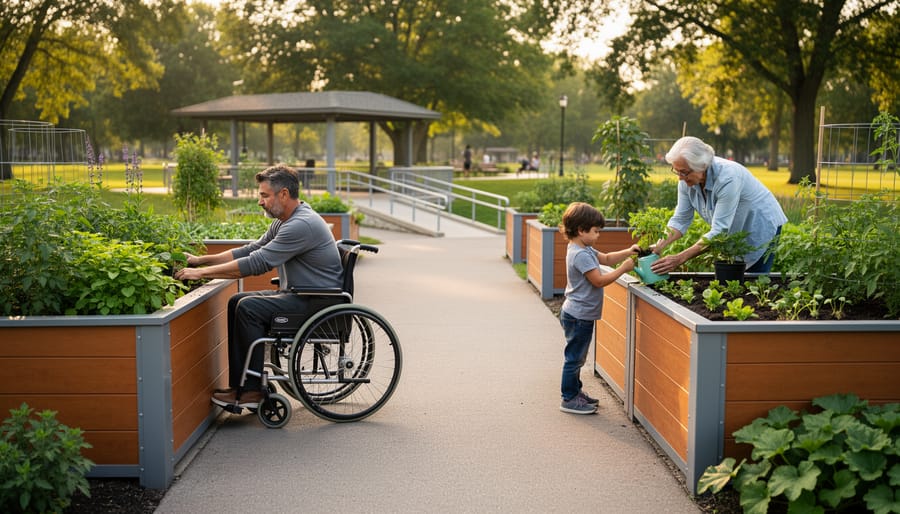
Picture a garden where pathways welcome wheelchairs and walkers with smooth, wide surfaces. Where raised beds bring vibrant tomatoes and fragrant herbs to comfortable heights for everyone. Where sensory experiences of soil, sunshine, and growing things aren’t limited by mobility or ability. That’s the promise of accessible community gardens in Ontario Parks.
These thoughtfully designed spaces transform traditional gardening into an inclusive activity where families, seniors, and individuals with disabilities can dig, plant, and harvest side by side. You’ll find gardens with wheelchair-accessible raised beds at shoulder height, tactile plant markers in braille, and gently graded paths that eliminate barriers between you and nature’s therapeutic benefits.
Ontario’s accessible community gardens aren’t just about physical access—they’re about belonging. They’re neighborhood gathering spots where retired teachers share composting wisdom with young families, where adaptive tools make planting possible for arthritic hands, and where the simple joy of watching seedlings sprout creates connections across generations and abilities.
Whether you’re seeking a peaceful outdoor activity, looking to grow your own fresh vegetables, or searching for meaningful community connection, these gardens offer something remarkable: green spaces designed with everyone in mind. From Toronto’s urban plots to gardens nestled in smaller communities, accessible gardening opportunities are blooming across the province, waiting for you to join in. The soil doesn’t judge, and neither do these welcoming spaces—they simply invite you to grow.
What Makes a Community Garden Truly Accessible?
Picture walking into a garden where every detail has been carefully thought out so everyone can dig their hands into the soil and watch seeds transform into vegetables. That’s the magic of a truly accessible community garden.
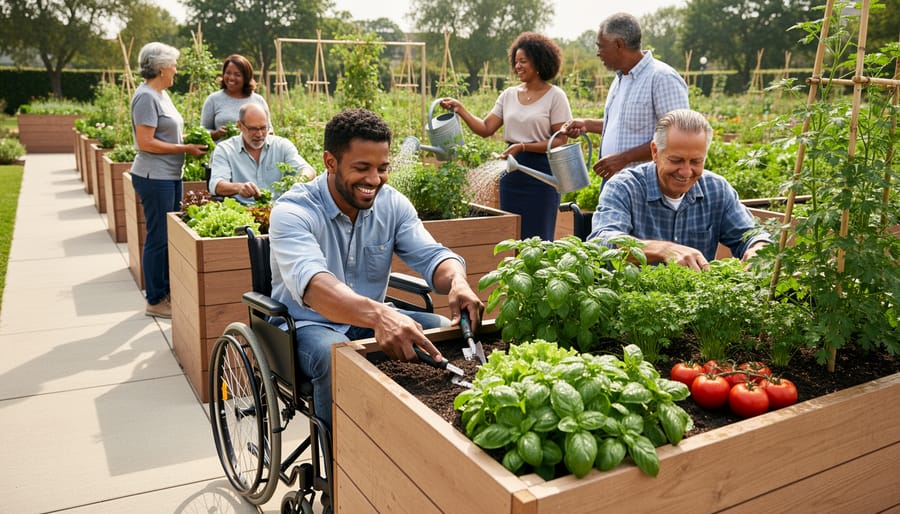
The foundation starts with raised beds positioned at just the right height. These aren’t your typical ground-level plots. Instead, imagine sturdy wooden or stone boxes elevated anywhere from 24 to 36 inches high, perfect for someone in a wheelchair to roll right up and comfortably reach the soil without straining. Many gardens even feature tables with cutouts designed so wheelchair users can get closer to their plants. It’s like bringing the garden up to meet you, rather than making you bend down to it.
Between these beds, you’ll find pathways that are wider than your average garden path, typically four to five feet across. They’re surfaced with smooth, firm materials like compacted gravel or pavement, making it easy for wheelchairs, walkers, and strollers to navigate without getting stuck. No muddy ruts or narrow squeezes here.
The tool shed in an accessible garden looks a bit different too. You’ll spot ergonomic hand tools with cushioned grips that are easier on arthritic hands, long-handled implements that eliminate bending, and lightweight watering cans. Some gardens even have vertical gardening structures where herbs and flowers grow at eye level, perfect for gardeners with limited mobility.
Sensory elements add another layer of accessibility. Think fragrant lavender planted along pathways for visually impaired visitors to enjoy, or textured plant markers with braille. The signage throughout uses large, high-contrast lettering and simple symbols that communicate clearly to everyone, regardless of reading ability or language background.
These thoughtful touches create spaces where a grandmother in a wheelchair gardens alongside her grandson, where someone recovering from surgery finds gentle therapeutic movement, and where differently-abled individuals discover the joy of growing their own fresh tomatoes.
Ontario Parks Leading the Way in Accessible Gardening
Hidden Gems in Urban Parks
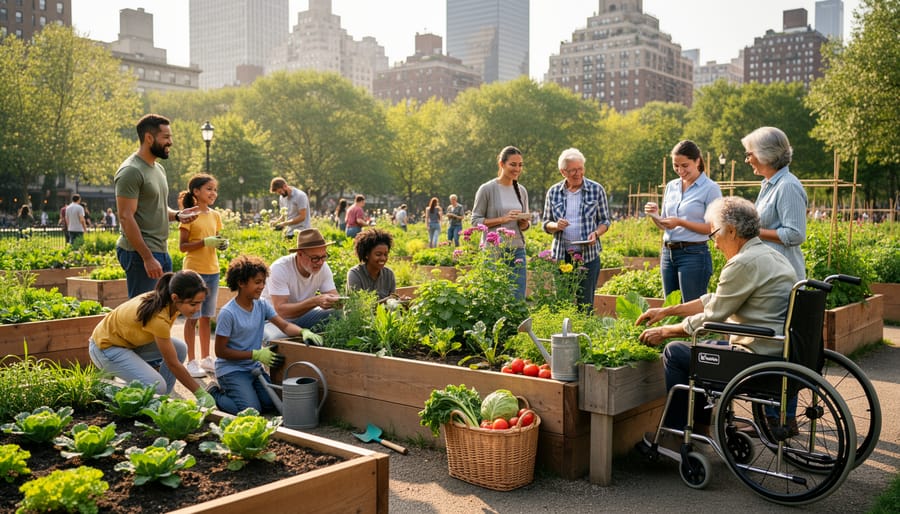
Tucked away within Ontario’s bustling urban parks are community gardens that offer something truly special—accessible spaces where everyone can dig in, regardless of mobility or experience level. These hidden gems prove that you don’t need to venture far from the city to connect with nature and community.
Take Eastview Gardens in Toronto’s Riverdale Park, where raised beds sit at wheelchair-friendly heights and wide gravel pathways make navigation a breeze. What makes this spot shine is their monthly “Garden Gatherings” program, where newcomers learn composting basics and seed-saving techniques from experienced gardeners. I visited on a Saturday morning and watched as a grandmother taught her grandson how to identify ready-to-harvest tomatoes—the kind of moment that makes these spaces magical.
Over in Ottawa, the Lansdowne Park Community Garden has become a model for accessibility. Their adaptive gardening tools are available for anyone to borrow, including ergonomic handles and vertical planters perfect for those who find bending difficult. Insider tip: arrive Tuesday evenings for their free workshops covering everything from container gardening to creating pollinator havens.
Hamilton’s Gage Park Garden stands out for its sensory garden section, featuring fragrant herbs and textured plants arranged at various heights. Their volunteer coordinator mentioned they deliberately planted mint, lavender, and lemon balm near the entrance—creating an aromatic welcome that engages all visitors.
These gardens typically welcome drop-in visitors during daylight hours, though calling ahead ensures someone’s available to show you around. Most provide basic tools and soil amendments, so you can start small before investing in your own supplies. The eco-friendly bonus? Many gardens operate composting programs, turning kitchen scraps into nutrient-rich soil while reducing landfill waste.
Natural Settings in Regional Parks
If you’re craving that perfect blend of wilderness beauty and hands-on gardening, Ontario’s regional parks offer some truly special accessible garden spaces that’ll make your heart sing. These hidden gems prove you don’t have to choose between hiking trails and harvesting tomatoes.
Imagine rolling through raised garden beds with towering pines as your backdrop, breathing in that fresh forest air mixed with the earthy scent of basil and marigolds. That’s exactly what you’ll find at several regional conservation areas across Ontario, where accessible community gardens nestle beautifully into their natural surroundings.
Take the approach at Nottawasaga Bluffs, for instance, where accessible garden plots feature wide, compacted gravel pathways that wheelchairs and walkers navigate easily, even after spring rains. The design here is brilliant – gardeners enjoy their plots while songbirds flit between the adjacent meadow and garden stakes. It’s multitasking at its finest: tend your carrots while spotting a Baltimore oriole.
Here’s an insider tip: visit these regional park gardens during early morning hours. You’ll often have the space mostly to yourself, plus the wildlife is most active then. I’ve spotted deer watching curiously from the tree line while I’ve weeded lettuce beds – talk about an audience!
The eco-friendly approach really shines in these settings too. Many regional park gardens incorporate native plant borders around accessible beds, creating pollinator highways that benefit both your vegetables and local ecosystems. Rainwater collection systems are common, and composting programs often welcome your kitchen scraps.
What makes these spaces particularly special is the community connection. Fellow gardeners share wildlife sightings alongside gardening advice, creating a uniquely Ontario experience where conservation meets cultivation. You’re not just growing food – you’re becoming part of the landscape.
How to Get Involved (No Green Thumb Required)
Ready to dig in? The beauty of accessible community gardens is that they truly welcome everyone, regardless of experience level. “I showed up not knowing a tomato plant from a weed,” laughs Maria Santos, who now tends a raised bed at High Park’s accessible garden plot. “The other gardeners were so patient and generous with their knowledge. Three years later, I’m the one teaching newcomers.”
Finding your local accessible community garden is easier than you might think. Start by checking Ontario Parks’ website or contacting your local conservation authority. Many municipalities also list community garden programs through their parks and recreation departments. In Toronto, platforms like Toronto Community Garden Network maintain updated directories of accessible spaces. Don’t hesitate to call ahead and ask specific questions about accessibility features, wheelchair-accessible pathways, or adaptive tools available on-site.
First-timers should know that most community gardens operate on a membership or plot allocation system, typically running from April through October. Some parks, like Presqu’ile Provincial Park, offer drop-in volunteer days where you can test the waters before committing. Expect an orientation session covering garden rules, composting protocols, and tool locations. Insider tip: attend spring planting days in May when the atmosphere is especially welcoming and you’ll meet the core community.
Beyond tending your own plot, volunteer opportunities abound. Many accessible gardens need help with seasonal tasks like building raised beds, organizing seed swaps, or leading workshops. Rondeau Provincial Park’s accessible garden hosts monthly “Garden Gatherings” where volunteers help maintain communal spaces while enjoying potluck lunches featuring garden-fresh produce.
Seasonal activities keep things interesting year-round. Spring brings seed-starting workshops and soil preparation. Summer means harvesting workshops and preserving classes. Fall harvest festivals celebrate the season’s bounty, while winter planning meetings let you dream about next year’s plantings.
“The garden became my outdoor therapy,” shares David Chen from Algonquin Park’s community plot program. “Some days I just sit there, even if I’m not actively gardening. That sense of belonging makes all the difference.”
The commitment level is entirely your choice – whether you want a dedicated plot or simply enjoy helping hands when available, there’s a place for you.
Growing More Than Vegetables: The Community Connection
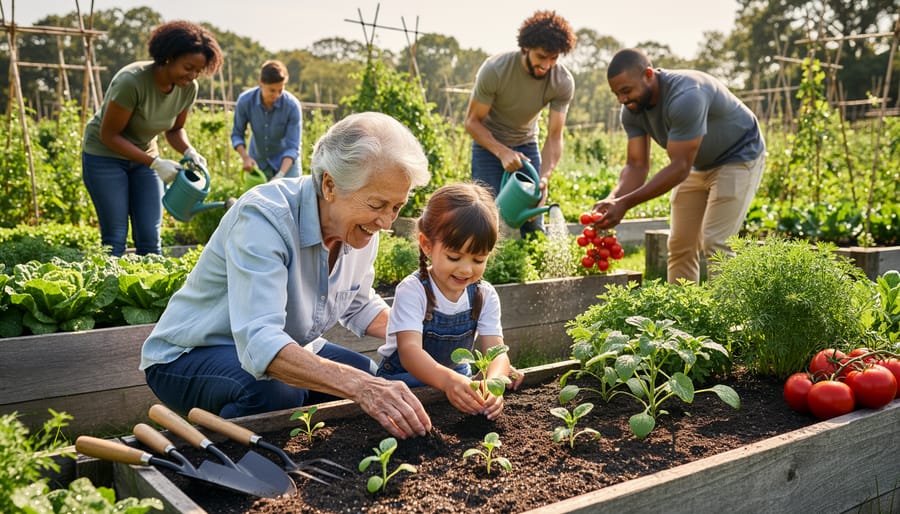
Picture Sarah, a retired teacher from Barrie, kneeling beside eight-year-old Marcus as they plant tomato seedlings together. She’s sharing stories about her grandmother’s victory garden while Marcus excitedly tells her about the TikTok videos he watches about composting. This is the magic of accessible community gardens—they’re fertile ground for building community connections that transcend age, ability, and background.
When gardens remove physical barriers through raised beds, wide pathways, and adaptive tools, they open doors to remarkable social benefits. At Awenda Provincial Park’s community garden, wheelchair users work alongside families with young children, while seniors share decades of growing wisdom with newcomers to Canada learning about Ontario’s growing season. These interactions create what one participant called “the best therapy you can’t get from a prescription.”
The mental health benefits are profound and well-documented. There’s something deeply grounding about getting your hands in the soil, watching seeds transform into food, and being part of something larger than yourself. Many gardeners report reduced stress and anxiety, improved mood, and a stronger sense of purpose. The routine of tending plants provides structure, while the unpredictability of nature teaches resilience and patience.
These gardens naturally foster environmental stewardship too. When you nurture plants from seed to harvest, you develop a deeper connection to the earth and food systems. Here’s an insider tip: start a community compost station using a simple three-bin system. Not only does this reduce waste heading to landfills, but it creates nutrient-rich soil amendments. Encourage native plant borders around garden plots to support pollinators—Ontario’s bees and butterflies will thank you.
Perhaps most beautifully, accessible gardens prove that when we create spaces where everyone can participate, we cultivate understanding, friendship, and belonging alongside our vegetables. That’s a harvest worth celebrating.
Planning Your Visit: Insider Tips
The best time to visit accessible community gardens is typically mid-morning on weekdays when pathways are less crowded and volunteers are often around to share their knowledge. I’ve found that arriving around 9 or 10 am gives you the perfect balance of peaceful exploration and the chance to chat with friendly gardeners who love sharing insider tips about what’s blooming.
Pack light but smart for your visit. Bring a reusable water bottle, sunscreen, and a wide-brimmed hat for those sunny days. A small folding stool can be handy if you want to spend time sketching or photographing the gardens at different angles. Don’t forget your phone or camera – the vibrant colors and textures make for stunning photos that capture Ontario’s gardening community spirit.
When scoping out accessibility features, look for gardens with firm, level pathways at least 36 inches wide, raised beds at comfortable heights, and rest areas with seating. Many parks now include sensory garden sections with fragrant herbs and textured plants positioned for easy reach. Check if the garden offers adaptive tools like ergonomic hand tools or vertical growing systems that eliminate bending.
Nearby amenities matter too. Most accessible gardens near community centers provide accessible washrooms, parking, and picnic areas. Consider combining your garden visit with a gentle nature walk on paved trails or a picnic lunch using locally sourced ingredients.
For eco-friendly visiting, bring your own bags if you’re picking produce during harvest shares, carpool with friends, or bike if possible. Leave no trace by disposing of waste properly and staying on designated paths to protect plant beds. Some gardens welcome volunteers for drop-in sessions – a wonderful way to give back while learning sustainable gardening practices firsthand.
Remember that wheelchair user we met at the start, fingers deep in herb-scented soil, face bright with purpose? That’s the magic waiting for you at accessible community gardens across Ontario’s parks. These aren’t just beautiful spaces with thoughtful design—they’re living proof that nature doesn’t have barriers, only doorways we haven’t opened yet.
Whether you’re an experienced gardener looking for community, someone exploring therapeutic benefits of growing your own food, or simply curious about what makes these gardens special, there’s a plot with your name on it. The wooden beds are waiting, the pathways are smooth and ready, and the neighbors are friendlier than you’d imagine.
Here’s my insider tip: visit on a weekend morning when volunteer groups are most active. You’ll witness the true heart of these spaces—the laughter, the shared expertise, the tomato seedlings changing hands like precious gifts.
So grab your gardening gloves or just your sense of adventure, and discover an accessible community garden near you. Your hands in Ontario soil might just be the most grounding experience you’ll have this year.






+ There are no comments
Add yours