
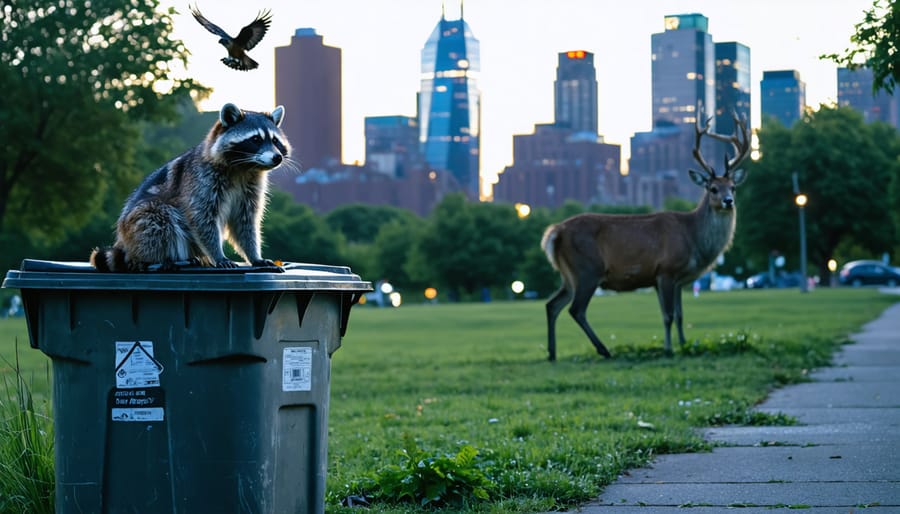
From raccoons raiding garbage bins to coyotes prowling park edges, Ontario’s native wildlife species are mastering urban living in fascinating ways. These remarkable adaptations transform our cities into unexpected sanctuaries, where foxes den beneath backyard decks and peregrine falcons nest on skyscraper ledges.
Watch for wildlife at dawn and dusk when urban animals are most active, particularly in green corridors like ravines and rail trails that connect larger natural areas. These wildlife highways offer perfect viewing opportunities while keeping a respectful distance. Morning joggers and evening dog-walkers often spot deer grazing in suburban parks or rabbits darting between garden spaces.
Our cities’ expanding boundaries create unique challenges and opportunities for wildlife adaptation. While some species struggle, others thrive – red-tailed hawks hunt from telephone poles, while skunks and opossums find abundant food in our neighborhoods. This delicate balance between human development and natural habitat creates a living laboratory of animal behavior right outside our windows.
These wild neighbors remind us that nature persists and adapts, even in our most developed spaces. By understanding and respecting urban wildlife, we can create cities that serve as sanctuaries for both people and animals.
Ontario’s Urban Wildlife Stars
Clever Raccoons and Smart Skunks
Among Ontario’s most resourceful urban wildlife, raccoons and skunks have earned a special reputation for their remarkable adaptability and problem-solving skills. These clever creatures have mastered the art of city living, turning our neighborhoods into their personal playgrounds.
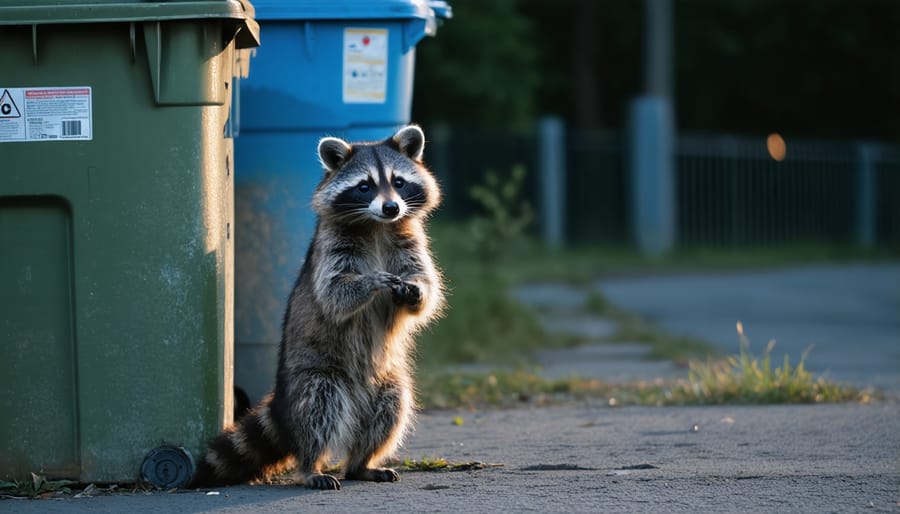
Raccoons, often dubbed “Toronto’s unofficial mascots,” showcase incredible dexterity with their nimble fingers. They’ve figured out how to unlock complex garbage bins, navigate fire escapes, and even use storm drains as urban highways. Watch them in action, and you’ll witness nature’s own acrobats scaling walls and fences with impressive agility.
Local tip: If you spot raccoons during daylight hours, give them space. While they’re typically nocturnal, mother raccoons sometimes forage during the day to feed their kits.
Skunks, despite their notorious defense mechanism, are actually quite gentle and contribute to urban ecology by controlling garden pests. These black-and-white residents have adapted to use our yards and gardens as their hunting grounds, helping to manage populations of grubs, insects, and mice.
Both species have learned to thrive in our urban spaces by making clever use of human structures. Garden sheds become winter dens, while deck spaces transform into protected nurseries. To peacefully coexist with these intelligent neighbors, secure your garbage bins, avoid leaving pet food outside, and maintain your property to prevent unwanted denning.
Remember, these animals aren’t trying to cause trouble – they’re simply adapting to share our space in remarkably innovative ways.
Urban Birds Taking Flight
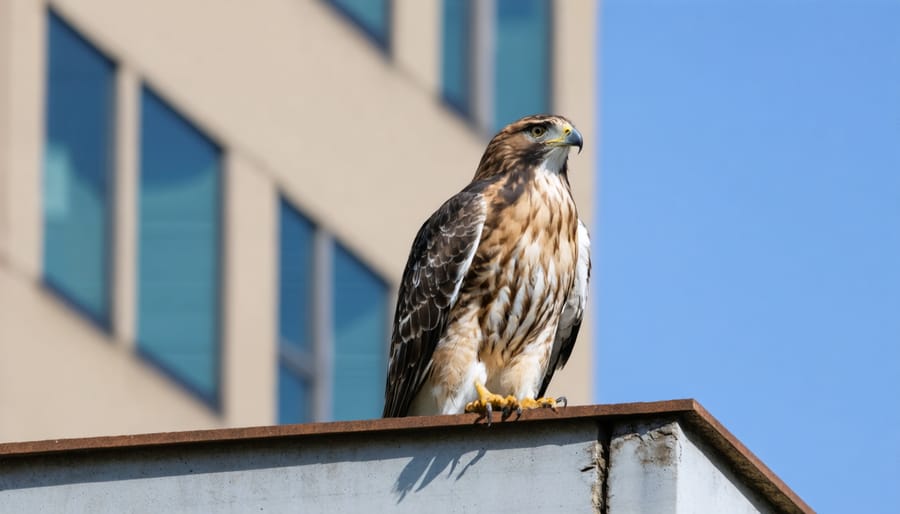
Look up to the skies in any Ontario city, and you’ll spot nature’s urban pioneers soaring between skyscrapers and nesting on window ledges. Peregrine falcons, once nearly extinct, now make their homes atop tall buildings, using them as perfect vantage points to spot prey. These magnificent birds have turned our concrete canyons into their own hunting grounds, reaching speeds of up to 390 kilometers per hour during their spectacular dives.
In Toronto’s ravines and parks, red-tailed hawks have become regular residents, often drawing crowds of admirers as they perch on light poles along busy streets. Even more fascinating are the colonies of chimney swifts that have adapted to urban life by using old chimneys as substitutes for hollow trees – their natural nesting sites.
Our city parks and gardens are alive with the melodies of northern cardinals, American robins, and black-capped chickadees. These songbirds have learned to thrive in urban environments, finding food in backyard feeders and building nests in ornamental trees and shrubs.
Want to help our feathered neighbors? Consider planting native species in your garden or maintaining a bird feeder during winter months. Just remember to keep feeders clean and use appropriate seed types. For the best urban bird-watching spots, try visiting Toronto’s High Park or Ottawa’s Mud Lake during early morning hours when our avian friends are most active.
Surprising Urban Habitats
Parks and Green Corridors
Urban parks in Ontario serve as vital sanctuaries for wildlife, creating green oases amid concrete landscapes. These natural spaces, from Toronto’s High Park to Ottawa’s Mer Bleue Conservation Area, provide essential habitats where animals can thrive despite urban development.
Connected green corridors are particularly important, linking larger parks through a network of ravines, trails, and natural passages. These wildlife highways allow animals to move safely between different areas, helping maintain genetic diversity and healthy populations. You might spot a red fox trotting along the Don Valley trail system or witness monarch butterflies following these green pathways during their migration.
Many of our city parks feature diverse ecosystems – from wetlands to woodlands – that support different species. Watch for black-capped chickadees in treed areas, painted turtles basking in park ponds, and even white-tailed deer at dawn and dusk. Native plant gardens and naturalized areas within these spaces provide food and shelter for countless insects, birds, and small mammals.
Local conservation authorities have been working to enhance these spaces by planting native species, creating wildlife-friendly features like brush piles and bee hotels, and maintaining natural water sources. These efforts help ensure our urban wildlife continues to find safe haven in our city green spaces.
Hidden City Sanctuaries
While we often think of wildlife sanctuaries as vast natural reserves, our cities hide surprising havens for local creatures. Abandoned railway corridors have transformed into vibrant greenways, where rabbits and foxes make their homes among wildflowers and native grasses. Even old industrial sites, now reclaimed by nature, serve as unexpected sanctuaries for various species.
Take Toronto’s Leslie Street Spit, for instance. This former construction debris dump has evolved into Tommy Thompson Park, where over 300 bird species find refuge during their migrations. The concrete ruins now host nesting colonies of gulls and cormorants, while native plants push through the cracks, creating a unique urban wilderness.
Community gardens and rooftop green spaces are becoming increasingly popular sanctuaries too. These urban oases not only provide fresh produce for residents but also attract pollinators like butterflies and bees. In Ottawa, many office buildings now feature bee-friendly gardens on their rooftops, creating vital stepping stones for wildlife moving through the concrete jungle.
Even small spaces make a difference. That forgotten corner of your local park with unmowed grass might be home to ground-nesting birds, while those ivy-covered walls could shelter countless insects and small mammals. These hidden sanctuaries remind us that nature finds a way to thrive, even in the heart of our busiest cities.
Pro tip: Next time you’re exploring your neighborhood, look out for these tucked-away spaces. You might be surprised by the wildlife you discover!
Living in Harmony
Wildlife-Friendly Gardens
Transform your backyard into a vibrant wildlife sanctuary by creating a garden that welcomes local creatures. Start by incorporating native plants for gardens that provide natural food sources and shelter for birds, butterflies, and beneficial insects. Consider adding features like bird baths, small brush piles, and bee hotels to create diverse habitats.
Layer your garden with different heights of vegetation – ground covers, shrubs, and trees – to accommodate various species. Leave seed heads standing through winter to feed birds, and maintain a small water source year-round. Even a tiny container garden on a balcony can attract hummingbirds and butterflies!
Avoid using chemical pesticides and fertilizers, as these can harm wildlife and disrupt natural ecosystems. Instead, embrace natural pest control by attracting beneficial insects and birds that feed on garden pests. Consider leaving a patch of lawn unmowed or creating a wildflower meadow to support pollinators.
Remember, your garden doesn’t need to look perfectly manicured to be wildlife-friendly. Those fallen leaves and hollow stems provide essential shelter for overwintering insects and materials for bird nests. By making these simple changes, you’ll create a thriving ecosystem that brings nature right to your doorstep while contributing to urban biodiversity.

Smart Wildlife Watching
Watching wildlife in urban areas can be an incredible experience, but it’s essential to do so responsibly. Keep a safe distance – a good rule of thumb is staying far enough away that the animal doesn’t change its behavior because of your presence. Using binoculars or a zoom lens on your camera lets you observe without disturbing our wild neighbors.
Early morning and dusk are prime viewing times when many urban animals are most active. Find a quiet spot in a park or green space, sit still, and wait patiently. You’ll be amazed at what appears when you become part of the landscape rather than an intruder in it.
Never feed wild animals, even if they seem friendly. Human food isn’t healthy for them, and feeding can make them dependent on people. Instead, consider creating wildlife-friendly spaces in your yard with native plants and natural food sources.
Remember to keep pets leashed in wildlife-rich areas – this protects both your pet and the wild animals. If you spot injured wildlife, don’t approach it. Instead, contact your local wildlife rehabilitation center for guidance.
Taking photos? Use natural light when possible and avoid flash photography, which can startle animals. Share your observations on citizen science platforms to help researchers track urban wildlife populations. These small actions help ensure our urban wildlife remains wild while allowing us to enjoy their presence safely.
Preventing Conflicts
Living alongside urban wildlife can be rewarding, but it’s important to take steps to prevent unwanted encounters. The key is making your property less attractive to wildlife while still maintaining a wildlife-friendly environment.
Start by securing your garbage bins with animal-proof locks and putting them out only on collection day. Keep pet food indoors and clean up any fallen fruit or birdseed from your yard. If you compost, use enclosed bins and avoid adding meat, dairy, or oily foods that might attract unwanted visitors.
For gardens, consider installing motion-activated lights or sprinklers to deter nighttime visitors. A fence around your vegetable garden can prevent rabbits and deer from treating it like an all-you-can-eat buffet. Remember to seal any potential entry points around your home’s foundation, roof, and vents – even a small gap can be an invitation for creatures seeking shelter.
When walking your dog, keep them leashed, especially during dawn and dusk when wildlife is most active. If you spot a coyote or fox, make yourself appear large and make noise to encourage them to keep their distance.
Bird feeders can be wonderful for attracting feathered friends, but place them away from your house to avoid creating perches for wildlife to access your roof. Clean up spilled seeds regularly to avoid attracting rodents.
By following these simple precautions, you can enjoy urban wildlife from a safe and respectful distance while preventing unwanted conflicts.
Where to Spot Urban Wildlife
Ontario’s urban areas offer surprising opportunities to observe wildlife throughout the year. In Toronto, High Park stands out as a prime location for spotting deer, coyotes, and various best bird watching spots, especially during dawn and dusk. The park’s natural areas and ponds create perfect habitats for these creatures, particularly in spring when new families emerge.
The Don Valley trail system provides excellent wildlife viewing opportunities year-round. Early morning walkers often encounter red foxes and white-tailed deer, while great blue herons can be spotted fishing in the river. For night owls, the valley’s paths offer chances to hear (and sometimes see) owls and nocturnal mammals.
In Ottawa, the Mer Bleue Bog boardwalk serves as a fantastic urban wildlife sanctuary. Visit during early morning hours to spot beavers maintaining their lodges and various songbirds darting through the shrubs. The nearby Green Belt trails host an abundance of wildlife, including porcupines and wild turkeys.
Mississauga’s Rattray Marsh Conservation Area offers exceptional wildlife viewing along Lake Ontario. The boardwalks and trails provide perfect vantage points for observing muskrats, monarch butterflies (during migration), and various waterfowl. Time your visit to coincide with sunrise for the best viewing opportunities.
For those in Hamilton, the Royal Botanical Gardens’ natural areas are teeming with wildlife. The Cherry Hill Trail system is particularly good for spotting white-tailed deer and red-tailed hawks. During spring and fall migrations, Cootes Paradise becomes a haven for bird watchers and nature photographers.
Pro tip: City ravines and urban parks are most active with wildlife during the first hour after sunrise and the last hour before sunset. Remember to maintain a respectful distance and never feed wild animals – observing them in their natural behavior is part of the experience!
As we share our cities with wildlife, each of us plays a crucial role in creating a sustainable future where nature and urban life can thrive together. By making small changes in our daily lives, like maintaining wildlife-friendly gardens, properly securing garbage bins, and supporting local conservation initiatives, we can help our wild neighbors adapt and flourish. The rewards of these efforts are all around us – from the cheerful morning songs of robins to the graceful flight of monarch butterflies in our parks. Remember, urban wildlife isn’t just surviving in our cities; they’re becoming an essential part of our communities. Let’s work together to create welcoming spaces for all creatures, ensuring future generations can experience the joy and wonder of wildlife right in their own backyard. Your actions, no matter how small, contribute to making our cities better homes for both people and wildlife.













+ There are no comments
Add yours