
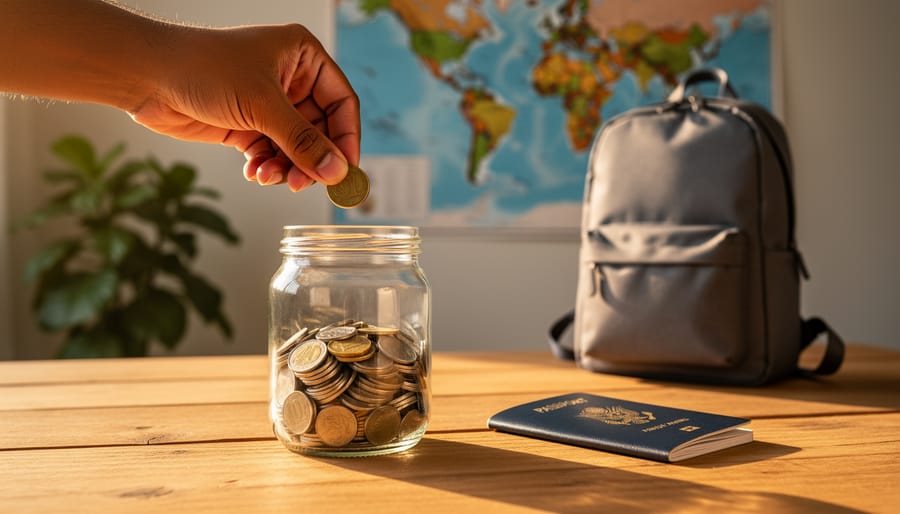
Track every expense for one week before your trip—coffee, takeout, subscriptions you forgot about—and you’ll discover at least $200 monthly that can redirect toward your travel fund. Most aspiring international travelers already have the money; it’s just hiding in daily habits.
Set your destination budget by researching actual costs in travel forums and budget blogs, not glossy travel magazines. A two-week trip to Portugal realistically costs $2,500-3,500 per person including flights, while Southeast Asia stretches that same amount across a month. Knowing real numbers prevents both over-saving that delays your trip and under-budgeting that creates mid-journey stress.
Open a dedicated high-interest savings account specifically for travel and automate weekly transfers of $50-100. Watching this account grow creates momentum, and separating travel money from your regular funds eliminates the temptation to raid it for everyday expenses. Even small, consistent contributions compound surprisingly fast—$75 weekly becomes nearly $4,000 in a year.
Calculate your daily destination cost by dividing your total budget by trip days, then subtract 20% as your emergency cushion. This gives you a spending target that accounts for unexpected opportunities like that cooking class in Rome or the boat tour everyone raves about.
International travel isn’t reserved for the wealthy or the reckless. It’s accessible to anyone willing to prioritize it, plan strategically, and make intentional choices about where their money flows. Your dream destination is closer than you think—sometimes it’s just one budget audit away.
The Real Cost of International Travel (And Why It’s More Affordable Than You Think)
Here’s a truth bomb that might surprise you: that dream trip to Thailand, Portugal, or Vietnam probably costs less than a week-long cottage rental in Muskoka during peak season. I know, I know—international travel feels expensive and out of reach. But let me share why that perception doesn’t match reality.
Last summer, my friend Sarah kept postponing her Europe trip, convinced she needed at least $5,000 saved up. Meanwhile, I spent two weeks exploring Poland and Hungary for under $1,800, including flights from Toronto. The secret? Those countries offered incredible experiences at a fraction of Western Europe’s prices, with hostels costing $15 per night and restaurant meals around $8.
The biggest misconception about international travel is that everything costs more abroad. In reality, many destinations offer better value than vacationing at home. Southeast Asia, Eastern Europe, Central America, and parts of South America provide rich cultural experiences, stunning landscapes, and delicious food at prices that make Ontario seem expensive by comparison.
Consider this real comparison: A weekend getaway to Niagara Falls with hotel, dining, and attractions easily runs $600-800 per person. That same amount could cover a week in Mexico, including flights, beachfront accommodations, and fresh seafood dinners watching the sunset.
The transformation happens when you shift from “I can’t afford it” to “How can I make this work?” Strategic budgeting isn’t about deprivation—it’s about smart allocation. Maybe you skip daily Tim Hortons runs for three months and redirect that $150 monthly toward your travel fund. Perhaps you choose shoulder season flights that cost half the summer rates.
I’ve watched countless people discover that international travel isn’t reserved for the wealthy—it’s accessible to anyone willing to research, plan strategically, and embrace flexibility. The cottages and local getaways will always be there, but your passport is practically begging for stamps, and it’s more affordable than the excuses you’ve been making.
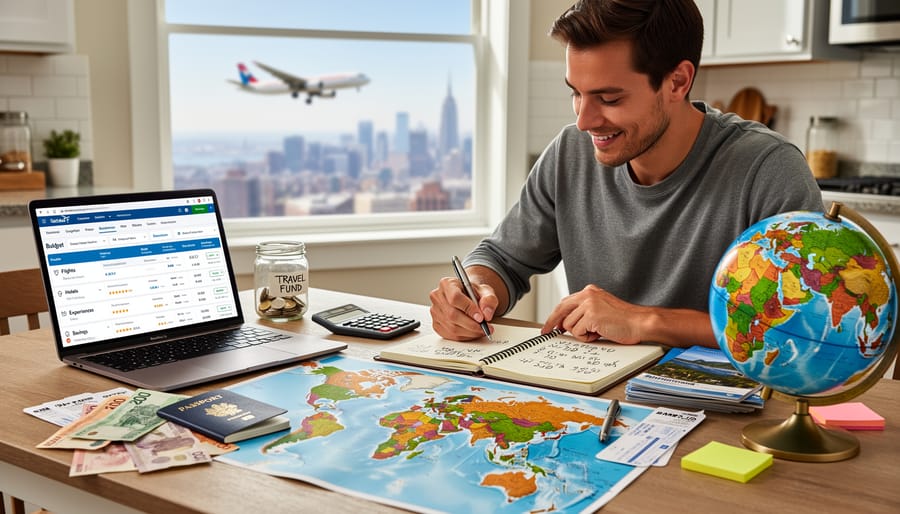
Building Your International Travel Budget From the Ground Up
The Four Major Cost Categories You Need to Track
When I planned my first trip to Southeast Asia from Toronto, I made the rookie mistake of only budgeting for flights and hotels. Big mistake! I quickly learned that international travel costs fall into four main buckets, and understanding each one is crucial for avoiding those panicky midnight ATM runs abroad.
Transportation typically eats up 30-40% of your total budget. This includes your round-trip flights from Pearson or Ottawa International, but don’t forget ground transportation. Think airport transfers, trains between cities, local buses, and the occasional taxi when you’re lugging backpacks in the rain. My insider tip? Book connecting flights during off-peak hours to save hundreds, even if it means a 6am departure.
Accommodation claims another 25-35% of most budgets. Whether you’re splurging on boutique hotels or embracing hostel culture, this category can make or break your budget. I’ve found that mixing accommodation types works wonderfully—spend a few nights in a private Airbnb to recharge, then switch to hostels for the social vibe and savings.
Daily expenses, including food, local transport, and miscellaneous costs, should account for 20-25%. This is where Ontario travelers often underestimate. That morning espresso and evening gelato add up quickly! I budget roughly 50-75 dollars daily for meals in Southeast Asia, but triple that for European destinations.
Finally, activities and experiences deserve 10-20% of your budget. Sure, you could skip the cooking class in Thailand or that gondola ride, but these moments become your treasured memories. Choose experiences that align with your passions—as someone who loves Ontario’s hiking trails, I always prioritize outdoor adventures abroad too.
Hidden Costs That Catch Travelers Off Guard
I learned this lesson the hard way during my first trip to Southeast Asia—I’d carefully budgeted for flights and hotels but completely forgot about those sneaky extras that add up fast. Let me walk you through the hidden costs that often catch travelers off guard.
Visa fees can range anywhere from $30 to $200 depending on your destination. Some countries offer visa-on-arrival options, while others require advance applications with processing fees. Pro tip: Check if you can apply for electronic visas, which are often cheaper than embassy visits.
Don’t skip travel insurance—it typically costs $50-100 for a two-week trip but can save you thousands if something goes wrong. Look for policies that cover adventure activities if you’re planning outdoor experiences similar to what you’d enjoy at Ontario’s provincial parks.
Vaccinations and health prep often get overlooked. Budget $100-300 for required shots and medications, though your health insurance might cover some costs. Book appointments at least eight weeks before departure since some vaccines require multiple doses.
Currency exchange fees silently eat into your budget. Skip airport kiosks with their terrible rates and use ATMs at your destination instead. Better yet, get a no-foreign-transaction-fee credit card before you go—I’ve saved hundreds this way.
Finally, research tipping customs for your destination. What’s standard in Ontario might be offensive elsewhere, or you might be overtipping unnecessarily. Setting aside 5-10% of your daily budget for gratuities usually covers it comfortably.

Setting a Daily Budget That Actually Works
Let’s get real about daily budgets—because guessing wrong can mean either running out of money mid-trip or returning home with regrets about all the experiences you skipped to save cash.
Start by researching your destination’s typical costs. I like to check travel forums and recent blog posts from travelers who’ve actually been there. For Southeast Asia, you might discover comfortable living costs around $50 daily, while Scandinavia could easily demand $150-200 for the same comfort level.
Here’s my favorite calculation method: Choose three categories that match different travel styles, similar to the budgeting strategies you’d use planning an Ontario road trip.
Budget traveler in Vietnam: Hostel dorm ($8) + street food and local markets ($12) + public transportation ($5) + one paid activity ($8) = roughly $35 daily. You’re eating pho for breakfast, taking buses, and staying social in shared spaces.
Mid-range explorer in Portugal: Private Airbnb room ($45) + mix of restaurants and grocery meals ($35) + occasional taxis and transit passes ($15) + museum entries and tours ($20) = approximately $115 daily. You’re balancing comfort with authenticity.
Comfortable traveler in Switzerland: Nice hotel ($120) + dining out most meals ($60) + convenient transportation ($25) + activities and experiences ($40) = around $245 daily. You’re prioritizing convenience and nicer accommodations.
Add a 15-20% buffer for unexpected costs—that gelato shop you can’t resist or the impromptu boat tour that’s absolutely worth it. Track your first few days religiously using a simple notes app. If you’re consistently under or over, adjust immediately rather than waiting until week two when the damage is done.
Cost-Sharing Strategies That Make Travel Affordable for Everyone
Traveling With Friends: The Fair Way to Split Expenses
Traveling with friends can slash your international travel costs, but money matters can get awkward fast if you don’t have a system in place. I learned this the hard way during a trip to Portugal when my hiking buddy and I had wildly different spending habits—she wanted boutique hotels while I was perfectly happy in hostels. The key? Talk openly about budgets before you book anything.
These days, apps like Splitwise and Settle Up have become absolute lifesavers for group travel. During my recent adventure through the Scottish Highlands with three friends, we logged every shared expense—from our rental car to group dinners—right into Splitwise. At the end of each day, we could see exactly who owed what, without the awkward “did you get that coffee?” conversations. The app even converts currencies automatically, which saved us so much mental math.
When your travel companions have different budget levels, create a flexible framework. Agree on shared essentials like accommodations and transportation, but give everyone freedom for personal splurges. On that Scotland trip, we split the cottage rental equally, but when two friends wanted an expensive whisky tasting, the rest of us explored a free coastal trail instead. We reconnected for dinner with zero resentment.
Here’s an insider tip: assign one person as the “expense tracker” each day on a rotating basis. This person photographs receipts and logs costs in real-time, preventing the end-of-trip scramble where nobody remembers who paid for that ferry ride three weeks ago.
The best part about traveling with friends? You can embrace eco-friendly options that are cheaper together, like splitting groceries for picnic lunches instead of eating out, or sharing one rental car instead of multiple taxis. Everyone wins when you’ve got a fair system in place.

Family Travel on a Shared Budget
Multi-generational trips can stretch your international travel dollar remarkably far when everyone contributes to a shared pot. I’ve watched families transform their dream European vacation from impossible to affordable by simply pooling resources and splitting costs strategically.
Start by having an honest conversation about everyone’s budget comfort zone before booking anything. My friend’s family of twelve recently rented a spacious villa in Portugal for less per person than hostel beds would have cost, complete with a full kitchen that saved them hundreds on dining out. Apartment rentals and vacation homes offer incredible value when you’re traveling with grandparents, parents, and kids together.
The real magic happens with meal planning. Assign different family members to handle breakfast, lunch, or dinner on rotating days. Hit local markets together—it becomes an adventure rather than a chore. One family cooks a big communal dinner while others explore, then you swap roles the next day. You’ll save money and create those authentic travel moments that hotels just can’t offer.
For activities, create a master list where everyone votes on their top three must-dos, then prioritize experiences that accommodate various ages and fitness levels. Many attractions offer family passes or group discounts that make including everyone more economical. Consider free walking tours, public beaches, and parks for budget-friendly days between splurges. Track shared expenses using simple apps like Splitwise to keep everything transparent and fair—nobody wants awkward money conversations to derail an otherwise perfect family adventure.
House Swaps and Accommodation Sharing
I discovered house swapping completely by accident when chatting with a family from Barcelona at a campground in Algonquin. They’d traded homes with an Ontario couple for three weeks, and both families saved thousands on accommodation while enjoying a truly local experience. It’s a game-changer for international travel budgets.
Home exchange programs like HomeExchange, Love Home Swap, and GuestToGuest connect travelers who swap houses simultaneously. You stay in their place while they stay in yours—no money changes hands. I’ve seen families cut accommodation costs entirely on month-long European adventures. The bonus? You get kitchen access for cooking meals, laundry facilities, and often local tips from your exchange partner. These eco-friendly travel approaches reduce resource consumption since homes are occupied rather than sitting empty while you rent elsewhere.
For solo travelers or those without homes to swap, co-living spaces offer affordable alternatives. Platforms like Outsite and Selina provide community-focused stays with shared kitchens and workspaces, often cheaper than hotels with way more character.
Safety tips from my own exchanges: verify profiles thoroughly, use platforms with insurance protection, do video calls before committing, and document your home’s condition with photos. Start with shorter swaps to build confidence and reviews. Many exchangers become long-term friends—we still email our Barcelona family every Christmas. The cultural immersion and local insights you gain transform your trip from tourist to temporary resident, enriching your experience beyond any hotel stay could offer.
Money-Saving Tactics That Won’t Sacrifice Your Experience
Timing Your Trip for Maximum Savings
Here’s the thing most Ontario travelers don’t realize: timing can slash your international travel costs by 40% or more, and it often comes down to working around our unique vacation patterns.
I learned this the hard way when I booked a March break trip to Europe years ago. The flights alone cost nearly double what my colleague paid for the exact same route in November. Since then, I’ve become obsessed with shoulder season travel—those sweet spots between peak and off-peak periods when destinations are still gorgeous but prices drop dramatically. For us in Ontario, this means targeting late April to early June or September to early November, right after kids go back to school and before the holiday rush begins.
Weekday flights are another insider secret. I always search for Tuesday or Wednesday departures and returns rather than Friday through Monday. Airlines know Ontarians typically start their vacations on weekends, so they price accordingly. By adjusting your departure by just a day or two—which many employers accommodate if you ask—you can save $200-500 per ticket.
The booking window matters too. For international flights, the magic zone is typically 6-8 weeks out for shorter trips and 3-5 months for major destinations. Set up price alerts and watch for flash sales during January’s “wave season” when airlines compete for your business after the holiday slowdown.
One eco-friendly bonus: shoulder season travel often means fewer tourists crowding popular sites, reducing your environmental impact while giving you a more authentic experience. Win-win.
Eating Like a Local Without Breaking the Bank
One of my favorite travel discoveries? The best meals rarely come from tourist-district restaurants. When I wandered through Bangkok’s morning markets, I ate incredible pad thai for less than two dollars—the same dish cost fifteen at my hotel. Eating like a local isn’t just budget-friendly; it’s authentically delicious.
Start your mornings at local markets where vendors sell fresh fruit, bread, and prepared foods at fraction-of-restaurant prices. Street food can be perfectly safe—look for busy stalls with high turnover and locals lining up. That’s your quality guarantee right there.
If your accommodation has a kitchen, shop at neighborhood grocery stores and cook a few meals. You’ll save money while experiencing local ingredients firsthand. I once spent an afternoon learning to make empanadas in my Buenos Aires rental—dinner cost five dollars and created memories worth millions.
Finding affordable authentic restaurants takes detective work. Walk three blocks away from major attractions, peek where locals eat during lunch rush, or ask your accommodation host for recommendations. Download translation apps to navigate menus confidently.
Here’s an eco-friendly insider tip: Buy only what you’ll actually eat, especially at markets where those gorgeous mangoes might spoil in your bag. Carry reusable containers for leftovers and street food purchases—many vendors happily pack food in your own containers, reducing plastic waste while you save money eating restaurant leftovers for tomorrow’s lunch.
Free and Low-Cost Activities That Beat Tourist Traps
Think about your favorite Sunday stroll through Toronto’s High Park or wandering Rideau Canal – those same experiences await you abroad, often completely free. Most European cities offer fantastic free walking tours (tip what you can), and you’ll discover hidden gems your guidebook missed. I once joined a community-led walk through Lisbon’s neighborhoods and learned more in two hours than I would have in three museums.
Public parks are your best friend overseas. Pack a picnic from a local market and enjoy people-watching in Barcelona’s Park Güell or London’s Hampstead Heath. Just like cottage country vibes back home, green spaces offer that peaceful escape without the price tag.
Check local event calendars before you travel – street festivals, outdoor concerts, and farmers markets happen everywhere. In Lyon, I stumbled upon a neighborhood block party with food stalls and live music, spending maybe ten euros for an incredible evening. These authentic experiences beat overpriced tourist attractions every time.
Churches, temples, and public viewpoints usually don’t charge admission either. That sunrise hike you love doing at Algonquin? Every destination has its own version, from Arthur’s Seat in Edinburgh to Mount Lycabettus in Athens – spectacular views, zero cost.
Tools and Apps That Keep Your Budget on Track
Managing your travel budget becomes so much easier when you have the right digital tools at your fingertips. I learned this the hard way during a trip to Portugal when I spent three days manually calculating exchange rates on scraps of paper before a fellow traveler introduced me to some game-changing apps.
Start with a reliable currency converter like XE Currency or OANDA, which work offline once you’ve downloaded the rates. This saves you from that awful moment when you’re haggling at a market and realize you’ve been doing the math completely wrong. I keep mine on my phone’s home screen so I can quickly check prices before making purchases.
For tracking expenses as they happen, Trail Wallet and TravelSpend are incredibly user-friendly options. You simply input what you spend in any currency, and the app converts everything to your home currency while categorizing expenses. It’s like having a personal accountant who doesn’t judge you for that third gelato. After a week of travel, you’ll have a clear picture of where your money’s actually going, which often reveals surprising patterns.
If you’re traveling with friends or family, Splitwise is an absolute lifesaver. Instead of awkwardly asking “who paid for dinner last night?” the app tracks shared expenses and settles everything up at the end. My sister and I used it throughout our Iceland adventure, and it saved our relationship from several potential money arguments.
For banking solutions, look into travel-friendly options like Wise (formerly TransferWise) or Revolut, which offer much better exchange rates than traditional banks and minimal foreign transaction fees. Some Canadian banks also offer specific travel accounts worth exploring before your trip.
Here’s an insider tip: download and test all apps before you leave home. Nothing’s worse than fumbling with a new app while standing in a busy train station abroad. Set up your categories, add a few test expenses, and make sure everything syncs properly. Your future traveling self will thank you.
When to Splurge and When to Save
Here’s the truth I learned after years of international travel: budgeting isn’t about saying no to everything fun. It’s about choosing your yeses wisely.
Think of your travel budget like you’d plan a camping trip in Algonquin Park. You splurge on quality gear that matters—a reliable tent, a good sleeping bag—while saving on things that don’t affect your experience much, like fancy cookware when simple works just fine.
My friend Sarah saved diligently for her Japan trip, then spent $200 on a private cooking class with a local grandmother in Kyoto. She still talks about it five years later. Meanwhile, she skipped expensive hotel breakfasts and grabbed onigiri from convenience stores instead. Smart trade-off.
Conversely, I once cheaped out on a hostel in Prague that was so far from everything that I spent the money I “saved” on taxis and wasted precious daylight hours commuting. That’s a regret I won’t repeat.
So when should you splurge? Experiences you can’t replicate at home deserve your dollars. That guided wildlife safari, the local food tour, the hot springs entrance fee—these create lasting memories. Also splurge on anything affecting your safety or health: decent travel insurance, reliable transportation in remote areas, safe accommodations in unfamiliar cities.
Save on things that don’t enhance your experience: airport meals, touristy restaurants near major attractions, souvenir shops, and luxury accommodations when you’ll barely be in your room.
The key is knowing your values. Love food? Budget more for memorable meals. Photography enthusiast? Invest in that sunrise tour. Prioritize what matters to you, and cut ruthlessly on what doesn’t. That’s not deprivation—it’s intentional travel.
Building Your Travel Fund: Starting Small, Dreaming Big
Here’s the truth: you don’t need a massive windfall to start planning your international adventure. I remember when my colleague Sarah decided she wanted to visit Scotland. She was earning a modest income, but she made it happen in 18 months by setting aside just $50 per week. That’s one dinner out or a few fancy coffees.
Start by opening a dedicated travel savings account—seeing that balance grow becomes incredibly motivating. Name it something fun like “Paris Fund” or “Tokyo Dreams” to keep your goal front and center. Many of the same saving strategies that work for exploring Ontario’s beautiful parks apply to international travel too.
Try the “spare change challenge” where you transfer rounded-up amounts from purchases into your travel fund, or commit to one no-spend weekend per month, banking what you would have spent. Sell items you no longer use—those forgotten camping gear pieces or kitchen gadgets can add up quickly.
Break your goal into milestone celebrations. When you hit 25% of your target, treat yourself to a guidebook. At 50%, maybe book a refundable flight to lock in prices. These small wins keep motivation high during the long haul.
Set a realistic timeline based on your actual savings capacity. A $3,000 trip might take 12 months at $250 monthly or 20 months at $150 monthly. There’s no shame in slower progress—you’re still moving forward.
Start today by calculating one specific trip cost and dividing it by reasonable monthly amounts. Pick your destination, set your timeline, and take that first step. Your adventure is closer than you think.
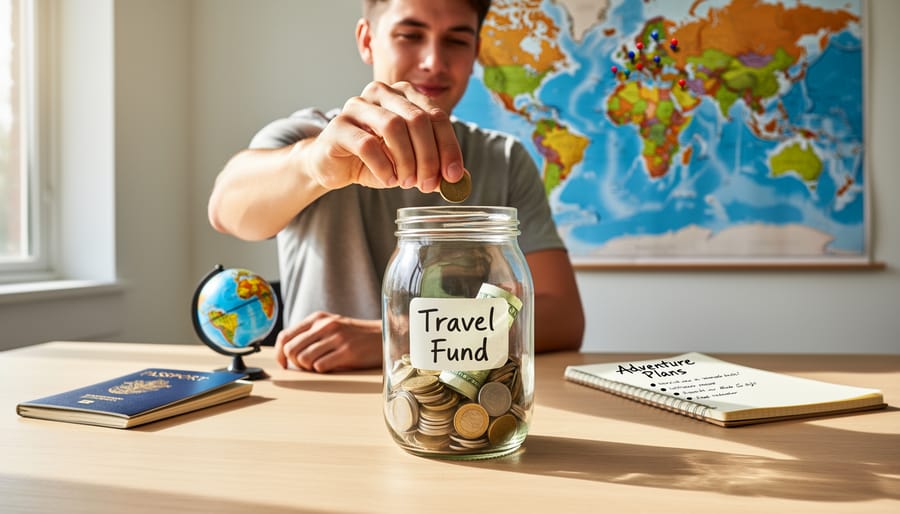
Here’s the truth I’ve learned from countless conversations with fellow travelers: that international adventure you’ve been dreaming about isn’t as far out of reach as you might think. Yes, overseas travel requires planning and yes, it costs money, but with the budgeting strategies and cost-sharing approaches we’ve explored, it’s absolutely achievable on a realistic income.
Think about it this way. You already know how to pack smart for a weekend camping trip in Algonquin. You’ve mastered the art of splitting gear costs with friends for canoe adventures. You plan ahead for seasonal activities and hunt for the best deals on outdoor equipment. These same skills translate perfectly to international travel budgeting. The only difference? You’re applying that resourceful Ontario spirit to passport stamps instead of provincial parks.
Start small if you need to. Open that dedicated travel savings account this week. Research one flight deal. Talk to a friend about splitting accommodation costs for a future trip. Every journey begins with a single step, and your first step might simply be believing it’s possible.
The world is waiting for you, and it’s more accessible than you think. Just like you discovered that hidden trail or secret swimming spot closer to home, there are incredible experiences abroad ready for the finding. Your next great adventure is calling. All you need to do is answer with a budget and a plan.









+ There are no comments
Add yours