

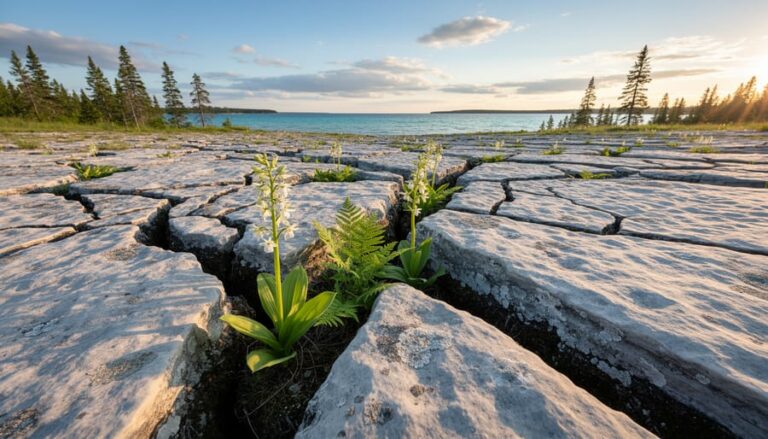
Imagine walking across a flat expanse of ancient stone, where cracks in the limestone reveal tiny orchids and rare ferns that exist nowhere else on Earth. This is the world of alvars and limestone pavements, extraordinary landscapes sculpted from travertine and limestone over thousands of years.
These unique ecosystems form when calcium-rich limestone erodes into flat, barren-looking platforms punctuated by deep fissures called grikes. Despite appearing lifeless at first glance, these rocky wonderlands support incredibly diverse plant communities adapted to extreme conditions—blazing heat in summer, waterlogged springs, and harsh winters. The shallow soils and exposed bedrock create microclimates where prairie grasses grow alongside arctic-alpine flowers.
Ontario hosts some of North America’s finest examples of these geological treasures. The Bruce Peninsula and Manitoulin Island showcase spectacular limestone pavements where you can trace fossil records dating back 400 million years to ancient tropical seas. Carden Alvar near Lake Simcoe represents one of the largest and most pristine alvar landscapes in the Great Lakes region, offering birdwatchers glimpses of loggerhead shrikes and other rare species.
Understanding the difference between travertine and limestone helps you appreciate what you’re seeing. Limestone forms from compressed marine organisms and shells, while travertine develops from mineral deposits around hot springs and caves. Both create the foundation for these remarkable ecosystems that feel like walking on another planet—yet exist right in Ontario’s backyard, waiting for your exploration.
What Makes These Rock Gardens So Special?

The Story Written in Stone
Imagine standing on rock that was once the floor of a tropical sea. That’s exactly what you’re doing when you explore Ontario’s limestone landscapes. About 450 million years ago, long before dinosaurs roamed the earth, this region lay beneath a warm, shallow ocean teeming with life. Coral reefs flourished here, and countless marine creatures—from tiny shellfish to ancient relatives of squid—lived, died, and settled to the ocean floor.
Over millions of years, these accumulated shells, skeletons, and coral fragments compressed under immense pressure, transforming into the limestone bedrock we see today. Look closely at the rock surface and you might spot fossils embedded right there—tangible proof of this incredible journey through time. Travertine, limestone’s cousin, forms through a different process involving mineral-rich spring water, but you’ll find both types creating the foundation for Ontario’s unique alvar ecosystems.
Here’s an insider tip: bring a magnifying glass on your next limestone pavement hike. You’ll be amazed at the fossilized sea creatures you can spot, turning a simple walk into a hands-on paleontology adventure that connects you directly to Ontario’s ancient past.
Why Limestone Creates Magical Landscapes
Limestone is like nature’s puzzle pieces, and water is the artist that shapes them into something extraordinary. Unlike harder rocks like granite that resist weathering, limestone contains calcium carbonate that dissolves slowly when rainwater (which is slightly acidic) seeps through cracks in the rock. Over thousands of years, this patient chemical process carves deep vertical fissures called grikes into the stone, leaving behind flat, table-like surfaces called clints.
Here’s the magical part: this weathering pattern creates an incredible variety of microclimates within just a few square meters. The grikes stay cool, moist, and shaded—perfect hiding spots for ferns and moisture-loving plants. Meanwhile, the exposed clints bake in the sun, hosting completely different species that thrive in hot, dry conditions. I’ve crouched down between these ancient cracks and felt the temperature drop noticeably, like stepping into a natural refrigerator.
This distinctive weathering also makes limestone pavements incredibly porous. Water disappears quickly through the cracks rather than pooling on the surface, which is why alvars can shift from flooded wetlands in spring to bone-dry landscapes by summer. It’s this dramatic transformation that creates such unique habitats you won’t find anywhere else in Ontario.
Where to Find Ontario’s Limestone Wonderlands
Bruce Peninsula National Park
If you’re seeking the ultimate limestone experience, Bruce Peninsula National Park delivers in spectacular fashion. The star attraction here is the Grotto, a mesmerizing sea cave carved into ancient Niagara Escarpment limestone over thousands of years. The turquoise waters contrasting against pale grey rock create an almost Caribbean-like scene—right here in Ontario!
The park’s entire shoreline is essentially a limestone playground. You’ll find yourself walking along wave-sculpted platforms, peering into crystal-clear waters that reveal every underwater rock formation. For the best experience, I’d recommend visiting on weekday mornings in late spring or early September when crowds thin out considerably.
The Grotto Trail is the most popular route, but here’s an insider tip: the Boulder Beach Trail offers equally stunning limestone formations with far fewer visitors. You’ll encounter massive limestone boulders, fossils embedded in the rock faces, and incredible Georgian Bay vistas.
Timing matters here. Visit after 4 PM during summer to avoid parking headaches and enjoy golden-hour photography opportunities that make the limestone glow. Remember to bring water shoes—those limestone shelves can be slippery! Book your parking reservation well in advance during peak season, as the park limits daily visitors to protect this fragile limestone ecosystem.
Carden Alvar Natural Area
If you’re craving a true wilderness alvar experience away from the crowds, Carden Alvar Natural Area is your hidden treasure. Tucked away near Lake Simcoe, this sprawling 2,000-hectare landscape represents one of North America’s largest and most intact alvar ecosystems. The limestone pavement here stretches as far as you can see, creating an almost otherworldly terrain dotted with wildflowers and juniper shrubs.
Visiting requires a bit of planning since this is a working natural area with limited infrastructure. Your best bet is to contact the Nature Conservancy of Canada beforehand to arrange access and grab trail information. Spring and early summer offer spectacular wildflower displays across the barren limestone, while birders flock here year-round for rare species like loggerhead shrikes and upland sandpipers.
Pack plenty of water and sun protection because shade is scarce on these exposed pavements. The thin soils mean every footstep matters, so stick to established paths to protect the fragile vegetation. Consider bringing binoculars and a wildflower guide to fully appreciate the specialized species thriving in this harsh, beautiful environment.
Frontenac Arch Biosphere
Tucked between Kingston and Brockville, the Frontenac Arch Biosphere is a hidden gem where ancient Canadian Shield bedrock dips beneath the St. Lawrence River and resurfaces in the Adirondack Mountains. This geological bridge creates some of Ontario’s most fascinating limestone pavements, carved smooth by glaciers thousands of years ago.
What makes this spot special is how accessible these features are. Unlike remote alvars, you can explore limestone bedrock ridges along well-marked hiking trails at places like Frontenac Provincial Park. The thin soils support hardy wildflowers like pale corydalis and walking fern that somehow thrive in the cracks between rock slabs.
Here’s an insider tip: visit in late spring when water levels are lower. You’ll spot fascinating solution pits and channels etched into the limestone by slightly acidic rainwater over millennia. The UNESCO-designated biosphere also protects rare species adapted to these harsh conditions, including several at-risk turtles that bask on sun-warmed rocks.
Pack sturdy footwear since the exposed pavements can be slippery, and please stay on designated paths to protect fragile vegetation struggling to survive in these challenging pockets of soil.
Life on the Rocks: The Unexpected Wildlife
Tiny Survivors in Harsh Conditions
Against all odds, these rocky limestone landscapes support remarkably specialized plant communities that have adapted to survive where most vegetation would perish. Walking across an alvar pavement, you might spot delicate wild columbine sprouting from hairline cracks barely wide enough to hold a fingernail’s worth of soil.
The real stars here are the survivors that have learned to thrive in these extreme conditions. Rare prairie grasses like little bluestem create miniature meadows in shallow depressions, while northern walking fern performs an amazing trick—its leaf tips touch down and root, literally walking across the rock surface over time. Keep your eyes peeled for lakeside daisy, a threatened species that creates stunning yellow displays in spring, and the elusive ram’s head lady’s slipper orchid, one of Ontario’s rarest wildflowers.
These plants have developed clever adaptations: extensive root systems that probe deep into rock fissures, waxy leaves that prevent moisture loss, and the ability to go dormant during drought. When you visit, tread carefully and stay on designated paths—these fragile communities can take decades to recover from a single footprint. Early morning visits after rainfall offer the best viewing opportunities, when moisture brings these resilient plants to vibrant life.

Birds, Butterflies, and Snakes
The limestone-rich landscapes of Ontario’s alvars attract some truly remarkable wildlife that you won’t find just anywhere. Keep your binoculars handy for grassland birds like the Eastern Meadowlark and Upland Sandpiper, which thrive in these open, rocky habitats. If you’re lucky enough to visit in late spring or early summer, you might spot the rare Karner blue butterfly fluttering among the wild lupines that dot the limestone pavement.
Now, here’s an insider tip that comes with a safety reminder: these alkaline environments are also home to the massasauga rattlesnake, Ontario’s only venomous snake. Before you worry, know that these shy, threatened reptiles are far more afraid of you than you are of them. They’re actually quite beautiful, with distinctive patterns along their backs, and they play a vital role in controlling rodent populations. I’ve hiked these areas for years and have only encountered them a handful of times.
To stay safe, simply watch where you step and sit, especially near rock piles and sunny spots where snakes bask. Wear closed-toe shoes, stick to established trails, and give any snake you see plenty of space. They’ll retreat if given the chance. This eco-friendly approach ensures both your safety and the protection of these incredible limestone-loving creatures.
Your Limestone Pavement Adventure: What to Know Before You Go
Tread Lightly on Ancient Ground
Here’s something I learned the hard way during my first alvar hike: those crusty patches of grey and orange aren’t just decorative rocks. They’re ancient lichens that have been growing for decades, possibly centuries, and your footprint can destroy years of slow, patient growth in seconds.
The thin soils covering travertine and limestone pavements support incredibly fragile ecosystems. Rare mosses nestle between cracks, endangered plants cling to shallow depressions, and delicate lichens paint the rock surface with their patient artistry. When we wander off-trail, even with the best intentions of getting that perfect photo, our boots compact the sparse soil, crush vegetation, and scrape away organisms that might take a human lifetime to recover.
Staying on designated trails isn’t about being boring—it’s about being a thoughtful visitor. These pathways are carefully planned to showcase the best features while protecting the most vulnerable areas. Plus, you’re less likely to twist an ankle in the grikes, those deep crevices that can hide beneath innocent-looking vegetation.
Pack out everything you bring in, stick to marked routes, and resist the urge to collect “just one” interesting rock specimen. Future visitors will thank you.

Pack Smart for Rocky Terrain
Trust me on this one—visiting limestone pavements isn’t like your typical forest hike. I learned this the hard way on my first visit to the Bruce Peninsula when my smooth-soled sneakers turned the cracks and crevices into an obstacle course!
First up, footwear is absolutely critical. You’ll want hiking boots or trail shoes with aggressive, grippy soles. The limestone surface can be surprisingly slippery, especially after rain or morning dew, and those natural grooves between rock sections—called grikes—create uneven footing everywhere you step. Think of it like walking on nature’s puzzle pieces.
Here’s something that catches many visitors off guard: there’s virtually no shade on these exposed rock platforms. The limestone reflects heat like crazy, and you’re essentially standing on a solar panel all day. Pack a wide-brimmed hat, apply sunscreen generously (and reapply!), and consider bringing an umbrella for portable shade during breaks.
Water is your best friend out here. Bring more than you think you’ll need—at least two liters per person. The heat and sun exposure will dehydrate you faster than you’d expect.
For photography enthusiasts, golden hour creates magical lighting across the limestone’s textured surface. The low-angle sun highlights every crack and crevice beautifully, while tiny wildflowers tucked into the grikes provide incredible macro opportunities. Just remember to watch where you step while framing that perfect shot—protecting these fragile ecosystems matters more than any photo.
There’s something truly humbling about standing on rock that once lay at the bottom of an ancient tropical sea. When you visit Ontario’s alvars and limestone pavements, you’re literally walking through 450 million years of history—every groove, every fossil, every weathered crevice tells a story that predates dinosaurs, mountains, and so much of what we consider “old.” It’s a perspective that makes your own footprint feel wonderfully small.
But here’s the thing: these remarkable landscapes are incredibly rare. Ontario holds some of the finest examples of alvars in the entire world, yet they’re surprisingly fragile. Those tiny orchids pushing through rock cracks, the specialized butterflies dancing over the pavement, the ancient cedars twisted by centuries of wind—they’ve all adapted to survive in one of the harshest environments imaginable. They don’t need much, but they do need our respect.
As you explore these geological wonders, tread lightly. Stay on established trails when they exist, pack out everything you bring in, and resist the urge to collect “just one” fossil or rock sample. These ecosystems have survived ice ages and millennia of change, but they can’t survive being loved to death.
Take your photos, breathe in that limestone-scented air, marvel at the resilience of life in these seemingly barren places. And then share what you’ve discovered. Post your pictures, tell your friends, inspire others to experience this ancient magic—but always with the gentle reminder that we’re all just temporary visitors to a very old, very special place.



+ There are no comments
Add yours