

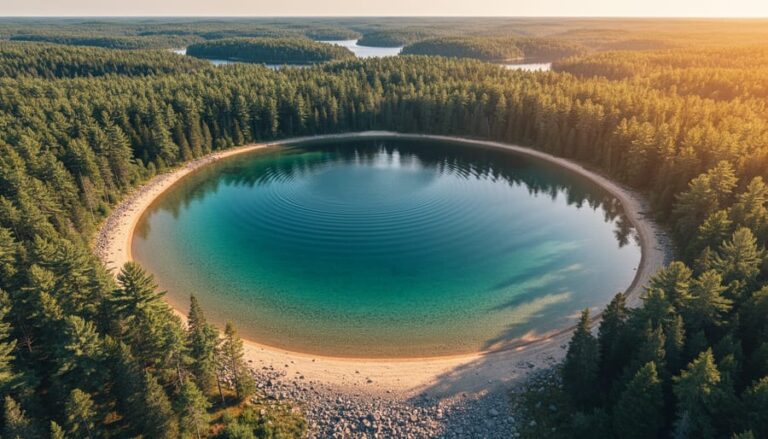
Picture a perfectly round pond nestled in the forest, its basin so smooth and deep it looks like a giant ice cream scoop carved it from the earth. That’s essentially what happened – except the scoop was a massive chunk of glacial ice, and the carving took thousands of years. Kettle lakes are these remarkable depressions filled with water, created when huge blocks of ice broke off from retreating glaciers during the last Ice Age and became buried in sediment. As the ice melted, it left behind bowl-shaped hollows that filled with water, forming the kettle lakes we see today.
These geological treasures dot Ontario’s landscape, offering some of the clearest, most pristine swimming holes you’ll ever discover. Unlike regular lakes formed by rivers or tectonic activity, kettle lakes have no inlets or outlets, which means their water comes entirely from precipitation and groundwater. This creates incredibly clean, often crystal-clear water that stays refreshingly cool even in summer. You’ll find them throughout Ontario’s provincial parks, hidden gems that tell the story of Ontario’s geological history while providing perfect spots for a secluded swim or peaceful paddle.
Understanding what makes kettle lakes unique helps you appreciate these natural wonders when you stumble upon them during your next hiking adventure – and trust me, once you know what to look for, you’ll start spotting them everywhere.
What Exactly Is a Kettle Lake?
Picture this: thousands of years ago, as massive glaciers retreated across Ontario, they left behind more than just scraped bedrock and rolling hills. Sometimes, huge chunks of ice—some as big as houses—broke off and got buried under sand, gravel, and other debris the glacier had been carrying. These ice blocks sat there, covered like frozen time capsules, as the landscape around them began to stabilize.
Then, slowly but surely, those buried ice giants melted. As the ice disappeared, the ground above it had nowhere to go but down, sinking into the space where solid ice once stood. What remained was a distinctive bowl-shaped depression in the landscape—a kettle lake waiting to fill with water.
Think of it like pressing a large ball into sand at the beach, then carefully removing it. You’re left with a rounded hollow. That’s essentially what happened here, except on a much grander scale and over centuries rather than seconds.
Today, these glacier-formed depressions dot Ontario’s landscape, filled with crystal-clear water that reflects the surrounding forests. They’re typically round or oval, with steep sides that drop down into surprisingly deep basins. Unlike rivers or stream-fed lakes, many kettle lakes are fed primarily by groundwater and rainfall, which often gives them that remarkably clear, pristine quality that makes them so perfect for swimming and snorkeling.
The next time you’re hiking through Ontario’s parks and stumble upon a perfectly round, deep lake surrounded by hills, you’re probably looking at one of these ancient geological treasures. Each one tells the story of ice, time, and the powerful forces that shaped the landscape we explore today.

The Ice Age Story: How Kettle Lakes and Eskers Were Made
What Are Eskers and Why Do They Matter?
Ever wondered about those long, winding ridges you see snaking through Ontario’s landscapes? Those are eskers, and they’re like geological siblings to kettle lakes. Picture this: as massive glaciers melted thousands of years ago, rivers of meltwater flowed beneath the ice, carrying sand and gravel. These underground rivers deposited sediment like a conveyor belt, creating tunnel-like channels. When the ice finally disappeared, those deposits remained as long, narrow ridges we call eskers.
Here’s the cool connection: eskers and kettle lakes were born from the same glacial retreat. While buried ice blocks created depressions that became kettle lakes, the flowing meltwater left behind these raised ridges. You’ll often spot them together because they formed during the same dramatic period of glacial melting.
When you’re exploring Ontario’s parks, keep an eye out for these distinctive landforms. Walking along an esker ridge gives you an elevated view of the surrounding landscape, and you might just spot a kettle lake nestled nearby. It’s like reading a 10,000-year-old story written in sand, gravel, and water. Understanding this relationship helps you appreciate why Ontario’s terrain looks the way it does.

The Perfect Recipe: Ice + Time = Kettle Lake
Here’s the cool part: kettle lakes aren’t complicated, they just take a really long time to happen! Picture this like making the world’s slowest ice cream sundae. About 12,000 years ago during the last ice age, massive glaciers covered Ontario like a frozen blanket. As these glaciers slowly retreated (think melting at a snail’s pace), chunks of ice broke off and got left behind, kind of like ice cubes dropped on your driveway.
Here’s where it gets interesting. These weren’t ordinary ice cubes – some were as big as houses! Glacial sediment and debris buried these ice giants, insulating them. Over hundreds or even thousands of years, the ice melted underneath, creating a hollow depression. Rain and groundwater filled these depressions, and voila – you’ve got yourself a kettle lake!
The recipe is simple: take one glacier, add natural debris, wait several millennia, and let water do the rest. What makes kettle lakes special is that they’re often perfectly round or oval, sitting like natural bowls in the landscape. They’re geological time capsules, formed during a period when woolly mammoths still roamed the earth!
How to Spot a Kettle Lake in the Wild
Once you know what to look for, spotting kettle lakes on your hiking adventures becomes an exciting treasure hunt. These geological gems have telltale features that set them apart from ordinary ponds and lakes.
The most obvious clue is their shape. Kettle lakes are remarkably circular or oval, looking almost as if someone scooped out a perfect bowl from the landscape. When you’re standing at the edge of one, you’ll notice the sides drop off steeply rather than gradually sloping into the water. This gives them an almost amphitheater-like quality that’s quite distinctive.
Here’s an insider tip: if you don’t see any visible streams feeding into or flowing out of the lake, there’s a good chance you’ve found a kettle. Most lakes have at least one inlet or outlet, but kettle lakes are often self-contained systems, fed primarily by groundwater and precipitation. This isolation is part of what makes them so special.
The water clarity is another giveaway. Because they’re not fed by sediment-carrying streams, many kettle lakes have remarkably clear, almost jewel-like water. On a calm day, you might see surprisingly deep down into these lakes, and they often appear an intense blue or green color that photographs beautifully.
Don’t be fooled by their modest size, either. Many kettle lakes are deceptively deep relative to their surface area. A lake that’s only 50 meters across might plunge 15 or 20 meters deep at its center. When you’re exploring Ontario parks, keep a park map handy and look for small, isolated water bodies marked in areas with glacial history. Trail markers and information boards sometimes identify kettles specifically, making your detective work even easier. The thrill of recognizing one yourself, though, never gets old.

Ontario’s Best Kettle Lakes Worth Visiting
Frontenac Provincial Park’s Hidden Gems
Frontenac Provincial Park shelters some of Ontario’s most stunning kettle lakes, each offering a unique window into the region’s geological wonders. Big Salmon Lake stands out as a perfect introduction—accessible via the Arab Lake Gorge Trail, this deep kettle lake surprises hikers with its crystal-clear waters and rocky shoreline. For a quieter experience, seek out Little Salmon Lake, just a short paddle away, where you’ll often have the entire basin to yourself.
Insider tip: Visit Devil Lake via the blue-blazed trail from Big Salmon Lake. This hidden kettle lake sits in a dramatic depression, and early morning visits reward you with mirror-like reflections and frequent wildlife sightings. Pack a lightweight chair and enjoy breakfast on the smooth granite outcrops.
Campers should request backcountry sites near these kettle lakes well in advance—they fill quickly in summer. Bring a topographic map to appreciate how these bowl-shaped depressions punctuate the landscape. The best time for photography is late afternoon when the sun illuminates the surrounding forest canopy. Remember to practice Leave No Trace principles, especially around these delicate ecosystems where the banks can be easily eroded.
Other Must-See Kettle Lake Destinations
Beyond Killarney, Ontario’s filled with kettle lake treasures waiting to be explored! Head to the Haliburton Highlands where dozens of these glacial gems dot the landscape—many accessible by canoe for that quintessential Canadian paddling experience. Insider tip: Visit during weekdays in September for stunning fall colors and fewer crowds.
The Muskoka region also showcases beautiful kettle formations, particularly around Arrowhead Provincial Park where interpretive trails explain their geological origins. For adventurous souls, the Temagami area offers remote kettle lakes perfect for backcountry camping—just remember to practice Leave No Trace principles to keep these pristine ecosystems healthy for future visitors. Each location provides unique perspectives on how glaciers sculpted Ontario’s spectacular waterscape.
What Makes Kettle Lakes Special for Nature Lovers
Kettle lakes stand out among Ontario’s natural features for their remarkably unique ecosystems. Because they’re fed primarily by groundwater and precipitation rather than streams, these isolated water bodies develop their own distinct chemistry and temperature profiles. The result? Crystal-clear waters that often stay cooler than regular lakes, creating perfect conditions for cold-water species like brook trout.
What really gets nature lovers excited is the sense of discovery these lakes offer. Many kettle lakes remain tucked away in wilderness areas, accessible only by hiking trails, which means you’ll often have them entirely to yourself. I’ve watched loons glide across mirror-smooth kettle lake surfaces at dawn, their calls echoing off surrounding forest walls—an experience that’s increasingly rare on Ontario’s busier waterways.
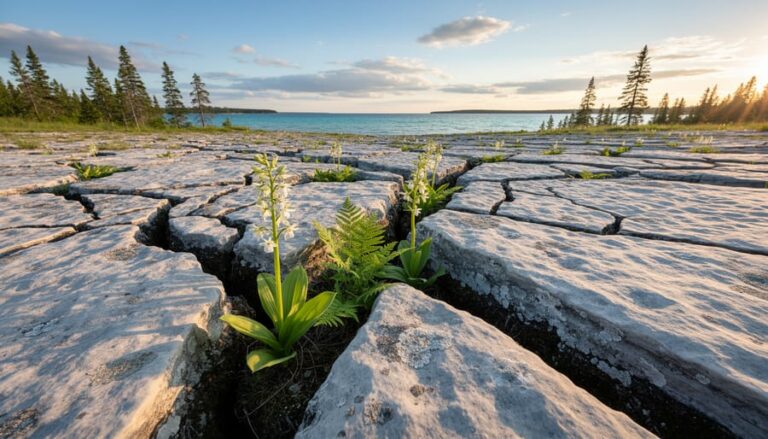
The surrounding ecosystems are equally fascinating. The steep-sided bowls that cradle these lakes create microclimates where rare plants thrive. You might spot unusual ferns, orchids, or moss species along the shoreline that don’t grow anywhere else in the region.
For eco-conscious visitors, kettle lakes offer wonderful low-impact recreation. Pack out everything you pack in, and consider leaving your kayak or canoe at home if accessing remote kettles—carrying in a lightweight packraft minimizes trail impact. Photography is perfect here since you don’t disturb anything.
Insider tip: Visit during shoulder seasons like late May or early October. You’ll avoid summer crowds and witness incredible wildlife activity as animals take advantage of these pristine water sources. Just remember these are sensitive environments—observe from shore rather than wading in, and keep your distance from nesting waterfowl. Your respectful approach ensures these geological treasures remain special for future generations.
Planning Your Kettle Lake Adventure
Ready to explore these glacial gems? Here’s your insider guide to making the most of your kettle lake adventure!
The sweet spot for visiting is late spring through early fall, when trails are accessible and water levels are perfect for paddling. Summer brings warm swimming conditions, while September offers stunning fall colors reflected in those crystal-clear waters. Just remember, kettle lakes can be chillier than regular lakes since many are spring-fed, so pack a wetsuit for early season dips.
Your essential gear list should include good hiking boots, a camera with a polarizing filter to cut water glare, binoculars for wildlife watching, and plenty of water. If you’re planning to camp nearby, choose established sites to minimize your impact on these delicate ecosystems.
Photography tip from a regular visitor: shoot during golden hour when the light creates magical reflections. The steep banks and surrounding forests make incredible natural frames for your shots.
Here’s the most important part: practice leave-no-trace principles religiously. Stay on marked trails to prevent erosion around these steep-sided basins. Never introduce fish, plants, or any organisms into kettle lakes, as many host unique ecosystems that took thousands of years to develop. Pack out everything you bring in, and give wildlife plenty of space.
These geological treasures are irreplaceable time capsules from the ice age. By treading lightly and respecting their fragile nature, you’re ensuring future generations can experience the same wonder you’re about to discover.
There’s something magical about standing at the edge of a kettle lake, knowing you’re gazing into a depression carved by ice thousands of years ago. These natural time capsules tell stories of glaciers that once dominated Ontario’s landscape, and today they reward curious explorers with crystal-clear waters, thriving ecosystems, and peaceful moments far from everyday life.
Whether you’re hiking through Algonquin’s backcountry or enjoying a picnic at a local conservation area, kettle lakes offer that rare combination of geological wonder and natural beauty. They’re proof that the most fascinating attractions don’t always require a plane ticket – sometimes they’re right in your backyard, waiting to be discovered.
Ready to experience these glacial gems for yourself? Pack your hiking boots, grab a good field guide, and head to one of Ontario’s parks. Take time to really observe the landscape around you – those subtle hills might be eskers, and that perfectly round lake could be your own kettle lake discovery. Each visit deepens your connection to the incredible forces that shaped this province. Your kettle lake story is out there waiting to be written.



+ There are no comments
Add yours